

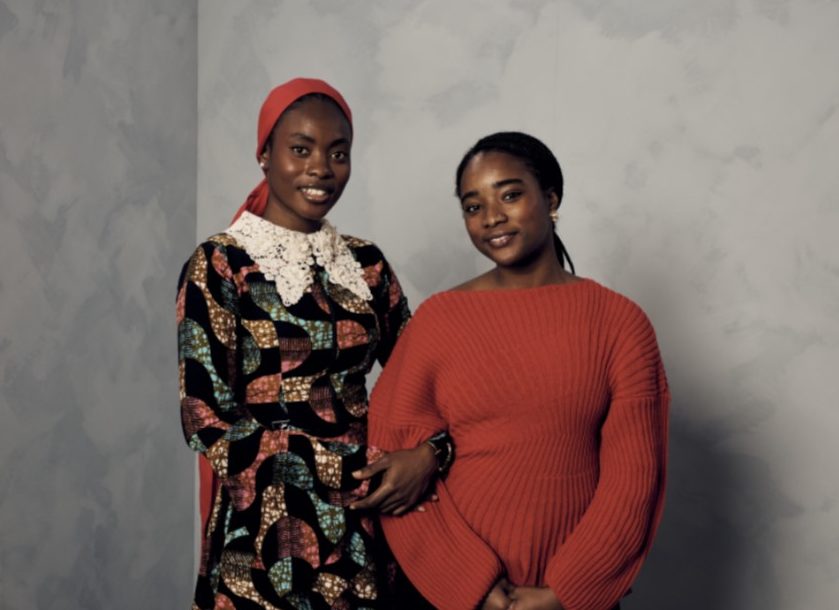

“I think we often expect women on screen to be one or the other. You are either vulnerable and in need of saving, or you’re strong and resilient. But real people aren’t like that.” – Christine Boateng
By Jerry Chiemeke
What does it mean to carry a burden? In Zjili: A Story of Sisterhood and the Burdens of Excess (2026), this question bears multiple facets.
Rendered against the bustling backdrop of Accra’s Kantamanto Market, where young women carry enormous bales of second-hand clothing for a living, first-time feature directors Christine Boateng (Tejiri, The Burial of Kojo) and Hajara Musah Chambas explore questions of resilience, gender, migration, and survival in contemporary Ghana.
At the heart of Zjili are two young women whose dreams persist despite overwhelming odds. The film follows Zoya (Rahana Abdallah), a girl from Botingli who dreams of becoming president until the death of her father and the threat of child marriage push her toward Accra. There she meets Teiya (Esinam Semordzi), a kayayoo whose body is slowly giving out under the weight of her work. They live in a dingy compound managed by Mma Chalpang (Zaharawu Fuseini), a guarded landlady whose abrasiveness hides old wounds.
Through the unfolding of these three intertwined lives, Boateng and Chambas interrogate exploitative labour, ambition, survival, and sisterhood in a society shaped by inequality and expectation. To their credit, they approach these themes with striking confidence and empathy, creating a film that is as socially conscious as it is emotionally resonant.
We spoke with the two directors about bringing the film to life, collaborating with communities whose experiences inspired the story, telling stories rooted in lived experience, and what it means to tell this story as first-time feature directors.
*This interview has been edited for length and clarity.
Zjili is rooted in the lived realities of kayayei. What was the moment, image, or encounter that convinced you this story needed to be told as a feature film?
Christine Boateng: I don’t think there was one single specific moment. From as far back as I can remember, being a young girl going to the market with my grandmother on Saturday mornings, it has always been something I was curious about. Seeing how she interacted with these women and how she even asked their names and gave them extra money really influenced me later to do the same anytime I went to the market. I observed that these girls worked so hard, yet earned so little. I witnessed them being treated so poorly and spoken to harshly. It was almost like they didn’t matter. It always felt wrong. But beyond that, I was also drawn to moments I saw them seated in their pans, huddled together, sharing gist and laughs. As with a lot of things around me, I’ve always just been curious about what their stories are, what their dreams may be, and just what life possibly feels like for them.
As life would have it, I would later join the Or Foundation as a storyteller, and there, I found some answers. From getting to spend time with the women in the market and in their rooms, bonding and building friendships with some, observing their cultures, the way they interacted with each other in their language, their faith, and their way of life, I became so curious to know who they were when no one was watching. I spent time listening to their stories (thankfully, I could get some summarised and translated in real time from Dagbani to English or Twi) and to them singing the songs that reminded them of home, and just overall getting a window into what life is like for them.
Drawing from these experiences, my strong empathy for their plight grew into this strong feeling that their reality is a grave moral and societal injustice. Off of that, what grew in me was a desire to capture their lived experiences and amplify their stories in a dignifying manner that erases the reductive perspective that they’re simply women who carry heavy loads in the market, and replaces it with a much more wholesome perspective that brings the layers of their lives into context. Like every other human being, they are carrying the weight of unresolved trauma, emotional baggage, expectations, responsibilities, goals and ambition. But unlike the rest of us, they also have to physically carry enormous weight, twice their own size, almost every day just to survive. And no human being deserves to do this.
More so, I’m very interested in what people don’t say, the things that exist underneath what we see. So I started thinking about how cinema could allow us to enter those inner worlds rather than simply document the labour. That’s when I began to feel that this couldn’t just be a documentary about a social issue. We needed the space of a narrative feature to live with these women, to understand their relationships, their contradictions, their dreams and their sisterhood.
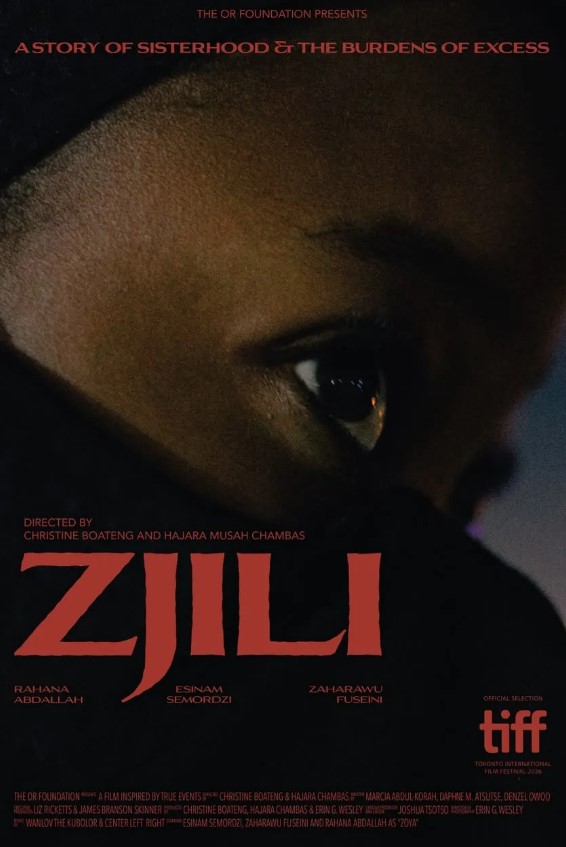
How did the partnership with the Or Foundation shape the project’s direction in terms of research, ethics and other creative decisions?
Hajara Musah Chambas: The partnership with The Or Foundation was shaped by a shared goal: to tell a story that educates the public, supports policy advocacy, and helps create alternative opportunities for women. The Foundation supported the research and broader mission, while we, as directors, translated that research into a film.
Our priority was to represent the women authentically and with dignity, reflecting their culture, religion, language, relationships, and communities, while helping audiences see them beyond the labour they perform. We were given significant creative freedom to make decisions about the narrative, visual language, locations, casting, crew, and filming process. We had the space to explore different creative possibilities and make decisions that best served the story.
This trust allowed us to create a film grounded in research and lived experience, while still making room for fiction and our creative vision as directors.
As co-directors, how did you divide creative responsibilities, and did your respective backgrounds push the film in different directions?
Christine Boateng: I think our responsibilities evolved rather than being completely divided from the beginning.
Hajara had a relationship with these women that existed before I came onto the project. She had spent a lot of time with them and understood their experiences and the communities very intimately. I came in with my filmmaking practice and storytelling perspective.
My instinct was to start asking: how do we take all of this material, all of these experiences, and find a cinematic language for it? So I brought in some of the most brilliant writers I know, my friends Denzel (Owoo), Daphne (Atsutse) and Marcia (Abdul-Korah) (working on her PHD in African and Ghanaian cinema) to begin shaping the narrative. I helmed the story development process by allowing us to first gather stories (special thanks to Huzeima Hafiz for her immense support during that stage), then went ahead to facilitate writing workshops to shape the characters and develop a strong plot, working closely with the writers as well as consulting with Leonard Kubaloe (OBL Studios), an amazing filmmaker based in the North who had already been engaged with to support with the project.
Eventually I brought together a wider creative team including Erin G Wesley, our DOP, and Joshua Tsotso, our Creative Producer. So whilst seeing the creative and administrative sides of moving the project forward, we collectively looked to Hajara for cultural authenticity, and leveraged her knowledge and relationship with these women to gain insight and context for the work. And this became the system of approach that saw the project through development into production and eventually post-production. So I don’t think our backgrounds pushed the film in opposing directions. It was more symbiotic. We had different entry points into the same story, and we leaned on each other’s strengths, weaknesses and knowledge to arrive at our desired goal.
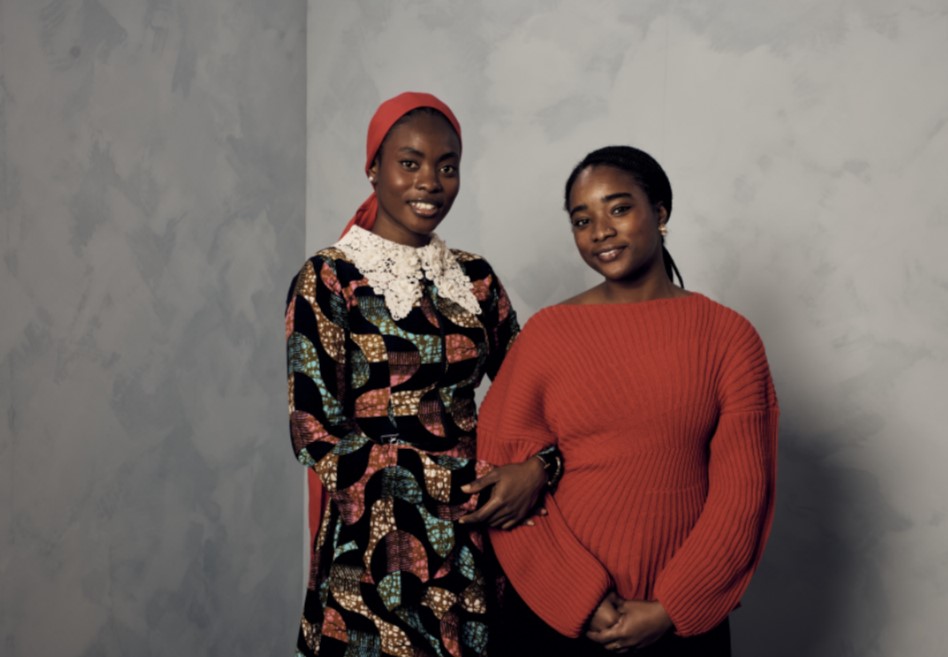
The screenplay has three credited writers alongside your own input as directors. How did that collaborative writing process work, and how much of the dialogue came from real testimonies you gathered?
Hajara Musah Chambas: The screenplay for Zjili is deeply rooted in research and the lived experiences of the women whose stories inspired the film. Between 2021 and 2024, we worked with over 300 women through our chiropractic research, which gave me the opportunity to build relationships with them and understand their experiences firsthand.
As a co-director, I had spent more time with the women before Christine came on board in 2023. It was important for her to also develop those relationships, which became a foundation for our collaborative writing process. We documented the stories of 12 women across different age groups, primarily in Dagbani and some in Twi, and translated their testimonies into English.
We then worked with the writers to identify recurring themes and experiences, which informed the development of the screenplay and its characters. Each character is rooted in real-life stories, but we incorporated fictional elements to shape the narrative and convey the emotional realities of the women’s experiences.
The dialogue was therefore not a direct transcription of the testimonies, but a creative interpretation grounded in the stories we gathered and the themes that emerged from our research.
As first-time feature directors tackling such difficult material, what was the hardest scene to get right, and what did you learn about your own instincts as filmmakers in the process?
Hajara Musah Chambas: One of the hardest scenes for me was the fire festival. Because we were filming outside the festival period, we had to engage with community leaders and seek permission to recreate it. We were eventually allowed to shoot on the outskirts of the community, in the middle of a forest at night, with real fire and more than 100 people involved. As a producer and director, my biggest concern was ensuring everyone’s safety, especially the cast, crew, and extras.
What made the scene particularly powerful was that at a certain point, we had to stop controlling it so closely and allow the community members to express themselves naturally. Even after we had captured the scenes we needed, we allowed the celebration to continue because something genuine was unfolding. We stayed until dawn, and although it was a challenging night, it taught me the importance of trusting the process.
As a first-time feature director, I learned to trust my instincts and respond to what was happening in front of me. Sometimes unexpected changes, whether caused by weather, the environment, or the people, can make a scene more authentic. I also learned the value of community relationships. The trust we had built over time made it possible for people to welcome and support us. It deepened my understanding of communal life in the north and reminded me that filmmaking is not only about directing a scene, but also about listening, adapting, and working with people.
Were there things you learned about the physical and psychological toll of kayayei work that surprised or unsettled you during research?
Christine Boateng: That it’s a circle. A hard circle to escape. That most of these women migrate primarily in search of better opportunities, not to do kayayei or sometimes even knowing about it. But they end up in Accra, with no support system or anything to ease them in, and the work becomes something they must do for upkeep. What may start off as something they do for the moment becomes something they must continue to do every day.
What unsettled me most was realising how normalised the physical toll had become. When you first see a woman carrying a bale, you understand that it is heavy. But spending time with the women changes the way you see that image. You begin to understand that this isn’t one difficult moment that happens occasionally. This is someone’s livelihood. It’s something their body is repeatedly being asked to absorb. The research, including the medical work and X-rays, made the physical consequences much harder to look away from.
But psychologically, I think what affected me even more was the complexity of how people live with hardship, because the women weren’t walking around thinking only about their pain. They were making jokes; they were making friends. They were falling in love. They were thinking about their children. They were dreaming about owning businesses, thinking about getting educated and what their future could be. That really challenged me as a filmmaker because it reminded me that if you’re not careful, even when you’re trying to tell an important story, you can flatten someone into just their suffering. I became very conscious that the film had to hold both things – the reality of what was happening to their bodies and how rich, beautiful and layered their lives were.
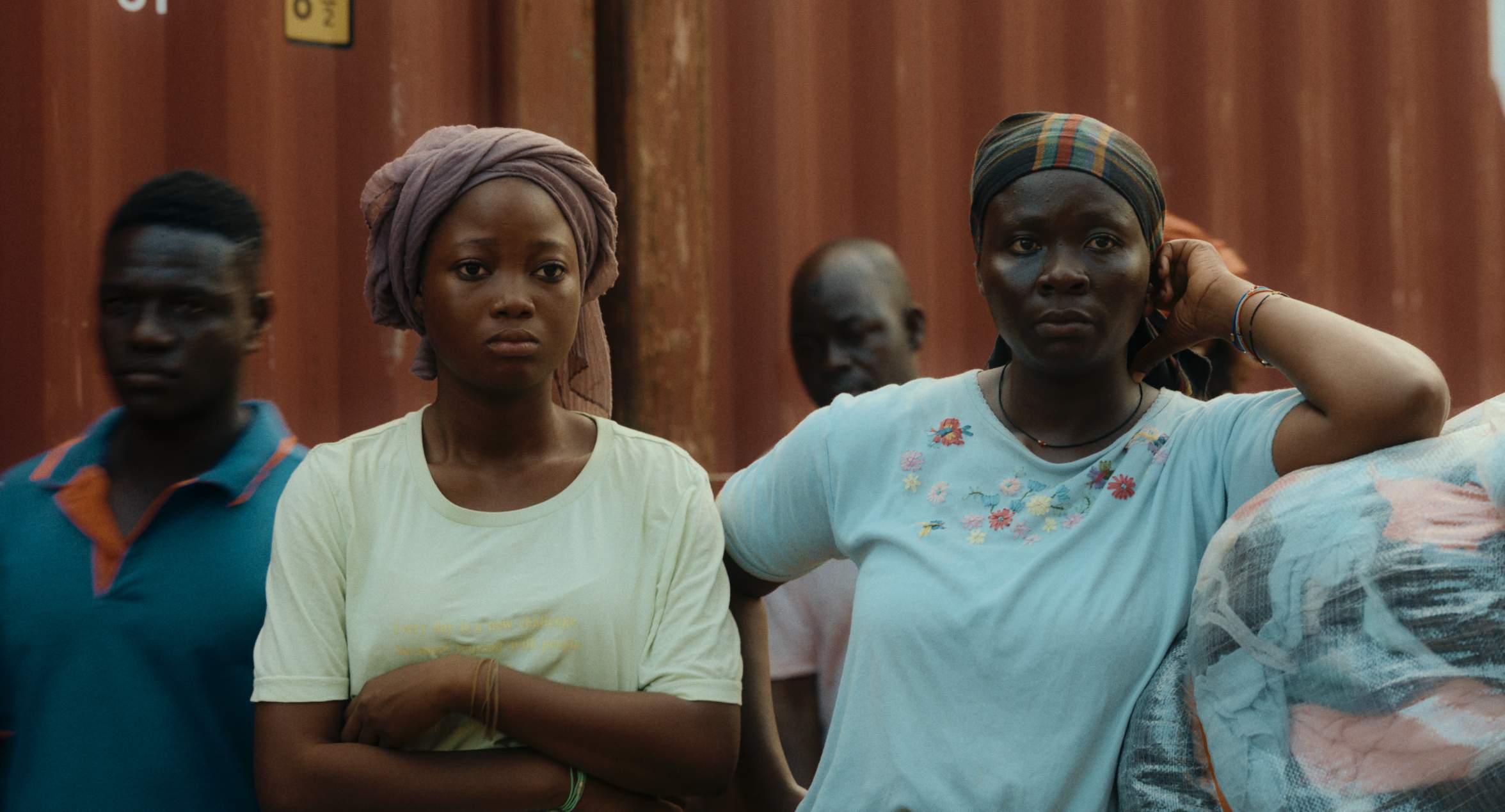
The film moves between rural stillness and Accra’s chaotic bustle. How did you craft a visual rhythm that mirrors the girls’ emotional journeys?
Hajara Musah Chambas: The contrast between northern Ghana and Accra was central to how we developed the film’s visual language. In the north, life is generally slower and more grounded in culture, with greater stillness, open spaces, farmland, and a different relationship with the environment. We used wider shots to capture that sense of space, calm, and connection to place. Even details such as the homes, water-fetching, and the way people go about their daily lives, like we see Zoya’s community members do in the film, helped establish this atmosphere.
When the girls arrive in Accra, the environment becomes more crowded, noisy, and overwhelming. We shifted towards tighter lenses and closer framing to reflect the limited spaces and the emotional pressure they experienced. For example, the contrast between where Zoya fetches water in the north and the crowded bathing spaces in Accra, where she has to pay for every bucket of water, helps communicate how drastically her surroundings change.
The visual rhythm was therefore not just about showing two different locations. It was about using space, framing, and movement to reflect the girls’ emotional journeys from familiarity and stillness to uncertainty, pressure, and adaptation.
What were the logistical and emotional challenges of shooting in one of Accra’s busiest, most precarious environments?
Hajara Musah Chambas: Shooting in one of Accra’s busiest and most precarious environments was one of the most challenging parts of the production, both logistically and emotionally. The pollution, rain, water conditions, and constant movement affected both the cast and crew, with some people falling sick. We also had to work around the realities of the community, where people were running their businesses, moving through the space, and living their everyday lives. Unlike a controlled studio environment, we couldn’t ask people to stop what they were doing or remain quiet. We had to adapt our filming process and respect their space without disrupting their livelihoods.
The weather and changing conditions also meant making decisions on the spot, sometimes adjusting scenes or even reworking parts of the script to fit the environment. Before filming, we engaged with community leaders and built relationships with residents, many of whom already knew us through our research. That trust made a significant difference. People were more open to allowing us to film, but we always respected their boundaries; if someone was uncomfortable, we moved or changed our approach.
Despite the challenges, the experience was deeply meaningful. It taught us the importance of flexibility, patience, and community relationships. More than anything, we learned that filming in such an environment required us to work with the community, rather than simply filming within it.
What obligations did you feel toward the kayayei whose stories inspired the film, and how did you build trust with women willing to share such personal and painful stories?
Christine Boateng: I felt that our first obligation was to listen before trying to make anything.
When I joined the project, I didn’t want to arrive with the assumption that I already knew what the film was going to be. I spent time with the women, built relationships with them, bonded over moments, listened to their stories, observed their everyday lives, and participated in the story-gathering and story development workshops. And I think trust came through consistency because some of the stories we heard were incredibly personal.
But we understood that someone’s willingness to tell you something doesn’t automatically give you the right to use every detail of it. And that was something I carried quite strongly into the writing and directing. We weren’t trying to reproduce people’s lives literally. We were trying to portray the emotional truth of what we had heard.
That’s also why I think the fictional form was befitting. We could draw from multiple women’s experiences, thread and merge similar circumstances, introduce fictional characters and protect people’s identities, while still holding onto something emotionally and circumstantially truthful. And for me, the relationship didn’t end when we finished shooting. The community screenings were important because we wanted the women and families who inspired the work to have a chance to encounter the film themselves first and give us feedback and their blessing.
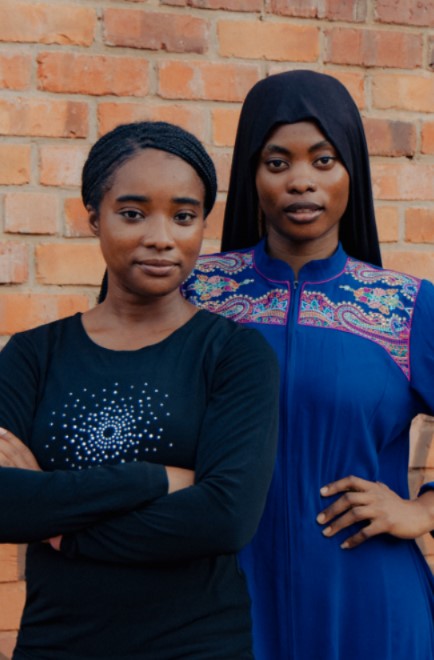
How did you work with Rahana Abdallah and Esinam Semordzi to build characters who feel both fragile and fiercely determined?
Christine Boateng: For me, it started with not treating vulnerability and strength as opposites. I think we often expect women on screen to be one or the other; you are either vulnerable and in need of saving, or you’re strong and resilient. But real people aren’t like that. Zoya can be frightened and lost yet incredibly ambitious. Teiya can be exhausted and still have an enormous capacity for love and hope. They can be hurt, they can make mistakes, they can need each other, and they can still be fiercely determined.
So with Rahana and Esinam, a lot of our work was about finding and capturing those contradictions rather than smoothening them out. I also wasn’t interested in the idea of them “playing” a character, but rather seeing them live out and express the emotions and truth in different circumstances we ought to put their characters in. And we gave them space to bring their own understanding into that. We didn’t want to direct every emotion, but rather just simply steer the course of the direction of their character.
My goal was to place them in the right environment and add just enough emotional pressure or sometimes context, and push to allow them to instinctively express the truth and humanity of these characters. They really supported us, gave us feedback and shared ideas or suggestions on how to enrich their performance or make their dialogue more connecting, and that made it easy for us to work with them because it felt very collaborative. We also prioritised their well-being and safety throughout the production, and that made them develop a level of trust with us which was special and important to us.
Mma Chalpang’s backstory touches on paternal abuse and a forced teenage abortion. How did you approach writing and directing that arc responsibly?
Hajara Musah Chambas: We approached it with the understanding that in some Northern Ghanaian communities, a girl’s behaviour, marriage, and perceived respectability can be closely tied to her family’s reputation. This places significant pressure on girls and can lead to harmful decisions being made in the name of family honour.
It was important for us to tell this story honestly while approaching it with sensitivity and care. We wanted audiences to understand the social pressures behind Chalpang’s experiences without excusing the harm inflicted on her. The father’s actions were rooted in his fear of disgrace, but we also wanted to show the importance of accountability and the possibility of acknowledging harm, something that is not always easy within certain patriarchal structures.
Our intention was not to portray the community or its culture as something to condemn, but to create space for reflection and learning. We wanted the story to encourage people to reconsider the expectations placed on girls and to understand that a daughter’s worth should never be tied to family reputation or a man’s honour.

Teiya dreams of hairdressing even as her body is breaking down. What does that juxtaposition say about how these women hold onto identity and hope outside of pure survival?
Christine Boateng: That’s one of the things I love about Teiya. Her body is telling us one story, but her imagination is telling us another. I think it speaks to not just the reality of these women, but also all less privileged women whose means of survival is circumstantial. It reinforces the fact that it doesn’t define who they are, and they must never allow it to. It usually is only a means to an end, using what they can to achieve what they want. But just as her story goes, it’s also a cautionary tale to take it easy on ourselves, to listen and to care for our bodies, to take rest seriously and to treat our bodies with respect.
Teiya wasn’t a machine, she was a woman as Ayishetu (the old sick neighbour) told her, and it was a moment to depict the juxtaposition of the life that Teiya was living and which was leading to a possible outcome: being bedridden, unable to function and in need of support because her future had been shattered from taking care of everyone around her at her own expense. To see your dream come true, you must not only work hard enough at it, but you must also live long enough for it, and that is so important for these women to recognise.
Did any of your lead actors spend time with real kayayei to prepare, and how did that shape their performances?
Christine Boateng: We were intentional about producing accurate depictions for each of the characters, and that informed our approach in choosing and working with each of our leads. Primarily, we sought to go for actors who shared as similar lived experiences as possible, but we also had to prioritise acting proficiency and depth. And I think we were extremely lucky to find the perfect cast. A lot of props to our casting director Mawuko Kuadzi, CSA for the incredible work as well.
Rahana (who plays Zoya) and Zaharawu (who plays Chalpang) had commonalities they share with their characters. However, for Esinam who plays Teiya, it was a different reality. Although she grew up in the Northern part of Ghana and she was an experienced actor, she knew nothing about what life as a kayayei truly meant. So, two months after being cast, she went into intense preparation for the character.
I remember after meeting with her, I told her she needed to take off her braids and her newly fixed nails because it was necessary for her to start getting into character. She took it all in and started looking the part, going to the markets to observe and spend time with the women, building relationships with them, studying and immersing herself in that world. At some point she even carried some of the bales because she wanted to get a sense of what it feels like to carry such heavy weight over a distance. She did all these, and it helped so much because she had naturalised into that world and into the character Teiya when we were ready for production.
For Zoya, from the very first tape we saw of Rahana, we immediately thought she was perfect for the role. Her emotional portrayal of the role in that scene in the tape left us stunned and curious. When we eventually spoke to her, we learned she shared so much in common with the character, and that confirmed it for us.
For (the role of) Chalpang, Zaharawu was someone I always saw in the community during our meetings with the Adammog film group, which is a film and theatre group based in Old Fadama where we shot. I observed her and was immediately fascinated by her countenance, and when I found out she’s an actor, I was even more keen because she just seemed like the best option for the character Chalpang. She seemed tough, but she also assumed a mother-like figure to the younger girls. We came to find out that she indeed takes care of some of these younger women and advocates for them in her own way. The layers of expression she gave when she came in for the auditions left a strong impression on us.
The actors were coming into a world that had to feel lived in, so the research was very important to their preparation. We wanted them to understand the environment, the physicality of the work and the relationships between the women. But I was also very conscious that I didn’t want them to simply imitate kayayei. We weren’t asking them to give us an idea of what a kayayei is. We were asking them to become Zoya, Teiya and Chalpang (respectively). So a lot of our conversations were actually about things that had nothing to do with carrying bales. What does this woman want? What embarrasses her? What makes her laugh? What is she hiding? What does she remember? What does she imagine her life becoming?
Once you understand the person, the work becomes part of the character rather than the character becoming the work. And I think that was particularly important for me because my own filmmaking practice is very interested in what exists beneath the surface. I wanted the actors to be able to communicate things even when they weren’t speaking. Sometimes it’s a look between two women, the way someone reacts to a sound, the way they sit after an argument. Those small things can tell you more than a line of dialogue.
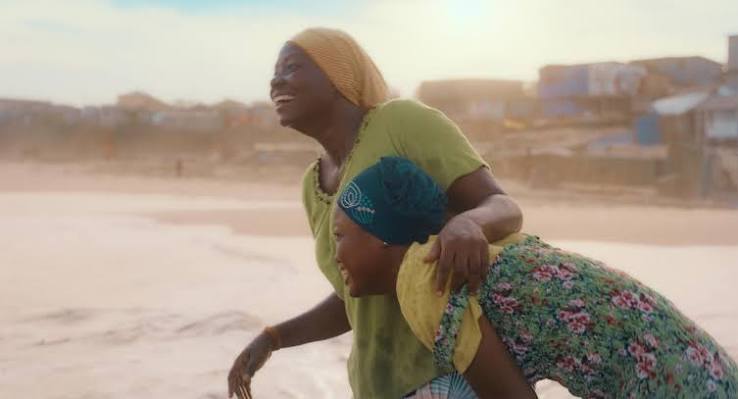
The film deals with hardship, and some may call it “sensationalised suffering”. How do you respond to that critique?
Hajara Musah Chambas: We were very conscious of not making hardship the sole focus of the story. It was important for us to show the women in their entirety: their sisterhood, joy, ambitions, relationships, communities, and the moments when they simply come together and have fun. Their struggles are part of their experiences, but they do not define who they are.
When I began working with these women, one of the things that stood out to me was their sense of sisterhood. Even when they did not know one another personally, if one woman came across an opportunity or something that could benefit her, she would often share it with other women. That generosity, kindness, and willingness to support one another were important qualities for us to capture.
We wanted audiences to see them as human beings beyond the labour they perform: women with dreams, ambitions, families, love, loss, and hopes for the future. The film acknowledges the realities of hardship, but it also makes space for joy, resilience, and connection. For us, telling their stories responsibly meant showing their full humanity, rather than reducing them to their suffering.
Three kayayei reportedly died under their loads during production. How did that reality shape decisions on set?
Christine Boateng: It was one of the most difficult realities to carry during production because suddenly, the thing we were trying to represent wasn’t abstract anymore. It wasn’t a study, or product of research or statement. It was real life, or rather real death, happening in the present (at the time). It gave this fictional film ‘based on true stories’, a very real-life context. Everyone on the project already understood why we were telling this story and why it was important – we made sure of that before every onboarding, but with the news, everyone saw the reason in real time. And that was a whole thing in itself. We were witnessing the physical risks of that work all around us as we shot.
I think it made everyone emotionally conscious and more involved because the project demanded so much of every crew member and actor, beyond what our budget could cater for or what the conventions of our work required, but everyone showed up every day and gave their best. As a director, it affected me in the same way no less. It reinforced something for me. So even when we were thinking about the visual language or the drama in a scene, there was always this awareness that these weren’t simply cinematic images. They were connected to people’s actual lives.
Do you see Zjili as a tool for advocacy around labour laws and women’s rights? What conversations do you hope the film sparks about responsibility and reform?
Hajara Musah Chambas: Yes, I see Zjili as a tool for advocacy around labour rights and women’s rights, but also as a way to create conversations about the systems that shape people’s lives. Before sharing the film with international audiences, we screened it in 23 communities, including the communities where we filmed, so that the women, their families, and local residents could see the story and give their consent. Over 400 Kayayei women watched the film, and many said they could see their own lives reflected in it.
One of the most powerful experiences was seeing parents and families in remote communities recognise the realities their daughters were facing in Accra. Some expressed that they had never understood what their daughters were going through and began discussing how they could better support and protect the girls and women in their families. We also saw women themselves reflecting on their experiences and exploring ways to organise and improve their lives.
Beyond the individual stories, I hope the film encourages audiences to confront the wider systems behind this reality, particularly the fashion industry’s cycle of overproduction and overconsumption. We need consumers, producers, brands, and other stakeholders to understand how the decisions made at one end of the fashion supply chain affect people at the other end. The excess clothing that enters markets like Kantamanto does not exist in isolation. It is connected to production practices, consumption patterns, waste, and the working conditions of the people who handle these clothes.
For me, the film is also an educational tool. Many of the women may not be able to read or access written information about labour rights, occupational health, or the risks associated with their work. Film creates another way for them to recognise and reflect on their own experiences.
Ultimately, I want Zjili to encourage people to see these women beyond their trade, acknowledge their dignity, and recognise our collective responsibility to create safer and more dignified opportunities. This includes improving market structures, supporting alternative livelihoods, and addressing the systems that continue to place the burden of overproduction and overconsumption on vulnerable communities.
I hope audiences understand that we are all connected to this cycle, and we must all be part of the solution. The film is a conversation starter, but that conversation must lead to greater accountability, meaningful reform, and action.
*Zjili made its worldwide premiere in the Discovery programme at the recently concluded 2026 Toronto International Film Festival.
Jerry Chiemeke is a Nigerian-born writer, communications specialist, culture journalist and lawyer based in the United Kingdom. His writing has appeared in publications like Die Welt, The I Paper, The British Blacklist, The Africa Report, Berlinale Press, The Johannesburg Review of Books, Olongo Africa, The Lagos Review, Agbowo, Culture Custodian, and elsewhere. Chiemeke’s work has won or been nominated for the Pushcart Prize, Ken Saro-Wiwa Prize, Diana Woods Memorial Award for Creative Nonfiction, Best Small Fictions, and the Quramo Writers Prize. He is the author of the short story collection Dreaming of Ways to Understand You (2020), the poetry chapbook Notes For Nnedimma (2019), and the hybrid manuscript The Colours In These Leaves (2017). For his work as a writer and critic, Chiemeke has been invited to the Cannes Film Festival, Sundance Film Festival, Berlinale, Toronto International Film Festival (TIFF), BFI London Film Festival, and the Lagos Book and Art Festival (LABAF).