

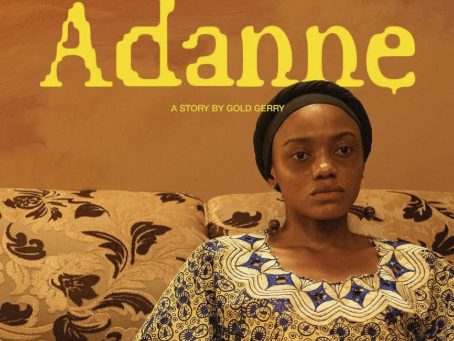

The performances, use of language, and cultural texture give Adanne considerable appeal, even as its structural and narrative shortcomings prevent it from becoming as affecting as it intends.
By Joseph Jonathan
In many Nigerian homes, a girl’s future can seem to have been negotiated long before she is old enough to imagine one for herself. Marriage, motherhood, respectability and the expectation to preserve family traditions often become the terms through which her womanhood is measured. These expectations do not always arrive as explicit instructions. Sometimes, they are passed down through a mother’s advice, a grandmother’s regrets, the choices women make to survive, and the sacrifices they quietly expect their daughters to repeat.
Adanne, directed by Orobosa Ikponmwen, is interested in these inheritances, tracing how three generations of Igbo women navigate the complicated relationship between love, duty and self-determination.
Written and produced by Gold Gerry, and produced by Lotanna Nwose, the film centres on Adanne (Mmesomachi Chilaka), a young woman negotiating her desire for an identity of her own against the expectations imposed on her. Her mother, Ijeoma (Onyinye Odokoro), is herself a woman shaped by the demands of marriage and motherhood, while her grandmother, Akachi (Jennifer Umenwa), represents an earlier generation whose experiences have helped establish the expectations now confronting them.
Across their lives, Adanne considers how ideas about womanhood are formed, preserved and sometimes challenged within a patriarchal society where marriage is treated as a measure of female fulfilment and the preference for male children remains deeply entrenched.
One of the film’s more compelling observations is that mothers do not necessarily pass down their experiences through deliberate instruction. Their daughters also learn from what they witness: how their mothers relate to their husbands, what they tolerate, what they sacrifice and the compromises they make to keep a family together.
Ijeoma’s circumstances are particularly revealing. She is a loving wife and devoted mother, but also, for much of the time, the person holding the household together financially. She must navigate a marriage in which her husband’s ego is expected to remain intact even when his contributions fall short, while enduring the abuse and indignities that accompany this imbalance. Yet her relationship with her daughter is far from uncomplicated. Her partiality towards her son creates another layer of tension, exposing how women can become both victims and enforcers of the very expectations that constrain them.
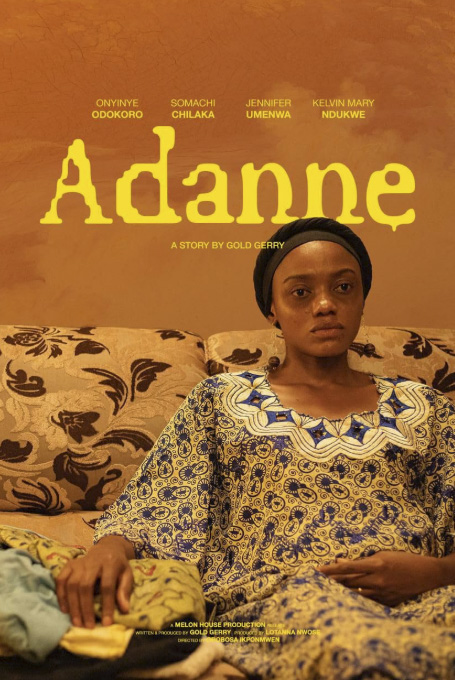
Odokoro carries much of this emotional weight with remarkable ease. She gives Ijeoma a convincing mixture of affection, frustration, resignation and vulnerability, making her more than a catalogue of maternal sacrifices. Her performance is particularly effective in the moments when the character’s circumstances seem to leave her with little room to express what she truly wants. Odokoro also has an assured command of Igbo, and the naturalness with which she moves between the language and English gives the film some of its most convincing exchanges.
She shares an appealing onscreen chemistry with Kelvinmary Ndukwe, who plays her husband, Daniel. Their relationship has an ease and familiarity that makes their scenes together believable, even when the circumstances surrounding them are difficult. Odokoro has demonstrated a knack for creating engaging romantic chemistry, including with Tobi Bakre in Zikoko Life’s Before We Fall Asleep (2026), and that quality is evident here.
Ndukwe, meanwhile, gives a solid performance, finding enough nuance to keep Daniel from becoming merely a device through which the film illustrates male entitlement. Chilaka is also fairly impressive as Adanne, particularly considering that this is her first major screen appearance. While a few supporting performances occasionally feel less than entirely natural, the principal cast gives the film a dependable emotional foundation.
The film’s use of Igbo is another considerable strength. Its dialogue often follows the rhythms of ordinary conversation rather than sounding like language inserted to signal cultural authenticity. This is important for a story so invested in the domestic lives of its characters. The language allows the women’s relationships to feel rooted in a recognisable social environment, while the art direction and choice of locations further establish the world they inhabit. Shot in Ibadan, Adanne is also nostalgic in its evocation of a familiar Nigerian domestic experience. For viewers who grew up in this part of the country, some of its family dynamics, conversations and unspoken rules will likely feel immediately recognisable.
However, Adanne is less assured in how it tells its story. Its non-linear structure moves between different periods in the characters’ lives, but the transitions are not always sufficiently clear. Rather than deepening our understanding of how the women have become who they are, the shifting timelines sometimes leave us struggling to establish where we are in the narrative. The film could have made better use of the characters’ physical ageing to distinguish these periods. Ijeoma, in particular, looks remarkably similar across timelines, making it difficult to recognise when we have moved backwards or forwards in her life. A more considered approach to makeup, styling and visual continuity could have made the structure considerably easier to follow.
Pacing is another problem. The film has a great deal to say about gender, marriage, motherhood, family expectations and the transmission of trauma, but its eagerness to communicate these ideas occasionally works against it. Some scenes linger long after they have made their point, while certain conversations could have been considerably shorter without losing their meaning.

There is a difference between allowing a dramatic moment to breathe and allowing it to overstay its welcome. At times, Adanne struggles to recognise that difference. Its themes are relevant, but the insistence on repeatedly articulating them can make the film feel preachy, as though it does not entirely trust its characters or situations to communicate what it wants us to understand.

This becomes particularly noticeable in the third act, where the film must bring together tensions it has spent much of its runtime establishing. The strained relationship between Adanne and Ijeoma has been given considerable attention, making its eventual movement towards reconciliation one of the story’s most important emotional tasks.
Yet, the resolution feels too readily achieved. The events and conversations that precede it offer possible explanations for the change, but the film does not sufficiently establish which of these experiences has truly altered the relationship, or how such a deeply rooted estrangement can be overcome so quickly. The problem is not that reconciliation is impossible; it is that the emotional groundwork required to make it convincing has not been fully laid. After investing so much time in the distance between mother and daughter, the film needed to spend more time showing what it would take for them to bridge it.
Ultimately, Adanne is a film with a worthwhile understanding of the complicated ways women inherit expectations from one another. It recognises that the struggle for self-determination does not always involve rejecting one’s family or culture, but can also mean questioning the sacrifices that have been normalised across generations.
The performances, use of language, and cultural texture give it considerable appeal, even as its structural and narrative shortcomings prevent it from becoming as affecting as it intends. Winning the Audience Choice Award at AFRIFF 2026 suggests that its concerns found an audience, and it is easy to understand why. There is something familiar and recognisable in the world it creates. But familiarity alone cannot carry a film. Adanne has a compelling story about the lives women inherit; it needed greater narrative discipline to make that story resonate fully.
Rating: 2.8/5
Joseph Jonathan is a historian who seeks to understand how film shapes our cultural identity as a people. He believes that history is more about the future than the past. When he’s not writing about film, you can catch him listening to music or discussing politics. He tweets @Chukwu2big.