


At its core, “Deliverance” studies the misrepresentations of Christian exorcism and the toll it takes on the victims.
By Chimezie Chika
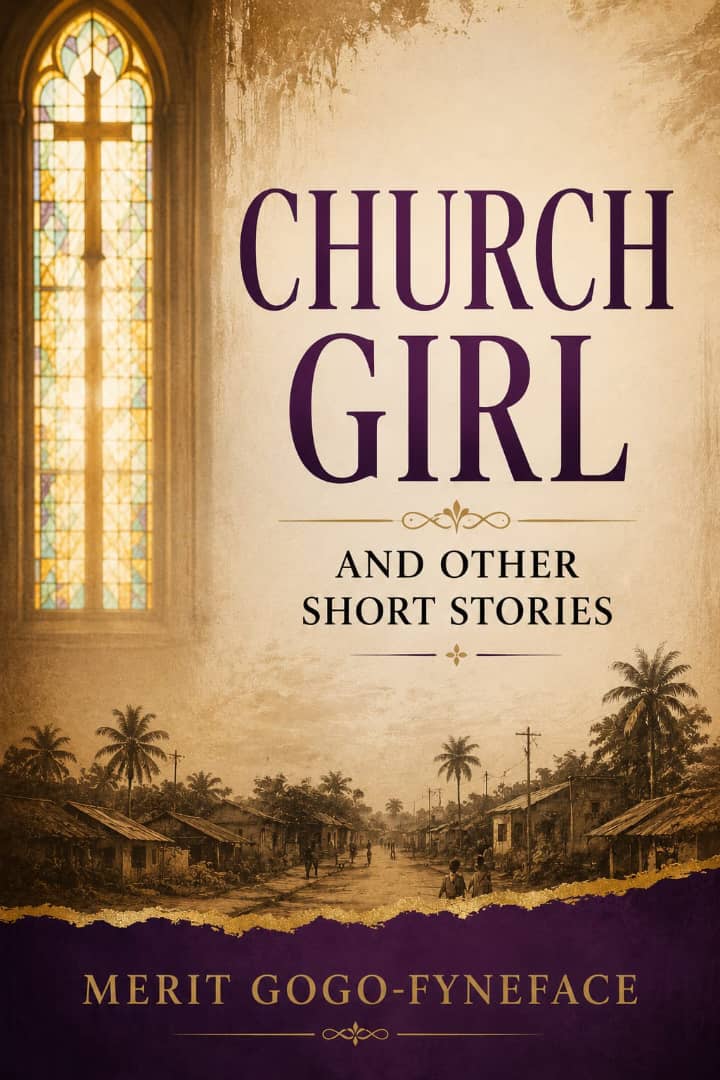
Merit Gogo-fyneface’s Christian-oriented story, “Deliverance”, begins with a scene of corporal punishment. The narrator is being flogged by a man called Baba. At this point, we do not know who the narrator is or what they might have done. We are not even clear as to the justness of this punishment. What the narrative tells us at this point is the details of the beating going on. The onomatopoeic weight of the cane—“Viam. Viam.”—and the force and single-mindedness with which the man is flogging the narrator: “It [the cane] came down on my back – the first, the second, the third until I could no longer count.”
Of course, a crucial word—time—is missing from that counting, but we get the drift of the narrative. In the next sentence, the narrator tells us that their screaming did nothing to stop Baba. “If anything, the strokes began to match the velocity of my wails.” And whenever the narrator tries to move away from Baba, he draws the narrator back into proximity so that the cane can continue its journey.
And thus we are let into the world of Bright, a boy whom the rest of the people around him see as a being “possessed”. But why is such heavy punishment being visited on Bright? What has he done? Apparently, nothing untoward. His father—whom he calls “Papa” in the story—took him to that ministry to be exorcised. In short, he is being flogged as a form of deliverance. Such extreme measures are not an anomaly in Nigeria, especially when the subject of the beating has been identified as “possessed”.
The commonality of the idea of possession labelling within the Christian subculture in Nigeria conjures images of evil or satanic alliances which, as the religious devout would have it, can only be solved by church deliverances. But the idea of possession in Nigeria’s religious landscape goes much further. A child who is not walking exactly in the expected ways, a person who is behaving outside of society’s stipulated boundaries, is no less seen as possessed. Behavioural defects that may simply be a result of teenage exuberance are also added into the equation. Indeed, there is no end to the things Nigerians can label as possession.
An unhealthy dependence on religious panacea as the only solution to physical or behavioural defects prevails in Nigeria. It is more disturbing that the route such deliverance sessions take is ferocious, with the belief that the possessing spirit can be forced out by putting the body through physical pain. Gogo-fyneface exposes that hypocrisy in this story.
In truth, Bright’s problems do not appear to be spiritual. He is a child who does poorly at school. But is he less attentive in class? This is what he tells us: “I listened in class. I tried. I listened when our teacher came in wearing the same shoes all week, the same faded blouse, still speaking about education and telling us it was the key, a key that had locked her inside this village. Still, they said I was not trying enough.”
Now if a person tries this hard, as Bright narrates, is it possible for us to think they might not be a talented student? Certain kinds of people, like Bright’s father, do not understand the idea of nurturing talent, which is why he would miss the one crucial interest his son has, and insist on orthodoxy: “I saw Papa work hard, selling farm products that filled our soup pot and bought me books at school. My kind of hard was football – movement that made sense in my body. Papa did not understand me, no one did. He said I would grow up and I would be a Medical Doctor.”
At its core, “Deliverance” studies the misrepresentations of Christian exorcism and the toll it takes on the victims; it also highlights defects of character as a problem that demands a different solution. One cannot begin to imagine the mental toll of being misjudged as spiritually possessed by one’s own family, when parental care and love are all a child needs. In one of the author’s clever set-pieces, we learn that his father uses money meant for food to pay the prophet who does the exorcism or deliverance, as Pentecostal Christianity calls it. Bright describes the prophet as “a very old man in long white garments who said he would travel with it to see Jesus Christ”.
But while even Bright could see the disparity between the “Jesus Christ” the prophet speaks of and the one he had been taught to believe in, his father seems unable to detect the underlying subterfuge. To this end, Bright says something that proves he is far from the mentally challenged boy his father appears to think he is.
In fact, he flips the script on him. And this time his father thanks the prophet. “I remember thinking: Papa might also need deliverance, because what kind of man thanks another human being for beating his child for thirty minutes?”
The author does well to show us the psyche of the character we are dealing with here. Bright narrates that his father is frustrated, waiting for his mind to catch up to the meaning of his name. He also says this: “There was nothing bright about me. Not my skin or the way I felt inside”. Without telling us these details in a bland, matter-of-fact way. The author makes us see that Bright is a dark-skinned, disturbed boy grossly misjudged by the people around him.

It is perhaps to the author’s credit that she does not endow Bright with any Christian-centred redemption. The character is shown until the end to have the same issues he has always had, even after being bundled off to live with his aunty. The author leaves the story open-ended.


“Deliverance” is written as a first-person narrative. We encounter Bright through his own eyes. While his unstable mental state—which might be a result of his family’s treatment—may be why the narrative rambles, his voice is also disproportionately mature for a 10-year-old.
The author’s tackling of the psychology of deliverance in the Nigerian imagination needs to be reiterated. Bright is stigmatised, not from an actual diagnosis, but from socio-cultural assumptions. Of course, the relevance of such a subject cannot be overstated.
But also this is a story whose principles are extra-literary. The author could’ve stretched the narrative, taken it to its end, with characters acquiring a more nuanced portrayal by virtue of space to develop.
This story assumes the tenor of the vast majority of the home-grown literature emerging today in Nigeria, in its tendency towards a range of social concerns. To its credit, its prose is simple; but the structural devices from which it operates remain vastly under construction.
A time will come when we will look at the kind of provocative Christian fiction Gogo-fyneface writes and see our lives or that of our neighbours. Here, in this time, we can understand this is an instalment in the work of an author hewing their way through a much-trodden path.
Chimezie Chika is a staff writer at Afrocritik. His short stories and essays have appeared in or forthcoming from, amongst other places, The Iowa Review, Dappled Things, Channel Magazine, Terrain.org, Lolwe, Isele Magazine, Efiko Magazine. He is the fiction editor of Ngiga Review. His interests range from culture, history, to art, literature, and the environment. You can find him on X @chimeziechika1.