

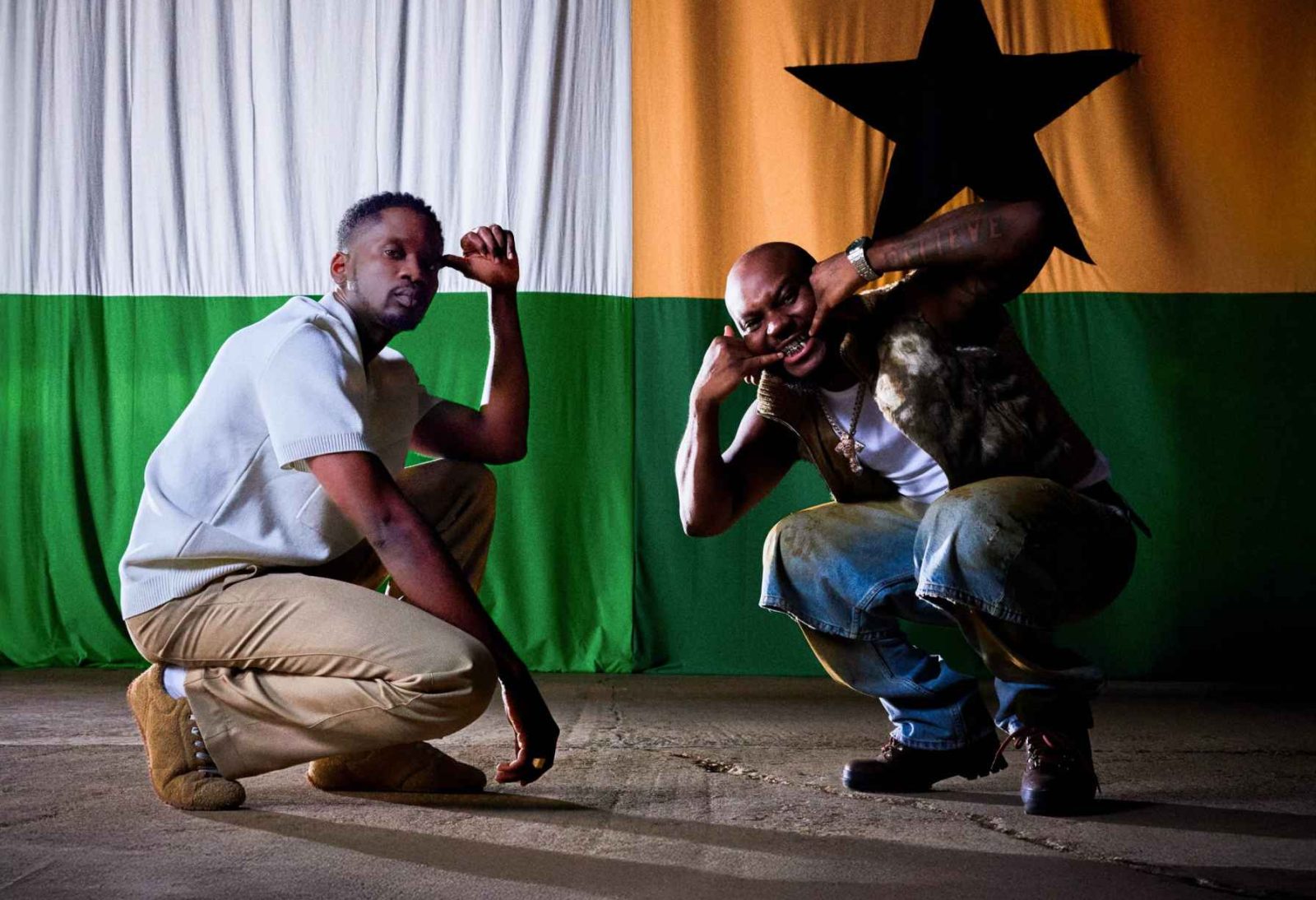

Ultimately, See What We’ve Done stands as an undeniably enjoyable body of work, one that succeeds not by redefining expectations but by executing its chosen direction with confidence and precision.
By Yinoluwa Olowofoyeku
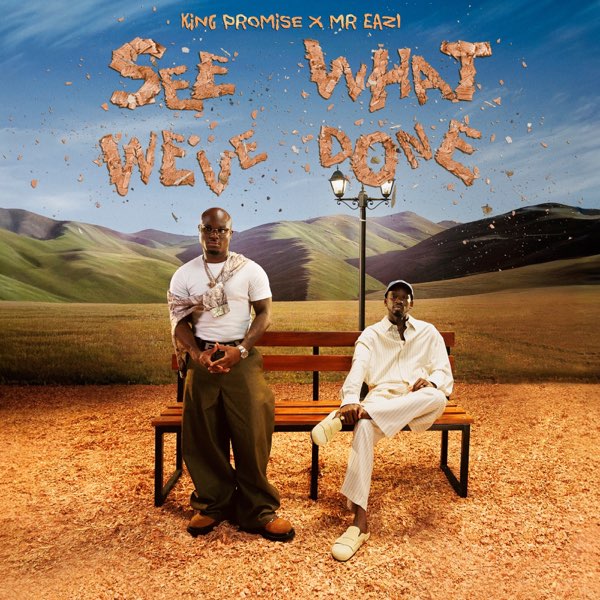
For Mr Eazi and King Promise, See What We’ve Done is less a spontaneous collaboration and more the culmination of a relationship that has been quietly building in the background of Afrobeats for over a decade. Their connection dates back to the early 2010s, when both artistes were still navigating the formative stages of their careers, sharing creative spaces in Ghana and gradually developing a musical rapport that would reveal itself across a series of collaborations, both released and unreleased.
Over time, that rapport evolved into a natural chemistry, one rooted not just in complementary sonic sensibilities but in a shared understanding of rhythm, melody, and cultural identity. In many ways, this joint album feels inevitable, a long-gestating idea finally realised at a point where both artistes possess the clarity, experience, and artistic confidence to execute it fully.
Individually, both artistes arrive at this moment with substantial legacies already in motion. Mr Eazi, widely credited as a pioneer of the Banku sound, a laid-back fusion of Ghanaian Highlife and Nigerian Afro-Pop sensibilities, has played a pivotal role in reshaping the sonic direction of modern Afrobeats. His influence extends beyond music into infrastructure and industry development through initiatives like emPawa Africa, a platform dedicated to nurturing emerging African talent and expanding the continent’s creative economy.
King Promise, on the other hand, has established himself as one of Ghana’s most consistent and versatile hitmakers, blending smooth vocal delivery with a refined pop sensibility that has produced standout records like 2023’s “Terminator” and “Perfect Combi”. His catalogue reflects an artiste deeply attuned to melody and emotion, capable of navigating both commercial appeal and artistic nuance with ease. Together, they represent two distinct but complementary strands of West African music, Nigeria and Ghana, converging into a shared sonic space.
See What We’ve Done is framed explicitly as a reflection, a statement of arrival that looks back as much as it looks forward. As King Promise explains, the title is intentionally direct, an invitation for listeners to take stock of their journey, their individual contributions to African music, and the path that has led them to this collaborative moment. It is not just about accolades or chart success, but about growth, friendship, and the lived experiences that have shaped their artistry. That sense of timing is crucial.
Both artistes have spoken about how the project had been under consideration for years but was delayed by the natural demands of their respective careers. When it finally came together, much of the core material was created in a concentrated burst of creativity, with sessions in London alongside producers like GuiltyBeatz and JAE5 yielding a significant portion of the album within a short span. That efficiency is less a sign of haste and more an indication of maturity, a reflection of how deeply ingrained their creative understanding of each other has become.
Opening See What We’ve Done, “Where Have You Been?” immediately establishes the album’s emotional and sonic foundation with a stripped-back Afroswing palette that prioritizes vocal interplay. Rattling shakers and rolling tom fills sit lightly over a bed of slinky string synths, warm pads, and subtle key stabs, creating an understated groove that leaves ample room for expression.
Mr Eazi steps in first with the familiar cool, almost conversational cadence that has long defined his Banku style, asking with a sense of longing, “I’ve been searching all my life / Baby tell me, where have you been? / Cos I’ve been searching all this time, yeah yeah”. His delivery is relaxed but purposeful, setting a tone that King Promise builds upon with a more melodic, fluid approach.
The interplay between them becomes immediately clear, Eazi’s understated swagger balanced by King Promise’s smooth, emotive singing, with both artists weaving between English and Twi, especially in the bridge, where the cultural blend becomes more pronounced. The song reads as a declaration of long-awaited love, grounded in simplicity but elevated by the chemistry of its performers.
On “That Way”, See What We’ve Done leans into nostalgia and playful interpolation, as strummed guitars usher in a groovy bassline supported by Afroswing drums and layered synth accents. The track directly references the iconic Backstreet Boys 1999 record, threading fragments of its melody and phrasing into a modern Afro-Pop framework.
The result is a familiar but refreshed sonic experience, where both artistes express admiration and desire for a love interest through catchy, conversational lines like “Wetin you dey do me, Nobody dey come close / And when you put it on me, I want ghost / Wetin dey inside your jollof, I want know.” Mr Eazi stretches into a more melodic delivery, occasionally pushing into his upper register with a playful edge, while King Promise remains anchored in his comfort zone, delivering warm, intimate vocals that emphasize affection over flair. The contrast enhances the track’s charm, allowing both perspectives to coexist naturally.
With “Mariana” See What We’ve Done settles into a softer, more tender space, drawing from Amapiano and Afro-Adura influences without fully committing to their heavier rhythmic structures. Gentle acoustic guitar strums, smooth sub bass, and subtle rhythmic guitar accents form a delicate foundation, while restrained percussion and faint string swells add emotional weight.
King Promise takes centre stage here, his delivery precise and emotionally resonant, with clear diction and controlled phrasing carrying lines like “Girl I wanna love you, till eternity / Give you, everything / Spoil you, share my dreams with you / Wanna love you with urgency.” His performance feels sincere and unforced, allowing the sentiment to land cleanly. Mr Eazi complements this with a bilingual verse that flows between English and Twi, reinforcing the romantic narrative with reassurance and grounded presence. The song is brief and uncomplicated in structure, but its execution is refined, making it one of the more quietly effective moments on See What We’ve Done.
The sonic palette shifts on “Taste,” where a more experimental blend takes shape. Four-to-the-floor kicks, rattling shakers, and triplet Afrobeats percussion are layered over rapidly strummed country-style acoustic guitars, creating an unusual but engaging rhythmic texture. King Promise’s layered humming stabilizes the composition, smoothing over the sharpness of the instrumentation with his signature warmth.
Lyrically, both artistes lean into desire and indulgence, with Eazi delivering his lines in a bold, playful manner, “Slow whine for me, come gimme dat / Make I eat your booty out like a KitKat / Caribbean girl, from Trinidad / Pump action, make I fire that”, while King Promise continues to embody the softer, more melodic counterpart. The contrast remains a defining feature, sharpening the dynamic between them even within more provocative territory.
On “Criminal”, See What We’ve Done pivots into Afro-R&B, with shimmering pad chords, nostalgic mallet keys, and a pulsing bassline forming a lush, early-2000s-inspired backdrop. Afropop percussion keeps the rhythm grounded, while synth leads add subtle melodic movement. King Promise delivers the hook with a softness reminiscent of classic Afro-R&B acts, echoing the Styl-Plus era with lines like “Criminal, you’re a criminal / Dressed in black, you’re a criminal / Stole my heart, sexy criminal”.
His phrasing is deliberate, his tone gentle and expressive. Notably, Eazi adjusts his approach here, abandoning his usual laid-back cadence for a more melodic, harmonized delivery that aligns with the track’s emotional tone. The result is a cohesive performance where both artists operate within the same emotional register, enhancing the song’s overall warmth and cohesion.
“Baby I’m Still Jealous” introduces a reflective pause in the album’s progression, functioning as a sequel to their earlier collaboration. Built on a drumless reworking of the original instrumental, with soft guitar strums, electric piano chords, and subtle synth pulses, the track strips everything back to focus on King Promise’s vocal performance. He delivers with restraint and vulnerability, revisiting past emotions with lines like “Some days I miss you / And I still think of what we could have been o / Eazi got married, He married Temi / And I still think of what we could have been”.
The inclusion of sampled vocals from the original song deepens the sense of continuity, making the track feel like a genuine extension rather than a nostalgic callback. It stands out as a rare moment of introspection within See What We’ve Done, offering a glimpse into emotional complexity beneath the album’s otherwise celebratory tone.
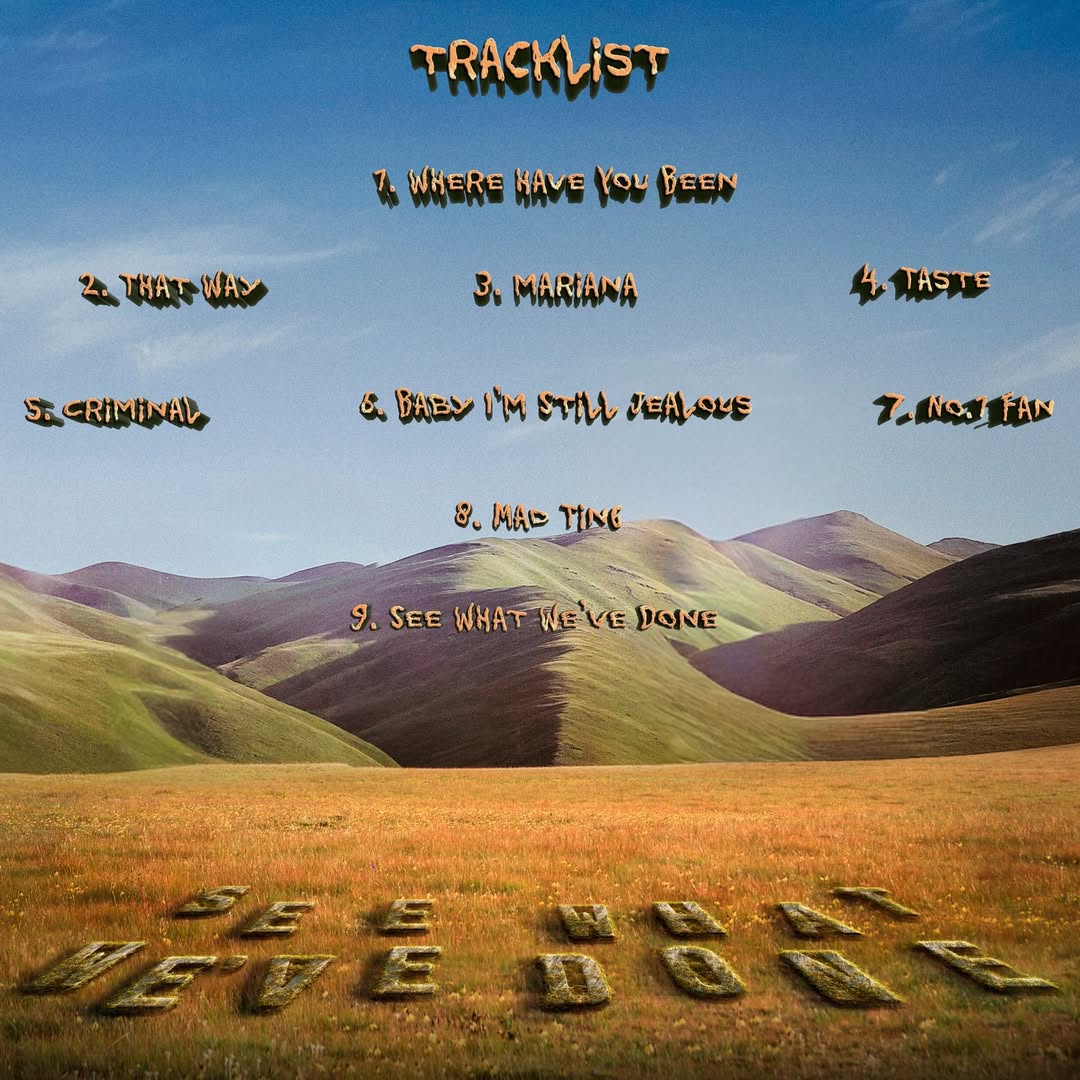
On “No.1 Fan”, the album returns to admiration and affection, carried by a minimal but effective arrangement built on a warm bassline, subtle chord stabs, and light percussive textures. The simplicity of the instrumental allows the vocal performances to shine, with King Promise delivering romantic lines like “If I be Samson, like e be you wey go cut my dread / You geti power over me,” while Eazi reintroduces his playful, suggestive energy with lines such as “I be your personal personal plumber, Come make I pipe you / I be your personal physician, Come make I stretch you”.
The frequent use of Twi alongside English reinforces the cultural grounding of the track, while the layered harmonies and backing vocals add richness to what could have otherwise been a straightforward composition.
“Mad Ting” leans into sensuality with a more rhythmically assertive structure, opening with spacious pads, mallet keys, and sliding electric guitar lines before transitioning into a drum pattern defined by heavy kicks, rapid claps, and sharp snares. King Promise sets the tone with a smooth, laid-back delivery, his harmonies and vocal layering creating a relaxed but immersive atmosphere.
Midway through, Eazi shifts the dynamic, introducing a more varied and animated performance that blends singing and rap, occasionally reaching into falsetto and upper register phrasing. His delivery is playful and confident, punctuated by lines like “Shift your body left and the right, yes / Break your back, Mashup your punani / Me no go lie, I’m excited / To do forever, you and me, my girl / Anytime I see notification, me I jack up,” injecting energy and unpredictability into the track.
Closing See What We’ve Done, its eponymous track serves as an aspirational and celebratory finale, rooted in Afro-Adura influences. Straightforward kick patterns, rattling shakers, rolling log drums, and layered percussion create a vibrant rhythmic base, while a bold synth bass and simple pad chords provide melodic structure.
Here, both artistes fully embrace their braggadocious personas, reflecting on success, growth, and the rewards of their journey. Lines like “Where I dey, me I dey on top / Private room for Louis Vuitton … Gimme the money over the fame, over the fame / See what we’ve done / No be wallpaper, we dey live this life” encapsulate the album’s overarching sentiment. It is a fitting conclusion, energetic, confident, and rooted in the shared narrative that has defined the project from the very beginning.
See What We’ve Done arrives with the weight of expectation that naturally accompanies a collaboration of this magnitude, and the title itself initially suggests something diaristic, perhaps a reflective chronicle of growth, legacy, and lived experience from two artists who have spent over a decade shaping the sound of contemporary African music.
There is an implied promise in that framing, the idea that Mr Eazi and King Promise might use this moment to look inward and outward at once, documenting their journeys as industry figures and cultural contributors. That expectation, however, is not fully realized across See What We’ve Done, as the album instead commits almost entirely to themes of love, lust, and relationships across its runtime, with the closing track standing as the only moment that gestures more directly toward reflection and broader perspective. It is a noticeable limitation, particularly given the depth of experience both artists bring to the table, and it leaves a sense of curiosity about what a more thematically expansive version of the album might have offered.
That said, where See What We’ve Done narrows its thematic scope, it compensates emphatically through execution. The most immediate and consistent strength of the album lies in the vocal performances, which reflect the experience, comfort, and technical command of two seasoned artists who understand exactly how to navigate a record.
From the opening track, there is a clear sense of ease, a natural settling into rhythm and melody that carries through the project. King Promise operates with a silky, controlled finesse, his vocals smooth and emotive, flowing through melodies with precision, layering harmonies and delivering romantic passages with clarity and softness.
In contrast, Mr Eazi brings a more direct and varied approach, blending half-sung, half-rapped cadences with a confident, sometimes brash delivery that introduces texture and contrast. This interplay becomes one of the defining features of See What We’ve Done, with each artist complementing the other’s strengths, creating a dynamic that feels balanced and intentional. The quality of their vocalisation, from enunciation to tonal control to the subtle injection of emotion, underscores the years they have spent refining their craft.
The production on See What We’ve Done, largely shaped by the steady hand of GuiltyBeatz, mirrors this sense of experience and restraint. Rather than overcomplicating arrangements, the instrumentals rely on a focused selection of well-executed elements, crisp drum patterns that maintain rhythmic freshness, carefully chosen melodic layers that establish mood and atmosphere, and clean structural composition that allows each track to breathe.
The sound is polished without being excessive, detailed without becoming cluttered. This balance ensures that the vocals remain at the forefront while still benefiting from rich, supportive backdrops. In its sound engineering, this clarity is further reinforced, with each element occupying its intended space within the mix, resulting in a listening experience where nothing feels misplaced or overwhelming.


Across the nine tracks, there is a consistent sense of sonic cohesion and technical precision that speaks directly to the pedigree of everyone involved.
Where the album finds some limitation is in the depth of its lyricism, a consequence closely tied to its narrow thematic focus. With most songs revolving around variations of romantic desire, admiration, and indulgence, there is limited room for broader exploration or narrative complexity.
While Afrobeats as a genre has not always prioritised lyrical depth in the traditional sense, and neither artiste has positioned themselves as overtly lyrical storytellers, the repetition of familiar phrases and ideas becomes more noticeable over the course of the album. Even so, See What We’ve Done avoids stagnation by leaning into the strengths of its performers.
Rather than allowing the writing to feel overly repetitive or uninspired, both artistes use their experience to inject life into these themes, crafting melodies and vocal moments that remain engaging and memorable. The result is a collection of songs that, while not deeply layered in meaning, are effective in their intent and built for connection, particularly in communal settings where their simplicity becomes an advantage.
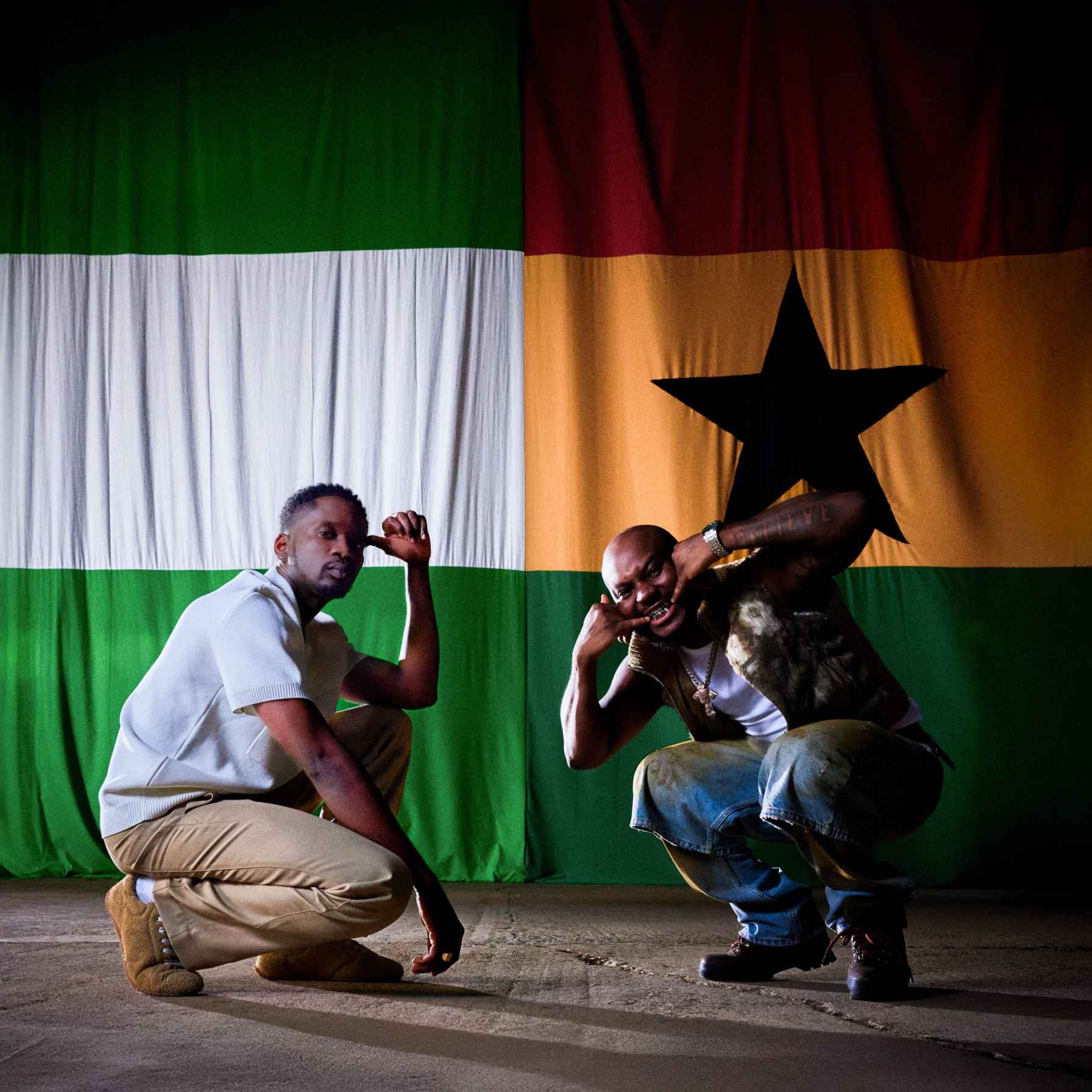
Ultimately, See What We’ve Done stands as an undeniably enjoyable body of work, one that succeeds not by redefining expectations but by executing its chosen direction with confidence and precision.
Regardless of any initial assumptions about what the album might have been, what it delivers is a concise, vibrant, and well-crafted listening experience. Its relatively brief runtime, combined with energetic compositions and the assured presence of two artists operating at a high level of comfort, allows it to move fluidly from start to finish.
The alignment of talent, experience, and chemistry ensures that the project makes the most of its foundations, resulting in an album that is easy to return to, easy to enjoy, and reflective of two artists who understand exactly how to create music that resonates, even within a deliberately contained scope.
Beyond its musical content, See What We’ve Done also occupies a meaningful place within the broader trajectory of Afrobeats. At a time when the genre continues to expand globally, driven by collaboration, cross-cultural exchange, and increasing artistic ambition, this project stands as a reminder of the importance of creative partnership within that ecosystem.
Both Mr Eazi and King Promise position the album as part of a larger continuum, one where each contribution helps to build and reinforce the foundation of the movement. Their collaboration is not just about combining fanbases or creating momentary excitement, but about demonstrating the value of shared vision, mutual respect, and artistic alignment.
In that sense, See What We’ve Done becomes more than a joint album. It is a document of two parallel journeys intersecting at the right moment.
Lyricism – 1.4
Tracklisting – 1.3
Sound Engineering – 1.7
Vocalisation – 1.6
Listening Experience – 1.6
Rating – 7.6/10
Yinoluwa “Yinoluu” Olowofoyeku is a multi-disciplinary artist and creative who finds expression in various media. His music can be found across all platforms and he welcomes interaction on his social media @Yinoluu.