
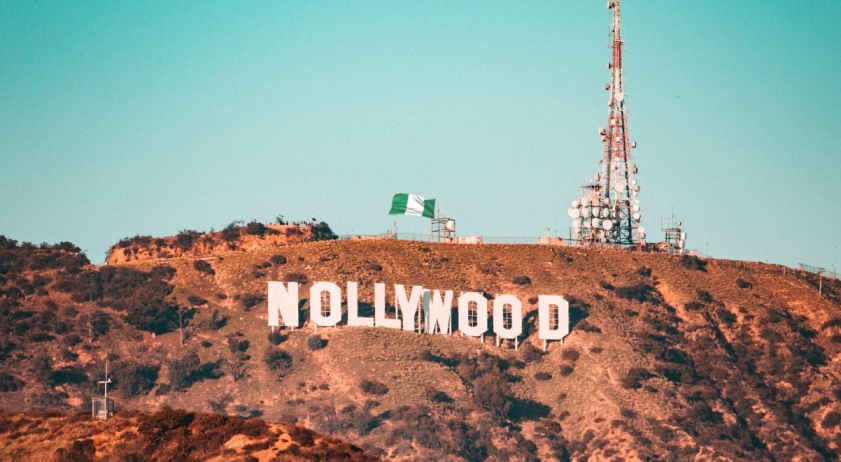

Nollywood filmmakers have proven their capacity for innovation under constraint, time and again, but there comes a point where ingenuity cannot compensate for structural deficiencies and a fundamental lack of investment in craft, infrastructure, and long-term thinking.
By Jerry Chiemeke
I. Nollywood Lately
“What do you think about Nigerian films with regard to conversations around global cinema?”
If I had a nickel for each time I had this question thrown in my direction during a heated panel following the screening of a Nollywood film in London, I would have three nickels, which doesn’t add up to a lot, but it may be weird that it’s happened thrice within a five-month period.
…or maybe it isn’t. Perhaps there are people in the diaspora who want to hear the truth about an ecosystem that is bustling (or at least appears to be) from someone who cares about how his natal country is perceived. Perhaps they are curious to hear elaborate detail about the current state of a landscape that produces around 2,500 films annually and is (or boasts of being) the world’s second-largest film industry, but has struggled to translate this size and volume to relevance on a grander scale, which is bemusing given the potential for diverse stories.
Film industries in Africa have had to deal with protracted waves of volatility over the decades, but Nollywood in particular has had to ask difficult questions of itself, and understandably so: investment of resources by external players has not yielded dividends (certainly not to a desired volume), and memes or pop culture trends simply do not translate to meaningful soft power of any sort. Individual triumphs, be it a huge box office sweep or runaway critical acclaim in the festival circuit, cannot be heralded as industry growth, even as they are pointers to what is possible if prospects are duly harnessed.
II. Don’t Let Those Numbers Fool You, We Are Not Growing
Since 2024, major streamers have ceased commissioning original productions and significantly downsized investment in Nigerian features. In 2025, only 24 Nigerian titles were licensed by Netflix, with over 80% of them geoblocked—Baby Farm and To Kill A Monkey were two of the few shows accessible outside Africa. For perspective, the streaming giant licensed 19 titles in the first half of 2023 alone.
A lot of reasons have been adduced for the scale-back, from the unprofitability of the Nigerian market—sheer population isn’t synonymous with economic stamina—to the dearth of quality in stories greenlit for viewing, but away from the Blame Olympics and Fingerpoint Games, Nigerian filmmakers have had to turn elsewhere to platform their works, considering that the benefactors have all but walked out the door.
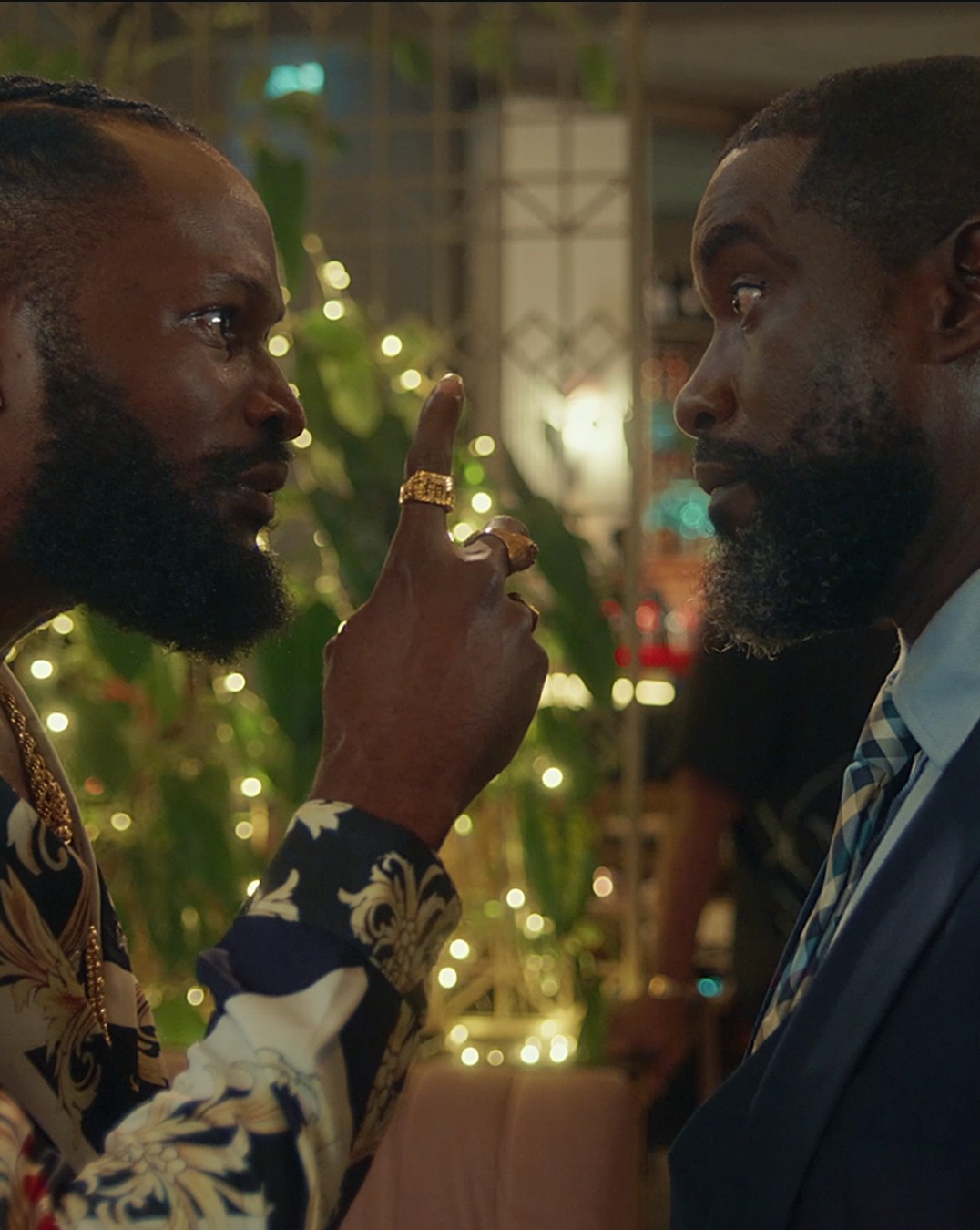
This has, inevitably, culminated in a reignited focus on cinematic releases. In 2025, more than 81 Nollywood titles premiered at movie theatres, compared to 73 films from the year before. Ostensibly, the figures seem propitious: box office numbers have risen from ₦5 billion in 2021 to ₦15.6 billion in 2025. But it’s important to view this in context: according to FilmOne, in 2021 there were 3.3 million admissions in total with tickets priced at an average of ₦1,512, while 2025 recorded 2.79 million admissions with movie tickets now costing ₦5,596 on average. Accounting for inflation, that’s hardly a victory that should be held out as “immense growth.”
In any case, for a country’s movie industry to achieve global success, it must be successful outside its home market. Nollywood, however, has struggled to produce breakthrough films that resonate commercially with global audiences. None of its highest-grossing films has generated significant revenue outside Nigeria. Even the most successful Nollywood film of all time, Funke Akindele’s Behind The Scenes, has earned approximately $1.7 million domestically with virtually no international box office. The scale disparity is stark. Per international valuation, Nigeria’s entire 2025 box office revenue totalled approximately $11.52 million, less than what major Hollywood blockbusters earn on their opening day in a single market. For comparison, Deadpool & Wolverine earned $96 million on its opening day in the US and Canada alone, while Inside Out 2 collected $62 million on its opening day in the same market.
Sure enough, jostling for commercial success in a terrain where only about 118 cinema theatres are catering to over 200 million people would always be an uphill task. But there’s also the additional impediment of being at the mercy of distribution chains. In Nigerian cinemas, operators assign better showtimes to titles with bigger budgets, riding on the assumption that such films would draw in larger audiences, ergo more revenue. Some would argue that this is inevitable from a business standpoint, but whatever happened to creating a level playing field? How does a film with a smaller budget stand a chance when it only shows for three weeks at cinemas, with time slots placed at working hours on weekdays and screenings fraught with “technical issues” that reek of sabotage? During the theatre run of Akay Mason’s Red Circle in June 2025, moviegoers who tried to see the film complained about being stuck in uncomfortable halls, or watching in dismay as screens went off mid-movie. In December, directors Niyi Akinmolayan, Ini Edo and Toyin Abraham expressed their displeasure over what they deemed “unfair practices” perpetrated by cinema distributors in refusing to honour agreed-upon screening schedules for their respective films, Colours Of Fire, A Very Dirty Christmas, and Oversabi Aunty. This concentration of influence in the hands of a few key players is inimical to the industry’s developmental targets.
III. Will NollyTube Be the Death of Our Storytelling?
By some twist of fate, NollyTube (the term I coined in 2024 for Nollywood films distributed directly on YouTube) has emerged as a **viable** revenue model for Nigerian filmmakers over the past few years. Unlike traditional theatrical releases or premium streaming platforms that require significant capital and industry connections, YouTube’s open-access platform has democratised film distribution. Would we have had so many actors and directors flock there if the big streamers had not pulled back resources? To lean into Kanye-esque verbiage, I guess we will never know, but it currently functions as a repository for hundreds of Nigerian stories.
Producers like Omoni Oboli, Bimbo Ademoye, and Bolaji Ogunmola have leveraged this model to build substantial audiences and generate revenue through ad monetisation, reaching millions of viewers without the gatekeeping mechanisms that historically controlled Nollywood’s distribution channels. Oboli’s Love In Every Word and its sequel Love In Every Word 2: The Wedding garnered 31.1 million and 21 million YouTube views respectively, and for some reason, these figures are meaningful in modern Nigerian film discourse.
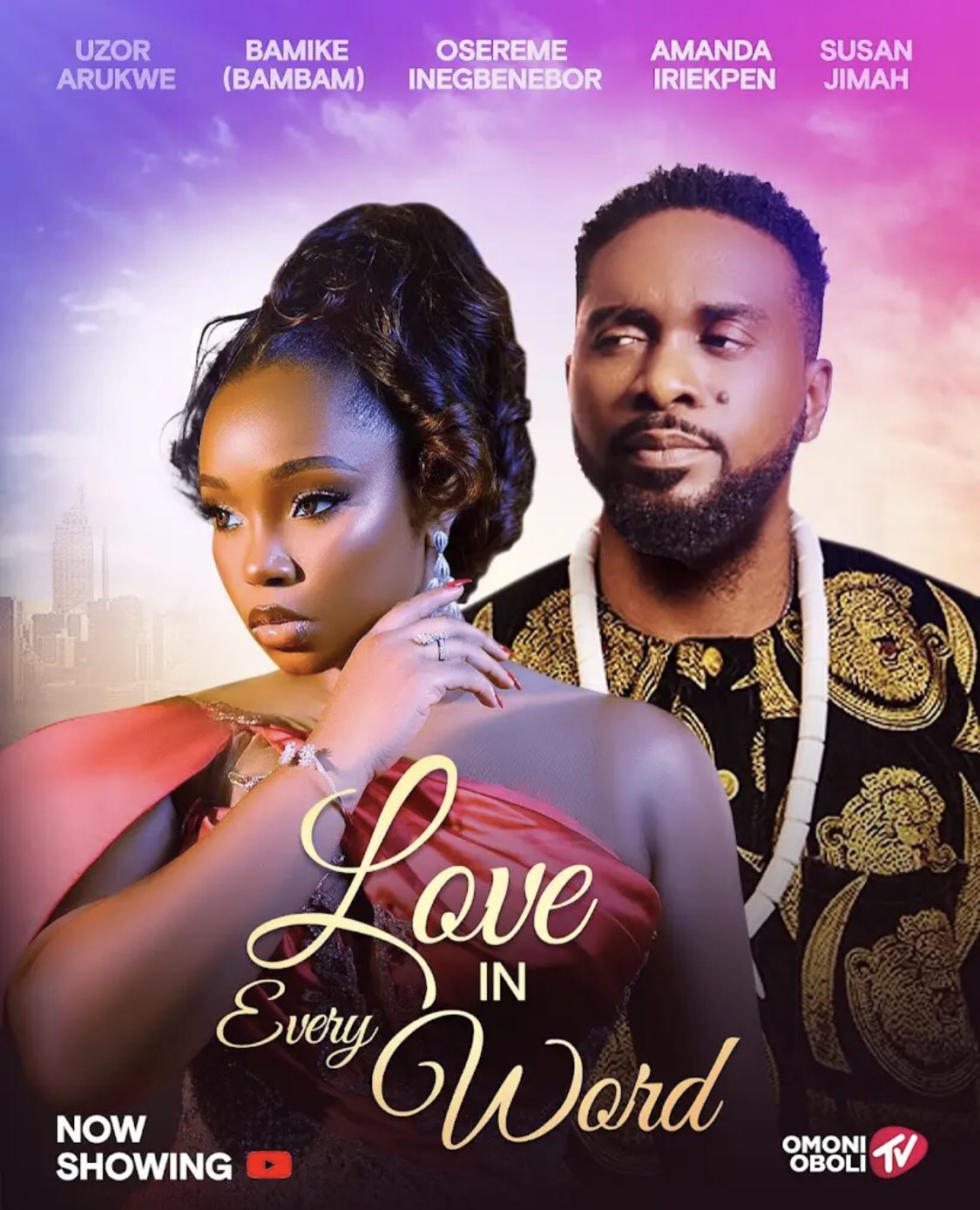
The appeal of NollyTube content lies in its accessibility and relatability. These films, predominantly low-stakes romantic comedies with saccharine premises, resonate deeply with Nigerian adult audiences both at home and across the diaspora, offering comfort viewing that provides some escapism without the heavy drama or high production values that characterise prestige cinema. Actors like Eso Dike, Bamike Olawunmi, Uzor Arukwe, Detola Jones and Michael Dappa have cultivated devoted followings, becoming household names through their recurring presence in these easily digestible stories. The tropes are silly for the most part, but by God, the people seem to love it. Apologies to my friend Cindy; I know that I had promised to facilitate an introduction with Frederick Leonard.
But as with all things Nigerian, the gift comes with the curse. The lack of barriers to entry also presents a situation where we have to deal with an acute lack of… well, other things. The pressure to maintain constant content output has led to production timelines that can span as little as four days, a pace that inevitably compromises storytelling quality. Channels have fallen into patterns of recycling the same actors and retreading familiar storylines, creating a homogeneous landscape where one romcom bleeds indistinguishably into the next. The assembly-line approach to filmmaking, while feasible in the short term, sacrifices narrative depth, character development, and creative risk-taking. If you look into a mirror and utter “Maurice Sam” three times, you’d suddenly find yourself performing cinematography duties on a feature where the short-fused protagonist is enamoured of his personal assistant, with an absurd title to boot.
Complaining about the quality of the stories that permeate NollyTube is one thing, but having to worry about seeing one screenplay duplicated across three different productions is downright ridiculous.
In January 2025, Oboli had to pull down her film A Different Type Of Love following allegations of copyright infringement, on grounds that it bore similarities to Hope Given, a production released on Susan Jimah’s YouTube channel in 2023. Further conversations revealed that between 2022 and 2024, one Jayne Nwachukwu had “sold” the same screenplay to Oboli, Jimah and two other producers. Christmas ushered in a legal snafu to close out the year as actor Baaj Adebule starred in productions on two different channels with similar plots and characters, Lily Perez Films’ A Kristmas To Love and ChinnyLove Eze’s George Hates Christmas, the former claiming that copyright had been flagrantly violated.
With such a wonky system of production where films are churned out at the speed of baking meat pies, it’s hardly surprising to stumble on reports of tensions boiling over. When actors and crew members are made to work in gnarly conditions over a period of months, the most probable outcome is a disaster of huge proportions.
In November 2025, actor Taye Arimoro and producer Peggy Ovire got into a heated confrontation on a movie set, which ultimately escalated into a physical altercation. In a befuddling turn of events, the Directors Guild of Nigeria (DGN), Actors Guild of Nigeria (AGN) and Association of Movie Producers of Nigeria (AMP) deemed Arimoro the primary aggressor (in spite of video evidence hinting at the contrary) and ruled that he be “suspended from all Nollywood productions until further notice.” Since the decision was made public, however, Arimoro has featured in multiple NollyTube productions. But this is not the essay where we discuss the relevance (or lack thereof) accorded to guilds and trade unions in the industry’s current iteration.
IV. Should **Nollywood** Arrogate the Critical Success of Arthouse Films?
At last year’s edition of Festival De Cannes, Akinola Davies Jr.’s feature-length debut My Father’s Shadow made history as Nigeria’s first official selection at the festival, competing in the Un Certain Regard section and earning a Camera D’Or Special Mention. Following an impressive festival run with screenings at the Toronto International Film Festival (TIFF) and the BFI London Film Festival, the film has gone on to win several awards, including the British Independent Film Award (BIFA) for Best Director and two Gotham Awards for Best Breakthrough Director and Outstanding Lead Performance (for Sope Dirisu). It has also received a BAFTA for Outstanding Debut.
I think My Father’s Shadow is brilliant (especially because it’s semi-autobiographical), nostalgic, and functions as a love letter to Lagos, amid its unique exploration of Nigerian masculinity. But I do not regard it as a **Nollywood** film; Davies Jr. will disagree with me (if he gets to read this), but I promise that I mean well. The same goes for C.J. “Fiery” Obasi’s Mami Wata (2023) as well as Arie and Chuko Esiri’s Eyimofe (2020). While these productions are Nigerian at their core, belong to a canon of arthouse films featuring stories that go against the grain, and exist as metaphors for variety in our filmmaking, it is not exactly preposterous to assert that they may not identify as Nollywood films in the strict sense of the word.
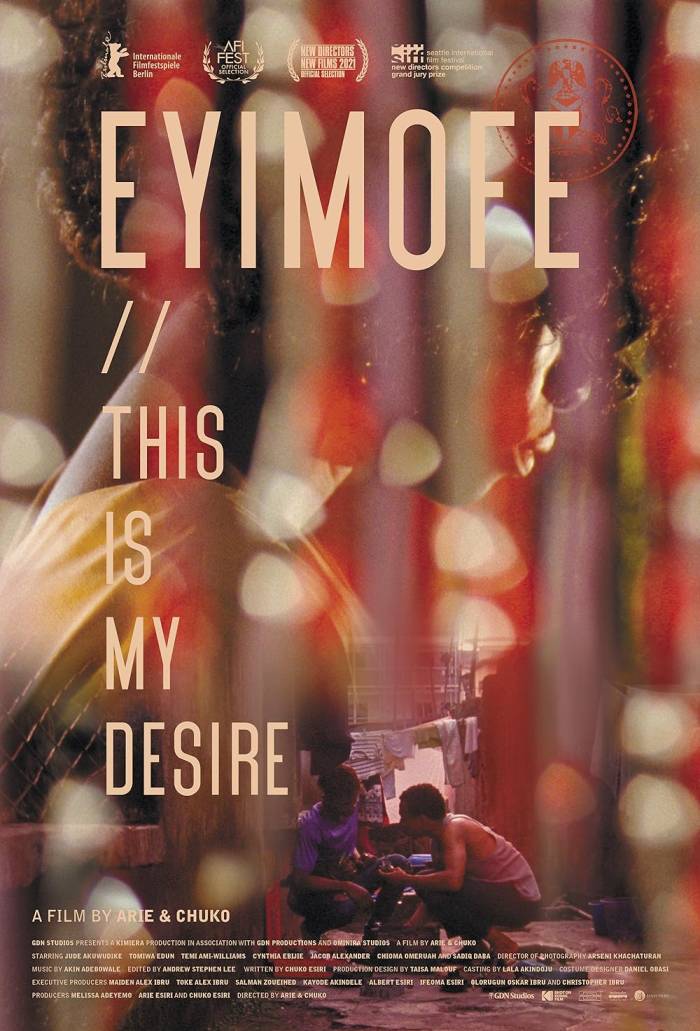
From a perspective of fellowship, how eagerly does the wider industry (by way of its stakeholders) embrace these films? Are their theatre runs supported without manipulating showtimes? Haven’t we stumbled on certain filmmakers derisively referring to their colleagues as “festival directors”?


Demanding that we expunge Davies Jr.’s masterpiece from Nollywood’s end-of-year lists may be too much to ask, but at least I can argue for an asterisk to be placed alongside it. Then again, consider that it was selected as the United Kingdom’s entry for Best International Feature Film.
V. Alternative Models as Hail Marys
Nigerian creatives have a penchant for finding windows when doors close. With limited domestic infrastructure and revenue, the country’s filmmakers have become structurally dependent on film markets and development labs as essential pathways for funding, development, and international exposure. James Omokwe’s historical drama Osamede and Gbolahan Peter Macjob’s Ireke: Rise of the Maroons, both indigenous-language epic films, premiered in May 2025 at the Cannes Film Market. Omotola Jalade Ekeinde’s directorial debut, Mother’s Love, screened at the TIFF Lightbox 5 for an audience of distributors, sales agents, and international industry delegates in September 2025.
Producers and directors are also latching on to another strategy in working their way around the shrinking revenue streams. By partnering with production companies and talent from other markets, they attempt to get one foot in the door. More cross-national feature films are coming to life, and we should expect to see an uptick of these projects in the near future. One Woman One Bra, a Kenyan-Nigerian coproduction, made its world debut at the Venice Film Festival in August 2025, an outcome of its selection for the festival’s Biennale College Cinema programme in 2024.
Son of the Soil, an action thriller filmed entirely in Lagos and whose African theatrical rights were acquired by Nile Entertainment, was birthed by a collaboration between Action Xtreme (a genre label of UK production company Sovereign Films) and Wingonia Ikpi’s Boxonia Blueprint.

In August 2025, Inkblot Studios’ Chinaza Onuzo and Filmhouse Group’s Kene Okwuosa announced the launch of KAVA, a Nollywood-focused streaming app. The co-founders have talked a good game, claiming to hold the solution to the industry’s creator compensation puzzle. KAVA’s proposed hybrid licensing model promises ongoing stakes for content creators, but whether the platform can deliver on this remains to be seen. There’s also the small matter of Inkblot being the studio that cranked out movies like A Lagos Love Story (2025), Japa (2024), No Way Through (2023) and Charge and Bail (2021), so scepticism is by no means misplaced.
VI. Parting Notes
Nigerian filmmakers have proven their capacity for innovation under constraint, time and again, but there comes a point where ingenuity cannot compensate for structural deficiencies and a fundamental lack of investment in craft, infrastructure, and long-term thinking. The harsh reality confronting Nollywood is that survival mode has become the default setting, and you cannot build an industry worth its salt when everyone is simply scrambling to stay alive. This current trajectory is not a sustainable path forward.
Transition is not a state we are unfamiliar with: we have had to navigate moments of inertia right before VHS machines and DVD players gave way to Cable TV at the turn of the millennium, and there was a lull that preceded the resurgence of cinema culture in Nigeria by the end of this century’s first decade. The difference this time is that the world is paying more attention compared to previous epochs, and we have not been quite honest with acknowledging how far off we are from where we need to be.
Asserting that Nollywood is caving in or on its last legs would be presumptuous in multiple respects, but it’s imperative for stakeholders in the ecosystem to move far outside the bubble of press releases in trade publications. This thing of ours is in a state of flux, and while it is true that we shouldn’t necessarily pander to external validation, the fact remains that we are playing on a global stage, and our current model is not tenable if our stories, personnel and structure are to be taken seriously. With consumer fatigue in Hollywood at an all-time high (amid multiple reboots and diminishing returns of CBM franchises), there’s a golden opportunity for Nigerian stories to take centre stage and garner sustained international spotlight like our Indian and South Korean counterparts have done since the turn of the 2010s. But we can’t do it like this, not while our films wear the look of poorly glued wigs holding on for dear life. Until we do the much-needed, long-overdue introspection that our industries require, we will always find ourselves here, teetering on the brink, pulling ourselves by our bootstraps now and again, requiring defibrillators at intervals when we could be sprinting into the wild as we bask in our peerlessness.
Across several weeks in the summer of 2025, I was in frequent correspondence with a French filmmaker. We had intended to co-direct a short, and while that plan (among other things) fell through, I was intrigued by her interest in African cinema. During one of our long conversations, she had requested that I mention some “great modern Nigerian movies” to serve as an introduction to current Nollywood for her and her associates. I hate that it took me one hour to revert with just about nine titles—for a moment, I felt like Abraham pleading Sodom’s cause and hoping that a righteous few could be found within the city walls—but I like to think that it wasn’t my fault. I shouldn’t have to rack my brains for so long if we were more intentional about the quality and delivery of our stories.
*This essay, among other cultural essays, is published in The Afrocritik Report 2025. Download the report here.
Jerry Chiemeke is a Nigerian-born writer, film critic, journalist, and lawyer based in the United Kingdom. His writing has appeared in Die Welt, The I Paper, The Africa Report, The British Blacklist, Berlinale Press, The Johannesburg Review of Books, Culture Custodian, Olongo Africa, and elsewhere. Chiemeke’s work has won or been nominated for the Pushcart Prize, Ken Saro Wiwa Prize, Diana Woods Memorial Award for Creative Nonfiction, Best Small Fictions, and the Quramo Writers Prize. He is the author of the critically-acclaimed short story collection, Dreaming of Ways to Understand You. For his work as a writer and critic, Chiemeke has been invited to the Sundance Film Festival, Berlinale, Toronto International Film Festival, BFI London Film Festival, Lagos Book and Art Festival, and Abuja International Poetry Festival.