


The Nigerian usage of arthouse is less an error than an adaptation. It is a local vocabulary shaped by local conditions. Rather than asking why audiences have failed to adopt the standard definition, we should ask why the Nigerian film industry has produced a different one.
By Joseph Jonathan
I. The Misdiagnosis
I have watched this argument happen enough times now to recognise its shape before anyone finishes the sentence. A Nigerian film premieres at a major international festival to enthusiastic reviews. Critics celebrate its visual ambition, its formal experimentation, its emotional restraint. Months later, it opens in Nigerian cinemas, and the reaction is markedly different. Some viewers admire it. Others leave disappointed, confused, unmoved. Before long, the debate hardens into two familiar positions.
The first is that Nigerian audiences simply do not understand “arthouse” cinema, that with enough exposure to slower, more formally adventurous films, they would eventually learn to appreciate them. The second is almost the inverse: these films were never really made for Nigerian audiences in the first place. They belong to the international festival circuit, not the local multiplex, and shouldn’t be judged by domestic commercial standards.
Both explanations locate the failure in people. One blames the audience for lacking the right cinematic vocabulary. The other assumes the filmmaker chose to speak a language the audience was never meant to understand. Neither explains why this same conversation keeps recurring, or why the word arthouse has acquired such a specific, narrow meaning within Nigerian film culture in particular.
As I argued in a previous essay, arthouse is neither a genre nor a synonym for “festival film”. It is a broad cinematic tradition with a long, contested history; one that cannot be reduced to pacing, symbolism, or box-office performance. Yet in Nigeria, those distinctions collapse into a single, catch-all label. Films as formally different as Eyimofe (2020), Mami Wata (2023), and My Father’s Shadow (2025) are routinely discussed as though they belong to the same category, not because they share an artistic lineage, but because they occupy a similar place within the country’s contemporary film ecosystem.

The interesting question isn’t why Nigerian audiences use the word loosely. It’s how they came to use it that way at all.
The real story isn’t in the audience. It’s in everything that happened to a film long before anyone bought a ticket: how it was financed, where it was shown first, who wrote about it, and what institutions did or didn’t carry it home. People don’t learn cinematic categories in the abstract. They learn them through repeated encounters, and over time those encounters produce habits of recognition that teach audiences what kinds of films belong together.
That doesn’t mean every Nigerian viewer would embrace an Eyimofe or Mami Wata if the country’s film infrastructure looked different. Taste is irreducibly personal, and no cinematic tradition has ever appealed equally to everyone. My claim is narrower: audiences can only classify films using the signals actually available to them. When those signals consistently point in one direction, the resulting classification isn’t a misunderstanding. It’s a rational response to the conditions under which the cinema was produced, circulated, and encountered. The recurring debate over arthouse cinema isn’t primarily a story about audience failure. It’s a story about infrastructure.
II. How “Arthouse” Got Its Nigerian Meaning
No audience arrives at the cinema with a ready-made taxonomy of film. Horror, romantic comedy, epic, blockbuster; these are not natural classifications but cultural ones, acquired through repeated exposure to films, marketing, criticism, conversation. Arthouse is no different. What differs is how the lesson gets taught.
In film cultures where art cinema has long been sustained by dedicated institutions, audiences encounter the term through a fairly stable set of relationships. A film may play at a festival, but it’s also likely to get a proper theatrical release in dedicated arthouse cinemas, be discussed in specialist publications, screened at cinémathèques, programmed by universities, broadcast on public television. Arthouse comes to signify a tradition — defined by history, artistic ambition, and mode of spectatorship — rather than any single industrial marker.
Nigeria has followed a different path. For many viewers, the first encounter with the word doesn’t happen in a film studies classroom or a specialised cinema. It happens in the publicity around a particular kind of release. A film premieres at Cannes, Berlin, or Toronto. It returns carrying festival laurels. It has often been financed, at least in part, through international partnerships. Its theatrical run, if it gets one, is short. Critics praise it in a register that feels a little more academic. Box-office conversation shifts quickly from commercial performance to artistic merit. Over time, these associations harden into a pattern.
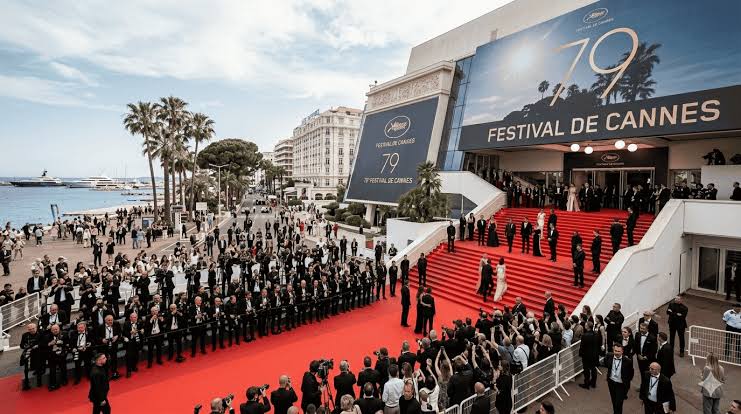
Audiences aren’t responding to one isolated characteristic. They’re responding to a cluster of signals that keep appearing together: festival recognition, international co-production, a restrained marketing campaign, a quieter storytelling style, limited theatrical visibility, strong critical acclaim. None of these defines arthouse cinema on its own. But when they repeatedly travel together, they start to function as cultural shorthand.
That’s how categories get learned, not through formal definition, but through repeated encounters. From the audience’s side, the inference is entirely reasonable. If the films consistently called arthouse keep arriving through the same industrial pathway and generating the same kind of public conversation, then “arthouse” naturally comes to mean that whole package, rather than a more historically precise tradition. The category reflects the experience of encountering these films. It isn’t a misreading of film history; there was no reading of film history on offer to begin with. The Nigerian usage of arthouse is less an error than an adaptation. It is a local vocabulary shaped by local conditions. Rather than asking why audiences have failed to adopt the standard definition, we should ask why the Nigerian film industry has produced a different one. That question leads beyond language and into the institutions that make particular ways of seeing and naming cinema possible.
III. Why Arthouse Is Legible Elsewhere
Film cultures don’t just produce films. They produce the conditions that make those films intelligible. The difference between an arthouse tradition that’s widely recognised and one that stays culturally ambiguous isn’t the quality of the films. It’s the network of institutions around them; institutions that teach audiences how a film is meant to be encountered, discussed, and placed within a larger history, distributed across exhibition, funding, criticism, and circulation.
Commercial multiplexes are not, in a mature film culture, the only place films are expected to live. Alongside them exist repertory theatres, cinémathèques, independent venues, university film societies; spaces built to programme work that will never compete for a blockbuster audience. A viewer walking into one of these spaces already knows they’re entering a different set of expectations. The venue itself is doing some of the interpretive work before the film even starts.
Nigeria offers comparatively few such spaces. Commercial multiplexes dominate theatrical exhibition, and nearly everything (broad comedies, action spectacles, formally experimental dramas) ends up competing in the same commercial environment, on the same handful of screens. There is no Nigerian equivalent of the repertory house or the cinémathèque: no venue whose business model exists specifically to protect a difficult, low-attendance film long enough for an audience to find it.

Funding tells a related story, though the shape of the gap is worth being precise about. Nigeria is not without film funding — government vehicles like the Creative Industry Financing Initiative of the Central Bank of Nigeria (CBN), the NEXIM-administered creative loan scheme, and the newer Creative Economy Development Fund have moved real money into the industry, alongside Afreximbank’s continent-wide creative economy facilities. But nearly all of it is structured, sensibly, around commercial viability: a business plan, a revenue projection, proof the loan comes back. There is no Nigerian equivalent of a public fund built specifically to subsidise work because it’s unlikely to make money — which is exactly why a film like My Father’s Shadow gets financed through the BFI and BBC Film rather than any domestic body built for that purpose.
Criticism does work that’s easy to underrate. At its best, it doesn’t just judge a film, it hands audiences the language to describe what they’ve seen, the way decades of Cahiers du Cinéma and Sight & Sound trained entire reading audiences, not just reviewed films for them. Nigeria’s critical ecosystem has grown seriously over the last decade — Afrocritik, WhatKeptMeUp, Culture Custodian, NollyCritic and others are doing real long-form work — but it remains young and comparatively small, still largely freelance, still spread thin across a handful of outlets and a great many individual X threads and Instagram pages doing the work without institutional backing behind them.
Much of the public conversation around film still unfolds through promotional interviews, social media reactions and review scores rather than sustained critical engagement. The result is not an absence of criticism but a more limited system for developing and circulating shared critical vocabularies. A critical culture capable of shaping how millions of people talk about film takes decades to build. Nigeria’s is, charitably, a few years into that process.
Distribution compounds all three gaps rather than sitting apart from them. The typical route for a Nigerian festival film runs: festival abroad, a gap of months, a short local cinema run competing for scarce screens against whatever commercial title opens the same week, then streaming (if you’re lucky). The festival audience meanwhile met the film through catalogue notes, post-screening conversations with the director, critics with months of lead time. Two audiences, two systems of introduction: one that explains itself extensively before the lights go down, one that mostly doesn’t.
None of these institutional gaps, on its own, decides how any one viewer responds to any one film. Together, they shape the environment where meaning gets made; what a viewer expects walking in, what language is available walking out, what categories the whole experience eventually gets filed under. It’s in that environment, not in any individual viewer’s understanding, that the Nigerian meaning of arthouse took its current shape.
IV. What Infrastructure Actually Produces
Infrastructure gets discussed, usually, in things you can count: cinemas built, grants awarded, festivals held. Those numbers matter. But infrastructure also produces things that don’t show up in a count. It produces expectations. It produces habits. It produces vocabulary. It produces the very questions an audience learns to bring into a film. By the time the lights go down, a viewer has already been interpreting the film for weeks: a trailer, a poster, the cast list, a festival laurel, a friend’s tweet. None of that is private. It’s social, built from repeated encounters with similar films moving through similar pathways, and over time those repetitions become the framework a new film gets read against.
A viewer is entirely free to find a slow, contemplative drama distant, and another viewer entirely free to find the same film moving. Infrastructure doesn’t touch that, and shouldn’t try to. What infrastructure does is make the kind of experience a film is offering legible in advance.
In a culture where audiences regularly meet films that favour atmosphere over plot, ambiguity over resolution, observation over spectacle, those choices become familiar possibilities rather than surprise departures. A viewer can still reject the film, but they’re rejecting something they recognise for what it is.
Disliking a musical isn’t the same as being unsure whether the film was trying to be a musical. Rejecting an experimental film isn’t the same as wondering why it refuses the shape of a conventional drama. One is a matter of preference. The other is a matter of classification, and it’s the second one infrastructure actually governs.
Where the institutional pathways I’ve described are thin, an audience reasonably falls back on whatever signals are most consistently available: festival recognition, international circulation, restrained marketing, critical acclaim. The resulting vocabulary differs from the one in film-history books, but it reflects, accurately, the environment that produced it.
Infrastructure doesn’t just determine which films get made. It shapes what becomes thinkable about them; not only what an audience watches, but what conceptual tools they carry into the room. Once that’s clear, the whole Nigerian debate over arthouse looks different. The issue was never whether audiences hold the correct definition. It’s whether the institutions around Nigerian cinema have ever produced the conditions that would make a precise definition meaningful in everyday life.
V. Why Festival Films Feel Different
There’s no universal pace at which arthouse films unfold, no mandatory visual style, no required dose of ambiguity. Art cinema has always covered a wide range of formal approaches but audiences rarely meet a film as an isolated object. They meet it through a context that shapes expectation before interpretation even starts.
That’s why Eyimofe, Mami Wata, and My Father’s Shadow keep getting discussed inside the same conversation despite real differences in style, tone, and construction. They don’t resemble each other because they share a formula. They’ve occupied a similar position in the ecosystem: moving through the same institutional spaces, drawing the same kind of critical attention, becoming attached to the same public conversation about festivals and artistic ambition and commercial reception. For an audience, those recurring associations become part of the film itself.
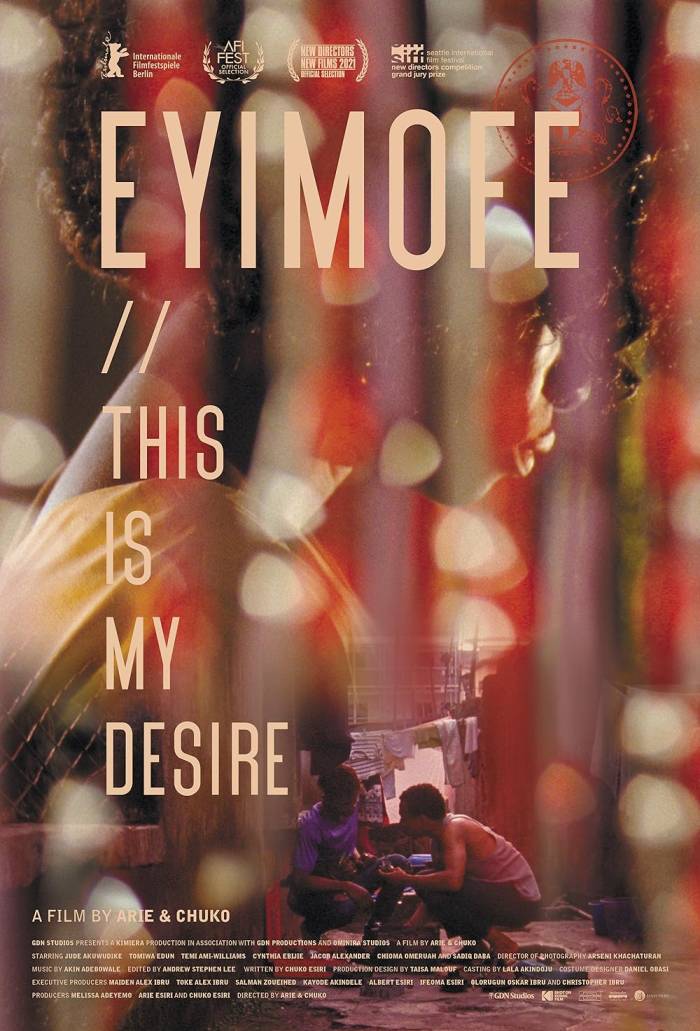
No viewer consciously reasons, “this film premiered at Cannes, therefore it must be arthouse”. Recognition rarely works that deliberately. It works by accumulation: a certain kind of publicity, a certain register of critical discussion, a certain industrial pathway, encountered together often enough to start feeling like one thing. The feeling that a festival film is “different” is real.
What’s worth interrogating is where that difference actually lives. It’s tempting to locate it entirely inside the film; its pacing, its symbolism, its visual restraint. Those qualities matter. But they don’t, on their own, explain why audiences keep grouping wildly different films under the same label. The stronger explanation sits outside the work itself, in the shared pathway that financed it, moved it, and delivered it to a room.
Therefore, “festival film” functions less as a description of form than as a description of industrial experience, a record of how a film travelled, not what it is. The meaning attached to a film is never made on the screen alone. It’s made, just as much, by the institutions that frame its arrival.


VI. A Crisis of Legibility
The debate over arthouse cinema in Nigeria usually gets framed as a disagreement about taste. Do audiences appreciate these films? Are critics overvaluing them? Should filmmakers chase broader appeal? Underneath all three questions is a more basic problem: a crisis of legibility.
Legibility is what lets a cultural object be recognised for what it is. It doesn’t require admiration. A viewer can dislike a musical while knowing exactly what a musical is. They can reject magical realism without mistaking it for documentary. Classification doesn’t guarantee appreciation; it just gives two people a shared floor to disagree on.
The difficulty in contemporary Nigerian film culture is that this shared framework remains uneven. The historical meaning of arthouse cinema, developed over decades of critical writing, exhibition practices and institutional support, sits alongside a distinctly Nigerian understanding of the term; one shaped by festival circulation, international co-productions, limited theatrical visibility and the contemporary realities of the local industry. Neither vocabulary emerged by accident. Each reflects the environment from which it grew. The friction arises when these two systems of classification are treated as though they were interchangeable.
Critics may use arthouse to describe a cinematic tradition with a specific historical lineage stretching from post-war Europe through Third Cinema to contemporary global art cinema. Audiences may use the same word to describe a recognisable industrial pattern: the kind of film that premieres internationally, travels through festivals and returns home accompanied by a particular style of critical conversation.
Both groups are describing something real. The problem is that they are not always describing the same thing. Recognising this distinction changes the terms of the debate. Instead of asking whether audiences have misunderstood arthouse cinema, we can ask whether different parts of the Nigerian film culture are operating with different vocabularies because they inhabit different institutional realities. That is a more productive question. It moves the conversation away from assumptions about intellectual deficiency and towards the structures through which cultural meanings are formed.
More importantly, it reminds us that criticism is not simply the act of correcting public language. It is the work of understanding how that language came to exist in the first place. The recurring disagreements over arthouse cinema are less a sign of cultural failure than of an industry still in transition. Nigerian cinema has expanded rapidly over the past two decades, developing new funding models, new audiences, new critical voices and new relationships with global film culture. It is hardly surprising that its vocabulary is evolving as well.
The task, then, is not to insist that one definition immediately replace the other. It is to recognise why the gap exists, to describe it accurately and to build the conditions under which more precise forms of classification can gradually take root. That is not a crisis of taste. It is a crisis of legibility.
VII. What an Evolved Film Culture Would Look Like
If the Nigerian meaning of arthouse has been shaped by the conditions under which audiences have encountered certain films, then a more precise vocabulary cannot emerge through correction alone. It must emerge through cultural development.
Film cultures mature not because everyone begins to like the same kinds of films, but because they become capable of sustaining many different kinds of cinema at once. That maturity is reflected in institutions as much as in individual works: in exhibition spaces that accommodate different viewing traditions, funding ecosystems that support artistic diversity, criticism that expands rather than narrows public conversation, and distribution networks that allow films to find the audiences for whom they are intended.
As those institutions grow, so too does the language available for talking about cinema. Categories become more precise because audiences encounter a wider range of films in a wider range of contexts. Distinctions that once seemed unnecessary begin to matter. A festival premiere no longer functions as the defining feature of a film’s identity because festivals become only one part of a much larger ecosystem through which cinema circulates. The industrial shorthand that currently shapes Nigerian understandings of arthouse gradually gives way to a richer critical vocabulary, one capable of distinguishing between artistic traditions rather than collapsing them into a single label.

This is not to suggest that disagreement will disappear. Nor should it. Critics will continue to debate the merits of individual films. Audiences will continue to reject works that others celebrate. Commercial successes will coexist with films whose ambitions lie elsewhere. Such disagreements are signs of a healthy film culture, not evidence of its failure.
What matters is that those disagreements begin from a shared understanding of what kind of film is under discussion. That is why precision in criticism matters. Not because criticism exists to police language or correct audiences, but because it can illuminate the histories, institutions and artistic traditions that words often conceal. The task is not simply to define arthouse cinema more accurately. It is to make visible the conditions that have made competing definitions possible in the first place.
The two essays in this series have approached that task from different directions. The first asked what arthouse cinema is by tracing the history of the tradition itself. This essay has asked why the term has come to mean something different within Nigerian film culture. Taken together, they suggest that classification is never only about films. It is also about the worlds that produce, circulate and make sense of them.
If Nigerian cinema is entering a new phase of artistic and industrial development (as many believe it is), then one of the signs of that maturity will not simply be the production of more ambitious films. It will be the emergence of a richer critical culture around them: one in which audiences, critics, filmmakers and institutions share an increasingly nuanced vocabulary for recognising the many traditions to which those films belong. That, ultimately, is how a film culture learns not merely to celebrate its cinema, but to understand it.
Joseph Jonathan is a historian who seeks to understand how film shapes our cultural identity as a people. He believes that history is more about the future than the past. When he’s not writing about film, you can catch him listening to music or discussing politics. He tweets @Chukwu2big