

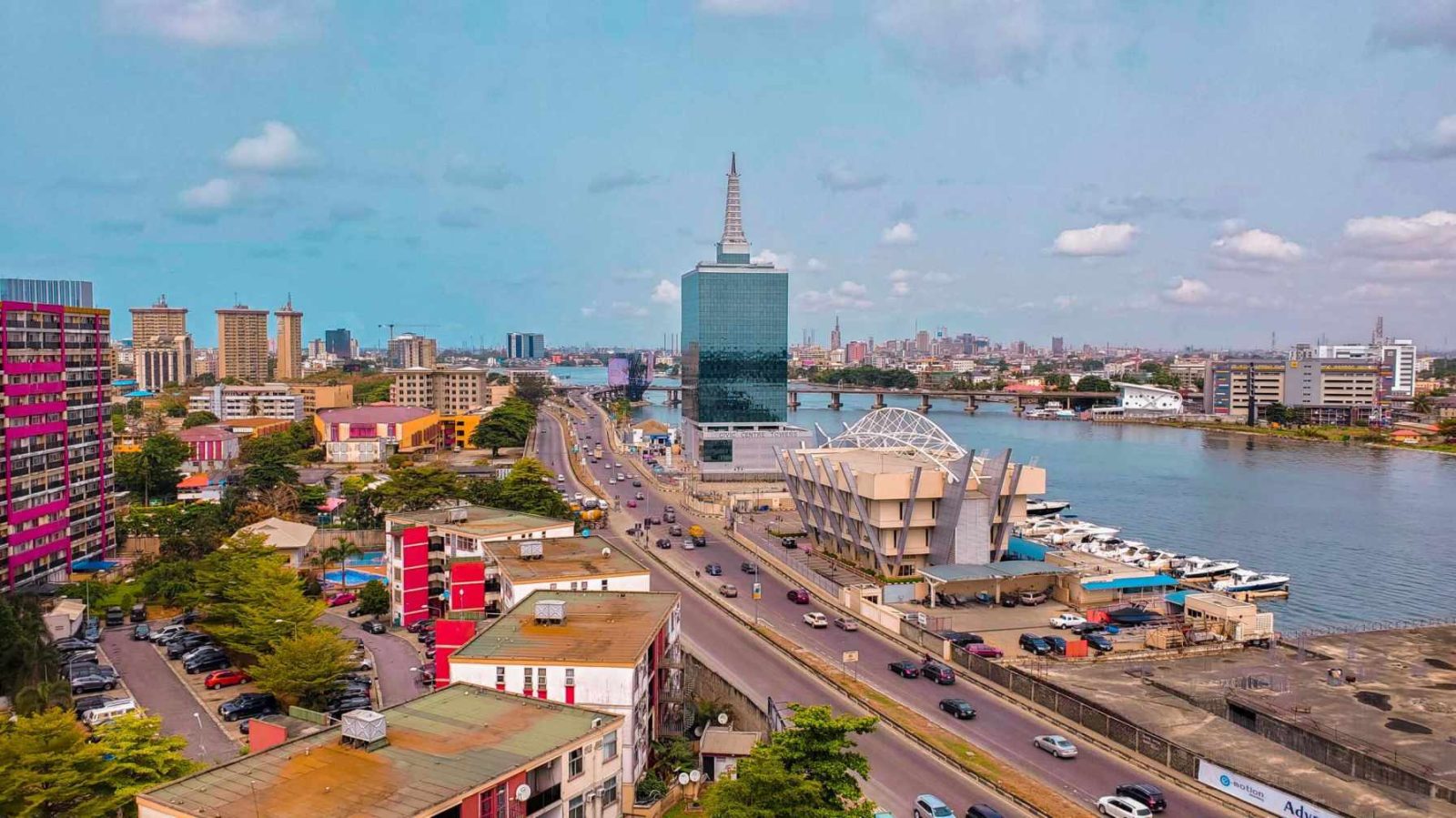

As we have seen, everything about Nigeria today indicates that it is ripe for revolution. But revolution needs energy, belief, and anger, not inertia and inaction.
By Chimezie Chika
I
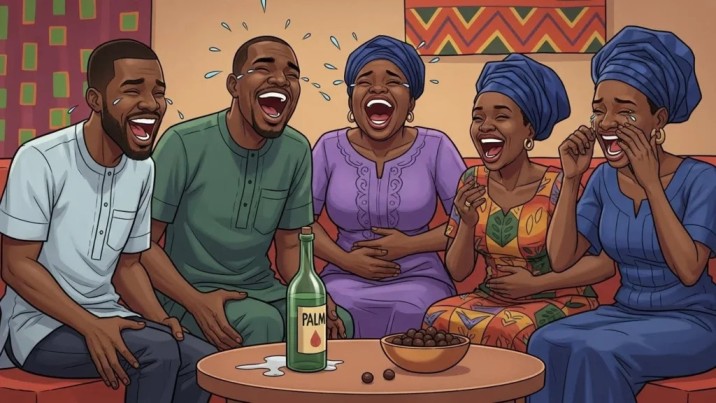
It is more or less a cliché to observe that Nigerians joke about everything. That we are a humorous people is a fact frequently remarked upon; that we consistently find humour in the Nigerian condition is another corresponding fact. It is true that comedy keeps people happy when they would have been depressed, but it is also true that there is a sense in which consistently making a joke or comedy out of everything becomes anathema to progress. In those situations, it might be infinitely better for the depressed person to keep being depressed, for that depression, if it’s caused by the social and political malfunctions of his environment, will force him to protest those conditions. If he is not alone in that depression, if the depression is as widespread as the conditions that caused it, then it becomes a public grievance against the architects of those conditions. Of course, mass discontent is the seed of revolution. The point here is that progress and change cannot happen if sustained despair and anger are often dampened by comedy.
And that’s Nigeria, in a nutshell. What if the tendency to always joke has turned a corner and become not just a coping mechanism, but a complete hindrance to political change and social progress? What if it has become the proverbial monkey’s hand that entered the soup pot and turned into a human hand? I would venture that a culture that has fully embraced comedy in the farcical way we have has resigned itself to a ghastly fate, for the complete abandon that comes with our desire to engage in a kind of frivolity that is akin to porn addiction has turned a vast majority of Nigerians into social zombies and political illiterates who, numbed by the political malfunctions around them, are only able to make feeble, ineffectual comments about “what government is doing to us.”
Let me also quickly add that, as a result, the relationship between Nigerians and their government is not one of a people-led demand for accountability, but rather a situation where the government breadcrumbs the social contract and gets praised for it in a society divided unequally between sycophants, indifferent citizens, and the genuinely concerned (the second type of people being the vast majority). Here, my brethren, are all the symptoms of a dysfunctional society.
Scholars have consistently characterised social fragmentation as one of the features of dysfunctional societies. Social fragmentation functions in insidious ways: most of society revolves around performances of indifference, either as a total breakdown of effective communication or a total or near-total emotional disconnection from the effects and meanings of the larger struggles in society. That is, beyond the reality of institutional decay, the sociology of when people or groups do not feel any sort of responsibility towards their environment. The result is a kind of widespread apathy rooted in safety rhetoric. In Nigeria, it will be the typical “E no concern me”.
That safetyist tendency is the very root of what joke culture has become in Nigeria. It is the means by which Nigerians consciously or unconsciously disconnect themselves from the economic, political, and civil terrors that have assailed them under the present regime. The roots of joke culture did not begin with the Tinubu regime; it is only amplified by its incompetence and paternalism. The level of indifference Nigerians exhibit when all the country’s problems rear their heads is nothing short of remarkable and provides a case study for a society where irresponsibility is couched in affirmations of safety and frivolity.
Why a people so spectacularly harried by civil strife should behave this way is a question that demands immediate answers, for at no time in 21st century Nigeria has security disintegrated on such an all-encompassing scale (not even during the peak of Boko Haram and Niger Delta insurgencies). What we are witnessing today is the most country-wide destruction of law and order in thirty or more years. While previous conflicts have often been confined to specific regions in the country, this time around, no region or zone is safe.
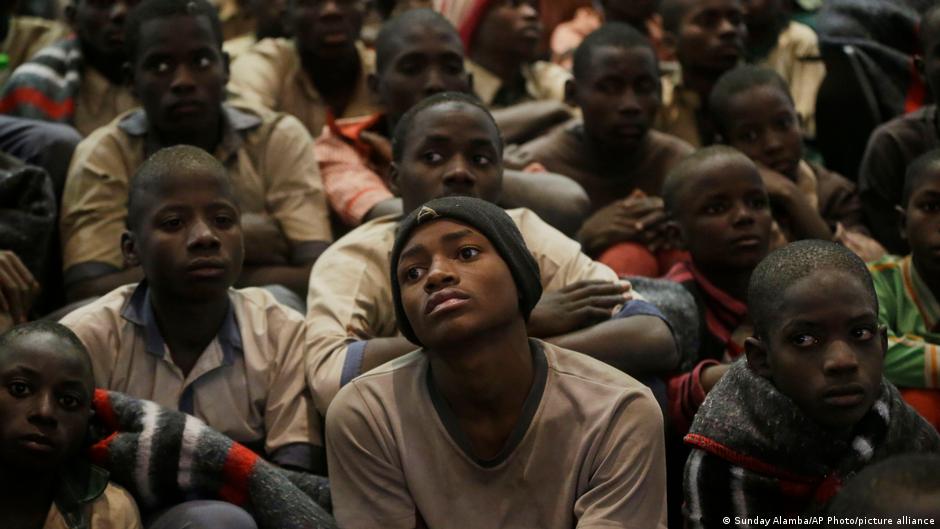
While we will not go into a litany of the issues confronting Nigeria today, we will take as a case in point the spike in kidnappings and banditry, the most recent of which is the attack in Oyo State. According to reports, gunmen invaded a cluster of villages in the state and kidnapped a total of 46 people, including 7 teachers and 39 students, the youngest being just two years old. A few days later, in Ibadan, the state capital of Oyo, an ex-minister’s sister was abducted alongside her twin sons on their way to school. The real shock of these two events is that they are happening in the southwest, one of the few regions considered relatively safe. If the insurgencies and banditry that have long plagued the northeast and northwest could spill into the southwest, then the country as an entity is in even greater danger than initially thought. On social media, Nigerians railed and screamed at the perpetrators and made verbal demands to the government. But within days, these terrible events had already started eliciting jokey remarks.
A time for jokes and play exists, but that place is not a critical issue of security. If anything, issues like this should be approached—if they must be solved—with collective seriousness. Yet, here is a country where people easily reach for frivolities the sooner they are faced with any kind of difficulties. The question that should be asked is the psychology behind those responses? Is entertainment and petty distractions the medicine we have for our ailing country? Are Nigerians the proverbial man who prefers to chase frightened rats fleeing from a fire in his house while his house burns?
II
I have sometimes wondered if the Nigerian attitude to jokes is social engineering.
The Nigerian identity and character are forged in the smithery of hardship. No typical Nigerian has ever fully enjoyed the dividends of good governance, nor has he ever truly lived in a secure country, physically and economically. The first act of a person living in an insecure place is usually a high consciousness of security. Economically, the most deprived people often find solace in the distractions of any kind of entertainment.
Repressive and corrupt regimes throughout history understand this psychology. One of the aims of such a regime is to avert anti-government organising, which in turn can spark a revolution. So they begin to gradually condition the angry youth to see his situation as one that can only be laughed at. From this point, he never sees his situation with any depth. Issues in the country are not seen in their larger context but instead are compartmentalised into personal affirmations of stoic indifference and resilience; usually in the form of the idea that, no matter how grievous a situation, one is emotionally strong enough to remain unfazed by it.
But this is not a strength at all; it is resignation.
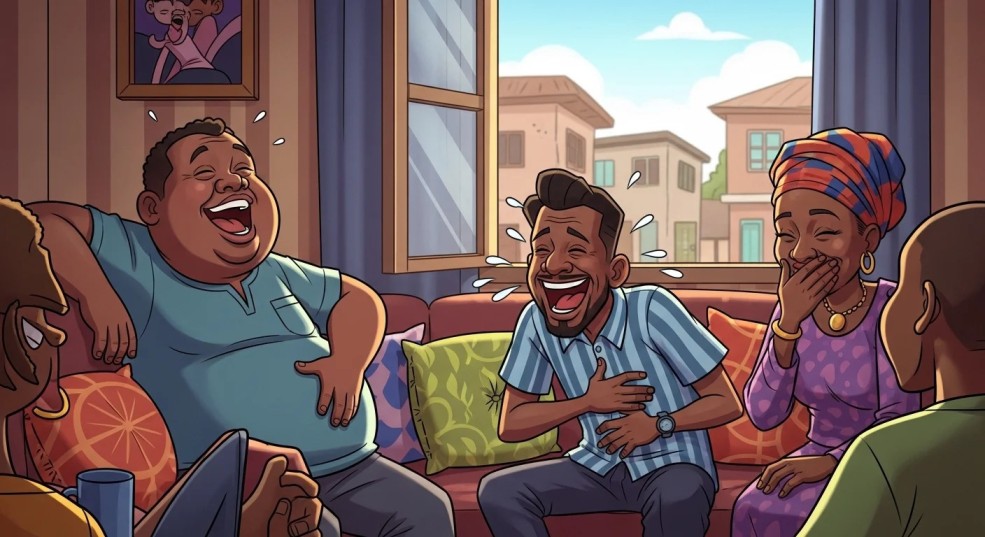
The internet’s attunement to the attitudinal phrases “It’s not that deep” and “Guy, relax, you too dey form serious” is not a symptom of psychological strength. It is the height of the facetious culture of Nigerian social media.
To the point where one is not entirely sure when a Nigerian is serious. Typical expressions like “I never chop since morning” or “Person ask me for 1k na why I go offline” have become mere capers rather than references to impecunious despair. Even when Nigerians protest, peak fooling never sits far away. During the ENDSARS protest, phrases such as “Na only babe wey join us protest we go knack/marry” were often heard. Little wonder that the government of the day was able to find ways to infiltrate that protest before it could turn into a powerful revolution.
Claiming that comedy in this instance helps us cope with trauma or that it gives us relief from our unsavoury conditions is a typical strawman argument, for comedy can be utilised powerfully when it is endowed with the intellectual weight of satire or the imbued meaning of sardonic reactions. Alas, with us, comedy is trivialised to the point of foolishness, for there seems to be no point to it other than “just laughs”. And of course, it’s not that deep.
Therefore: people die, we joke; a woman is raped, we joke; a politician steals public funds, we joke; an accident happens on a bad road, we joke; a couple divorces in bitter circumstances, a student engages in exam malpractice, young people suddenly come into wealth from unknown sources, robbers become revered citizens—we joke about it all. All these have managed to turn the country into an extended circus, performing our national malaise for the fun of it.
III
What if, though, this is simply Nigerians being Nigerians? Is this who we are? Is this our identity? If not, how did we become this way?
The typical Nigerian is often described as possessing an irrepressible spirit, a never-say-never spirit, a grass-to-grace spirit. Nigerians are usually characterised as having drive and grit, as well as the ability to work through immense difficulties to survive. You see this everywhere in the country, from the North to the South. As tenacious goal-getters, Nigerians no dey gree for anybody. It is why, as individuals, Nigerians often achieve great success on the continental and world stage, for it is often reasoned that if one can survive Nigeria, then they can prosper anywhere. One of the most inspiring subsets of the Nigerian spirit is the Igbo Spirit—a temperament often vaunted as exemplary. Here are people crushed by a devastating war of survival, reduced to penury at the end of the war, who, despite the mammoth disadvantages of having to start all over from scratch, have managed to become one of the most successful ethnic groups in Africa. It is hard not to be inspired by such a story, even for an Igbo person like me.

This, in my opinion, is also why Yahoo and internet fraud are normalised in Nigeria. Nigerians are far more interested in the idea of success, the outward trappings of it, than in the morality around it. Nigerians are far more interested in the final result of a perceived success story than in anything else; Nigerians are only interested in a person’s wealth and status, not the moral compass of the path he took to get there. The result is that a successful person in Nigeria is never questioned, as long as it is obvious to everyone that he exhibits the accoutrements of wealth. Nigerians would never seriously question a wealthy politician who acquired his wealth by stealing public funds. You will soon be at the receiving end of accusations of jealousy if you so much as ask that question yourself. A culture like this does not approach serious political and moral issues with the right degree of seriousness they deserve. The Nigerian attitude to the idea of success is oriented to treat it as an essence relative to faith and fate, rather than evincing a wrong or right. (Interestingly, unlike contemporary Nigeria, indigenous cultures in Nigeria have strong moral opinions on what success and wealth are. Igbo culture, for instance, through the stipulations of Odinani, never worships wealth unless it can be traced to an honest source. The possessor of ill-gotten wealth is treated as a pariah and faces ostracism.)
Amidst immense hardship, poor infrastructure, and government incompetence, you will often hear Nigerians admonish each other to ignore all the social and political ills and grind it out. In such cases, the individual is made the main character; all they have to do is to extract themselves from the environment, turn a blind eye to its ills, and grind it out. Grind it to success, no matter what everything else around you is saying. It is not far-fetched to see how the rise of the new-age Pentecostalism preaching gospels of prosperity and abundance may have also gradually heightened the culture of toxic positivity in Nigeria.
Toxic positivity, feeding directly into the frivolity porn culture, is a recipe for the social state of mass indifference, and its attendant safteyist attitudes towards issues of social and political concern. When Nigerians choose to remain toxically positive towards an issue that demands immediate physical response, they are indirectly rejecting the kind of political and social change that will drive progress.
IV
No one can contest that Nigeria is on the brink. Its people are facing severe economic, security, and political malfunctions in the hegemony entrenched by its corrupt political elite. When societies come to such an impasse, as history has taught us, the only forward course is usually revolution. But Nigeria is not a country primed for this because its populace has been rendered inert by its frivolity porn culture.
The numbing effects of this culture reach their apogee in the appalling situation where Nigerians are brazenly collecting giveaways on platforms like TikTok from the same bandits who have held the country to ransom for years. The banality of the evil here is the direct result of the selfsame culture of jokey indifference that has been entrenched in the country. The curious disaffectedness of the culture has become bloodthirsty autosarcophagy.
Meanwhile, as in all dysfunctional societies, the government has failed to regulate social media in that singular case where such a regulation is actually needed. And this is a government that rushes to censor social media use when the citizens resort to protest. There is nothing but to conclude that these acts are either deliberately encouraging distractions or symptomatic of good, old government incompetence.
But closer to the truth are people who might have unwittingly resigned themselves to their unhappy augury, who are never sufficiently stirred by the shocks in their environment. But when they do act, it is with astonishing moral levity. They are aware that their government has nothing to offer; therefore, driven by coterminous penury and moral incapacity, they resort to jungle-like survival instincts. Only that animals in the jungle are probably far more sensitive than people who paste their OPay accounts on a bandit’s social media comment section to get credited with the very loot that was extracted by killing and maiming their fellow countrymen.
Of course, it’s not that serious. Calm down, Chimezie. You too dey form serious. Yes, we can keep trivialising serious issues, or we can realise the full import of the decadence and disorder that has permeated all sectors of this country’s existence. If we can sit down and understand that the influence of our government is in question, then perhaps we can start being genuinely alarmed. If we realise, for instance, that vast tracts of land in this country are ungoverned, and that insurgents and bandits have set up their own parallel principalities in these areas, collecting their own taxes and whatnot, and that there are far too many places in this country where government presence is a myth, then perhaps we can understand the very state of abandon and dereliction which the vehicle of our country has been left in.
As we have seen, everything about Nigeria today indicates that it is ripe for revolution. But revolution needs energy, belief, and anger, not inertia and inaction. One quickly realises, when studying contemporary Nigeria, that the reason why there is no mass anger—or not enough of it—is that we have a society psychologically desensitised to its anarchic dysfunctions; we have the example of a society that has gone from reactive umbrage to jocular docility. The entrenched frivolity porn culture here will only keep politically alienating the populace in a country in dire need of a drastic political overhaul.
Chimezie Chika is a staff writer at Afrocritik. His short stories and essays have appeared in or forthcoming from, amongst other places, The Weganda Review, The Republic, The Iowa Review, Terrain.org, Isele Magazine, Lolwe, Fahmidan Journal, Efiko Magazine, Dappled Things, and Channel Magazine. He is the fiction editor of Ngiga Review. His interests range from culture, history, to art, literature, and the environment. You can find him on X @chimeziechika1