

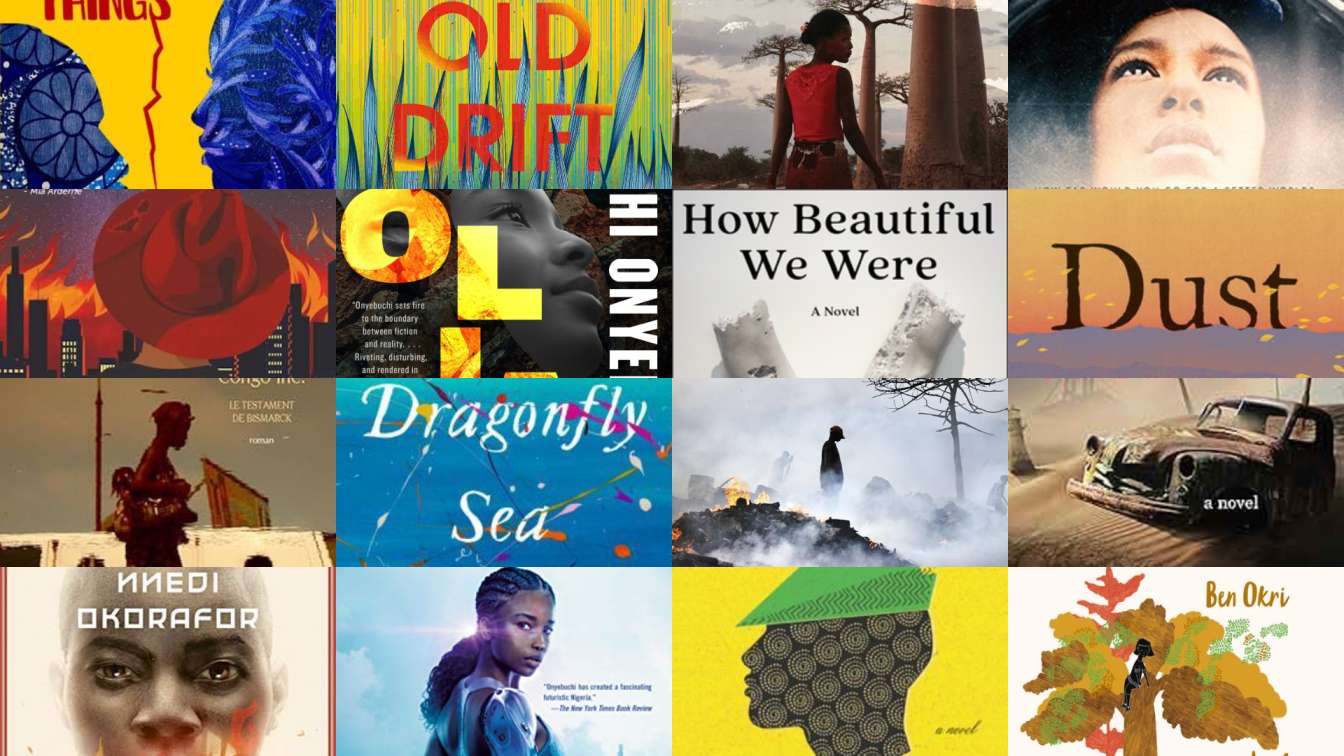

The environmental realities of Africa have been the subject of literary works from inception. Some of the most important African novels ever written have been about environmental issues.
By Chimezie Chika
The dawn of the modern age in Africa saw its lands being invaded by foreign powers seeking its people and resources. The Transatlantic Slave Trade gave way to the pillages and indignities of the colonial enterprise, in which Europeans constantly milked the continent for the benefit of their countries, the result being that a foundation of environmental carnage was set in Africa for centuries.
The colonial legacy gave way to the massive environmental degradation of the African environment that we see today, through the auspices of war, oil pollution, climate change, desertification, anthropogenic deforestation, and political neglect. Yet any knowledgeable person would acknowledge that many indigenous African cultures are rooted in preservative environmental practices which the modern realities of the continent are entirely divorced from. Many studies are beginning to take on the complexities of Africa’s environmental issues, criticising the role of foreign powers in both the loss of environmentally conscious cultures and the ongoing economically fuelled degradation.
Scholarly interventions into Africa’s despoiled ecologies, such as Cajetan Iheka’s Naturalising Africa: Ecological Violence, Agency, and Postcolonial Resistance in African Literature, interrogate the pressing ecological problems of Africa, ranging from oil pollution in the Niger Delta, the ecologies of war in Somalia, and animal abuses elsewhere on the continent. Iheka specifically challenges the tendency to focus on humans in the conceptualisation of Africa’s environmental problems and instead focuses on how African literature demonstrates “proximity” between human and nonhuman elements in environmental discourse, suggesting that texts in African Postcolonial literary studies should yoke Africa’s exploitation to the despoliation of the environment.
Another such intervention is Anehi Edoro’s Forest Imaginaries: How African Novels Think, which takes an entirely different route in the ecological discourse. Edoro argues that forests in African fiction not only symbolise the continent’s premodern past but are also sites where African novelists can experiment with worldbuilding, political possibilities and imagine new futures for the continent. Forests, for both the past and present of Africa, have always been a laboratory for making and remaking the world. It is then sad that, despite Edoro’s scholarly optimism, Africa is fast losing its forest cover, both physically and metaphorically.
The environmental realities of Africa have been the subject of literary works from inception. Some of the most important African novels ever written have been about environmental issues. The likes of Helon Habila’s Oil on Water and Kaine Agary’s Nigeria Prize for Literature-winning Yellow Yellow. In a capitalist world where concern for the environment is relegated in favour of economic gain, a question persists: How much have African novelists tackled environmental issues in recent times, especially in the last ten years?
Here, then, are twenty environmental novels from across the African continent, published within the last decade, that place ecology not at the margins of their stories but squarely at their centre.
Every Leaf a Hallelujah – Ben Okri (2021)
“An environmental fairytale made for our times, written to be read by both adults and children” is how this children’s novel by the acclaimed Booker Prize winner Ben Okri, his first ever, is described on his website. The plot of the story is about a forest near Mangoshi’s village where a very special flower grows in the surrounding forest.
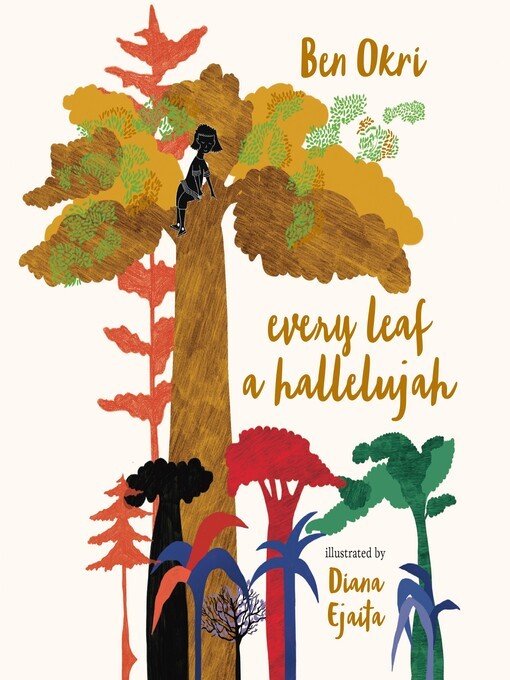
When her mother becomes ill, Mangoshi knows only this flower can save her mother’s life. She also knows that it can save her village too. All she has to do is find it. The little girl needs all her courage and kindness to overpower the dangers on her way when she sets out alone to find and bring back the flower. This novel has been variously described as an environmental story, an ecological consciousness novel, amongst others.
Barzakh: The Land In-between – Moussa Ould Ebnou (2022)
This novel by Mauritanian novelist and philosopher, Moussa Ould Ebnou, has been described by The National UAE as “one of the most gripping dystopian tales to come out of the Arab world”. It is a story told uniquely, structured as a stream of consciousness transcript translated from the remains of a skeleton found at the top of a mountain in Ghallawiya.
The novel spends a long time on the ethereal and alien landscapes of a fictional Mauritanian desert region. Framed by the story of future scientists discovering his remains, narrator Gara jumps between three eras: the distant past, the recent past, and the distant future.
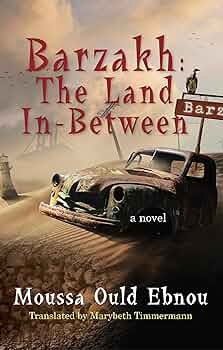
The novel asks the question: How did this universe, which has witnessed the birth of so many creatures, lose everything to preserve only these few men and their animals? Geographically, the desert landscapes of Mauritania have a long, illustrious history of Islamic scholarship. Aware of this, Ebnou shows us how these dunes of immaculate white sand would be infinitely true and beautiful if it weren’t for the intrusions and pollutions of human beings.
Blending historical realism with metaphysical fiction, Barzakh: The Land In-Between is a novel that lives and breathes the consciousness of its inhabitants’ environment. Through slavery, rebellion, colonial violence, ecological collapse, and a future archaeological expedition, the book asks what remains of human life and civilisation after the passage of time and memory.
Water Baby – Chioma Okereke (2024)
According to Afrocritik’s review of this book, it “is set in Makoko, a well-known riverine community in Lagos State, often dubbed the “Venice of Africa” for its tourist appeal, though it is equally notorious for the poverty and environmental pollution that have plagued it for decades.” The reality of the Makoko slum in Lagos is well-known.

The immense pollution of the Lagoon waters where the people eat, defecate, and make a living has rendered the place one of the most unhygienic places on earth. But it also highlights the poverty and economic deprivation that forces people to live under such conditions. The young girl at the centre of the novel, Yemoja (a name that references the Yoruba deity of the sea), dreams of success out of Makoko. But often she is reminded that such dreams come with the overbearing weight of an environment like Makoko.
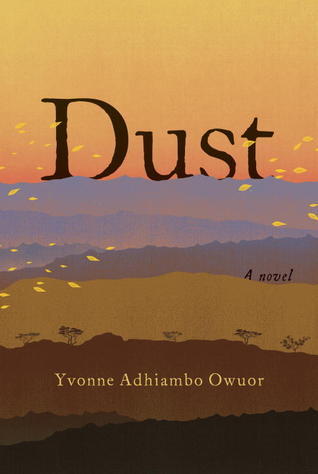
Dust – Yvonne Adhiambo Owuor (2013)
Set against the backdrop of political violence in Kenya, Owuor’s masterly debut novel conflates personal violence with the violence of one’s country and environment. Following the death of Odidi, a brilliant engineer, in the violence that accompanied the 2007 elections in Kenya, his family comes together to take him home to their native Turkana region in the north of Kenya. The landscape here is dry and unforgiving.
In the novel, Owuor makes the physical landscape an active force in the story rather than merely a backdrop. The metaphor of Dust surfaces again and again as a reference to the physical and psychological violence of the country and its peoples. The recurring presence of dust evokes drought, aridity, ecological fragility, and the harsh realities of life in landscapes shaped by limited water and climatic uncertainty. In a novel where violence permeates every story and place, its focus on the environment also highlights social histories and their link to individual and national struggles.
In his review of the novel for The Guardian UK, Nobel Laureate, Abdulrazak Gurnah, writes: “Dust and intermittent flood are made into a metaphor: water turns dust into mud, which can then be shaped and sculpted, just as dispersed histories are brought together by memory and stories. The metaphor is made concrete in the sculpture Ajany makes of her father’s missing brother, whom she only knows from stories.
This apparently arid landscape also provides Owuor with an inclusive and complex vision of Kenya. In it are people of many provenances: Turkana, Luo from the south, Somali herdsmen and traders, an Eritrean police officer, an intelligence officer originally from Mombasa, an Indian shopkeeper, missionaries and an English colonial police officer, who is central to the plot. It is a heterogeneous vision of Kenya, a rebuttal of the corrosive parochialism that was the source of the divisions in the ‘burning, dying country’”.
Do You Dream of Terra-Two? – Temi Oh (2019)
One can’t make a list of fiction that deals with the environment without including the sci-fi, for a great many of its subgenres have one thing or the other to say about the environment of our world in a utopian or dystopian frame. Nigerian-British author Temi Oh’s Do You Dream of Terra-Two follows a team of six teens and three astronauts who embark on a twenty-year expedition to colonise an earth-like planet that was discovered a hundred years prior.
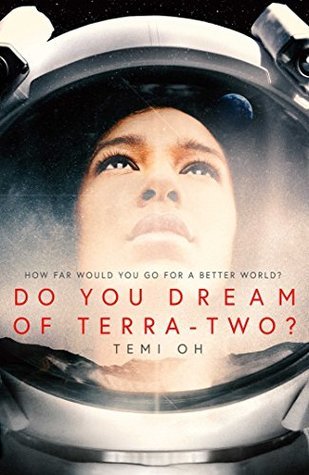
The planet is described as pristine and possibly uninhabited, with a wholly intact environment. The novel itself is set in a technologically advanced version of earth, and the goal of the expeditionists was to set up a utopia of sorts in the new world. The sad thing, as the book shows, about humans remains their inability to create and sustain meaningful relationships with the people and the surrounding environment.
Black Moses – Alain Mabanckou (2017)
This book by the acclaimed Congolese-French novelist follows an orphan called Moses from the totalitarian confines of an orphanage to the underworld of the slums and urban malfunctions of Pointe-Noire. The Guardian UK described this novel as “a picturesque tour-de-force”. Mabankou shows us the ravaged urban environment of Pointe-Noire through Moses’ story, a city and country more or less destroyed by unbridled corruption across the political elite and the economically disadvantaged.
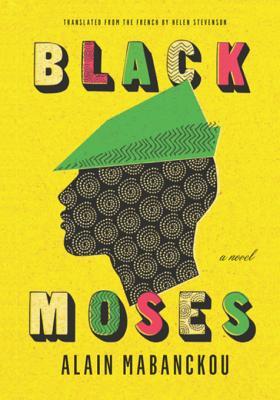
On the face of it, its citizens have to deal with poor housing, poor waste disposal, lack of water, lack of good roads, poor urban planning, in short—all of which means poor flood management, pollution, amongst other environmental hazards for the city’s rank-and-file. In the novel, Moses increasingly becomes not only disillusioned by this environment but also sufficiently angered to act. Propelled by madness and a resistance to injustice, he resolves to act.
Oil on Water – Helon Habila (2010)
In award-winning Nigerian writer Helon Habila’s third novel, two journalists set out to investigate the kidnapping of a European wife at the height of the Niger Delta militancy caused by widespread environmental degradation and the indiscriminate exploitation of oil companies and the government.
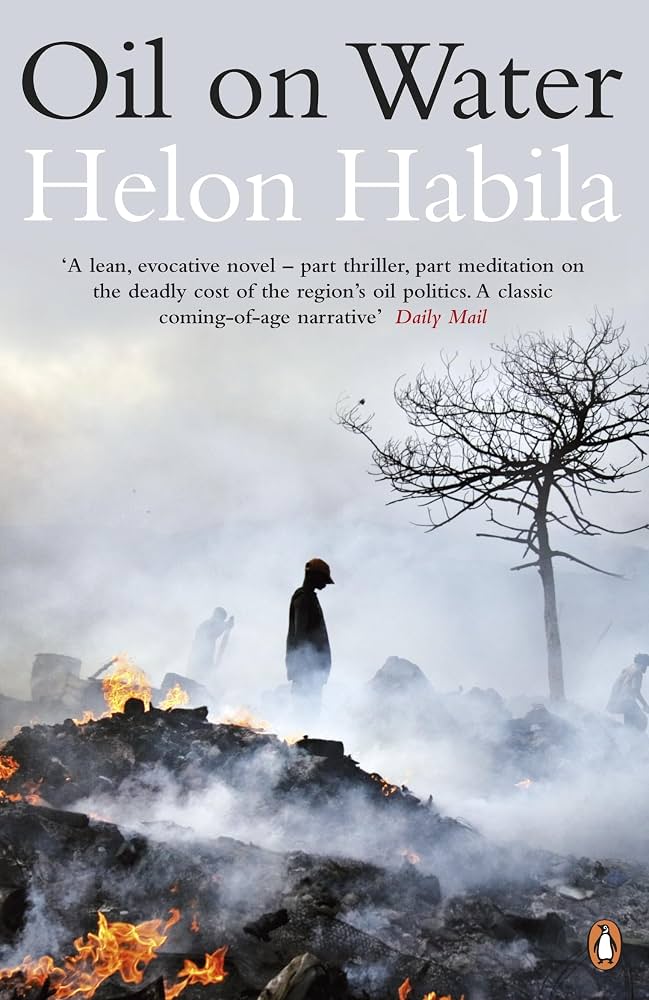
Habila shows us the utter devastation of the Niger Delta landscape as a result of oil spills in the region, which turned the thick mangroves into dead backwaters, contaminating and destroying the livelihoods of riverine communities in the region.
This novel of Nigeria’s oil conflict highlights why attention to the environment remains supreme. It is so important to this discourse that, despite its publication period, I “cheated” to include it in this list as a way to set an example—in African educational curricula—of how to properly interrogate ecology in Africa.
How Beautiful We Were – Imbolo Mbue (2021)
Imbolo Mbue’s sophomore novel is perhaps one of the most notable environmental novels in recent times. The story is told in the collective voice of a fictional community in Southern Cameroon fighting to reclaim their environment from the violence of oil companies.
The struggle of many of the peoples of the oil-rich regions of the continent is obvious here. The government and the oil companies are only ever interested in the oil they extract, and never in the lived environment that provides sustenance to the people. The result is the mass devastation of oil spills, dead rivers, and loss of livelihood. Mbue’s novel justifies environmental activism and also positions itself as a scathing attack against the ills of hydrocarbon extraction in Africa and the corporate conspiracies of corruption that keep such harmful business alive in our continent.
Lost Ark Dreaming – Suyi Davies Okungbowa (2024)
In this fine example of climate fiction, we are introduced to a future world in which dramatically risen sea levels have swallowed up coastlines and cities, including Lagos. Most Lagos residents now live in a partially submerged high-rise called Pinnacle. The political class, the wealthy, and the powerful live on the upper floors while the poor live on the lower floors, beneath sea level.
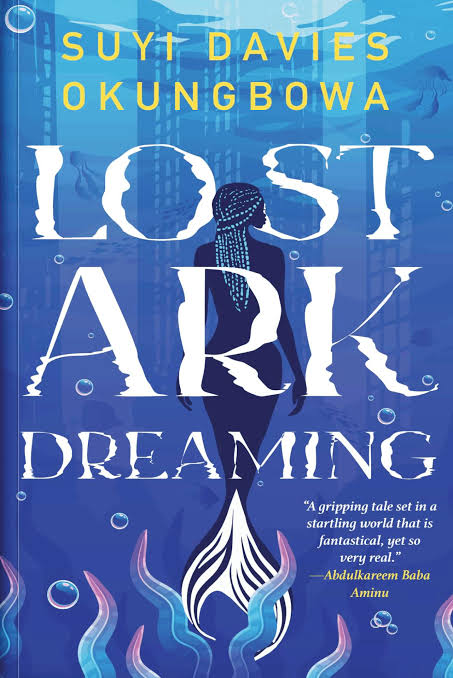
The novel follows Yekini and Ngozi, two government officials saddled with the responsibility of tackling the many problems in the Lowers, one of which is a leak that was later found to be a breach by dangerous sea creatures rather than age-related structural failures. They must fight to reveal the truth about the tower and the creatures while simultaneously fighting the corruption that has segregated the tower for years.
Okungbowa’s vision here shows us that the consequences of climate change: that the climate dystopia that may succeed our environmental recklessness may change nothing about the basest aspects of human nature.
In the Company of Men – Veronique Tadjo (2021)
The book’s description reads: “In a series of moving snapshots, Véronique Tadjo illustrates the terrible extent of the Ebola epidemic, through the eyes of those affected in myriad ways: the doctor who tirelessly treats patients day after day in a sweltering tent, protected from the virus only by a plastic suit; the student who volunteers to work as a gravedigger while universities are closed, helping the teams overwhelmed by the sheer number of bodies; the grandmother who agrees to take in an orphaned boy cast out of his village for fear of infection. And watching over them all is the ancient and wise Baobab tree, mourning the dire state of the earth yet providing a sense of hope for the future.
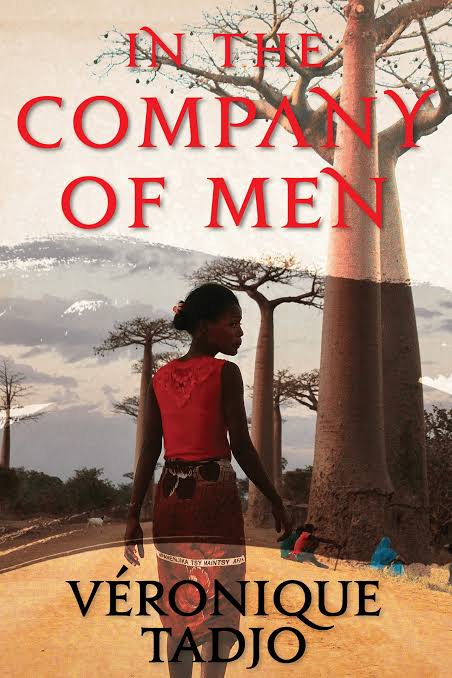
Drawing on real accounts of the Ebola outbreak that devastated West Africa, this poignant, timely fable reflects on both the strength and the fragility of life and humanity’s place in the world.” But, I tell you, this experimental non-fiction novel places nature at the centre of so much human suffering, highlighting how our relationship with the fauna and flora in our environment could both cause us fatal pain and give us immense hope for the future.
War Girls – Tochi Onyebuchi (2019)
In a far-future post-nuclear-disaster post-apocalyptic world with an environment devastated by both the nuclear event and global warming, the Western powers have escaped to colonies in space and left poor nations behind whom they exploit for their scarce remaining resources.
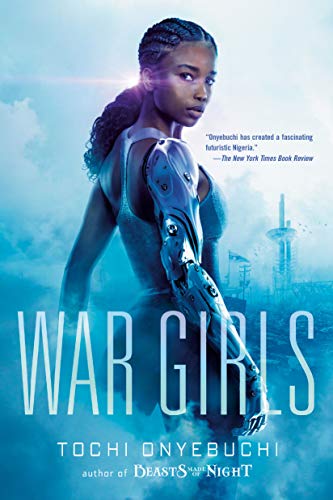
In this world, two characters, Ify and Onyi, are trying to survive the resurgent Nigerian Civil War, which has been on for decades. It is also a technologically advanced world in which many people have undergone what they call “augmentation”, a cyberising of the organs used to replace war injuries. Ify and Onyi are living in a camp for War Girls, a group of orphaned Biafran teenagers who have been child soldiers for the Biafran Army.
The Dragonfly Sea – Yvonne Adhiambo Owuor (2019)
The novel by Owuor, her latest, is set in Kenya’s Swahili coast, which is part of the larger Swahili coast of East Africa, a region that has historically engendered economic, cultural and religious exchanges across Africa, the Middle East, and Asia.
Following along these lines, the novel tells the story of Ayaana, a girl growing up on Pate Island, off the northern coast of Kenya. Ayaana develops a close relationship with the island’s maritime culture and oral traditions. Her life is shaped by her mother and Muhidin, an elderly sailor who becomes a mentor and father figure, introducing her to the histories and trade routes of the Indian Ocean world.
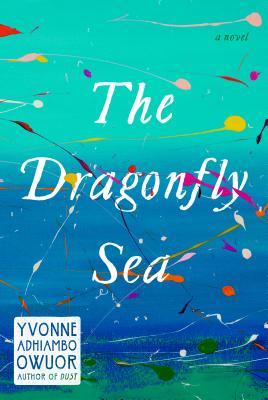
In due course, representatives of Chinese diplomatic and cultural institutions arrive on the Swahili coast seeking links to the final voyage of the Ming admiral Zheng He. After genetic testing suggests Chinese ancestry, Ayaana accepts an offer to study in Xiamen, China. While there, she is presented in official and academic settings as a symbolic link between China and the Swahili coast. More than anything, the Indian Ocean and the unique miscegenated history and culture it shaped and still shapes today.
Goliath – Tochi Onyebuchi (2022)
Another space-colony, earth-exodus dystopia by the Nigerian sci-fi author is about the economic and class-discrimination chaos that attends the aftermath of an environmentally devastated earth. The book’s description reads: “In the 2050s, earth has begun to empty. Those with the means and the privilege have departed the great cities of the United States for the more comfortable confines of space colonies.
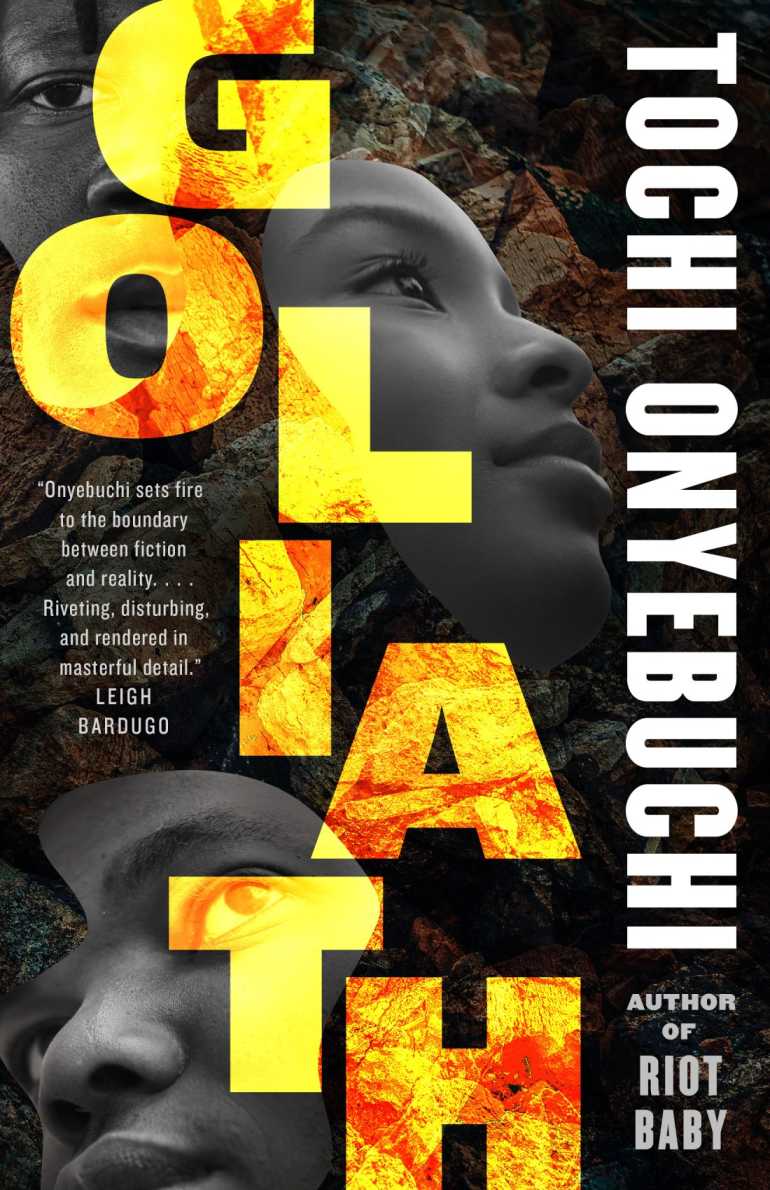
Those left behind salvage what they can from the collapsing infrastructure. As they eke out an existence, their neighbourhoods are being cannibalised. Brick by brick, their houses are sent to the colonies; what was once a home is now a quaint reminder for the colonists of the world that they wrecked.
A primal biblical epic flung into the future, Goliath weaves together disparate narratives—a space-dweller looking at New Haven, Connecticut as a chance to reconnect with his spiraling lover; a group of laborers attempting to renew the promises of earth’s crumbling cities; a journalist attempting to capture the violence of the streets; a marshal trying to solve a kidnapping—into a richly urgent mosaic about race, class, gentrification, and who is allowed to be the hero of any history.”

The Old Drift – Namwali Serpell (2020)
This premise is almost mystical, but also rooted firmly in reality. Near the Zambezi River, close to the majestic Mosi-oa-Tunya (Victoria Falls), is a settlement called The Old Drift, which is said to be the beginning of a country. The novel captures three families living in Zambia and the saga that links and binds them.
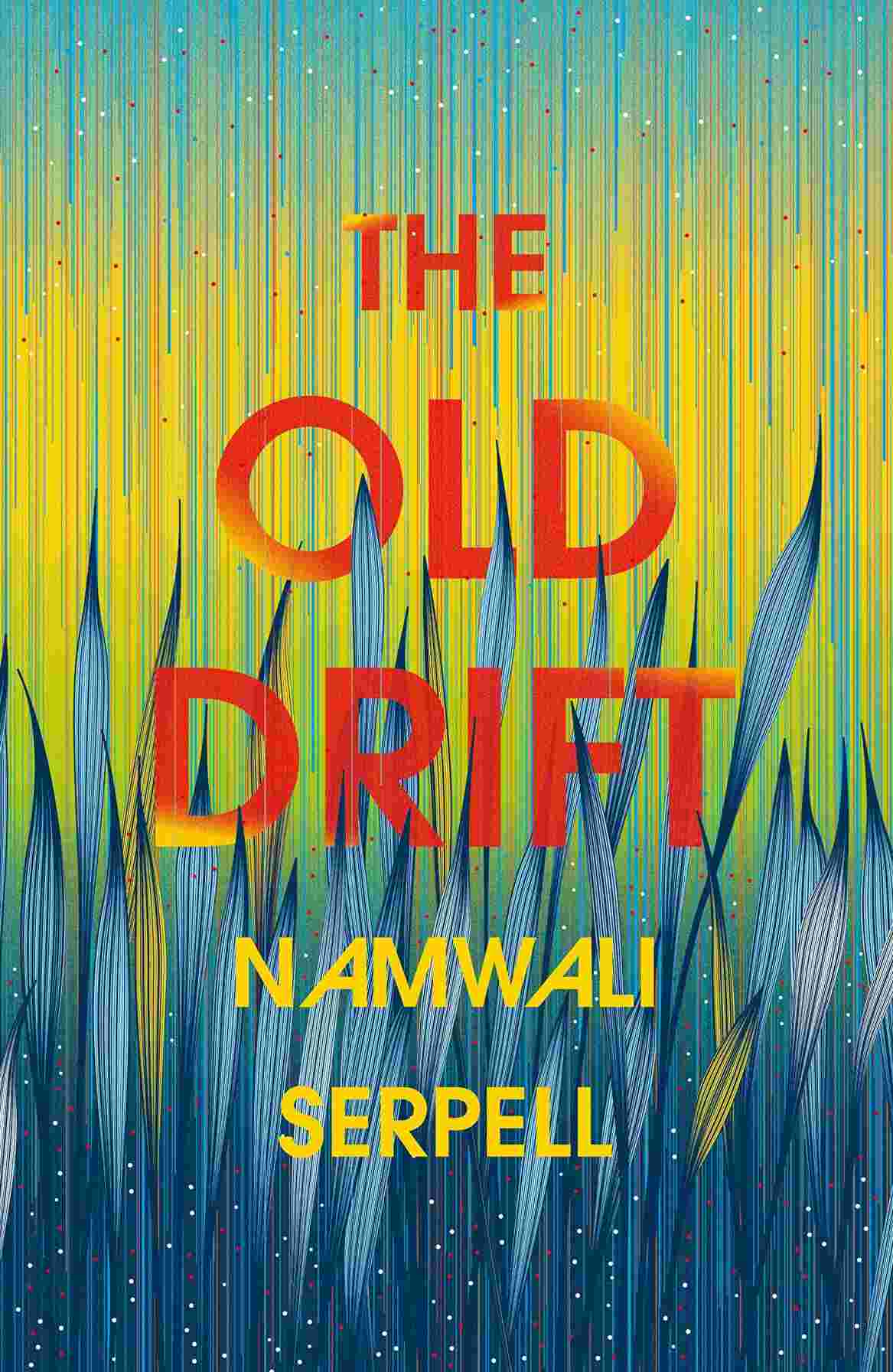
The book’s first narrator, Percy M. Clark, a real settler in Zambia who came to the country in the early 20th century from Cambridge, England. A series of events led him to shoot a mentally ill boy whose condition was also caused by him.
The novel’s argument for being environmentally aware is its experimental posture around landscape and history: against the backdrop of the beautiful landscape of Zambia, the novel explores Zambian history up to a speculative near-future where technology has superseded all concerns about the land and its scapes.
The Book of Phoenix – Nnedi Okorafor (2015)
This science fantasy novel by the prolific, multiple-award-winning Nigerian-American author of sci-fi and speculative fiction who originated the term Africanfuturism is a standalone prequel to her previous novel, Who Fears Death. Here is the story of a world where human beings are biologically altered or “accelerated” through the use of technology to experience a greater lifespan.
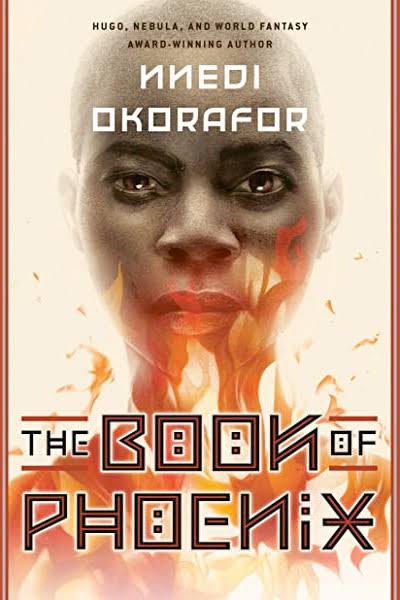
According to the book’s description: “Phoenix was grown and raised among other genetic experiments in New York’s Tower 7. She is an “accelerated woman”—only two years old but with the body and mind of an adult; Phoenix’s abilities far exceed those of a normal human.
Still innocent and inexperienced in the ways of the world, she is content living in her room, speed-reading e-books, running on her treadmill, and basking in the love of Saeed, another biologically altered human of Tower 7.” A future in which our biological composition is altered is a future that de-emphasises the cycle of life-forms that has preserved earth’s ecosystem so far.
Congo Inc.: Bismarck’s Testament – In Koli Jean Bofane (2018)
A man named Isookanga leaves his Ekonda village deep inside the Congo forest in search of a better life in the city of Kinshasa. While still in his village, a phone company had installed a telephone tower in the nearby forest, forcing locals to question its effects on their environment. Isookanga’s departure to the city is a result of his opposing stance in the village in support of the tower. The rest of the novel explores the exploitation of Congo’s resources—its minerals and geography—by international concerns for the benefit of global capitalism, degrading and destroying much of the Congolese environment in the process.
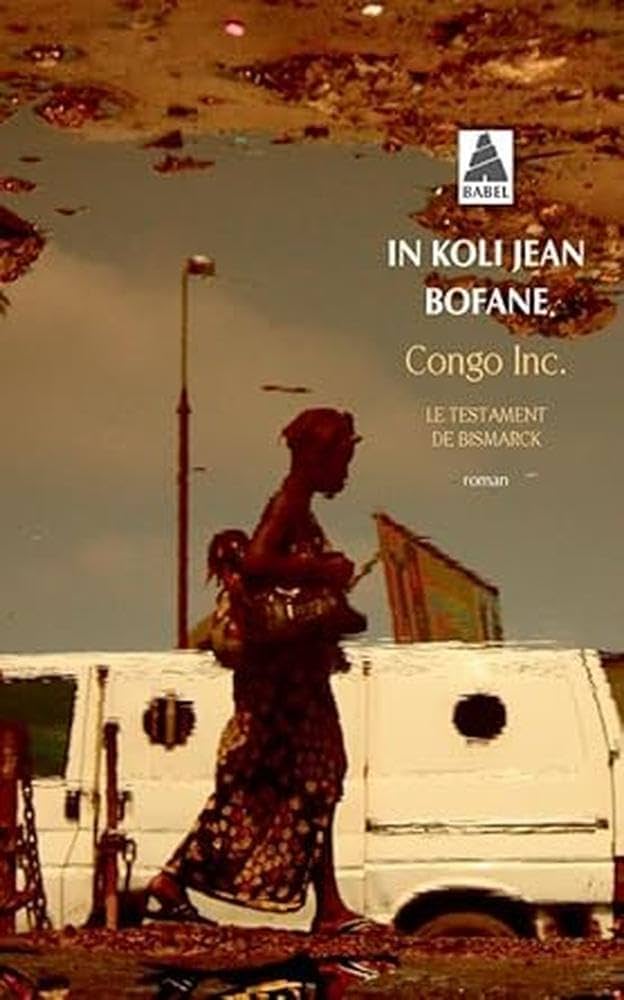
According to the description, the book is a “satirical journey through the civil conflict and political instability that have been the logical outcome of generations of rapacious multinational corporate activity, corrupt governance, widespread civil conflict, human rights abuses, and environmental degradation in Africa. Isookanga, a Congolese Pygmy, grows up in a small village with big dreams of becoming rich. His vision of the world is shaped by his exploits in Raging Trade, an online game where he seizes control of the world’s natural resources by any means possible: high-tech weaponry, slavery, and even genocide.
Isookanga leaves his sleepy village to make his fortune in the pulsating capital Kinshasa, where he joins forces with street children, warlords, and a Chinese victim of globalisation in this blistering novel about capitalism, colonialism, and the world haunted by the ghosts of Bismarck and Leopold II. Told with just enough levity to make it truly heartbreaking, Congo Inc. is a searing tale about ecological, political, and economic failure.”
One Leg on Earth – ‘Pemi Aguda (2026)
This is a novel about the mystical pool of Lagos where water sustains and takes lives. The reality of Lagos has always been its proximity to water—it is a resource that has determined the city’s fortunes but has also been its greatest source of anguish as sea levels rise and global warming establishes unpredictable weather patterns.
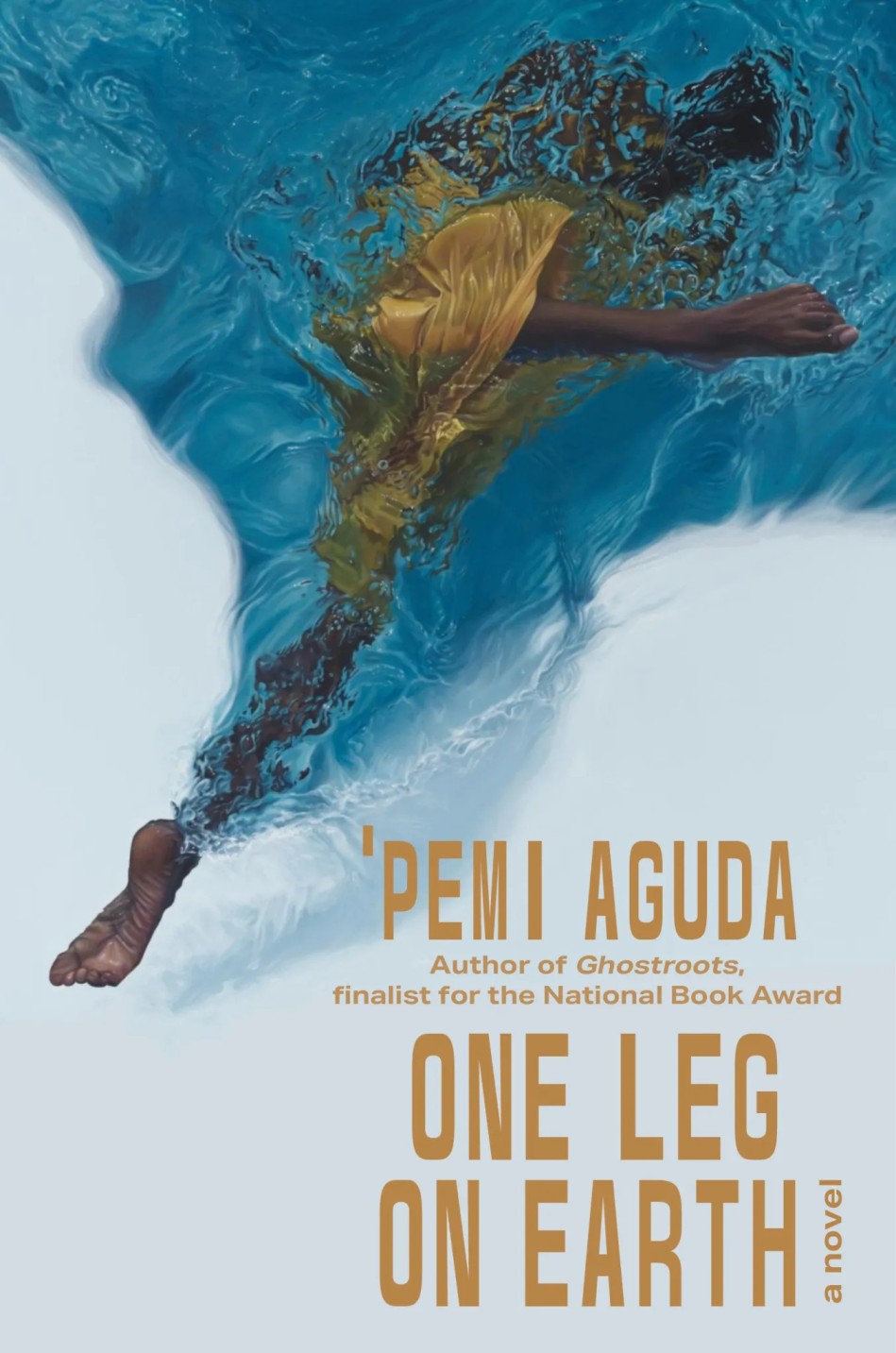
Afrocritik has this to say in its review of this book: “One Leg on Earth mythologises the mystery of Lagos, and all such places living between land and water, where nothing is ever too sure or too firm, where the giving and taking of life in a divine feminine performance beyond the quibbles of mortality, where the spirit of the place—surrounding as it were by so much water, a living entity in Nigerian traditional religions—is the most dominant character, with everybody and everything else sucked into its churning whirlpool.”
The Desert and the Drum – Mbarek Ould Beyrouk (2020)
Winner of the Ahmadou-Korouma Prize, this novel by the Mauritanian author is purported to be the first from the country to be translated into English. Set in Saharan communities threatened by desertification, it explores how ecological/technological/capitalist change transforms traditional nomadic lifestyles amidst the onslaught of modern iterations of development.
The book’s plot follows Rayhana, a girl living in a rural desert tribe in Mauritania. All changes for Rayhana when foreigners with strange machines arrive to mine metal near her Bedouin camp.
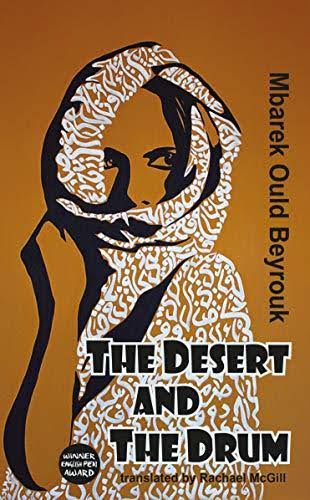
One of them is the enigmatic Yahya, whom Rayhana becomes drawn to. Her association with him leads her to abandon her native land and all she knows, fleeing alone to the city in a frantic search for her choice. Then her tribe discovers she has stolen their sacred drum and they begin to pursue her in revenge.
This is the story of one woman’s rift with her family and people, her experiences in the city, negotiating a confusing world of friends and enemies, amidst the contradictions of modern Mauritania.
It Doesn’t Have to Be This Way – Alistair Mackay (2022)
Mackay’s novel is set in a post-apocalyptic Cape Town ravaged by climate change and its attendant social unrest. It follows three queer friends who meet at a reforestation festival. Through environmental activism, they find themselves clashing frequently with the ruling government.
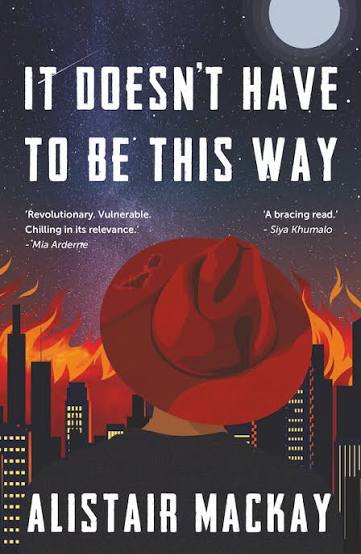
The novel also features the kind of social divisions that we see in Okungbowa’s Lost Ark Dreaming. But here the city ruptures into two sections as it advances technologically: The Citadel, a dome-like structure where the wealthy spend their time lost in a virtual reality, and Kapelitsha, a slum where the rest of the city lives.
The three friends face the consequences of the social separation that the city’s division causes. Each must deal with the physical realities of living in technological privileges of The Citadels and the environmentally degraded and technologically deprived slum.
A Spell of Good Things – Ayọ̀bámi Adébáyọ̀ (2023)
The idea of environmental fiction can transcend dystopia or climate and preservation ecologies to include subjects as broad as social inequalities affecting a given place and its intersections with class divisions. This is what Adebayo’s second novel is about. Longlisted for the Booker Prize, the novel follows two storylines that later collide: on one hand, there is Eniola, and on the other there is Wuraola.
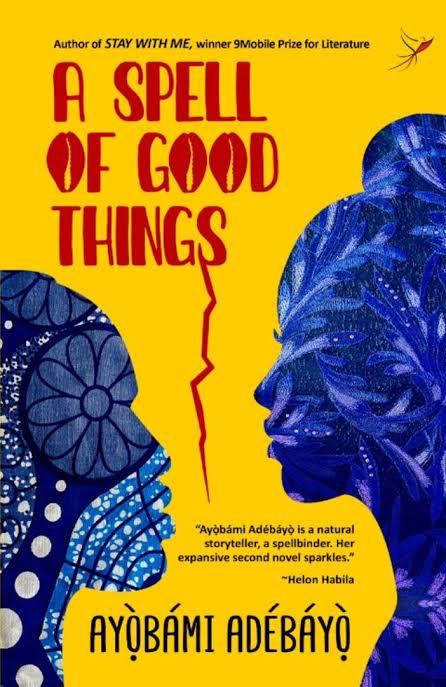
Eniola comes from a poor family living in poor areas where water scarcity and poor infrastructure are normal. The only thing that keeps him is his big dreams of achieving greatness. Wuraola is exactly the opposite, being from a wealthy political family, with an assured future as a successful young doctor. The juxtaposition of environmental inequality—between great lack and great abundance—places this novel on the pedestal of fiction that tackles a major aspect of Nigeria’s problem: that of unfair playing fields.
Chimezie Chika is a staff writer at Afrocritik. His short stories and essays have appeared in or forthcoming from, amongst other places, The Weganda Review, The Republic, The Iowa Review, Terrain.org, Isele Magazine, Lolwe, Fahmidan Journal, Efiko Magazine, Dappled Things, and Channel Magazine. He is the fiction editor of Ngiga Review. His interests range from culture and history to art, literature, and the environment. You can find him on X @chimeziechika1