


Today, the critic and the institution of criticism have come under intense attack from a mainly internet-based mob. The discourses that criticism generates today are not equal responses of knowledge and information; they are crass, bitter accusations of marginalisation.
By Chimezie Chika
I
At no time in contemporary history has it become more important to ask what the value of the literary critic is in our society than now. Whilst he functions in an institution that has built prestige and purchase since humankind developed formal literacy, he and his institution has in recent times—since ascension of social media and internet as the main mode of social interactions and sharing intellectual discourses—come under intense attacks from angles ranging from masses of the unschooled to ideological bubbles balls who attach quality in literature not to technical mastery but rather a transaction of social representation.
So, who is the critic and what does he do? Northrop Frye once said that the critic’s task is to “isolate quality”. In simple terms, he is someone who examines and evaluates the form and nature of literature. He defines the literature from an experienced point of view and can offer value judgment as a result. The discernment thereof is why a person can reject certain views of literature and criticism. One thing the African critic must always be aware of, as Achebe noted in his essay “Colonialist Criticism”, is to always judge a piece of literature on its own terms. If we give African literature—or any literature at all—the benefit of its own background and milieu, we can see it more clearly and therefore judge it more fairly.
Critics teach us how to detect artistic refinement and mastery, for we will realise that—as far as literature goes—we really want to read those who mastered the craft completely, for then we can truly see the human portrayed with the kind of essence that can only be transmitted from one human soul to another, like two strangers in dark muddy alley nodding to each other in silent acknowledgement of each other’s existence.

They teach us how to develop literary taste—a taste which is not acquired in one fell swoop. The Ancient Greek philosopher, Longinus, says of criticism that it is “the last fruit of long experience.” There is no better way to show that the critic does not come out of nowhere: he is a product of long learning and erudite application to the matter of literature. Literary taste comes from continuous, sustained learning and immersion. It happens over time and demands patience and dedication. A person unschooled in tanning, such as one may find in the leatherworks of Kano, cannot tell original leather from fake leather outright. Why? Because they have not come in close contact with its processes, and they have not been exposed enough to good and bad ones to be able to tell. Enough exposition to a thing makes a person an expert in it; enough exposition to the workings of literature in whatever form allows the critic to evaluate it with authority.
Literary criticism developed to explain works of literature to the reading laity. The critic of old sought to examine literary works based on established aesthetic principles (which can be essentialist and problematic if only one view is privileged in discourses). Today’s critics, working in a time that has seen cultural movements and philosophical epochs, have adopted the attitude of personalising the aesthetic principles down to the work being examined. A work is judged, irrespective of whatever theory or belief the critic works with, on the principles reflected in the work (of course, literature of any form or type can still be examined through any perspective, but must always be faithful to the text and its background).
In all this, the critic will offer a considered view of literature beyond entertainment. It was the British scholar, H.D.F Kitto, who said that “criticism is of two kinds: the critic can tell us what he so beautifully thinks about it all, or he may try to explain the form in which the literature is written.” By doing the first, he offers his opinions directly; by doing the second, he is doing either of two things: excavating standards and aesthetic principles in the canon, or he tries to see clearly into what a book is trying to achieve and therefore examines it on that basis. The critic’s arbitration of literature—which is nothing more than a love and appreciation of good literature—often places him at odds with society. In short, the critic finds that (by the very nature of his work) he will always be the endpoint of recriminations and statements of hatred. Many authors and readers will think him a pompous, judgemental fool.
Of course, they are entitled to their opinion, but the critic is well aware that this is what he must face in the line of duty. The erudite English critic Samuel Johnson once said that he “would rather be attacked than unnoticed. For the worst thing you can do to an author is to be silent as to his works.” The public themselves are also vaguely aware that, notwithstanding their hatred of the critic, he functions in a role whose disappearance will kill or diminish the ability of literature to generate meaningful conversations and reflect or influence issues in the world. The worst thing that can happen to a book is not when it does not sell; it is when no one is talking about it, for when no one is talking about it, then we can assume that no one is reading it.
II
For many years, the critic enjoyed respect, for his expertise is uncommon. The critic’s insights and expositions were more often than not lauded and appreciated, even among detractors. The grouses against critics were never against the institution of criticism; they instead pitted one knowledgeable response against another, so that they became a debate. We have seen this play out amongst the ‘60s generation of African writers: particularly, Chinua Achebe, Wole Soyinka, and Ngũgĩ wa Thiong’o.
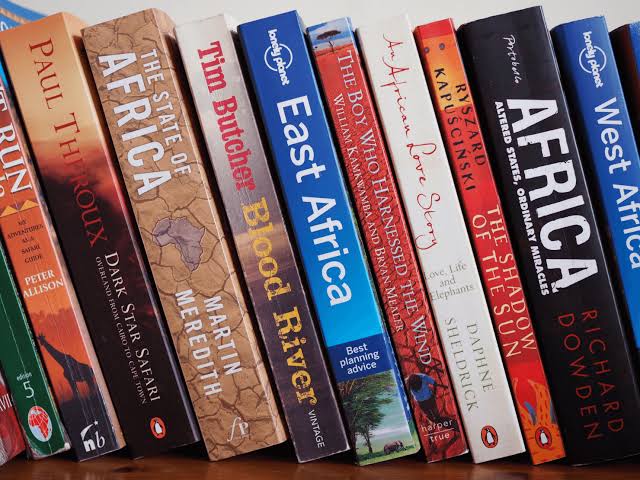
Today, the critic and the institution of criticism have come under intense attack from a mainly internet-based mob. The discourses that criticism generates today are not equal responses of knowledge and information; they are crass, bitter accusations of marginalisation. Whatever a critic says is met not with intellectual responses, but lowbrow insults and vague references to “not championing your own”—that is, social representation more or less. In the internet world where all these play out, logic is hardly ever met with logic, but accusations as to why the critic must judge a work of literature on its own terms. Perhaps it is only fair to assume that many African writers of today lack the intellectual gravitas to make such educated responses.
The mob of writers who do this have redefined literary value as a transaction of social representation. Once certain ideologies, groups, or ethnicities are represented in certain arenas, the work is valuable. The idea is that there is no need to judge the literary merits of such a work afterwards. When the critic attempts to do that, he is accused—ludicrous as it may sound—not of the soundness of his critical positions but of not fighting to represent an ethnicity, race, or ideology. That is: if you’re a black critic, you must champion black critics, which is fair; but they go further to imply that the quality of the work being championed is besides the point.
The transactional emphasis on social representation as an arbiter of value is not the preserve of the internet era; it is already a canker that has invaded the world of academic criticism in Nigeria for a long time. Prof Tony Afejuku tells an interesting story about this in his essay, “Thoughts on Contemporary African Literary Criticism”:
Of what relevance are the recalled critical judgments and acts of experience? The point is that I have witnessed a junior colleague in one of our universities who was similarly discriminated against by two Nigerian journal editors of two different ethnic regions of our country. First, he sent an article to a journal whose editor seemingly detested the writer focused on ostensibly because the said writer was not from the editor’s ethnic base. Our young colleague sent the rejected article to another editor of a journal from the same ethnic group our young critic’s focused-on writer hailed/hails from. His article was accepted. I then advised him to replicate exactly his experience by sending an article on another writer whose ethnic region was/is different from the same editor that accepted his earlier rejected article. The latter editor rejected the article. Our essayist thereafter sent the article to the earlier editor, whose ethnic base is the same as the new writer focused on. It was accepted without qualms. Thus, the point is that in contemporary Nigerian literary criticism, considerations of literary or critical values seem not to be the ulterior ends at issue. This is bad as it is not lucrative to our critical sensibility and judgment and imaginative experience and ethos. This perspective may appear to be a controversial one, but it should not or ought not to be seen as such, for it cannot be ignored in view of the fact that several of our critics are losing their conscience to ethnic delusion. I say it again: Ethnic values, ethnic peculiarities and particularities should not determine our literature and criticism. If a poem is good, it is because it is good. If a poem is bad, it is because it is bad. If a poem is neither here nor there, it is because it is neither here nor there. We must not disturb our critical consciousness by debating this perspective. Ethnic polemic or politics may serve its purpose, but we must let literature and criticism remain what they must be. As Eliot famously said of Arnold, we must not go for ‘’game outside of the literary preserve altogether…’’ (23).


If this is the state of affairs amongst older intellectuals in Africa, and Nigeria in particular, it needn’t be the case with us younger ones. Yet, that is exactly what we find. Three great controversies this year have made that very obvious: the Ernest Jesuyemi/NBCC affair, the Jamir Nazir affair, and the Harper’s Magazine affair. In each, the position of many of the more established younger African writers is nowhere near informed. In the second affair, I was bafflingly accused of setting up a fellow “global souther” for ridicule. The criticism of the critic shifts away from Nazir’s deception and writerly incompetence. Those—to these people—are irrelevant. The important thing is that Nazir was represented in a prestigious venue. He should remain there, regardless of the massive aesthetic failings of his writing and the immorality surrounding it.
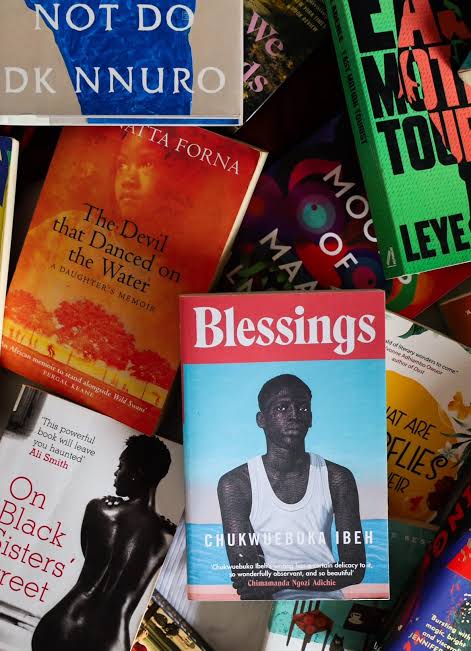
While social media has generated important intellectual discourses, it often suffers from a glut of shallow opinions. In many cases, these opinions are simply ideological arrows hurled against those who may not even be aware they are in the midst of a shadow war. The depthless attack on criticism has created a knowledge gap, for a mess has been made of what literature really is, even while thousands of African writers hurry to MFA programmes in Western universities to “learn” writing. One wonders why learning the techniques of writing is important if the critic is accused of judging literature on those same techniques. Such profound miracles of the mid-stage Internet era are endlessly fascinating.
It will be remiss to limit the growing antipathy towards literary critics and literary criticism to Nigeria and Africa alone. All over the world, the evidence is hard to repudiate. Recently, in a classic move of the billionaire oligarchy, The Washington Post Book World, one of the few remaining venues for mainstream criticism in the West, was closed down. That being the latest in a series of cuts that have seen full-time critics lose their jobs. It’s clear that contemporary attitudes towards literary and art criticism—in which literary value is increasingly redefined along non-aesthetic lines—have created a crisis around the critic’s role in society. The critic has become the scapegoat of a culture that pays lip service to real literary merit.
Perhaps this is why judges are no longer judging literature properly. There is no reason why, as in most recent examples, AI slop should escape literary prize judges if they are truly judging those writings on the aesthetics, foundations, and patterns of literature. We should therefore be genuinely worried about the kind of people judging our literary prizes today. Are they truly people interested in literature or people who hate it? Are they people who are unable to isolate literary quality from the agenda? Are they people who have developed sound literary taste? Are they people who can’t tell the difference between an author who fails to harmonise the technical devices available to them and one who does?
As for those of us who love literature and who, as I.A. Richards said, are concerned for its health, we will keep the literature canoe afloat amidst these storms.
Chimezie Chika is a staff writer at Afrocritik. His short stories and essays have appeared in or forthcoming from, amongst other places, The Weganda Review, The Republic, The Iowa Review, Terrain.org, Isele Magazine, Lolwe, Fahmidan Journal, Efiko Magazine, Dappled Things, and Channel Magazine. He is the fiction editor of Ngiga Review. His interests range from culture, history, to art, literature, and the environment. You can find him on X @chimeziechika1.
Cover photo credit: Grammarly