

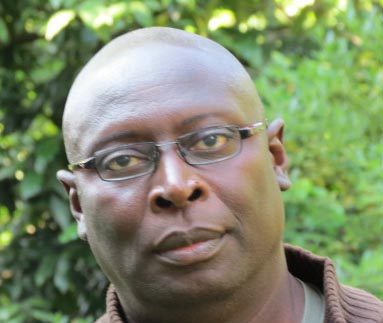

“I wanted a shorthand for expressing the fluidity and interparticipation of home and abroad in diasporan life”. — Pede Hollist
By Azubuike Obi
Sierra Leonean writer Pede Hollist is no stranger to the literary margins and to quietly, persistently pushing past them. His debut novel, So the Path Does Not Die (2008), has recently been selected for the WASSCE Syllabus for 2026–2030, a welcome development in a prose tradition that has, for the better part of a decade, skewed heavily toward Nigeria and Ghana.
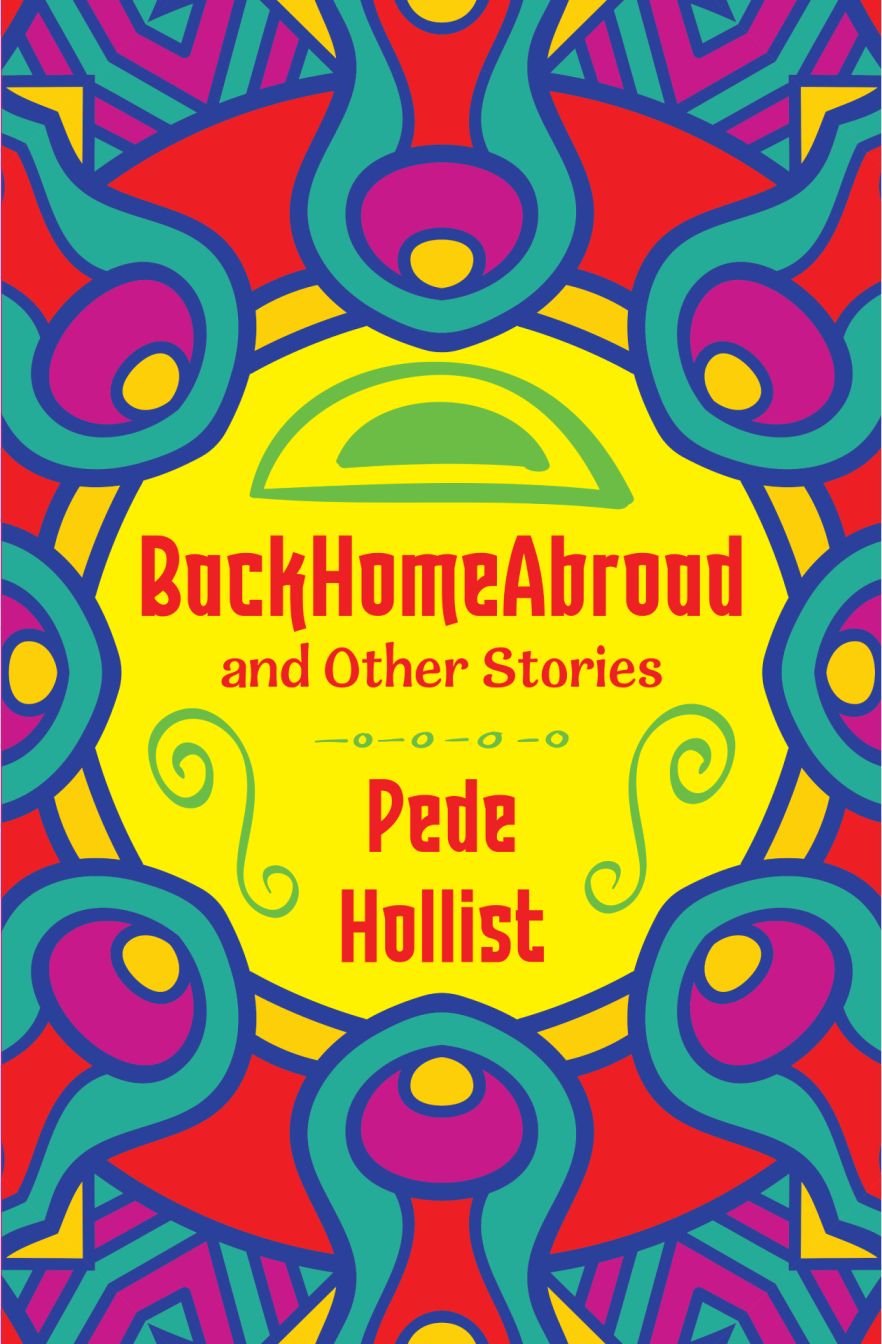
The novel’s selection was followed by its republication under the Lagos-based press, Narrative Landscape, which also published his debut short story collection, BackHomeAbroad and Other Stories (2025), a work that interrogates immigrant realities and the shifting, often ungovernable concept of displacement.
Hollist’s short fiction has long occupied a distinguished place in African letters. In 2013, his story “Foreign Aid” — included in the collection — earned him a spot on the 2013 Caine Prize shortlist, in what would have otherwise been an all-Nigerian lineup. He has also received the African Literature Association Award for his story “Wherever Something Stands, Something Else Must Stand Beside It”, and has been anthologised in Water: New Short Fiction from Africa. He is at present a Professor of English at the University of Tampa.
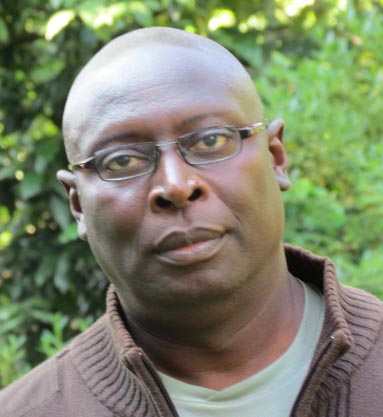
Afrocritik spoke with Hollist about the process of putting the collection together, the thorny hill of publication, and what’s next to expect from him. He spoke earnestly about combining fiction writing and teaching, the supposed homogeneity of MFA writing, and much more.
Congratulations on the inclusion of So the Path Does Not Die in the WASSCE syllabus. It’s a remarkable achievement. On a personal level, this goes to show the quality of the work you do in both the novel and short story forms. How do you approach writing in these two media? In what ways do your approaches differ, and how are they similar?
Thank you. I wouldn’t claim radically different approaches yet, but I am very conscious of what each form demands. In the short story, I’m drawn to characters under pressure—situations that are immediately clear and deeply human. I want the conflict to surface early and move quickly, with just enough setting and backstory to support the narrative without slowing it down. As a writer, I’m also trying to unsettle expectations—introducing turns, even the slightly unbelievable, so the reader stays engaged and off balance. The novel offers almost the opposite pleasure. Instead of compression, it invites immersion. You have space to live with characters, deepen the world, and let the language breathe. The reader isn’t rushing toward resolution so much as inhabiting the experience. That’s what I’m enjoying right now in Andy Weir’s Project Hail Mary (2021)—the sense of staying inside a world long enough to absorb it.
What books did you grow up reading, and was there a specific one that made you realise you wanted to do this?
Before I completed primary school, I remember reading all the Children’s classics books we had in a bookcase at home—King Solomon’s Mines (1885), Alice in Wonderland (1865), and others whose titles I can’t remember. In secondary school, I read the novels of Richard Gordon, P. G. Wodehouse, and James Hadley Chase. Saved in that bookcase with the children’s classics was a certificate my father had won for a BBC World Service writing Competition.
I may have subconsciously been interested in writing, but I don’t remember a eureka moment or a book that told me I wanted to write. I stumbled into writing fiction in my late forties. A colleague in my department encouraged me to put into writing the many stories I had shared with her. Around the same time, I read Rich Dad Poor Dad (1997), which emphasised using intellectual property to generate passive income rather than working for a paycheck. So the Path Does Not Die, my first novel, was the result.
In most of the stories in the collection, the characters are longing for home, sometimes as a place, other times as a feeling. Was this a theme you had specifically set to explore?
Not in a deliberate, pre-planned way, as I did with “BackHomeAbroad”. But when viewed as a whole, the preoccupation with home and belonging becomes clear. The stories span about fifteen years—from “Coming to America” to “Underlying Condition”—and across that range, the pattern reveals itself.
The simplest explanation is biographical. I have lived most of my life outside Sierra Leone, but she remains—like a Siren-Mami Wata summons—part of the consciousness I bring to every writing task, creative or otherwise. So when an idea presents itself, I inevitably filter it through a Sierra Leonean lens. That instinct, more than any formal plan, is what brings the collection together.
What was the hardest part of putting the collection together?
Putting it together was relatively easy; getting it published was the hard part. I spent five to seven years entering U.S-based competitions, pitching to publishers, and collecting polite rejections. Short story collections are a tough sell, especially if you’re not a well-known author. So, the manuscript kept stalling at that stage. Fortunately, after my novel So the Path Does Not Die was adopted as a recommended WAEC text, Narrative Landscape Press took a chance on the collection.
I’m interested in the title: BackHomeAbroad. In his introduction of the collection, Samuel Kamara posits that “this restructuring of three words into one is to iterate the notions that boundaries are not fixed; they can be collapsed, crossed over, rebuilt, reshaped, and extended”. How true is this assertion, and what informed this linguistic choice?
Very true, at least in my experience. Again, like the Balogun-Logan name change, I wanted a shorthand for expressing the fluidity and interparticipation of home and abroad in diasporan life. From a morning phone call for money from a relative in the birthland to a watercooler conversation about a World Cup match between the U.S.A and Ghana to a late-night newsreel about innovation and entrepreneurship in Sierra Leone, home and abroad blend seamlessly in multiple ways.
Some of the stories contained in the collection, such as that expertly done opening story, “Underlying Condition”, are open-ended— they do not allow for easy conclusions. As with stories, though very particular here, each reader brings their own interpretation to them. Why was it important to you that you deny your reader easy verdicts?
Because everything about life is complicated, or not as simple as I imagine, the more I read, learn, and listen, the less certain I am. Certainty is the prerogative of those with the power to exclude and reject.
In “Foreign Aid”, after years in America, Balogun becomes Logan. I find it interesting that this name change is never remarked upon, especially given the context and specificity of naming in African cultures. Were there reasons for this choice?
I saw the Balogun-to-Logan transformation as a kind of shorthand, one that captures both the history of naming in African American contexts and the adjustments many Africans and immigrants make as they adapt. Rather than pausing to explain it, I wanted the change to sit quietly in the story, doing its work without commentary.
Could I have explored it more? Yes—and I still might. But I was also interested in how these shifts often go unremarked in real life. For instance, my primary care physician is Dr. Bankole—pronounced Ban-ko-le. But everyone calls him Ban-kol. When I call his office, I ask to speak to Dr. Ban-kol. I sometimes wonder how he introduces himself in more formal spaces. That small slippage says a lot about accommodation, perception, and identity—exactly the kind of quiet transformation I wanted the story to carry.
Some schools of thought believe that storytellers are born, others believe that they are made. As a teacher of creative writing, what are your thoughts on this?
This is the old chicken-and-egg, nature–nurture question rearing its head again, right? So yes, I’ll happily weasel out and say: both born and made. The truth is, exceptional people in any field bring innate ability. Even someone who can’t stand football can see that Lamine Yamal has raw talent. But talent alone doesn’t carry him far—he still needs coaches, veteran players, trainers, even a dietician to keep evolving. That’s what makes him better.
Writing works the same way. You read widely, attend workshops, argue with other writers, read more than you have time for, sign up for a course, maybe even enrol in an MFA. All of it stretches your mind in ways you can’t fully predict. In short, writers may be born—but they are definitely made, too. And the good ones never stop learning and teaching.
Recently, there’s been talk about the role of the MFA in the work and life of the African writer— how MFAs tend to shape artists’ voices, such that, if one is not careful, they begin to sound like a professor of theirs wants them to, leading to a homogeneity, particularly in the choice of subject matter and overall tone. Some of the recent short fiction from these programs lent credence to this. What are your thoughts on this as a person in the system?
I am not familiar with the programs and short fiction you refer to. But assuming the claim is true, some homogeneity in subject matter, tone, and style is worth the knowledge of craft one learns from MFA programs. What little I know about creative writing has been shaped by African writers such as [Chinua] Achebe, Ngũgĩ [wa Thiong’o], [Wole] Soyinka, [Ben] Okri, and others, as well as Shakespeare and the authors of the Western Canon.
Generally, critics praise contemporary African writers when their work displays similarities to iconic figures and established genres. Why is the MFA’s shaping influence not viewed in the same way? The works of Jane Austen, Toni Morrison, and Chinua Achebe function like blueprints in my writing consciousness. I hope I inflect that consciousness with every new story, and over time, my style becomes distinct and defined. I suspect that’s the path that most MFA grads are on, growing into their own. Besides, I have worked with beginning African writers with little or no formal training and have read MFA students’ dissertations. The latter’s work is qualitatively stronger.
Walk me through a typical writing day of yours?

On a rough writing day, you wake up with this great idea that will turn your story into a masterpiece, and start making changes. You add, cut, modify, move, and refine the old draft until, hours later, you can’t recognise the old story. The changes have butchered it. You feel lost, drained as self-doubt settles in. But it has happened before, so you tell yourself to take a break, regroup, and work through the block. You browse the web to take your mind off your wahala, only to stumble upon a Medium or LinkedIn article outlining 10 steps to unleash your inner storytelling power.
In contrast, on a great day of writing, all the above happens, except that you push through the blockage, with or without the ten-step outline. In the end, a paragraph, section, or story emerges, polished and satisfying. You feel as if you can continue writing, and you are not a fraud—until the next morning.
Are there activities you do that seep into your writing and enrich it, whether professionally or for fun?
Not consciously designed activities. But I want humour to lace my writing, so—hoping it trickles down—I study comedies. Binge-watching personal African favourites like Yawa Skits and Anne Kansiime on YouTube, reruns of British and American sitcoms—Dad’s Army, Mind Your Language, Everybody Loves Raymond, Three’s Company, Cheers, and Barney Miller, to name a few. I’ve watched Some Like It Hot (Jack Lemmon, Tony Curtis), Dirty Rotten Scoundrels (Michael Caine), and Peter Sellers’ Pink Panther films an insane number of times.
I listen to stand-up comics. I hope by focusing on this genre, I develop a comic consciousness that, as you say, seeps into the work. As for how I fit the above with a full-time job and life. I write where I can. Early mornings. Late nights. Odd pockets of quiet.
Are there moments in the storytelling process that surprise you?
How much of it has to be planned and researched for it to present as fiction; how much of it has to be revised, rewritten, and reformulated; how I marvel at how other writers do it so well and effortlessly.
Who are three Sierra Leonean voices everyone should be reading?
Farouk Sesay–definitely Sierra Leone’s most prolific writer, a poet and novelist. His social criticism is sharp. Ahmed Koroma–the chemist-poet and now novelist who distils ordinary life into memorable images. Paul Conton–he won the Commonwealth First Book Prize in 1993 for The Price of Liberty. Terribly underrated.
What next can we expect from you?
Something speculative. I have been inching towards it in “Okonkwo’s Revenge”, “Wherever One Thing Stands, Something Else Must Stand Beside it”, and “Mami Wata’s Daughters”. I want to take the plunge now.
What do you want your work to be remembered for?
That it opened up another perspective, another lane for the reader to walk.
Azubuike Obi is an Igbo storyteller who believes in the transformative power of language. His fiction and nonfiction have appeared online and in print in The Republic, Efiko Magazine, Afapinen, Afrocritik, Naira Stories, and elsewhere. He was nominated for Chika Unigwe’s Awele Creative Trust Award and H.G Wells Short Story Competition in 2024, and is currently pursuing a Bachelor’s degree in English Language and Literature.