


It is troubling that so little African fiction is confronting these issues with sufficient urgency.
By Chimezie Chika
It could be said that modern African written literature began with political novels. It emerged at a time when the major struggle of Africans was the fight to shed the colonial shackles that had held the continent in servitude. Writers such as Peter Abrahams, Chinụa Achebe, Ngugi wa Thiong’o, and even cultural novelists such as the Egyptian Nobel laureate Naguib Mahfouz and the Sudanese, Tayeb Salih, wrote novels that either spoke directly to the colonial condition or indirectly, through its affirmation of Arabic cultural sophistication, upheld the pride of their local people as opposed to the culture of the colonial powers.
The age of political literature in Africa—or when its production peaked—was between the 1960s and the 1980s. Coincidentally, these were the decades during which most African countries gained their independence. It also marked the first decades of their postcolonial era. The disaster of Africa’s immediate postcolonial era was the entrenchment of a grasping, opportunistic political class (the erstwhile independence agitators and freedom fighters, wonder of wonders!) and their failure to meet the economic and political expectations of their respective nations. Many drove their countries into economic and political doldrums where power tussles, wars, famine, and near-zero infrastructural development became the order of the day.
Elsewhere in the world, the era from the 1960s to the 1980s was also politically significant. It saw the peaking and eventual end of the Cold War, witnessed the remarkable Civil Rights Movement in the United States, the sexual revolution, and the radical energies of second-wave feminism. The end of the Cold War in the late 1980s occasioned the collapse of the vast USSR and, back home in Africa, the fall of the repressive apartheid regime in South Africa — victories consolidated in the early 1990s with the independence of several Soviet republics and the first true general elections in South African history.
The 1960s to 1980s period was also the era that befittingly ushered in the most accomplished political fiction in African literature. The likes of Achebe, Ousmane Sembène, Wole Soyinka, Ayi Kwei Armah, Ngugi, and several South African writers stretching from Fugard to Biko wrote books that challenged the political inconsistencies and racial segregation of their homelands.
Throughout his career, Ngugi, in particular, confronted political corruption, malfeasance, and tyranny in a series of trenchant and often Marxist-leaning fictions. Through his works, Ngugi relentlessly proposed that Africa’s decolonisation should be comprehensive, in both cultural and political terms. In the same vein are Sembène’s propulsive God’s Bits of Wood (1960) and his compatriot Aminatta Sow Fall’s The Beggars’ Strike (1981). Two of Achebe’s novels — A Man of the People (1966) and Anthills of the Savannah (1987) — remain major reference points, as do feminist masterpieces such as Mariama Bâ’s So Long a Letter (1979) and Buchi Emecheta’s ironically titled The Joys of Motherhood (1979).
Fast-forward to the second and third decades of the 21st century, and politically themed African novels and fiction have visibly dwindled — even as many of the same political issues that earlier African writers fought over remain unresolved.
Politically, Africa is still generally performing poorly across many indices. Worst of all, poverty and its attendant economic regression have increased. Draconian anti-LGBT laws are still being passed in several countries — most recently in Senegal — drawn along religious and cultural lines. And women remain, needless to say, vulnerable to all kinds of unacceptable violence across the continent.
Considering all this, it is troubling that so little African fiction is confronting these issues with sufficient urgency. A certain faction within Africa’s most recent generations — Gen Z particularly — are even agitating for a move away from what they describe as “traumatic literature”, toward works that offer escapism through romance or speculative idealism.
Yet the political health of Africa remains supremely questionable. There is virtually no justification for turning one’s gaze away from the life-and-death issues confronting the continent today. We must stand for life and truth, and we must ask the questions that need to be asked. When we survey the continent’s literature at a time like this, which novels and works of fiction can we point to as genuinely engaging with our contemporary politics?
Below are some of them, in no particular order:
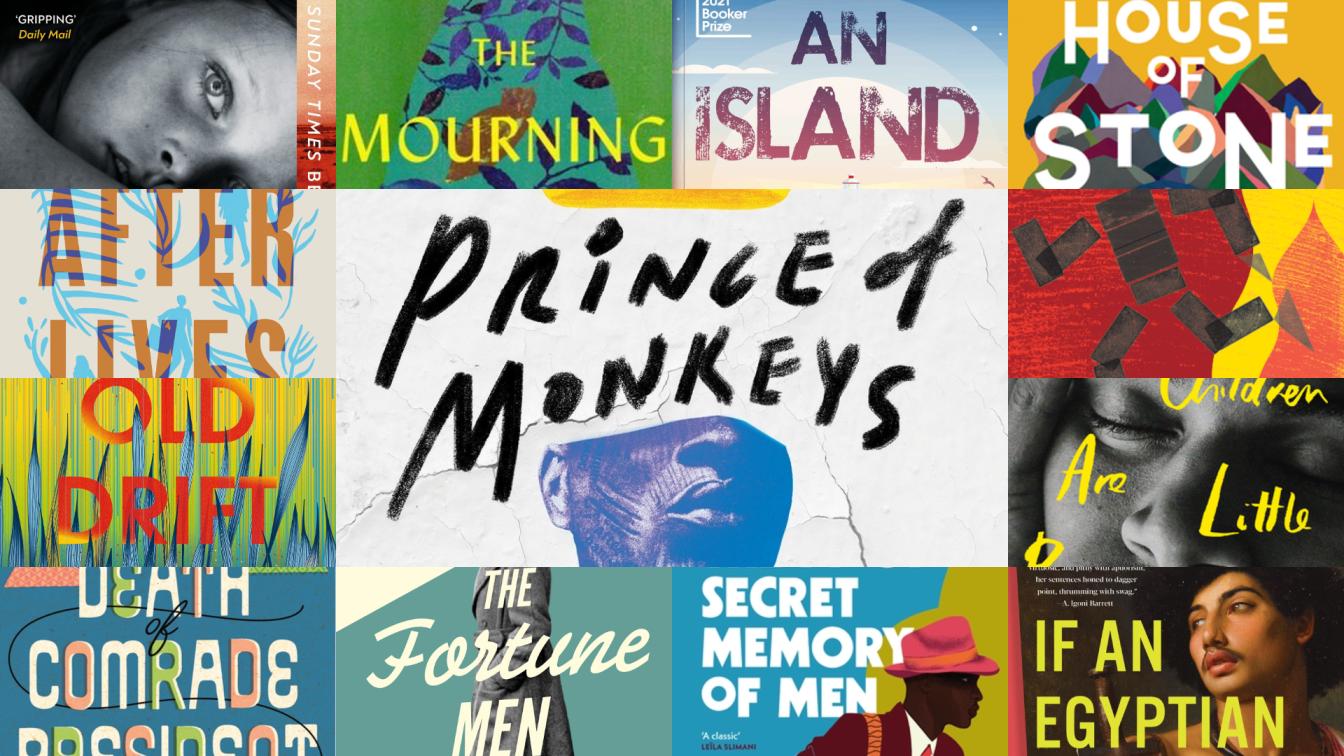
Prince of Monkeys (2019) — Nnamdi Ehirim
This stirring novel captures the trauma of a generation that came of age at the peak of military junta rule in Nigeria, and the upheavals that attended its unbridled authoritarianism — all set against the backdrop of the revolutionary music of Fela, the ultimate activist-musician, who inspired that generation.
If an Egyptian Cannot Speak English (2022) — Noor Naga
Another novel trained on a generation’s struggle, Naga’s experiment takes a close look at the fractured aftermath of the Arab Spring revolution in Egypt.
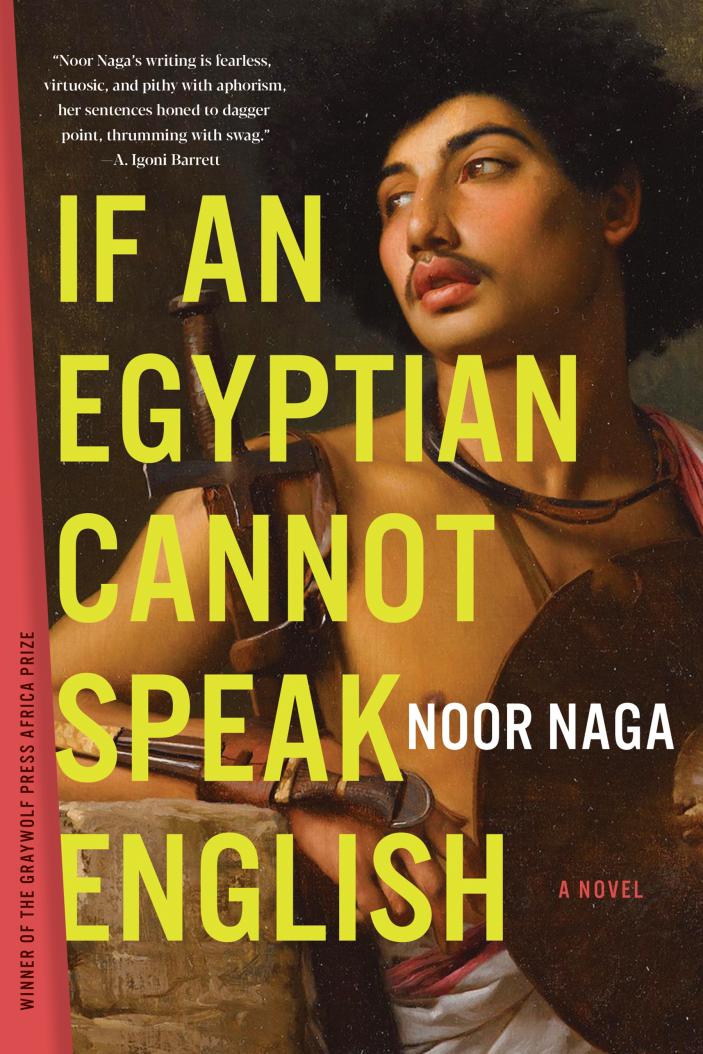
The novel follows a returnee woman and an ex-Arab Spring revolutionary in Cairo years later. A doomed relationship built on lies develops, but one which can stand for Egypt’s fractured relationship with how it tells the narrative of its own history.
Born on a Tuesday (2016) — Elnathan John
If you have ever wondered about the emotional undercurrents of Islamic fundamentalism in Northern Nigeria, this is the novel to read. This is a coming-of-age story that follows Dantala, a young Almajiri boy, who is gradually radicalised—via the route of poverty, mostly—into Islamic fundamentalism. The almajiri system in Northern Nigeria is a thorny issue in the country, and John’s novel explains the emotional and religious precepts that keep the system in business.
House of Stone (2018) — Novuyo Rosa Tshuma
This extraordinary novel captures the chequered history of Zimbabwe’s political dilemma through allegory and symbolism.
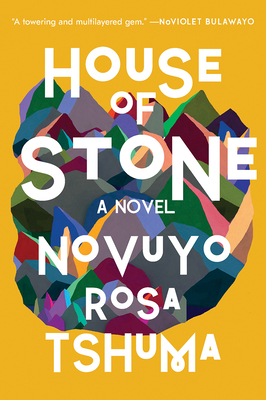
A thought-provoking tale of Zimbabwe’s multifaceted social and political state, it follows the storylines of a number of characters, including Zamani, its wily protagonist. It is packed with humour and lots of twists to keep the reader guessing—buoyed by a prose that is endlessly inventive and lively.
The Most Secret Memory of Men (2021) — Mohamed Mbougar Sarr
Many years ago, a real African writer from Mali was accused of plagiarism in France, after much critical fanfare had greeted his first novel. The weight of that accusation forced him to return home and become a recluse. Many years later, Senegalese writer Mbougar Sarr turned that reality into a novel that interrogates, among other things, political questions around cancel culture and plagiarism. This novel happens to the reader on so many levels.
The Shadow King (2019) — Maaza Mengiste
This novel about the Italian occupation of Ethiopia — the only African country that escaped colonisation — follows a number of fictional women through the Second Italo-Ethiopian War.
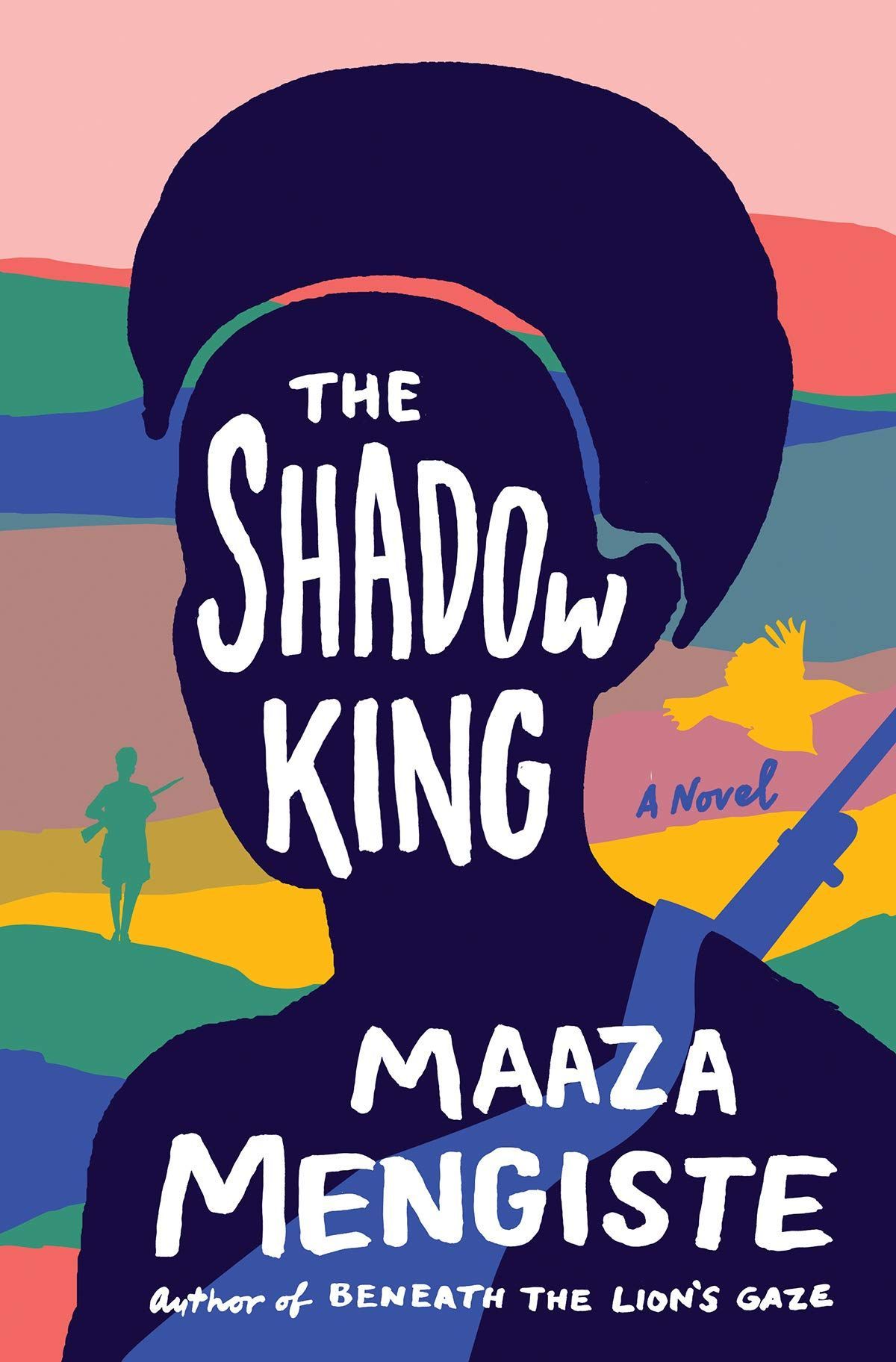
The remarkable revelation of that war was the role of the now forgotten women soldiers, whom Mengiste immortalises here. Mengiste places the women’s heroism at the centre of the narrative, showcasing how their value stands on the same pedestal as their menfolk. This novel remedies the errors of Ethiopia’s political history.
God’s Children Are Little Broken Things (2022) — Arinze Ifeakandu
This collection of linked stories—the only one in this list—about the emotional lives of gay people in Nigeria deserves inclusion because it is, quite honestly, the finest collection of short stories out of Africa in the last ten years. We are talking about virtuosic writing and characters that breathe close to your ear. From story to story, Ifeakandu not only convinced us of his bracing talent but also of the shared humanity regardless of gender, ideology, sexuality, or creed.


The Fortune Men (2021) — Nadifa Mohamed
The Somali-British writer’s novel tells the story of a Somali immigrant wrongfully convicted and executed on the strength of falsified police documents. The novel appears to invert Warsan Shire’s poem “Home”, whose famous first line — “No one leaves home unless home is the mouth of a shark” — affirms the idea of diasporic refuge. In Mohamed’s novel, that refuge might be another open-mouthed shark lurking.
An Island (2019) — Karen Jennings
A man who has been living on an isolated island off the coast of his country wakes up one morning to see the body of another man washed up on the shore. An intruder? His internal self-searching becomes a recapitulation of the active political life he had lived as an erstwhile revolutionary. Jennings’ slim novel is a lyrical tale of the aftermath of South African history—a necessary reminder of the psychological impacts of tyranny and human-wrought evil.
The Mourning Bird (2019) — Mubanga Kalimamukwento
The AIDS epidemic in Southern Africa was a phenomenon that left hundreds of thousands of casualties in its wake. In this novel, Kalimamukwento, Zambia’s contemporary literary star, captures her country’s struggle through that sordid affair, alongside the economic hardship and volatile Zambian politics that aided its rampage.
The Death of Comrade President (2020) — Alain Mabanckou
This novel has been described as a tale of family and revolution in postcolonial Africa. It follows in the tradition of works such as Achebe’s Anthills of the Savannah and Ngugi’s Devil on the Cross and Wizard of the Crow. Congolese novelist Mabanckou, arguably the most prominent francophone African writer, has always been keenly conscious of the rotten politics of his homeland. Many of his novels tread the line between picaresque satire and political consciousness, often through the eyes of child characters.
The Old Drift (2019) — Namwali Serpell
The accomplished Zambian writer’s inventive debut deconstructs novelistic form in its pursuit of a story that, among other things, observes and turns Zambian history on its head. The novel’s timeline also extends widely from far back in Zambian history to years into the future. Serpell’s widely remarked brilliance is evident on every page of this epic novel.
Afterlives (2020) — Abdulrazak Gurnah
In the late 19th and early 20th century, Tanganyika and Zanzibar (and other parts of East Africa) was thoroughly in German colonial hands. There were missionaries, colonial officers, farmers, fortune seekers. Gurnah, the Tanzanian Nobel Laureate, was in characteristic form in this novel, which looks at the early colonial history of Tanzania, where German officers turned boys into foot soldiers. A novelist thoroughly at home with history, there is perhaps no more eloquent indictment of the colonial enterprise than Gurnah’s fiction.
The Promise (2021) — Damon Galgut
Galgut’s novel begins in 1986, close to the fall of the Apartheid system, and follows the decline of a white family. Its simple premise is built on the death of Jewish woman outside Pretoria whose Afrikaner husband, Manie, had made a promise to her. The promise was that Manie would give their black maid the deeds to the annexe she occupies. Unfortunately, after his wife’s death, Manie couldn’t care less to fulfil this promise. Galgut’s accomplished novel tackles post-apartheid disillusionment through the lens of a white South African family whose refusal to acknowledge history and the present stands for South Africa’s many political issues with its racial profiling.
The Termite Colony (2025) — Ike Okonta
The review of this novel on Afrocritik begins thus: “In recent memory, there has not been a novel more encompassing in its examination of the Nigerian problem.”
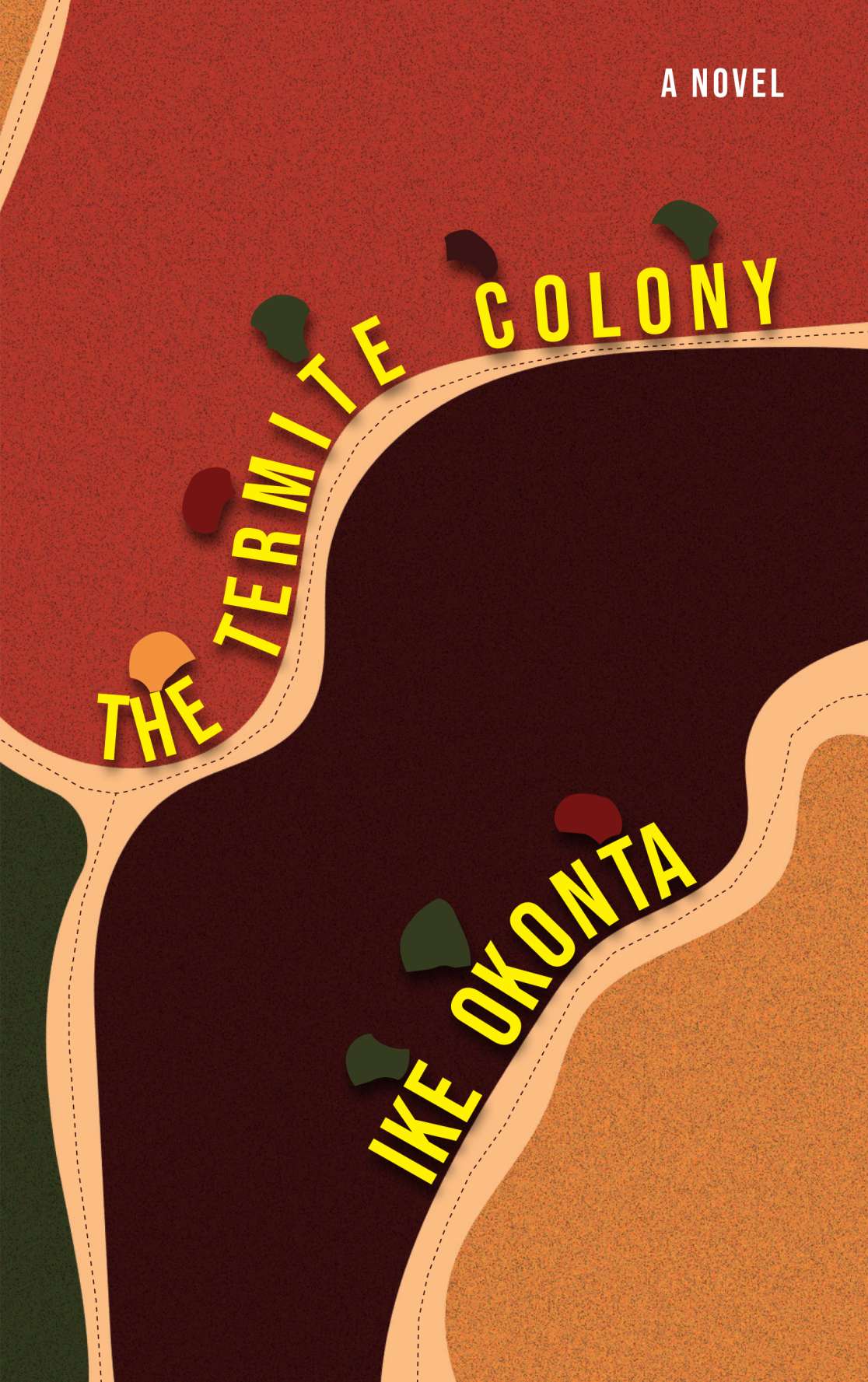
Set in Abuja, two decades after the end of military rule, this novel examines every facet of the Nigerian condition—from political corruption and democratic failings, to Japa and economic deprivation—through the eyes of three friends who are variously champions of democracy, Marxism, and Pan-Africanism. Following the example of Achebe and Ngugi, this novel takes a hard, unflinching look at the political battleground that is Nigeria.
Chimezie Chika is a staff writer at Afrocritik. His short stories and essays have appeared in or are forthcoming from, amongst other places, The Weganda Review, The Republic, The Iowa Review, Terrain.org, Isele Magazine, Lolwe, Fahmidan Journal, Efiko Magazine, Dappled Things, and Channel Magazine. He is the fiction editor of Ngiga Review. His interests range from culture, history, to art, literature, and the environment. You can find him on X @chimeziechika1