


We must not only question the failures of our literary space, but we must also ask forward-looking questions of and about it.
By Chimezie Chika
I
Criticism of Nigerian (and African) literature has always griped about its inadequacies. In the period between the 1960s and 80s, the likes of Obi Wali, Chinua Achebe, the troika critics (Chinweizu, Madubuike, and Onwuchekwa), and others, wrote eloquently and angrily on matters ranging from language to canon. In recent times—in the 2020s—a resurgence of such criticisms re-declared, via varying intellectual positions and ideals, that Nigerian literature was dead, or close to dead.
It is all well and good to rail against the unaccountable failures of a system that has the immense potential to be better; it is infinitely justified to hold a prevailing system to high standards. But if these concerns are genuine, panaceas should be offered alongside. Scanning through the overwhelming waves of pessimism that have marked criticism of Nigerian literature, one is hard put to find workable solutions being offered within their trenchant essayings.
One can begin by asserting, as many have done, that Nigerian literature, its culture, and its ecosystem are far from where they need to be. There are very few traditional publishers, there is a lack of government or institutional support, the country lacks a functional middle class (which is often the foundation of a robust literary culture), and available philanthropic funding is humanitarian in nature, which is necessitated by Nigeria’s long-standing sectarian and civil instability.
I mentioned a dearth of literary-centred philanthropy because literature everywhere is sustained by patronage. The social and political disorder in Nigeria predicates the underdevelopment of the country’s literary culture. And there is no way the situation of Nigerian literature can be helped by the kind of continuous, unbridled pessimism its literary criticism vituperates.
Intellectuals, more than any other demographic, are well aware that solutions to real-world problems begin with the cultivation of a utopic imagination or, at least, a collected optimism of some sort. Scientific scholars have long understood the importance of progressive imagination in developing or redeveloping non-working spaces or models. William James’ functionalist thinking emphasised the use of creativity to innovate upon human problems whose fundamental solutions lie within the sphere of human control.
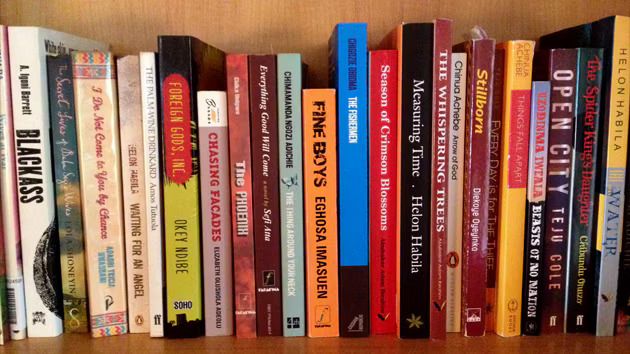
The challenge then, for critics, is to approach criticism of our literary ecosystem with solution-based ideals. We must not only question the failures of our literary space, but we must also ask forward-looking questions of and about it. What can be done to bring this literary culture to where we need it to be? How do we begin to position it on the part of real progress?
II
The work of building a cultural or artistic ecosystem—not to talk of a literary one—is a collective and endless concert of ideas. It calls for continuous material and intellectual investment. The timeline is not rushed, but is mediated by a long, gradual, and sustained effort towards the desired goal. It involves a total reorganisation of the collective psychology and attitudes of its participants. Each person, organisation, or institution works independently but also harmoniously to build up the ecosystem to levels where it begins to acquire its own codes and channels and language—its own way, in short. Such consciousness is what the Nigerian literary ecosystem needs.
The development of a robust literary culture is the product of a philosophical focal point that has the power to define the processes that determine success within it. All stakeholders involved will have to believe in an ideal of what they want the literary culture to be, and pursue it. That ideal becomes what carries the culture and all its parts. The need for this gradual but all-encompassing attitude is driven by the curious gaps that have attended Nigerian literary infrastructure—where it exists—for decades.
The most significant of that infrastructural gap is the publishing industry. The story of Nigeria’s publishing industry is often told inadequately, because it does not afford its patrons — the writers — enough options. This is even more so now that a few new-age publishers are taking over the scene. The point? The likes of Masobe, Narrative Landscape, Ouida, and other traditional publishers cannot carry the literary ecosystem, even at this stage, for the more new serious-minded publishers emerge, the more they compound innovations that will impact the literary culture as a whole.
As it is, the ones we have presently are incapable of serving an ecosystem that produces writers in their thousands. Although these publishers are admittedly doing their best through small-scale forays with new books and, mostly, republication of works already published in the West, they are nowhere near optimising the potentials of Nigerian literature—potentials which are truncated by a weak economy and its impoverished populace.
Nigeria is one of the world’s great melting pots of literary talent (or of course any talent at all, and part of the reason for this is its behemoth of a population), but the extents to which these literary talents can go within the country are severely hampered by glaring gaps in the literary culture and infrastructure. This is what has informed the japa of Nigerian writers to mostly Western locations. Had the culture been more developed, the situation would have been different.
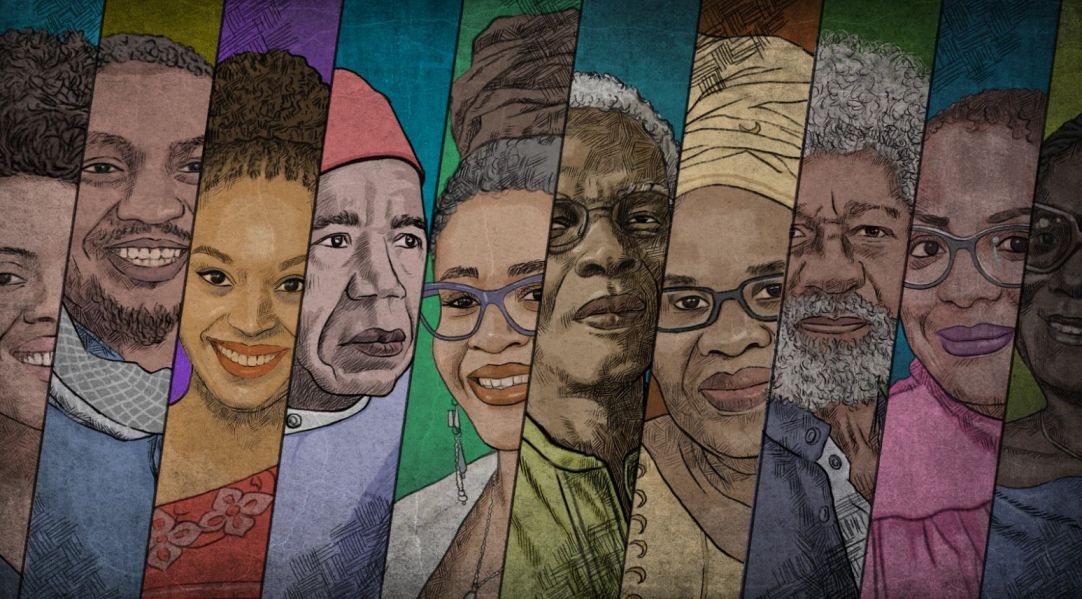
Culture happens at a minute level. It begins with action, which is subsumed into material and immaterial infrastructure, which then form the recognisable parts of a working ecosystem. What Nigerian literary culture may lack is that detailed philosophical core. How has this culture convinced Nigeria of its indispensability? In other countries, complaints about a decline in reading culture often necessitate collective, practical actions, as the UK is doing this year.
In Nigeria, the presence of such solutions does not even exist in any meaningful way. The biggest stakeholders in the arts outside literature in this country—musicians, actors, filmmakers, creators—have never been known to promote great literature, or any literature at all. There is, therefore, a lack of integration between these art forms and literature. Nollywood, for instance, has neglected book adaptation to its own creative detriment.
The complementary mutual enrichment that would’ve developed therein would’ve been massively beneficial to Nigerian literature and the prestige and success of Nollywood films. It would’ve meant authors being able to make a living solely from books. It would also have meant a literary culture that goes beyond niche intellectual circles into at least partial integration with popular culture, one able to engender real bestsellers from its sizeable readership.
Thus, publishers, authors, program coordinators, booksellers, and other stakeholders will need to come up with something that convinces the populace of the necessity of book culture. In one long discussion I had with the author, Nnamdi Anyadu, who was disillusioned with the presence of so much pessimism from thinkers on our literature, who in his opinion are completely dissociated with successes being recorded (“You cannot say a literature is dead when you have festivals, book clubs, publishers, and bookstores”, he said), I told him he was right but that it is grossly inadequate, because what we have cannot sustain liteary careers unless writers snag publishing deals overseas and can build fame (or notoriety, as the case may be) outside the country.
I made a dystopian proposal on the foregoing. I was of the view that Nigerians will somehow need to be convinced that reading is a matter of life-and-death or even of an apocalypse. Something along the lines of: if we do not read, we will go extinct. If we have a situation involving a massive ad messaging on the scale of Soviet or Mao China’s agitprop, maybe it could go some way in manipulating—and I do not use this word lightly—the Nigerian population into developing a substantial book-centred culture. This is rather simplistic, of course, especially since, for instance, it does not take into account Nigeria’s fatal tribal strifes; it makes my point, however: cultural integration with other forms of art, and a philosophy that aims to cover every important area of its ecosystem, is what Nigerian literature needs.
III


So, how will Nigerian literature achieve this? Through culture positioning. This may seem like a strange notion, given that Nigeria’s literary exports are some of the most recognisable in the world. The issue here is not that the culture is not operative on some level, for people are doing good work within it; it is that the literary culture has not placed itself at the vanguard of real affairs in the country. Its messaging is mixed, and that has to change; it must convince people outside of it that something positive is happening; it must extend its tentacles beyond the borders it has erected around itself. During that selfsame discussion I had with Nnamdi, we concluded that our literary culture has been positioned to exploit the interests of a few. It prides itself on its own intellectual elitism (although intellectualism is non-negotiable in any literary culture, it will mean nothing if sound thought fails to match with followership, reach, and purchasing power). And it exists within a limited space. What thinkers decry when they write about Nigerian literature will change, not through aimless injection of funds, but through putting Nigerian literature at the forefront of everything that matters to this country at the moment, or to anchor some of the limbs of our literary culture and philosophy around the things the country cannot do without, from education to health and politics. This is not a novel idea; countries like Britain and Russia built something like it.
It is also not a new idea even in Nigeria. It has happened with Afrobeats. It is the biggest example of how cultural positioning can be a tremendous success. In the 2000s, when popular Nigerian music announced itself, it went through a period where no one could say what it was exactly or what it was trying to do, apart from copying strands of American pop culture.
The sounds being made were so far apart that it remained “Nigerian Music” to everyone, indistinguishable from reggae, the emerging dancehall, many traditional fusion and folk sounds. The productions and funding channels were still inchoate, and many musicians still worked with exploitative marketers in Nigeria’s major commercial hubs. Good music was being made, but something new needed to happen: a sound that was more culturally and philosophically unified needed to emerge, and it did as the 2010s began.
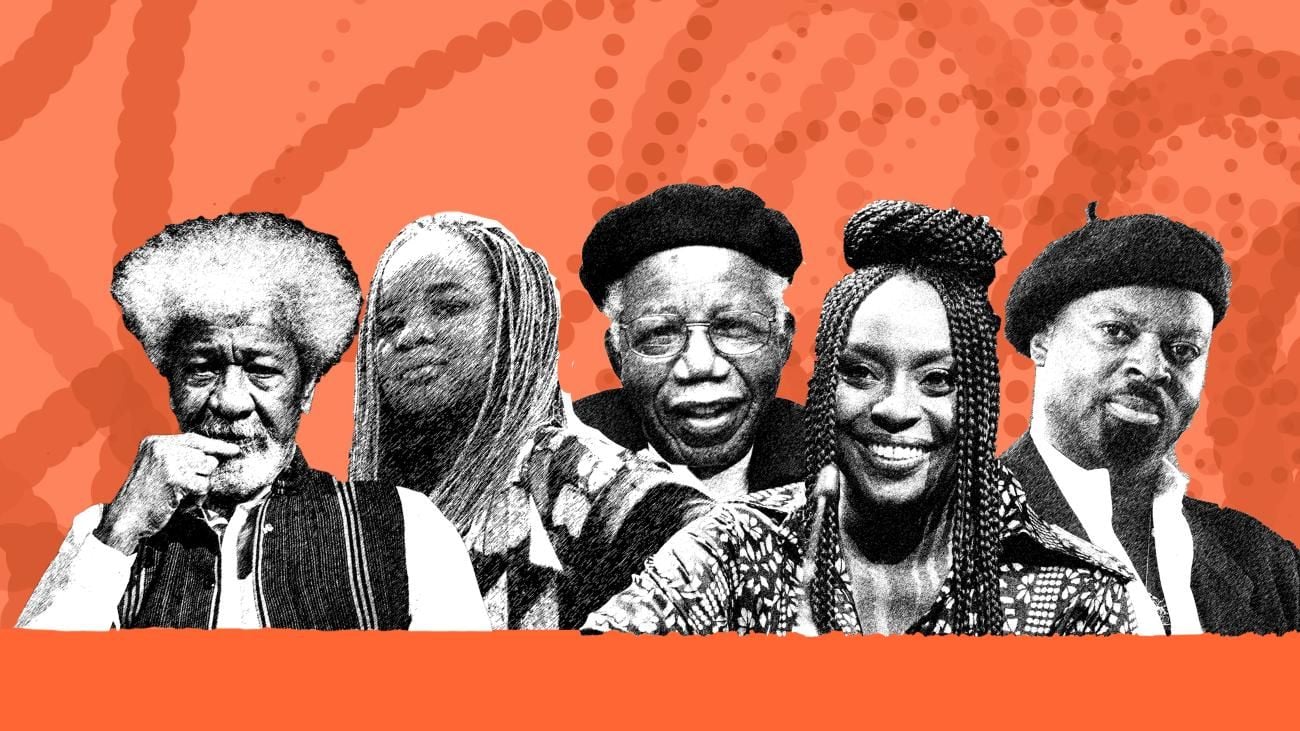
What changed was continuous creative and philosophical investment into the zeitgeist of a country that needed every single strand of its many cultures and ethnicities to recognise something in its contemporary music. It was a programmed unity on a sonic scale. The musicians took cultural sounds and continued to tweak and modernise them over a long time. They managed to convince Nigerians that the music meant something to them beyond the tag of good music; it was Nigerian and African—an evolved version of the people’s culture. Afrobeats managed to put itself at the forefront of Nigerian culture, becoming its representative in a popular culture that was previously a tagalong of those in the West.
This gradual philosophical and psychological investment is what Nigerian literature needs in this age of information ferment. Its old channels may no longer be effective. The literary culture needs to build bridges with institutions that have long neglected it by pushing itself as representing something in this age. While my speculative idea of convincing the country of a world in which the absence of literature will create an apocalypse of literacy within its national borders may be too far-fetched, it is my way of saying that people innovate when there is a genuine sense of need.
Time is one thing that cultural positioning needs. It is infinite, endless, and becomes telling on gradual, sustained work. If the philosophy is gotten right, it needs a good time to be massaged into the collective imagination. Massive investments in Afrobeats happened because it allowed time to do part of its work. Such investments into creating robust infrastructures for Nigerian literature will happen at scale when the country’s institutions have been captured by a strong literary imagination. Public philanthropy will then begin to extend to literature as a cultural investment.
As we find in robust literary cultures, the wealthy will begin to create intellectual investments in the same way they do with businesses. Residences will come up, universities will receive specific endowments, funds for magazines, fellowships, grants, and others will be more abundant and democratic. But these will be impossible without the time and philosophy to create them, to convince the country that creating these things will somehow enrich its larger identity and creative economy.
A last notation is the Nigerian government. The government has a role to play in these through appropriate legislation. It has to project optimism, tackle legal issues, reward excellence, and push for a stronger economy with a tangible middle class. The integration of literary culture into the country’s common imagination will need, amongst other things, the kind of freedom given to religious organisations. Such a move, along with everything else discussed here, will allow the emergence of Nigeria’s version of legacy organisations such as OSF, NEA, and others, in due course.
Chimezie Chika is a staff writer at Afrocritik. His short stories and essays have appeared in or forthcoming from, amongst other places, The Weganda Review, The Republic, The Iowa Review, Terrain.org, Isele Magazine, Lolwe, Fahmidan Journal, Efiko Magazine, Dappled Things, and Channel Magazine. He is the fiction editor of Ngiga Review. His interests range from culture, history, to art, literature, and the environment. You can find him on X @chimeziechika1
Cover photo credit: The Booker Prizes