

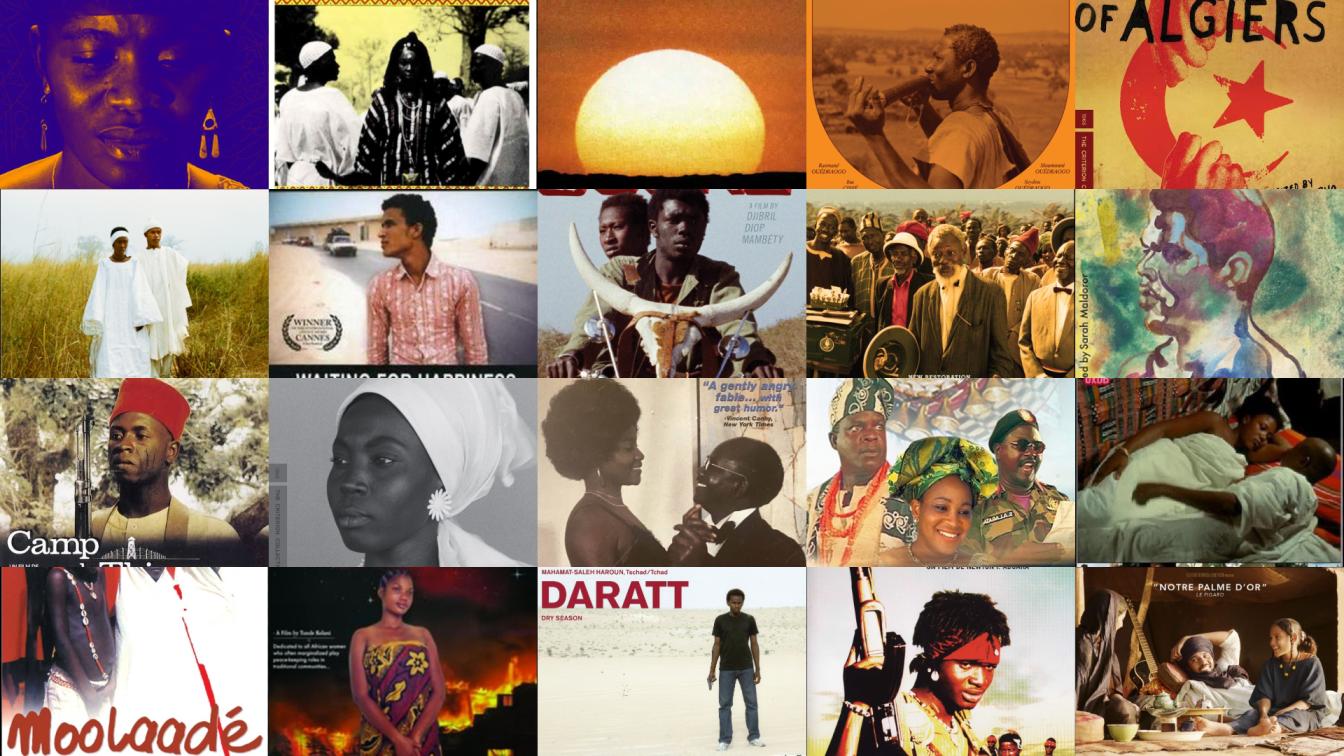


To watch these films is not simply to revisit African cinema’s past. It is to encounter many of the questions Africa is still asking.
By Afrocritik’s Film Board
African cinema has a reputation problem. Ask the average viewer to name a classic African film and, if they can name one at all, they will likely arrive at the same handful of titles: Black Girl (1966), Touki Bouki (1973), Xala (1975), Yeelen (1987). These films are spoken about with a kind of reverence that can make them feel distant; important, certainly, but also historical, the cinematic equivalent of monuments one is expected to admire rather than engage with.
Yet the remarkable thing about many African classics is not that they are old. It is that they remain stubbornly contemporary.
Long before policy experts began producing reports on brain drain, African filmmakers were making films about migration. Long before corruption became a favourite subject of election-season rhetoric, filmmakers were dissecting the relationship between political independence and elite failure.
Long before contemporary debates around gender, religious authority, or extremism hardened into the terms we now use, African cinema was already asking difficult questions about who holds power, how they acquire it, and who bears the consequences. That these questions feel as urgent in 2026 — when irregular migration across the Mediterranean continues to claim African lives, when military coups have reshaped the Sahel, and when debates around gender and cultural identity are more contested than ever — is precisely what makes these films worth returning to.
To that end, Afrocritik presents 20 African cinema classics grouped by the contemporary issues they most powerfully illuminate: migration, corruption, colonialism, tradition and identity, gender, and conflict. While many of these films touch on multiple themes, each has been placed under the issue it engages most directly.
The goal is not to reduce these works to a single idea, but to use them as entry points into some of the forces that continue to shape African life today. To watch these films is not simply to revisit African cinema’s past. It is to encounter many of the questions Africa is still asking.
Migration, Mobility, and the Dream of Elsewhere
If there is one theme that links African cinema across generations, it is movement. Whether toward Europe, toward the city, or toward some imagined future beyond present circumstances, migration has remained one of the continent’s most enduring preoccupations. What makes these films remarkable is that they rarely treat migration as a simple story of escape. Instead, they examine the desires, frustrations, and inequalities that make leaving feel necessary in the first place.
Black Girl (1966)
When discussions about migration dominate contemporary headlines, they are often framed through numbers: visa applications, border crossings, remittance flows, etc. Ousmane Sembène’s Black Girl restores the human dimension.
Widely regarded as the first feature film by a Sub-Saharan African filmmaker, the film follows a young Senegalese woman who travels to France expecting opportunity and discovers a different form of servitude instead. The film’s power lies in how little has changed. Its concerns (economic dependency, racial hierarchy, cultural alienation, and unequal Africa-Europe relationships) remain central to migration debates nearly sixty years later. Black Girl is often remembered as a landmark of African cinema. It is also one of the sharpest examinations of migration ever put on screen.
Touki Bouki (1973)
If Black Girl examines the realities of migration, Djibril Diop Mambéty’s Touki Bouki examines its seduction. Few African films capture the emotional pull of elsewhere as vividly as this story of two young Senegalese dreamers obsessed with reaching Paris. What makes the film enduring is its refusal to present migration as either salvation or betrayal. Instead, Mambéty focuses on desire itself: the longing for a different life, the dissatisfaction with the present, and the fantasy that geography alone can resolve deeper frustrations.

Half a century later, as thousands of young Africans continue to risk everything in pursuit of opportunities abroad, Touki Bouki remains painfully relevant. Martin Scorsese’s World Cinema Project restored Touki Bouki and is now considered one of the essential works of world cinema. None of that diminishes what it remains at its core: a precise portrait of young people seduced by an elsewhere they cannot quite reach
Waiting for Happiness (2002)
Abderrahmane Sissako’s film approaches migration from a quieter angle. Set in Nouadhibou, a coastal Mauritanian town at the edge of the Sahara, where the desert meets the Atlantic Ocean and the route to Europe, the film follows Abdallah, a young man who grew up in the town but no longer speaks its language. He is passing through on his way to Europe. Around him: an old woman teaching a child to sing, a Chinese electrician stringing lights, West African migrants washing ashore. Everyone in Nouadhibou is, in some sense, waiting.
The film understands something that migration statistics cannot capture: migration often transforms entire communities, not just those who leave. The anticipation, uncertainty, and suspended lives that accompany movement become part of the social fabric itself. In many ways, Waiting for Happiness is a film about limbo; a condition that remains familiar to countless Africans navigating restrictive visa regimes, economic precarity, and uncertain futures.
Corruption, Leadership, and the Betrayal of Independence
One of the great recurring questions in African political life concerns the gap between the promises of independence and the realities that followed it. Across decades and across countries, filmmakers have repeatedly interrogated what happens when political liberation fails to produce social or economic transformation.
Xala (1975)
Few films have diagnosed post-independence disillusionment more effectively than Xala. Adapting his own novel, Ousmane Sembène turns a satirical eye toward a newly empowered Senegalese elite that has inherited the privileges of colonial rulers without fundamentally altering the structures of power beneath them.
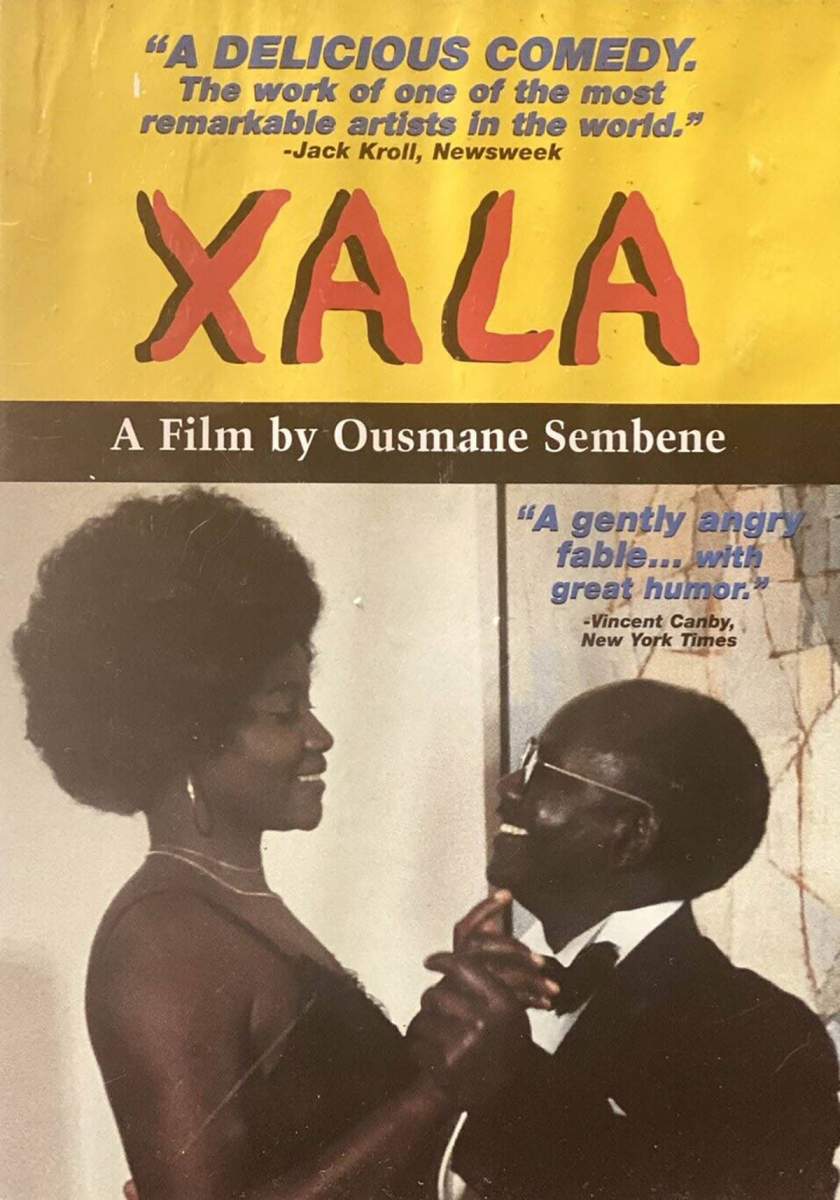
The film’s target is not colonialism alone but the local elites who replaced colonial administrators while preserving many of the same inequalities. Its critique remains startlingly contemporary. Across the continent, debates about corruption, political patronage, and elite capture continue to revolve around questions that Xala was already asking fifty years ago.
Saworoide (1999)
If Xala is among Africa’s greatest political satires, Saworoide is among its most incisive political allegories. Tunde Kelani’s Yoruba-language classic uses folklore to explore corruption, resource extraction, military interference, and failures of governance. Though rooted in a fictional kingdom, its political implications have always been unmistakable.
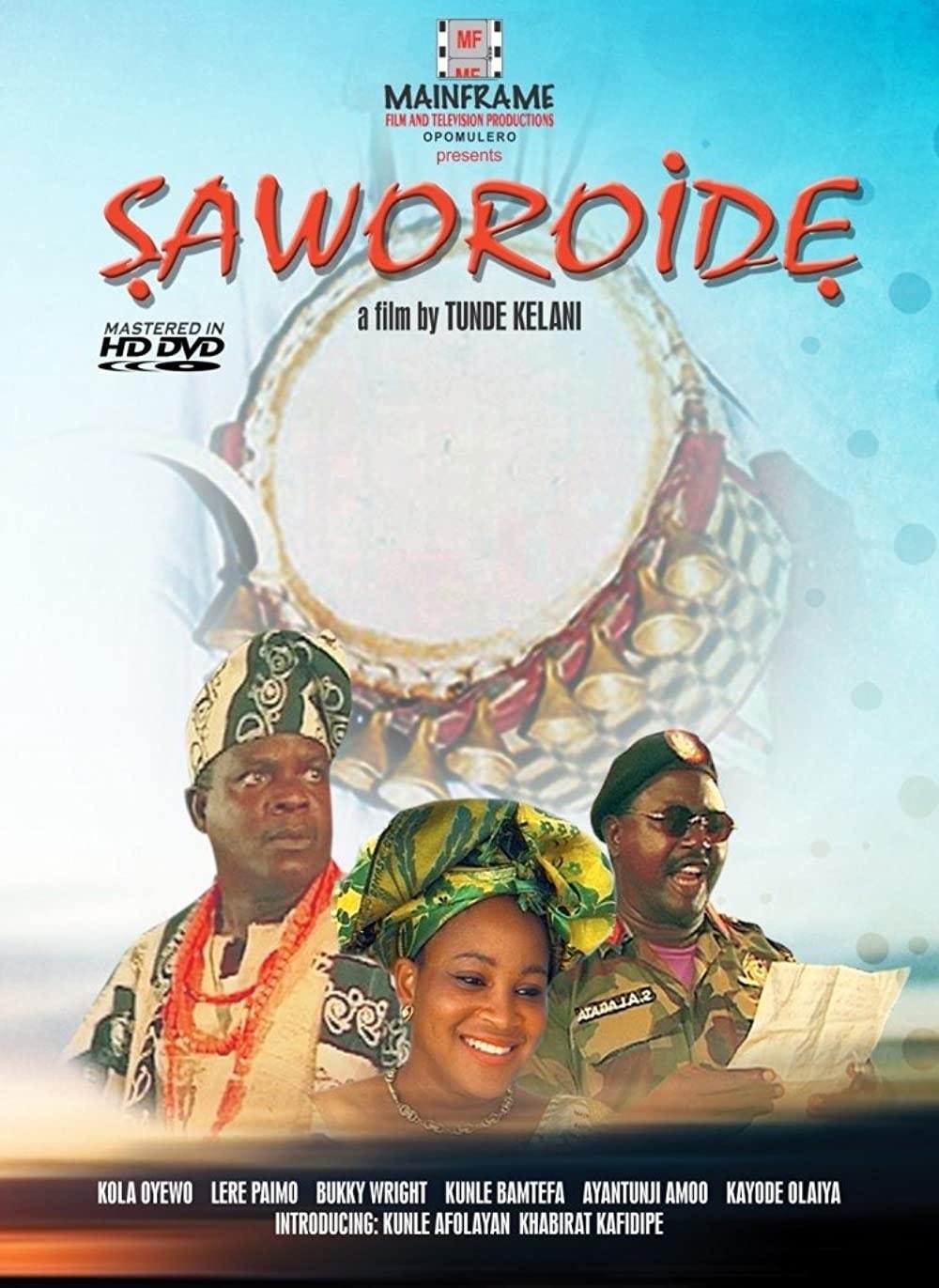
What makes Saworoide endure is its understanding that corruption is not merely a matter of individual morality. It is a system sustained by institutions, compromises, and alliances. That insight allows the film to remain relevant regardless of which politician currently occupies office.
Hyenas (1992)
Djibril Diop Mambéty’s Hyenas asks a deceptively simple question: what happens when an entire community decides that everything has a price?
Adapted loosely from Friedrich Dürrenmatt’s The Visit, the film follows a wealthy woman who returns to her impoverished hometown with an offer capable of transforming its fortunes. The catch reveals the fragility of collective morality under economic pressure. In an era marked by debt crises, resource negotiations, and growing inequalities, Hyenas feels less like a fable than a warning. Its central concern (the corrupting relationship between wealth and power) remains globally relevant but especially resonant within postcolonial economies navigating external influence and internal inequality.
Finye (1982)
While many political films focus on leaders, Finye focuses on youth. Souleymane Cissé’s film explores the tensions between students and authoritarian authority figures, presenting political resistance not as an abstract ideal but as a lived social reality. Its student activists challenge systems that appear permanent, exposing the fragility beneath official power.
Watching Finye today, one is reminded how frequently African political change has been driven by young people. From campus movements to contemporary protest campaigns, the relationship between youth and authority remains one of the defining dynamics of public life across the continent.
Colonialism and Its Afterlives
Colonialism occupies a peculiar place in contemporary discussions about Africa. It is simultaneously invoked too often and not often enough. Too often, because it is sometimes treated as a catch-all explanation for every contemporary challenge. Not often enough because many of the structures that continue to shape African economies, institutions, borders, and international relationships remain inseparable from colonial history.
The best African films about colonialism avoid both simplifications. They neither reduce Africans to passive victims nor pretend that independence erased the past. Instead, they examine how colonial violence lingers in memory, institutions, and political life long after the colonial state itself has disappeared.
The Battle of Algiers (1966)
Few films have shaped global understanding of anti-colonial struggle more profoundly than Gillo Pontecorvo’s The Battle of Algiers.
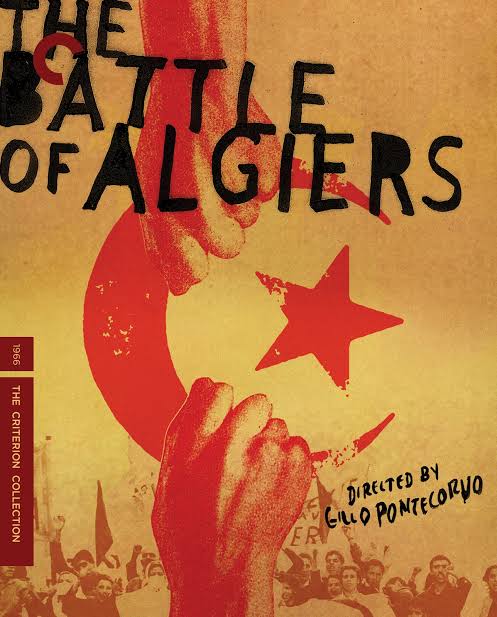
Recreating the Algerian War with documentary-like immediacy, the film refuses easy moral binaries. Colonial violence is exposed with brutal clarity, but so too are the ethical complexities of armed resistance. The result is a film that remains required viewing not only for historians and filmmakers but also for military strategists and political thinkers. Its relevance extends beyond Algeria. Questions about occupation, resistance, state violence, and self-determination continue to define conflicts across the world. Nearly six decades after its release, the film remains a benchmark for political cinema.
Sambizanga (1972)
The first feature-length fiction film made in Africa by a woman is also one of the most formally and politically sophisticated films in the African canon. Sarah Maldoror’s Sambizanga approaches colonialism from a more intimate perspective. Set during Angola’s liberation struggle, the film follows a woman searching for her imprisoned husband after his arrest by Portuguese authorities. Rather than focusing on military campaigns or political speeches, Maldoror centres ordinary people caught within larger historical forces.
That choice is precisely what gives the film its power. Sambizanga reminds viewers that colonialism was not merely an abstract political system. It was a daily reality that reshaped families, communities, and individual lives. The film’s human-scale approach continues to offer a corrective to histories that prioritise leaders while overlooking the people who bore the consequences of colonial rule.
Camp de Thiaroye (1988)
Some histories are neglected because they are inconvenient. Camp de Thiaroye confronts one such history directly. Written and directed by Ousmane Sembène and Thierno Faty Sow, the film is based on the real massacre of Senegalese soldiers (tirailleurs sénégalais) by French forces after World War II. The men had fought for France throughout World War II. They were protesting delayed pay, poor conditions, and the refusal to honour their service with the recognition granted to French soldiers. France denied the massacre for decades. Sembène, who was himself a tirailleur, made this film in response.
The film examines the contradictions at the heart of the empire. African soldiers were considered valuable enough to fight for France, yet not valuable enough to receive equal treatment once the war ended. The film remains essential because its central question persists: what happens when those who have sacrificed for a political order discover that the promises made to them were never intended to be honoured? That question extends far beyond colonial history.
Tradition, Religion, and Cultural Identity
One of the most persistent tensions in African societies concerns the relationship between tradition and change. Popular discourse often presents this as a conflict between modernity and the past, but African filmmakers have generally approached the issue with greater sophistication.
The question is rarely whether traditions should survive. It is which traditions survive, who decides, and what happens when competing systems of belief claim authority over the same community.
Ceddo (1977)
Perhaps no African film has generated more discussion about religion and power than Ceddo. Ousmane Sembène examines the historical encounters between indigenous belief systems, Islam, and political authority, revealing how religious conversion can become entangled with struggles for social and political control.
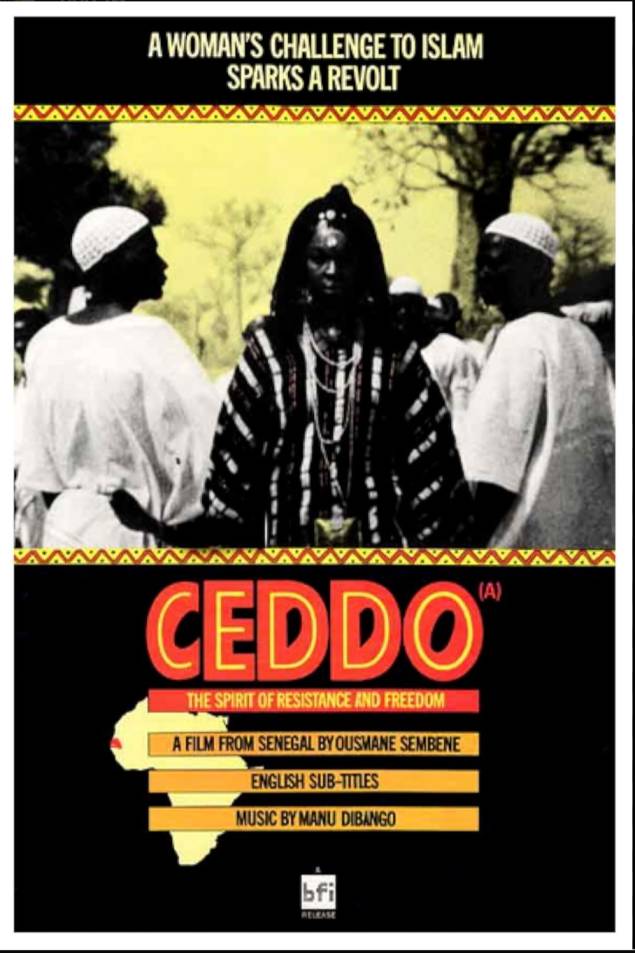
The film remains striking because it refuses simplistic narratives of progress. Rather than celebrating one system over another, Ceddo asks what is lost when cultural transformation occurs through coercion rather than consent. In contemporary Africa, where religious institutions continue to wield enormous influence, those questions remain deeply relevant.
Yeelen (1987)
Souleymane Cissé’s Yeelen occupies a unique place in African cinema as the first African film to win a prize at Cannes (the Jury Prize in 1987). Drawing heavily from Bambara cosmology and oral traditions, the film presents indigenous knowledge systems not as relics of the past but as living intellectual traditions capable of sustaining complex philosophical inquiry.
At a time when discussions about development often assume that modernity requires abandoning local knowledge, Yeelen offers a different possibility. It suggests that African futures need not be built through cultural erasure. The film’s enduring significance lies in its confidence that African traditions can serve as sources of knowledge rather than obstacles to progress.

Tilaï (1990)
Few films explore the costs of social conformity as effectively as Tilaï. Idrissa Ouedraogo’s drama centres on a tragic conflict between personal desire and communal expectations. The story unfolds within a society governed by rules that possess both moral legitimacy and destructive consequences.
What makes Tilaï enduring is its refusal to mock tradition while simultaneously exposing its limitations. The film understands that social norms provide cohesion and meaning. It also understands that they can become instruments of suffering. That tension remains central to contemporary debates across the continent. Tilaï won the Grand Prix at Cannes in 1990 and remains the most formally accomplished examination of customary law in African cinema.
Women, Patriarchy, and the Struggle for Autonomy
Few issues reveal the gap between legal progress and lived reality more clearly than gender. Across Africa, women have gained more access to education, political participation, and professional opportunities than before. Yet questions of autonomy, marriage, social expectation, and patriarchal authority remain deeply contested. Long before these debates became prominent in contemporary discourse, African filmmakers were already interrogating the structures that shape women’s lives.
Le Wazzou Polygame (1972)
Oumarou Ganda’s film remains one of the most provocative examinations of gender relations in African cinema. The story centres on a woman compelled to marry a younger man and take on a role dictated by communal expectations rather than personal desire. Through this premise, Ganda explores how social systems often limit the agency of the very people expected to sustain them. More than fifty years later, debates about marriage, gender roles, and women’s autonomy continue across the continent. Le Wazzou Polygame remains relevant because it approaches these questions with complexity rather than certainty.
Moolaadé (2004)
Moolaadé was Sembène’s final film, made when he was 81 years old, and it is among his most direct. Collé, a woman in a Burkina Faso village, grants sanctuary (moolaadé) to four young girls fleeing female genital mutilation, placing a rope of protection across her door that the cutters cannot cross by custom.
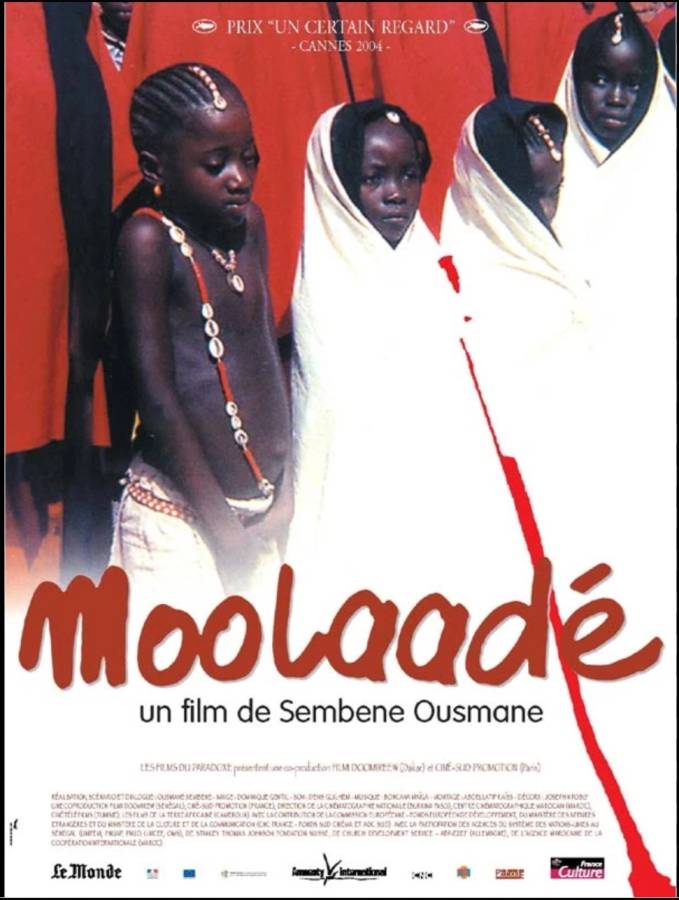
The community’s effort to force Collé to withdraw her protection (the confiscation of women’s radios, the public flogging of her husband, the burning of contraband) is the film’s central drama. Sembène is not interested in nuance about tradition versus modernity. He is interested in who pays for that debate with their bodies. The film won the Un Certain Regard Prize at Cannes in 2004. More than two decades later, FGM remains practised in at least 30 African countries, according to a report by the World Health Organisation (WHO).
Muna Moto (1975)
Jean-Pierre Dikongué-Pipa’s Muna Moto examines how love becomes entangled with economics. At the centre of the film is a couple separated by the financial demands of bride price, a practice that continues to shape relationships across many African societies. The film’s achievement lies in showing how economic structures influence intimate decisions, often transforming personal relationships into questions of social status and financial capacity. Its relevance extends beyond the specific custom it portrays. Muna Moto remains a powerful exploration of how inequality limits freedom even in the most personal aspects of life.
The Narrow Path (2006)
Tunde Kelani’s adaptation of a Yoruba literary classic demonstrates how tradition and patriarchy often reinforce one another. The film explores questions of female sexuality, communal expectations, and individual choice within a society where personal decisions rarely remain private matters. Kelani approaches these issues with characteristic nuance, avoiding both romanticisation and outright condemnation.
Nearly two decades after its release, many of the debates it raises remain unresolved. The Narrow Path endures because it recognises that social change rarely occurs through simple victories. It unfolds through negotiation, resistance, and gradual transformation.
Conflict, Extremism, and the Search for Dignity
Violence occupies a prominent place in international representations of Africa. Too often, however, those representations reduce conflicts to spectacle while ignoring the social, political, and historical conditions that produce them. African filmmakers have generally taken a different approach. Rather than focusing exclusively on violence itself, they examine its consequences: grief, displacement, revenge, resilience, and the difficult process of rebuilding after catastrophe.
Daratt (2006)
Mahamat-Saleh Haroun’s Daratt begins with a familiar premise: a young man seeking revenge. Yet the film quickly becomes something more complicated. Set in the aftermath of civil conflict in Chad, it examines what happens when societies attempt to move forward while individuals remain trapped by unresolved trauma.
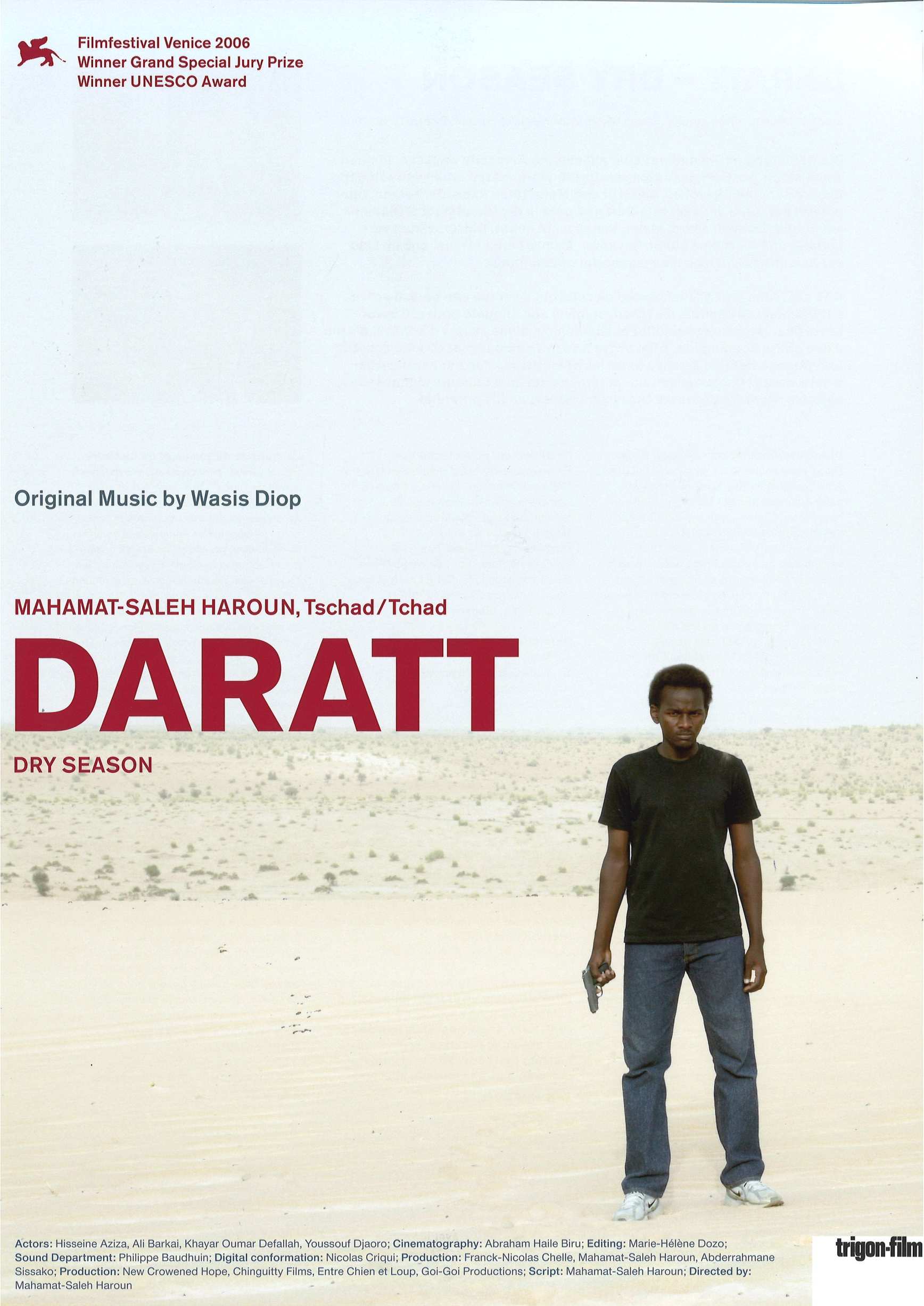
The film’s central concern is not justice in the legal sense but healing in the human sense. That distinction gives Daratt its emotional force and helps explain why it remains one of the most significant post-conflict films produced on the continent.
Timbuktu (2014)
When extremist groups occupied northern Mali in 2012, international coverage often focused on military developments and geopolitical implications. Timbuktu focuses on ordinary life under ideological rule. Abderrahmane Sissako’s film reveals how extremism reshapes everyday existence, regulating behaviour, restricting freedoms, and transforming routine activities into acts of resistance. The film’s power lies in its refusal to sensationalise violence. Instead, it shows how communities preserve dignity under oppressive conditions. In an era marked by continuing concerns about extremism across parts of Africa, Timbuktu remains urgently relevant.
Ezra (2007)
Directed by Newton Aduaka, Ezra is a film about child soldiers that refuses every convention of the child soldier film. It follows Ezra, a former Sierra Leonean combatant, who is brought before a truth and reconciliation commission after the civil war that laid waste to his country. Aduaka structures the film in fragments (testimony, memory, flashback) that refuse to resolve into the linear narrative of trauma and redemption that the Truth and Reconciliation Commission (TRC) format demands.
The film’s argument is precise: official processes of truth and reconciliation are designed to produce national healing at the cost of individual truth. Ezra is asked to perform an account of his violence that satisfies the commission’s need for closure. What he actually experienced — the coercion, the drugs, the way children are made into soldiers — does not fit the form. Ezra won the Golden Stallion at FESPACO in 2007.
Joseph Jonathan is a historian who seeks to understand how film shapes our cultural identity as a people. He believes that history is more about the future than the past. When he’s not writing about film, you can catch him listening to music or discussing politics. He tweets @Chukwu2big