

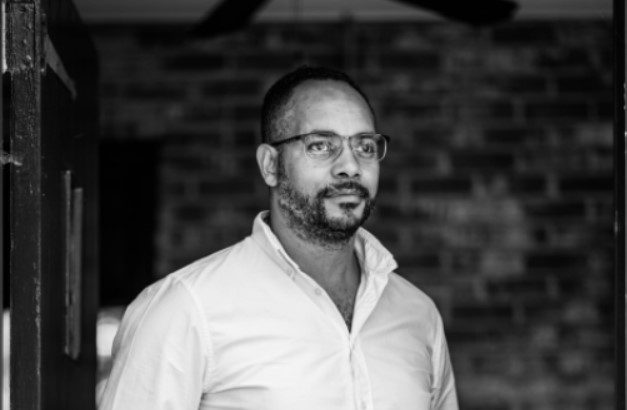

“I just think it is vitally important not to forget the past if we want to go towards a more progressive future.” — Andy Mundy-Castle
By Joseph Jonathan
The portrait documentary occupies a delicate, often contested territory in contemporary cinema. When a film centres on a singular, highly visible figure to navigate broader social justice movements, it risks subordinating systemic struggles to the individual’s emotional arc. Yet, in the hands of a filmmaker committed to creating “films of record”, that individual can become a vital, character-driven prism through which future generations connect the historical dots.
Joining this critical framework is Shoot the People (2025), a documentary feature which follows celebrated British-Nigerian photographer and activist Misan Harriman during volatile, history-defining moments, drawing connective tissue between the Black Lives Matter movement, the Palestinian liberation movement, and anti-apartheid struggles. Through Harriman’s lens, the film explores the urgent need to bear witness to global injustices.
Born in Calabar, Nigeria, and educated in England, Harriman came to photography through an unlikely door. He was working in finance when he picked up a camera in 2017, and within three years, his black-and-white photographs of the Black Lives Matter protests in London had circulated across the world. When Edward Enninful commissioned him to shoot British Vogue’s September 2020 issue, he became the first Black man to photograph the magazine’s cover in its 104-year history. His directorial debut, The After (2023), a Netflix short starring David Oyelowo, earned him an Oscar nomination. By any measure, his ascent has been one of the most unlikely and consequential in contemporary British cultural life.
The project is directed by BAFTA-winning British-Nigerian filmmaker Andy Mundy-Castle, whose previous docu-drama White Nanny, Black Child (2023) won the BAFTA for Specialist Factual, as well as Best International Documentary and the Grand Jury Prize at the Africa International Film Festival (AFRIFF) in Nigeria. Shoot the People opened in US theatres on 19th June 2026 and UK and Irish cinemas on 10th July 2026. In Shoot the People, Mundy-Castle brings a deeply philosophical approach to the intersection of privilege, activism, and image-making. Rather than flattening contradictions, the film leaves them visible, most strikingly in a scene capturing Harriman in formal wear at the Oscars while systemic protests rage just outside the doors.
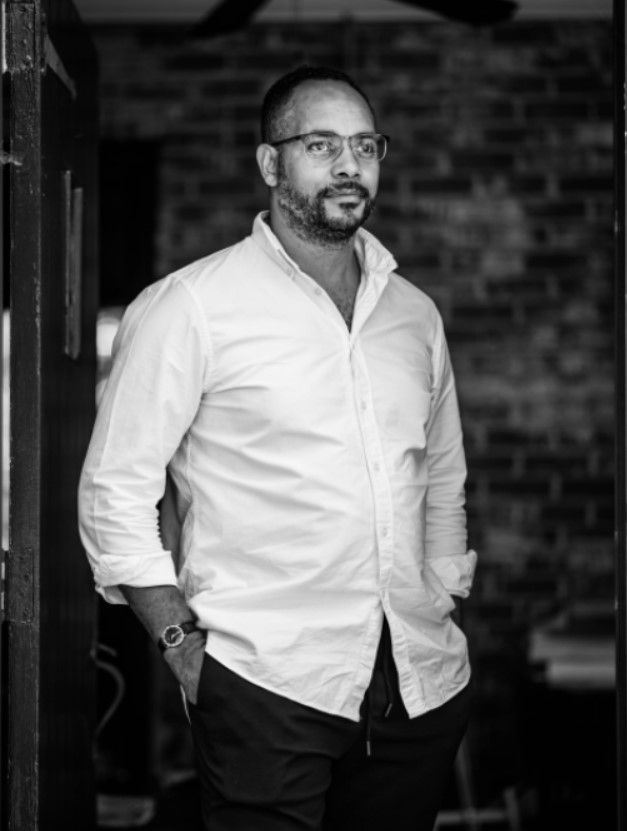
Under Mundy-Castle’s direction, the documentary balances an ambitious historical scope with an intimate character study. By capturing present-tense movements alongside historical archives, the film interrogates not just what it means to document history, but how a shared cultural background can build an unspoken language of trust between a director and their subject. Through it all, Mundy-Castle holds a question that resists a full answer: what does image-making cost the person who does it, and what does it owe the people being seen?
In this exclusive interview with Afrocritik, Andy Mundy-Castle speaks about the structural decisions behind Shoot the People, the creative negotiation of directing a subject who is also a collaborator, the ethics of centring a privileged figure in a film about collective struggle, and what it means to make a documentary whose political edges are still live.
This interview has been edited for length and clarity.
You have spoken about wanting to make “films of record”, documents that help future generations connect the dots of history. How did that archival instinct shape the structural decisions in Shoot the People? What made you choose a biographical frame rather than a purely movement-led one?
For me, I like somebody at the centre of any journey so that we can understand through their eyes and learn through their eyes as well, because I think it adds a different layer of conversation. It adds something that is also character-driven. So Misan brings in all of his own flaws, all of his own texture. Everything that makes up Misan as a character then goes into what we end up experiencing.
For me, it was always going to be something that felt like an exploration of a strong character alongside a story of record of protest, because we need to realise that the things we are going through now, many people have gone through before, and there are clues in history to help us move forward. I just think it is vitally important not to forget the past if we want to go towards a more progressive future.
Misan Harriman is both subject and collaborator here. He is not just being observed, but actively shaping what gets documented. How did you negotiate creative authority across that relationship? Was there any point where your editorial vision diverged from his?
Fortunately not. He was very respectful of the fact that this was the moment where he was in front of the screen. He had just seen my previous film, and I think when he watched that, he was very comforted by the fact that he was going to be giving his story to someone whom he could trust.
The one thing he made me think a bit harder about, because he is a photographer, was the visual aesthetic. Typically, I am really about feeling, and how you use the technology to create feelings. So I often pay less attention to the aesthetic and more attention to how it is going to make the audience feel. But he was very prescriptive on the lenses he wanted used by the Director of Photography (DP). It was more of a technological input he had. But because that was not a bugbear for me, I rode with it because it made the whole proposition that much more elevated.
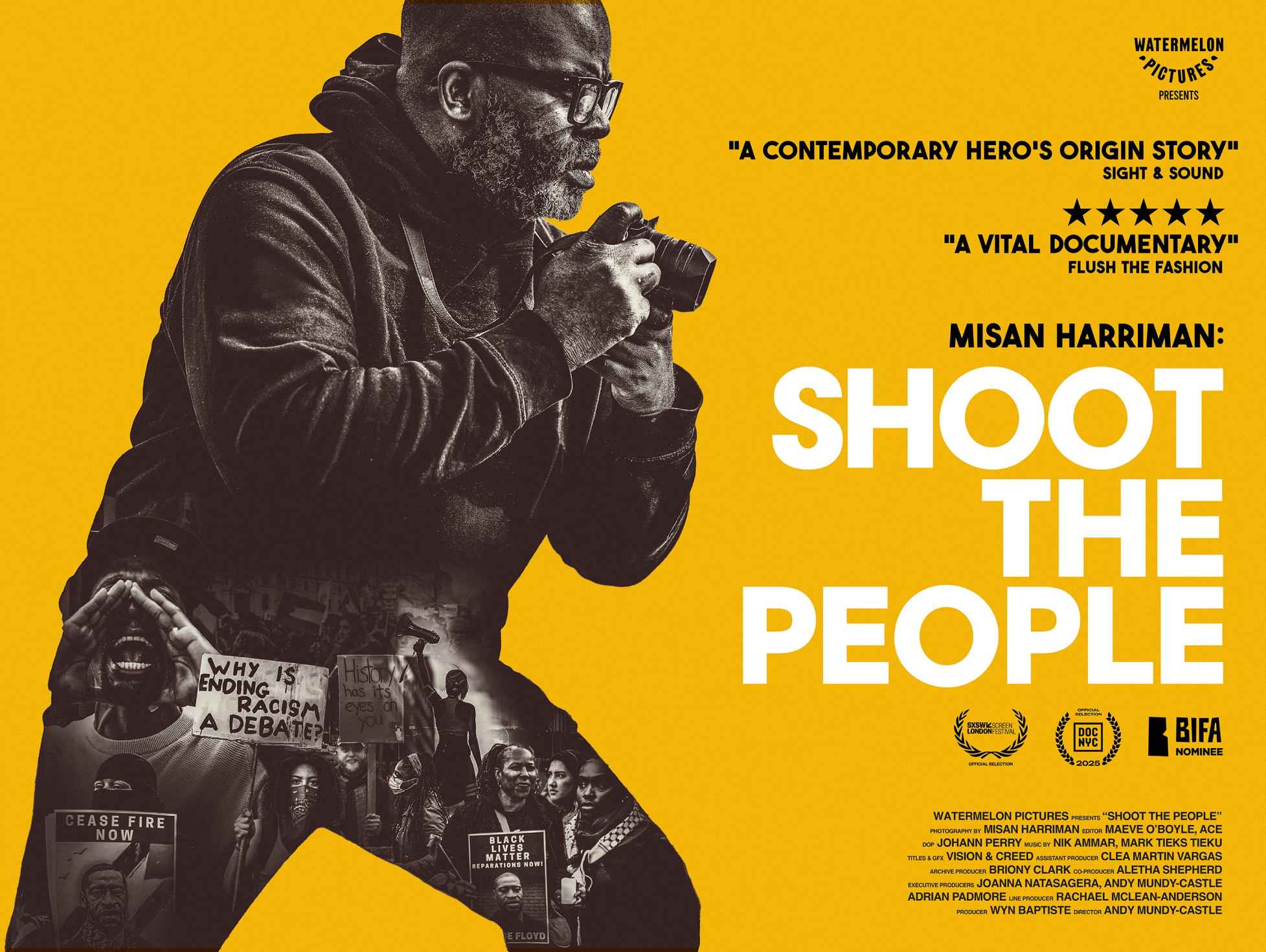
The film draws a connective tissue between the Black Lives Matter movement, the Palestinian liberation movement, anti-apartheid struggles, and others. How did you decide what to include and what to leave out? Were there any movements or geographies you felt the film ultimately underserved?
There were many things that did not make the final cut. We were looking at the issues of migration and the protests around migration. We were also looking at the First Peoples in America and the protests around that. But when it came down to it, what we chose to focus on were social justice movements that have had progression over the last fifty to seventy years: civil rights in America, apartheid in South Africa.
But because the Palestinian liberation movement is the protest of the day, and Misan had turned his lens to that particular movement, and we were seeing up to 800,000 to a million people marching on the streets every weekend for a sustained period of time in Great Britain, that was an obvious canvas to focus on, as well as being the movement that Misan has chosen to lend his voice to.
Prior to that, he has put his name to many different movements. It was just important to document what was happening in the day because that gave us the richest present-tense narrative to follow. Wherever we went, we were able to paint that picture.
But also, injustice is mirrored in every community, in every society. You have a wealthy handful of people dominating what the majority should think, how they should feel, how they should behave and act. Anthropologists will tell you that social structure finds itself in every society. There is always a hierarchical position at the root of any injustice. When protest is there, it is because the voice of the unheard, the masses, is pushing back against a small group of people that probably control the majority of what they are trying to get a little bit of. Those particular movements just felt right to thread a coherent conversation together.
Initially, this could easily be a series. You could literally focus on any given place and interrogate the movements that have defined it. Even our own country, Nigeria: you could really unpick from Fela to today the challenges the country has gone through, even before that with the Biafran War or independence from England. You can look at the agitation that has happened in any given place. But that is a much bigger body of work. When you are diving into a cinematic endeavour, you have to have a consolidated story. And those were the things we could afford the time to.
Both you and Harriman share Nigerian roots, and he was born in Nigeria before being educated in Britain. How conscious were you of that shared background as you made the film? Did it shape the film’s sensibilities?
Very much so. There is something special about having the unspoken language, the unspoken communication. You, as a Nigerian, could give me, as a fellow Nigerian, a certain look and I would know exactly what you are saying. I would know the feeling you are trying to communicate, and I would know if I need to push, if I need to hold back. That is not universal with everyone, but it definitely helped the way we collaborated.
It gave us a bridge of familiarity, so that, for instance, when we [are] in Abuja and you are ordering a kilo of suya, there is no apprehension about what you are about to dive into. You can just enjoy it peacefully without someone saying, “Hey, what is that you are eating? It is very spicy” or questioning your motives.
I know that sounds like a frivolous thing, but it really makes the experience of making a film harmonious, because you feel seen, you feel heard, you feel comforted. You feel like: I am with a brother. I am with somebody who is going to hold my story and treat it with the utmost care. So when people viewing the film see this sense of cohesion, it is partly because there was a lot that we did not need to say to each other, but we understood.
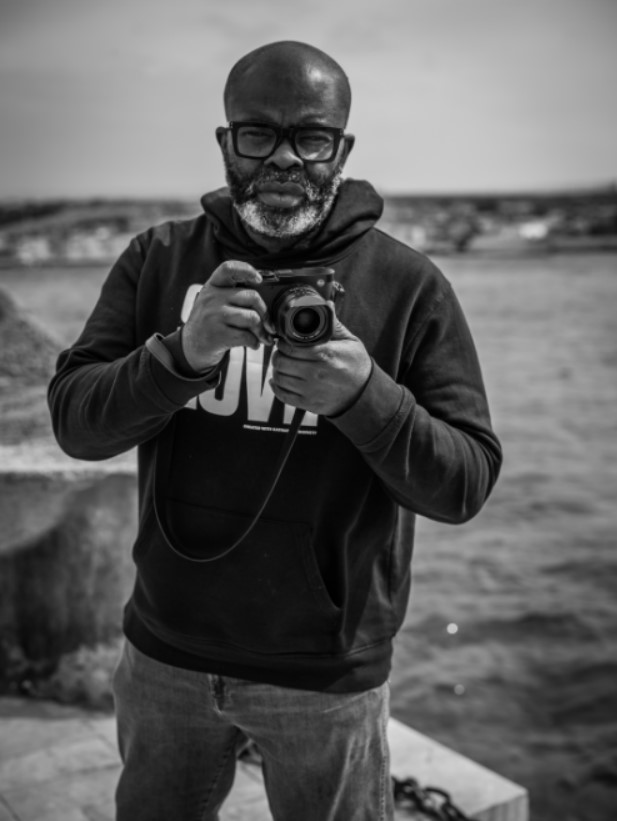
The film centres on one man, a celebrated, privileged figure, as the lens through which we experience these movements. Did you ever wrestle with the ethics of that framing? Was there a tension between honouring Harriman’s story and ensuring the movements themselves were not subordinated to his emotional arc?


It is a deep question. It is also interesting to me because Misan is neurodivergent. So there is a lot that he puts his voice to that feels, for want of a better framing, quite robotic. It feels like he is doing it because he really cares. He feels impassioned about something, but he is doing it because he knows that somewhere down the line it is going to help people.
It had more of an impact on me in the edit, when I was deciding how to shape and frame his story. But there was never any outward emotional challenge, other than the things he cared deeply about. That was truly felt. It was authentic. It was not somebody doing things for clout or for the likes. It was someone who truly believed, and truly believes, in the things he lends his voice to.
There is a remarkable scene in the film involving the Oscars, Harriman in formal wear while protests rage outside. You chose to leave that contradiction fully visible rather than resolve it. What was the editorial thinking there? And what does it say about the limits of what image-making can do, particularly as regards portraying the real struggles of real people?
If anything, I think you should be emboldened to tell the struggles of real people. Far too often, especially because I am constantly pitching stories, we are looking for that which is salacious, or related to crime in some way, or the absolute drop-jaw aspect of any given story. But for me, there is real power in community.
There was a picture at George Floyd Square that I made sure we spent time with. There was a sign, “People Over Profit,” on one of the boards. And I think what Misan is doing is pointing his lens at people who might not have the same level of privilege that he does. That is an extremely admirable thing, because we have that conversation about how you use your voice when you are in a place of privilege. Does it preclude you from getting really dirty with your mind and your heart, in terms of actually using your platform to change outcomes for others? And he does that so effortlessly.
It is a conversation we wanted to have with the film as well. I did not really know how much I should include my own voice when we started editing this, but it just became apparent that you needed someone to challenge why he did certain things. And that became the vehicle through which we allowed ourselves to do that.
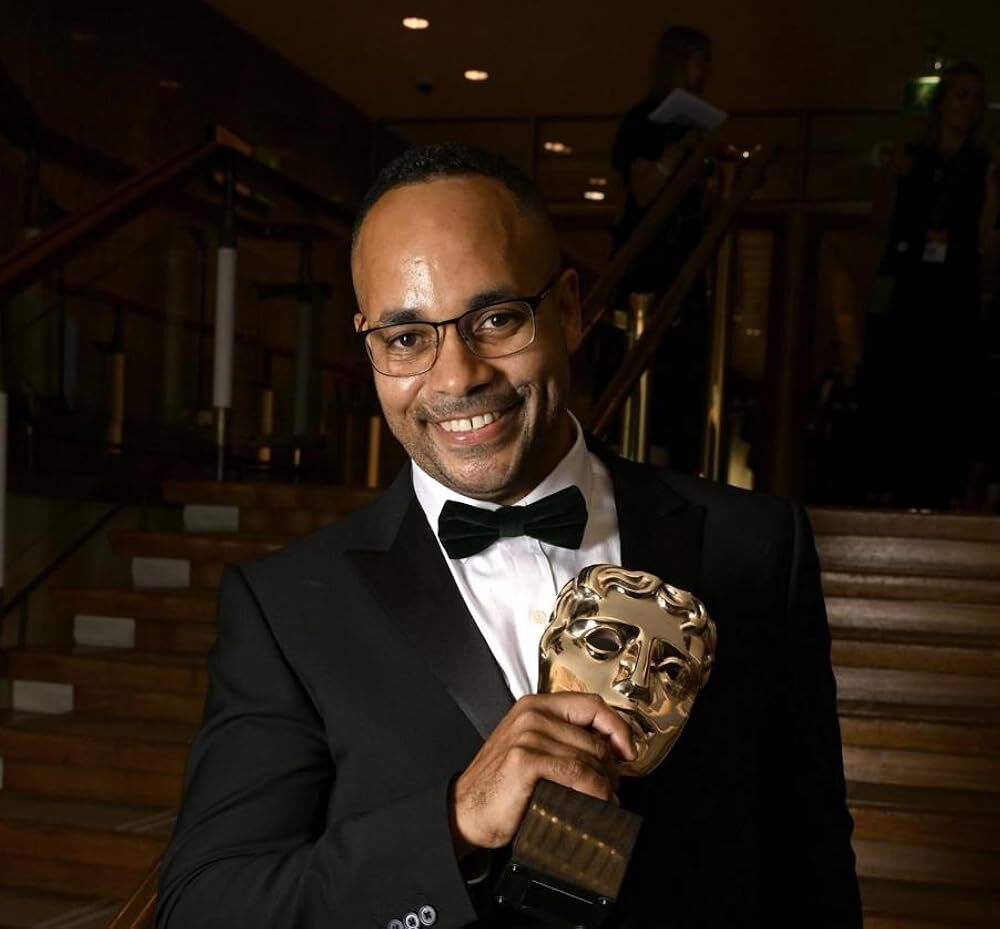
You have been vocal about the scarcity Black British filmmakers face. At the BAFTAs, you described it as “fighting over scraps.” How did that institutional reality shape the making of this film? Was there ever pressure to soften or broaden its political edges to secure funding or distribution?
Fortunately, no. We were in a position where the right people and the right partners were involved. Even our distributors (Watermelon Pictures) believe in the movement of the resistance, in being a voice for people who might not be able to lend their voice to issues in a certain way. Their catalogue represents that. We were very intentional when deciding who to move with. You needed brave hearts to stand alongside this film, people who would not back down from that uncomfortable conversation. Because what are we doing it for? Why are we creating art?
When you are doing something meaningful with well-intentioned individuals, it is best to put yourself in that place of discomfort, to walk into the darkness so that we can find the light. Choosing our partners was deliberate. Even in choosing the crew, it was important to make sure people were aligned with the bigger meaning and the values we wanted to place within the film.
With regards to the scarcity mentality, I have had to find a way to limit the fear, to limit that voice that says no all the time. So many people in the British television industry do that, whether we like it or not. If you are a filmmaker from the fringes, a storyteller from the fringes, the entry doors are so limited. You have to present your authentic self if you are going to stand a chance. It is harder for people to pretend to be what they are not, because that mask only lasts a certain amount of time.
What do you want audiences to leave with, not just in terms of what they know about Misan Harriman or these movements, but in terms of how they see the act of bearing witness itself?
Hope. That better times and a better place exist if we just choose to see that common humanity, that common decency in each other. Through Misan, I think we have a vehicle for seeing the basic humanity in each other, and that hope exists, no matter how hard we are made to believe it does not. And wherever you can, however little privilege you may have, how do you use that in service of others? In service of leaving this place a slight bit better than you found it? That, for me, is the ultimate goal of the film: to inspire people to be moved towards positive action.
Joseph Jonathan is a historian who seeks to understand how film shapes our cultural identity as a people. He believes that history is more about the future than the past. When he’s not writing about film, you can catch him listening to music or discussing politics. He tweets @Chukwu2big