


The politicians a country repeatedly elects are rarely accidental. They are often the logical outcome of the environment that produced them.
By Joseph Jonathan
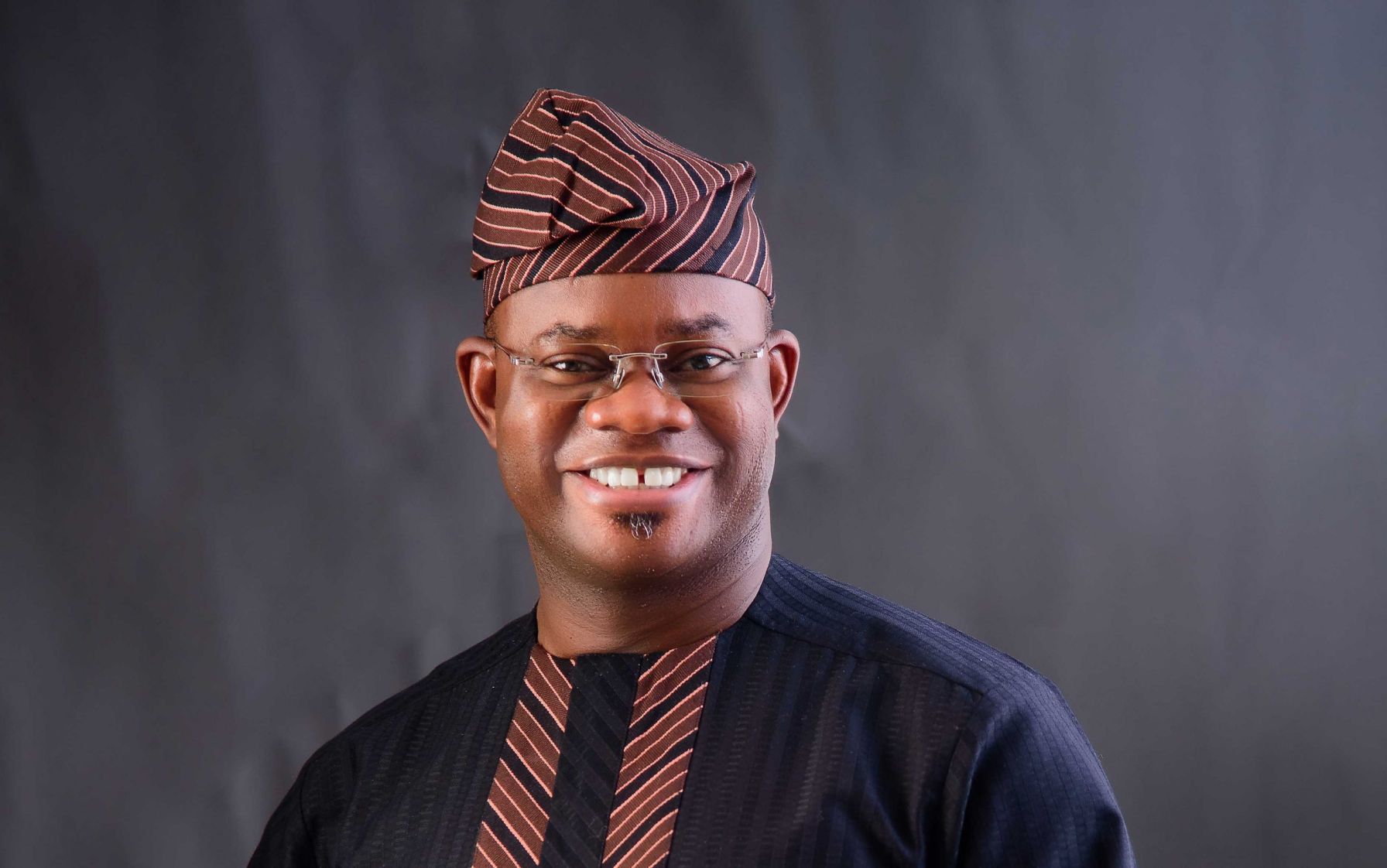
In May 2026, in the town of Okene, a former governor of Kogi State won his party’s senatorial primary by a margin that was less a contest than a formality. Yahaya Bello, who governed Kogi from 2016 to 2024, polled 72,399 votes across the five local government areas of Kogi Central. His closest challenger managed 319. Another candidate managed 188.
At the time of his victory, Bello was, and remains, the subject of a federal prosecution alleging that he laundered roughly ₦80 billion in public funds during his time as governor, money the Economic and Financial Crimes Commission says moved through shell companies and multiple bank accounts before becoming, among other things, real estate in Abuja. He did not attend his party’s screening exercise, reportedly because EFCC operatives were monitoring the venue. He got the ticket anyway.
If this story produced any genuine shock in Nigeria, it was not the shock of surprise. It was the shock of confirmation; the particular, exhausted feeling of watching something you already knew to be true announce itself again, in slightly larger letters.
Every election cycle produces a familiar lament. The names change. The parties change. The campaign slogans change. Yet somehow, the feeling remains remarkably consistent. Nigerians look at the available candidates, look at the scale of the country’s problems, and ask a version of the same question: is this really the best we can do?
The frustration cuts across ideology, region, religion, and generation. It appears in newspaper columns and roadside conversations, on radio programmes and social media timelines. Sometimes it is expressed as anger. Sometimes as resignation. But its underlying assumption rarely changes.
The assumption is that Nigerian politics suffers from a personnel problem. This is usually the point in the conversation where someone says, Politics in Nigeria is a dirty game. If only better people entered politics. If only more competent citizens contested elections. If only qualified professionals, respected academics, successful entrepreneurs, and principled reformers were willing to participate.
The country, many believe, would be governed differently. There is an intuitive appeal to this argument. It identifies a visible problem and proposes an obvious solution. The quality of leadership appears poor; therefore, the quality of leaders must be the issue. Yet this explanation becomes less convincing the longer one sits with it.
Nigeria is not a country lacking capable people. It produces world-class lawyers, engineers, doctors, economists, academics, artists, entrepreneurs, and public intellectuals. Nor is politics entirely devoid of such individuals. Since independence, the Nigerian state has repeatedly recruited technocrats, professionals, and highly educated elites into positions of authority. Some have entered politics directly. Others have served as ministers, advisers, governors, legislators, and presidential appointees.
The results have been mixed. More importantly, the same frustrations persist. This suggests a possibility that many discussions of political leadership avoid. What if the problem is not that capable Nigerians refuse to enter politics?
What if the problem is that Nigerian politics systematically rewards a particular kind of capability?
Because politics, contrary to popular belief, is not a system that randomly selects leaders. It is a system that rewards certain behaviours, punishes others, and gradually shapes the kinds of people who succeed within it. Every political order has its own incentive structure. It determines what skills are valuable, what resources matter, and what forms of conduct are most likely to produce power.
The politicians a country repeatedly elects are rarely accidental. They are often the logical outcome of the environment that produced them. Seen from this perspective, the recurring complaint that “good people don’t enter politics” may be asking the wrong question.
The more revealing question is why Nigerian politics keeps reproducing the same kinds of political actors regardless of who enters it. Why do reformers so often become establishment figures? Why do political newcomers frequently adopt familiar methods? Why do parties that promise transformation often end up behaving like the organisations they replaced? And why does the system appear remarkably effective at absorbing, neutralising, or reshaping those who attempt to challenge it?
The answers have less to do with morality than with incentives. Less to do with personalities than institutions. Less to do with individual politicians than the political marketplace in which they operate. The real puzzle is not why Nigerian politics produces disappointing leaders. The real puzzle is why it keeps producing the same ones.
The Cost of Entry
One reason the “good people don’t enter politics” explanation remains so popular is that it contains a grain of truth. Many Nigerians genuinely do avoid politics. The mistake is assuming that this avoidance is primarily moral.
Politics is often described as dirty, dangerous, or corrupting, and these perceptions certainly influence public attitudes. But focusing exclusively on culture obscures a more important reality: Nigerian politics is extraordinarily expensive. Before a candidate can persuade voters, they must first survive a long series of financial and organisational barriers that have little to do with governing ability.
Party nomination forms frequently cost millions of naira. Ahead of the 2027 elections, the ruling APC fixed its presidential nomination form at ₦100 million and its governorship form at ₦50 million. Those figures merely purchase the right to compete. They do not include the costs of campaigning, travel, staffing, publicity, mobilisation, or maintaining relationships within party structures. Elections in a country of more than two hundred million people demand resources on a scale that few private citizens can realistically mobilise. Even local races often require networks of supporters, brokers, mobilisers, and financiers capable of sustaining a campaign over months or years.
The result is a political arena in which access itself becomes a scarce resource. This matters because barriers to entry do not simply reduce the number of participants. They influence the kinds of participants who are most likely to succeed.
Imagine two citizens. The first is a respected professional. She is competent, ethical, knowledgeable, and genuinely interested in public service. She possesses ideas about education reform, infrastructure, healthcare, and institutional development. She enjoys credibility within her field and broad respect among her peers.
The second possesses something different. She has access to wealthy patrons, longstanding relationships within party structures, influence among local power brokers, and the ability to mobilise resources quickly. She may or may not possess the first candidate’s expertise, but she understands how power circulates within the political system and has spent years building relationships that allow her to navigate it.
Which candidate is more likely to secure a party nomination, build a viable campaign and survive a competitive electoral contest?
The answer is not particularly difficult. The issue is not that the first candidate lacks merit. The issue is that the system values resources that merit alone cannot provide. This is why discussions of political leadership often become trapped in the language of character. Citizens look at political outcomes and conclude that the wrong people are winning. But from the system’s perspective, these outcomes are rational: it rewards those who hold the assets it values — money, networks, party ties, the ability to broker elite coalitions and mobilise supporters over years. One could argue that what many Nigerians call “Godfatherism” is simply the visible face of this deeper logic: success depends on access to pre-existing power networks.
This is not unique to Nigeria. Political systems everywhere privilege certain forms of capital. Wealth matters in American elections. Party machines have shaped politics across Europe and Latin America. Elite networks influence political recruitment in virtually every democracy.
The difference is one of degree. Mature systems offer alternative routes into politics through strong parties, civic associations, unions, and professional bodies. Nigeria’s institutions are weaker: parties organise around access rather than ideology, membership is fluid, and recruitment runs through informal networks, which favour insiders.
The result is a self-reinforcing cycle. Those with access find it easier to gain more; those without face higher costs of entry. The political class increasingly consists of people who’ve already mastered these structures, not through conspiracy, but because the system keeps selecting for the traits it already rewards.
What the System Is Actually Designed to Reward
To understand why these particular traits (money, networks, brokerage, the capacity to mobilise) are the ones that matter, it helps to ask a more basic question: what does the Nigerian state actually need its political class to do?
The honest answer, for most of the country’s post-independence history, has had less to do with policy than with distribution. Nigeria’s federal structure channels a substantial share of public revenue, much of it derived from oil, through monthly allocations from the centre to states and local governments. A governor’s most consequential power is often not legislative but distributive: the ability to receive these allocations and decide how they move outward, through contracts, appointments, projects, and patronage. The same logic operates, in compressed form, all the way down to the local governments.
In a system organised this way, the most valuable political skill is not the ability to design good policy. It is the ability to manage the flow of resources through a network of intermediaries and to keep that network loyal, functional, and quiet. This is a genuinely difficult skill. It requires patience, relationship management, an instinct for loyalty and betrayal, and the discipline to maintain obligations across years. It is, in its own terms, a form of competence. It is simply competence in a different domain than the one “good people don’t enter politics” usually has in mind.
This is also not exclusively a Nigerian story. 19th-century American cities ran on precisely this logic; the urban political machines of New York, Chicago, and Boston were, at their core, distribution networks. Tammany Hall did not win elections primarily by articulating policy positions; it won by providing jobs, favours, and protection to immigrant communities through ward bosses who functioned much like Nigerian local government chairmen do today. Those machines did not disappear because better individuals replaced corrupt ones. They weakened only when the underlying thing being distributed was reduced by civil service reform, professionalised bureaucracies, and new sources of organised political power, like labour unions, that did not depend on machine loyalty.
The lesson generalises. Patronage politics is not a personality type. It is what happens when political power is primarily a mechanism for distributing scarce resources through personal networks, rather than a mechanism for producing and implementing public policy through institutions. Change what the system distributes, and you change what it rewards. Leave the distributive function intact, and you will keep producing politicians whose core skill is managing distribution, regardless of how many “good people” attempt to enter the system.
Why Political Dynasties Keep Winning
Viewed through this lens, political dynasties begin to look less like an anomaly and more like a predictable outcome. The conventional explanation for dynastic politics is nepotism. Families use influence to install relatives in office, and political power becomes hereditary. There is truth in this. But it does not fully explain why dynasties are so durable. What gets inherited in Nigerian politics is not simply a famous surname. It is political capital.
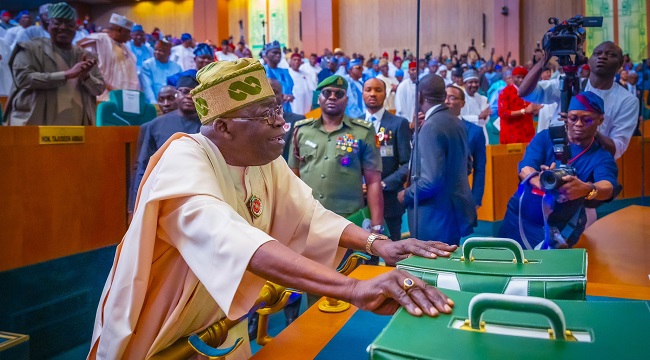
Consider the present landscape. President Bola Tinubu’s wife, Oluremi Tinubu, served three terms as a senator before becoming First Lady; his son, Seyi Tinubu, has become one of the most visible unofficial figures in his father’s government and was widely expected to seek the Lagos governorship in 2027. Former President Muhammadu Buhari’s son, Yusuf Buhari, recently secured a House of Representatives ticket under the same ruling party his father once led. The Saraki family of Kwara State has produced, across two generations, a Senate leader, two terms of a state governorship, the presidency of the Senate itself, and a federal minister. The Adeleke family of Osun State has produced three senators and two governors across two generations, including the state’s sitting governor.


None of this is, strictly speaking, illegal, and none of it is unique to Nigeria; dynastic politics exists from Washington to New Delhi to Libreville. But the Nigerian version has a particular texture worth naming: it is not simply that political families exist, but that political identity itself has become a transferable asset, a form of infrastructure that can be inherited the way a business or a piece of land might be. The structures — the local government networks, the relationships with traditional rulers, the loyalty of party officials built up over decades, the donor relationships — do not belong to an office. They belong to a name, and names can be passed down.
Therefore, if political success in Nigeria depends heavily on networks built over time, then it is entirely rational that those networks would remain within trusted circles. The son, daughter, spouse, or protégé enters politics with access to resources that newcomers must spend years trying to acquire. Dynasties persist not simply because political families are powerful, but because the system continues to reward the assets they already possess.
When Scandal Doesn’t Matter
This brings us back to Yahaya Bello. The conventional reading of his political survival is straightforward: corruption does not matter in Nigerian politics. There is some truth in that conclusion, but it does not go far enough. The more revealing question is why corruption often fails to matter.
The answer lies partly in how political systems evaluate their members. Voters may judge politicians according to integrity, but political organisations tend to judge them according to usefulness. From the perspective of a party machine, the most valuable politician is not necessarily the cleanest one. It is the one who can reliably mobilise supporters, deliver votes, maintain alliances, and keep a political network functioning. If a politician facing serious allegations can still do all of those things, the allegations themselves may become secondary to the assets that politician continues to possess.
This does not mean corruption is irrelevant. It means that political capital often outweighs it. A governor who leaves office with a powerful network intact remains politically valuable. A politician who can still command loyalty across constituencies remains politically valuable. A figure who can influence nominations, broker alliances, and mobilise support remains politically valuable. In such a system, scandal does not automatically erase political viability because viability is being measured according to a different set of criteria. The question is not, “Has this politician been accused?” The question is, “Can this politician still deliver?”
Moreover, the political class does not merely tolerate figures under serious legal scrutiny. In specific circumstances, it rewards them, because a politician who is vulnerable to prosecution is also, by the same token, a politician who can be controlled. An aspirant with an unresolved EFCC case has, in effect, a permanent lever attached to them. Their continued political relevance (their immunity, their access to the legal delays and political cover that have historically allowed prosecutions of powerful Nigerians to stretch on for years without resolution) becomes something they owe to the structures that protect them. This is not a flaw in the political system. It is one of the political system’s more efficient instruments. A senator who needs his party’s continued goodwill to keep a corruption trial from accelerating is a senator whose votes, whose loyalty, and whose silence are reliably available.
Yahaya Bello’s overwhelming primary victory is illuminating for precisely this reason. Whatever else it says about Nigerian politics, it demonstrates that political capital can survive accusations that would be politically fatal elsewhere. And once that becomes possible, the issue is no longer the character of any individual politician. The issue is the structure of a political system that continues to reward the possession of political capital even when that capital has been acquired, maintained, or exercised under deeply troubling circumstances.
Why Reformers Start to Look Like Everyone Else
One of the most familiar patterns in Nigerian politics is the trajectory of the reformer. This is someone who enters office with a language of rupture (accountability, transparency, institutional renewal) and is often received as a clear departure from what came before. But governing quickly exposes a constraint that is rarely visible from the outside: political authority depends on coalitions that stretch across party structures, legislators, financiers, traditional institutions, and informal networks of mobilisation. These coalitions are not optional; they are the infrastructure through which anything is actually implemented.
A reform-minded politician therefore confronts a narrowing set of choices. Refusing to engage these networks preserves moral clarity but undermines effectiveness. Engaging them makes governance possible but requires accommodation; appointments, contracts, concessions, and alliances that gradually reproduce the very system the reformer sought to escape. What appears as a shift in character is often better understood as the cumulative effect of necessary political trade-offs within a system that leaves limited room for clean alternatives.
This is why reform so often resolves into continuity. Not because every reformer lacks conviction, but because the system steadily filters all actors through the same constraints. Political survival requires participation in the same structures that produce political power. And once that is understood, the familiar disappointment takes on a different meaning: the issue is not simply who enters politics, but what politics consistently requires of those who remain in it.
So, Is This Really the Best We Can Do?
The question that opens this essay (“Is this really the best we can do?”) sounds like a judgement on individual politicians. It is usually asked in moments of frustration, directed at visible figures who appear unworthy of the positions they occupy. But by now, that framing should feel less stable.
Because if political outcomes are shaped less by individual deficiency than by the kinds of incentives a system consistently rewards, then the persistence of familiar political figures is not primarily a question of selection, but of production. This is not an argument that agency disappears or that politicians are beyond responsibility. It is an argument that agency operates within constraints that make certain behaviours more politically survivable than others, and that similar institutional logics can produce broadly similar outcomes across different actors and moments.
The point, then, is not that Nigeria is uniquely trapped or that change is impossible. It is that any serious account of its politics has to begin by taking incentives, institutions, and the structure of political capital seriously, before it reaches for explanations rooted in personality, morality, or individual failure.
Yahaya Bello’s political survival is not an anomaly within that logic. It is a demonstration of it. The same applies to dynastic politics, to the endurance of scandal, and to the gradual convergence of reformers and incumbents. These are not separate failures. They are different expressions of a single underlying structure.
This does not mean individual politicians do not matter. They do. Nor does it mean citizens are wrong to demand better leadership. They are not. But it does suggest that the more important question is not why better people do not emerge, but why the system so consistently rewards the same kinds of political behaviour regardless of who enters it.
Once that question is foregrounded, the original frustration takes on a different shape. The issue is not simply that Nigeria keeps producing disappointing leaders. It is that it keeps producing leaders in a way that is remarkably consistent with what the system has been built to select for. And if that is true, then the question “Is this really the best we can do?” is no longer a question about individual failure. It becomes a question about design. About what the system is built to value. And about whether anything meaningfully different can emerge without changing what political success itself requires. The candidates are not merely malfunctioning. They are the output. And the output is rarely an accident.
Joseph Jonathan is a historian who seeks to understand how film shapes our cultural identity as a people. He believes that history is more about the future than the past. When he’s not writing about film, you can catch him listening to music or discussing politics. He tweets @Chukwu2big