


The ultimate measure of a functioning society is not how many generous citizens it can produce. It is how rarely those citizens are required to rescue people from failures that should never have happened in the first place.
By Joseph Jonathan
A Nigerian has spent months trying to get justice. He has gone to the police station, explained his case, supplied documents, made repeated visits, and watched his complaint disappear into the familiar machinery of bureaucracy. Then someone tells him to do something that, a decade ago, might have sounded absurd: put the matter on social media and tag VeryDarkMan. It is now a perfectly intelligible instruction.
Across Nigerian social media, “please tag VDM” has become its own kind of public-service announcement. VeryDarkMan (real name Martins Vincent Otse) is a Nigerian social media personality and self-styled activist who has built a following in the tens of millions by intervening publicly in cases of alleged fraud, police misconduct, and consumer exploitation, turning ignored complaints into viral pressure campaigns that institutions suddenly find themselves answering. Has someone allegedly been defrauded? Tag VDM. Someone has been detained, and the police are refusing to listen? Tag VDM. A family has been struggling to get attention for a case that has stalled for years? Find someone with enough followers to make the problem impossible to ignore.
The phenomenon extends beyond one man. Harrison Gwamnishu, a Delta State-born activist who spent four years in prison for a crime he did not commit before founding the Behind Bars Human Rights Foundation, built a reputation intervening in cases of wrongful detention and police extortion, reportedly recovering tens of millions of naira from rogue officers on behalf of victims. Alex Onyia, an education entrepreneur, has devoted considerable private resources to Maths Olympiads and academic opportunities for young Nigerians, with a particular focus on the Southeast.
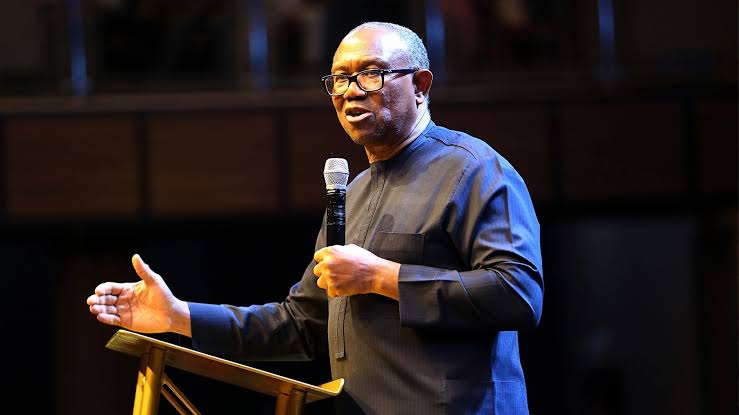
Peter Obi, a businessman and presidential candidate, has repeatedly directed personal resources towards universities, nursing schools, hospitals, and other public-serving institutions. Tunde Onakoya, a chess player and children’s education advocate, has built programmes around chess and child development in underserved communities. Don Jazzy, one of Nigeria’s most prominent music producers, has become one of the familiar names Nigerians invoke on social media when someone urgently needs financial assistance.

These people (and others) have different motivations, methods, and areas of interest. They are not one organised movement, nor should they be treated as though they are. But they increasingly occupy a similar space in the public imagination: they are people Nigerians turn to when institutions do not work.
That distinction matters. Nigerians have always helped one another. Families support relatives, communities raise money for neighbours, religious organisations provide assistance, and wealthy citizens donate to causes they care about. There is nothing inherently unusual about private philanthropy; in societies with strong institutions, people still give away millions and billions of their money every year.
What is different in Nigeria is how frequently private generosity and individual influence are being used to compensate for failures that should ordinarily be addressed by the state. A student qualifies to represent Nigeria at an international competition, but the government says it cannot fund the trip. A citizen seeking justice discovers that filing a complaint is easier than getting anyone to act on it. A school, hospital, or community lacks something that should be provided through public infrastructure, and a private individual steps in to supply it.
The state does not disappear in these situations. It simply leaves a space behind, and Nigerians have become accustomed to finding particular people to occupy it. The person with the audience becomes more useful than the office with the mandate. The philanthropist becomes more accessible than the ministry. The question citizens ask is no longer only who is responsible for this, but increasingly, who can solve this. Those two questions sound similar. They are not. The first is a question of institutional obligation. The second is a question of practical effectiveness. And in a country where the two have increasingly diverged, the second question is winning.
I. When the Official Route Stops Working
The easiest way to understand why private citizens have acquired this kind of influence is to look at the moments that make their intervention necessary. Consider Bryan Eze, a Nigerian student who qualified to represent the country at the International Economics Olympiad in China after winning the Sterling Bank National Online Maths Quiz. When it was time for him to travel, the Ministry of Education reportedly said there was no money to sponsor him.
The Ebonyi State Government, according to the account shared publicly, was also approached and declined. A Nigerian student had done everything required of him. The obstacle was not his preparation or his qualification; it was the unwillingness of the institutions responsible for supporting him to provide the funds. Alex Onyia then stepped into the gap.
The important question is not why Onyia was willing to help; his willingness to spend his own resources on educational opportunities is precisely the kind of civic generosity any society should welcome. The uncomfortable question is why the opportunity required private generosity in the first place.

There is a difference between a citizen choosing to supplement a functioning system and a citizen having to compensate for a system that has failed. When a wealthy individual donates to a university because they believe in education, that is philanthropy. When a private citizen funds a qualified student’s participation because the government says it has no money, the philanthropy becomes evidence of something else: a public responsibility quietly transferred to private hands.
The same tension shows up in Peter Obi’s giving to universities, nursing schools, and hospitals: genuinely useful to the institutions and people who benefit, but also a reminder of how much public infrastructure now depends on private will to function at all. The pattern extends beyond education and healthcare, appearing wherever Nigerians encounter an institution present in name but ineffective in practice.
This is where figures such as VDM and Gwamnishu become significant: their influence rests on the ability to take a complaint trapped inside an unresponsive institution and turn it into a public matter. A complaint becomes a post. A post becomes a viral conversation. An audience becomes pressure. Pressure produces a response that procedure alone could not.
This is why the growing influence of private citizens cannot simply be dismissed as an obsession with celebrity. It is, at least partly, a rational response to institutional incentives. People go where they believe they can get results. But this creates a dangerous inversion: the state has the responsibility, the individual has the responsiveness; the state has the mandate, the individual has the reach. And Nigerians are learning, by necessity, to value the second half of each pair more than the first.
II. When Citizens Become Institutions
Once private citizens repeatedly step into institutional gaps, their role begins to change. They are no longer simply helping people navigate a broken system; they become an alternative point of access to services, opportunities, and accountability that the system itself should provide.
The German sociologist Max Weber, writing in the early twentieth century, distinguished between two very different sources of legitimate authority. The first he called legal-rational authority: power that derives from an office, bound by codified rules and procedure — a ministry, a court, a police force. The second he called charismatic authority: power that derives not from any office but from the perceived exceptional qualities of a person, and which followers grant voluntarily, out of belief rather than obligation. Weber considered charismatic authority historically important but structurally unstable, precisely because it depends on continuous validation from the people who grant it and has no institution to fall back on the moment that validation falters.
Nigeria’s private saviours are, in Weberian terms, charismatic authorities filling a legal-rational vacuum. VDM is not a police officer, lawyer, or judge; Gwamnishu is not the judiciary; Onyia is not the Ministry of Education; Obi is not a public healthcare agency; Onakoya is not a government department for youth development; Don Jazzy is not a social-welfare programme. Yet, Nigerians increasingly know exactly which of these individuals to approach when a particular kind of problem arises. That is institutional substitution.
It does not mean these individuals have literally replaced the state, as they cannot legislate, cannot compel, and their interventions remain selective, dependent on personal resources and interest. But they occupy the space left open by institutional weakness, and in that space, their authority develops along entirely different lines from a ministry’s. A ministry is trusted, in theory, because it is bound by law. The private citizen is trusted because people have watched them act. Legitimacy, in other words, is migrating from what a body is legally empowered to do toward whether a person has demonstrated they can actually do something.
This is how someone without public office acquires a form of political authority without ever entering politics, not through the power to legislate, but through the ability to mobilise attention and pressure. A single complaint can be posted, but thousands of followers can amplify it; an activist can call out an institution, but the threat of public embarrassment gives that criticism teeth it would not otherwise have. “Tag VDM” is not significant because of one man’s popularity. It represents an alternative pathway through which Nigerians attempt to access justice: proof that authority, once thought to belong exclusively to institutions, can migrate toward whoever the public has decided to believe in.
III. When the Saviour Becomes the Standard
There is a strange consequence to this arrangement. A person helps once, and people are grateful. They help again, and people begin to trust them. They continue helping, and the help gradually stops being perceived as generosity at all; it becomes something closer to an obligation.
Alex Onyia’s experience illustrates the problem. His investment in education has attracted praise, but also questions about the boundaries of his interventions: a programme focused on students in one part of the country can be read as exclusion elsewhere, and an intervention concentrated in the Southeast has drawn accusations of tribalism rather than the more obvious question of why comparable opportunities are not being funded by governments everywhere.
The irony is difficult to miss: the person who voluntarily entered a problem becomes responsible for its boundaries, while the institution constitutionally responsible for the problem disappears from the conversation entirely.
The same logic applies elsewhere. If Obi donates to a university, the natural question should be why a private citizen is spending his own money on an institution that should have public funding. Instead, the public increasingly evaluates the intervention on its own terms; the philanthropist is asked why he did not do more; the government is asked far less often why it did not do its part in the first place. Responsibility quietly migrates: the state creates the gap, the citizen fills it, the public grows grateful, gratitude hardens into expectation, and expectation curdles into entitlement. Eventually the person who filled the gap is judged as though the gap belonged to them from the start, a standard no government would ever be permitted to apply to itself, since a state cannot legally choose which citizens deserve public services based on personal interest, while a private citizen’s selectivity is not evidence of prejudice so much as one of the defining features of voluntary giving.
The danger is not that Nigerians expect too much from people who help. It is that we have grown so accustomed to private citizens compensating for public failure that their generosity has itself begun to function as a kind of public institution; one that the original failure can now comfortably hide behind.
IV. When the Saviour Fails: The Fragility of Charismatic Authority
Weber’s warning about charismatic authority was not simply that it is unusual. It was that it is fragile in a specific way, because it rests on continuous belief rather than enforceable rule; it can collapse entirely the moment that belief is tested and found wanting, with no institutional floor to catch the fall.


Harrison Gwamnishu’s story supplies the clearest illustration of exactly this risk. Gwamnishu had spent nearly a decade building precisely the kind of trust this essay has been describing: a wronged man turned rescuer, someone families facing kidnappings and police extortion turned to because he seemed to understand, from personal experience, what the system had failed to do for them. In December 2025, a family in Edo State entrusted him with money meant to help secure the release of a kidnapped couple. He was subsequently arrested and accused of diverting a portion of those funds (over five million naira, by the allegations) for himself. He was granted bail, and in a public video apology, admitted he had “not been accountable with resources given to me”.

What makes the Gwamnishu case more than a single scandal is what it reveals about the entire arrangement this essay has traced. The public did not extend him the scrutiny commensurate with the sums and the stakes involved, because dramatic, fast-moving rescue work reads as inherently more trustworthy than it should. A wealthy philanthropist funding a public scholarship programme operates in daylight: a name attached, a public track record, an audience watching for inconsistency.
An activist raising money privately to negotiate a ransom operates in exactly the opposite conditions: urgency, secrecy, and a desperate family with no time to verify anything. It is, if anything, the arrangement most in need of oversight and the one that received the least.
Gwamnishu’s collapse did not happen because Nigerians were too trusting of philanthropists/activists. It happened because they were not nearly suspicious enough of an enforcer. Weber’s point was that charismatic authority, unlike legal-rational authority, has no audit, no appeal, no independent body positioned to catch a failure before it costs someone everything. Nigeria’s growing reliance on private saviours has, in effect, reproduced that exact vulnerability at national scale.
None of this means every activist or philanthropist is secretly self-interested. There is no reason to assume that, and it would be as unfair a generalisation as the tribalism accusations levelled at Onyia. The point is structural, not personal: a society that rewards visible effectiveness more reliably than it enforces process creates conditions in which performing trustworthiness becomes nearly as valuable as possessing it, and the public has no reliable way to distinguish between the two until, as in Gwamnishu’s case, it is too late.
V. The State Should Not Need a Saviour
None of this is an argument against the people who have chosen to help. Nigeria needs people willing to spend money, time, and influence on other people. The problem is not that they are doing too much. It is that the country has made their intervention necessary in the first place: that a private citizen has to fund a student’s trip abroad because the ministry responsible says there is no money, that a hospital depends on donation rather than budget, that a police station requires public pressure before it will take a complaint seriously.
A private citizen can supplement the state. They cannot sustainably substitute for it, because their help is inherently selective — bounded by resources, interest, and attention — while a government’s obligation is supposed to be universal, indifferent to whether a case has gone viral. When Onyia pays for a student to represent Nigeria, we should celebrate the student and still ask why the Ministry of Education could not.
When Obi donates to a hospital, we should recognise the donation’s value and still ask why public healthcare requires such extensive private supplementation. When VDM forces attention onto a neglected case, we should acknowledge the person who finally got results and still ask why the relevant institution needed public pressure to do its job at all.

The private citizen should not become the end of the conversation. They should be the reason we return to its beginning. “Please tag VDM” is more than a social-media instruction; it is a small, rational expression of how Nigerians have learned to navigate a country where formal authority and practical effectiveness do not reside in the same place. It should not be normal.
A functioning state should not require its citizens to know which philanthropist to tag, which activist to contact, or which celebrity might be willing to pay before they can access what should already be available to them. Nigeria should be grateful for the people who step into its institutional gaps. But gratitude should never be mistaken for accountability, and it should never be allowed to let the state quietly leave the room.
The ultimate measure of a functioning society is not how many generous citizens it can produce. It is how rarely those citizens are required to rescue people from failures that should never have happened in the first place. A healthy society celebrates its philanthropists. A functioning state makes sure it does not need them to govern.
Joseph Jonathan is a historian who seeks to understand how film shapes our cultural identity as a people. He believes that history is more about the future than the past. When he’s not writing about film, you can catch him listening to music or discussing politics. He tweets @Chukwu2big.
Cover photo credit: ResearchGains