

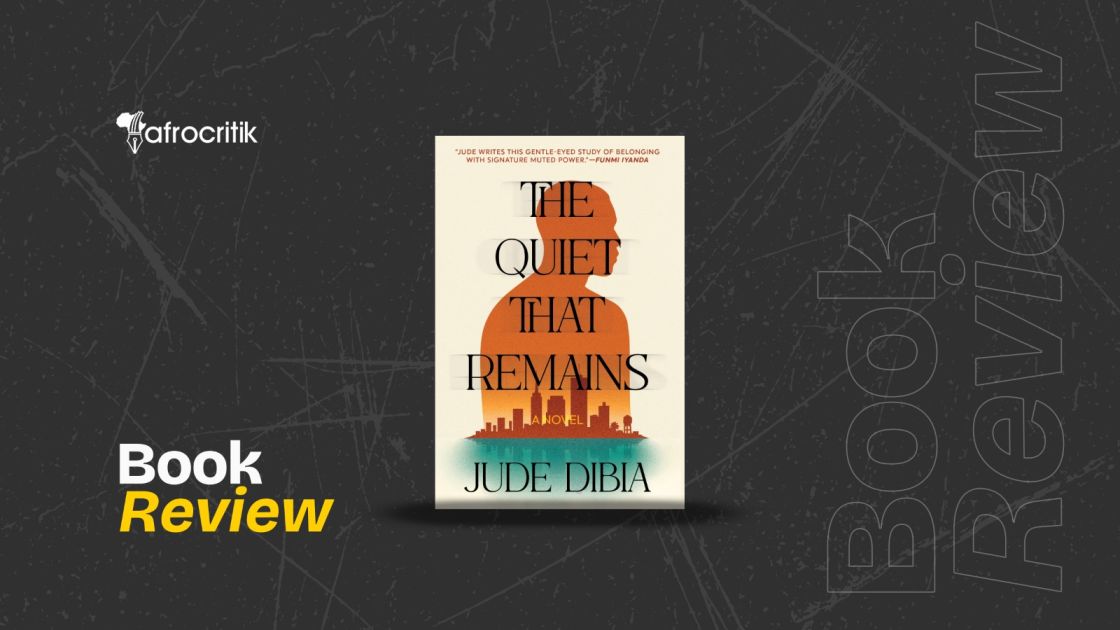

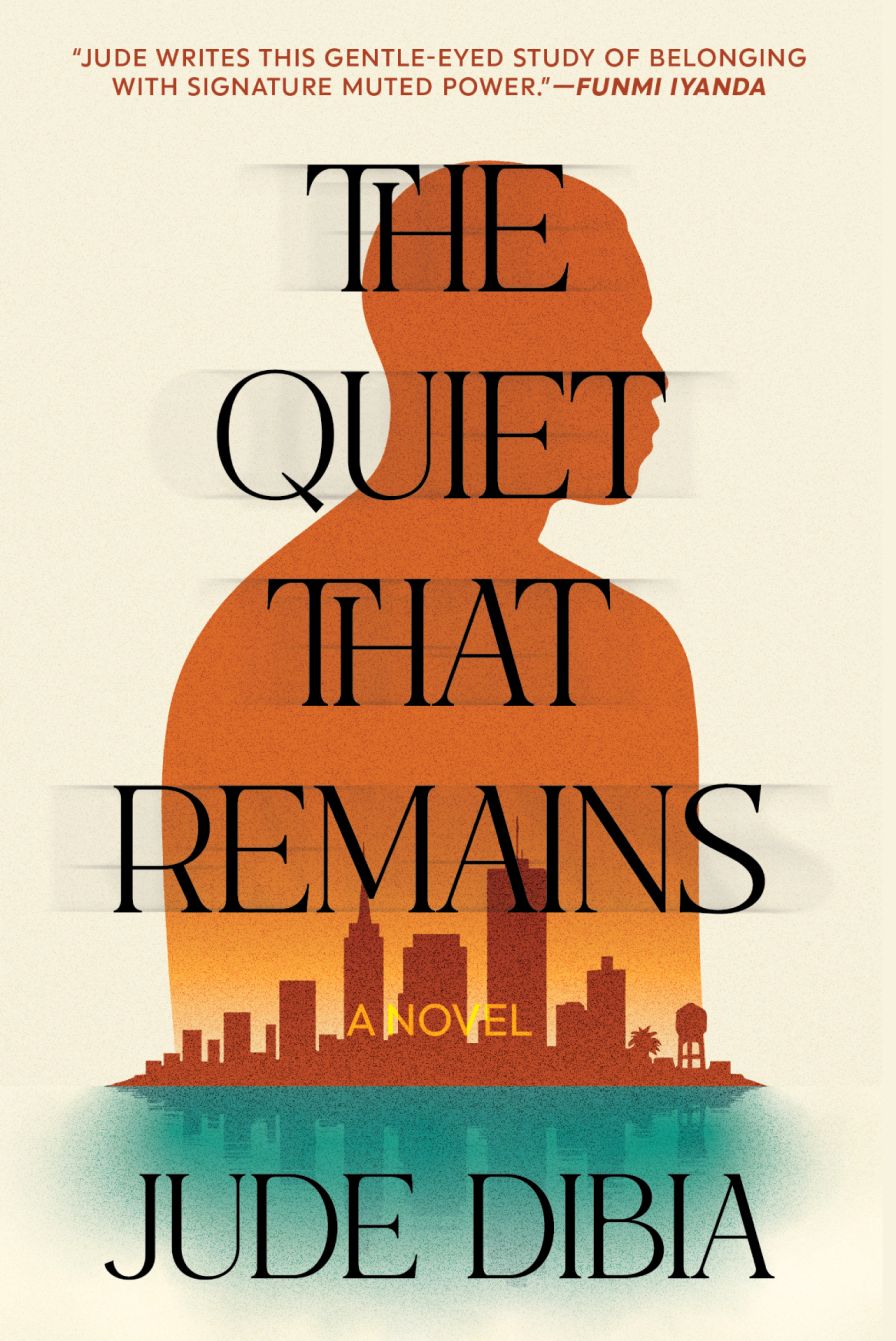
The Quiet That Remains is about many things, chief amongst them the concept of changing seasons and how we carry those we love alongside our ever-evolving selves; how we remain true to ourselves in a world that demands performance and passive obedience to its rules and roles.
By Azubuike Obi
Set in modern Nigeria and told through a polyphony of voices, Jude Dibia’s latest novel, The Quiet That Remains, charts the emotional landscape of three middle-aged friends as they push back against society, navigating love, illness, romance, motherhood and the tangled bands of friendship and family.
The novel follows Dilibe, Dakota and Abazu, three troubled upperclass Nigerians. Dilibe is sworn to solitude, but what happens when someone unexpected enters his life, and he has to renegotiate the terms of middle-aged life? Dakota is still healing from a broken marriage and a messy divorce, but new primal longings soon stir up, shaking the foundations of her comfortable life. And Abazu battles self-acceptance as he continues to try to lead a full life after an HIV diagnosis.
In The Quiet That Remains, Dibia is “brave with language and honest with feeling.” He is as sensitive as he is keenly aware of society’s injustices. Reading him, it feels as though he truly believes that the force of the gentle spirit of his writing can change someone or something. It is admirable. This passion cuts across all of his work: in his debut, Walking With Shadows (2005)—the first Nigerian novel to have a gay man at its centre and portrayed with sympathy and a rare candour—he challenges society’s position of queerness as abnormality. In the novel that followed, the prize-winning Unbridled (2007), he takes a shot at Nigeria’s phallo-centric society, examining the impact of sexual abuse in one woman’s life; and in Blackbird (2011), he places a quartet of characters at the centre of the narrative, casting the unravellings of their personal lives against the backdrop of “modern Nigeria with of of its challenges and triumphs”.
Dibia’s strongest forte is emotional terrain. We encounter a writer who displays unflagging empathy in understanding the human condition and the place of his characters within that vast space. With this empathy, he can map the emotional landscape of the fictional beings who populate the pages of his novels, whether they are living the aftermath of a big reveal or making sense of sharing intimate spaces with a partner they thought they knew as in Walking With Shadows; or they are striving for belonging in a body that has only known battering as in Unbridled; or their lives unspool and intersect with Nigeria’s own trajectory as in Blackbird.
On that note, Dibia’s characters share kinship with Adichie’s: upperclass fellows whose burdens are often emotional, fellows who, with money concerns out of the way, are trying to keep their heads above water, fighting the overwhelming emotional dilemmas that threaten to drown us all. Though class is an understated theme in The Quiet That Remains, Dibia is an attentive writer; hence, nothing is left to chance— he uses Dakota’s housekeeper to interrogate the role that money and access play in the way women navigate violent relationships. The details and aftermath of Dakota’s divorce is cast against that of her housekeeper, Charity, who is unable to leave her abusive husband.
Silence creeps into all spaces in The Quiet That Remains— between brothers who play housemates for a while, between lovers who shy away from sharing uncomfortable truths, between lovers who withhold complicated desires. Dibia is interested in how three friends navigate these silences and how they negotiate the spaces they hold in each other’s lives. In one striking passage, the narrator remarks: “The silence lingered long after… Not the ordinary kind of quiet, but one that pulsed, like a second heartbeat. The stereo had gone quiet, but Dilibe didn’t move to restart it. He sat still, shoulders slack, eyes on nothing in particular.”

However, the title—“quiet”, in particular—is doing a lot of heavy lifting. There’s an uncanny mention of “quiet” on nearly every page. There are “quiet edits” and “quiet calculations”; a culture is in “quiet retreat”, and a Mercedes is polished to a “quiet gleam”; shoulders are hunched in “quiet shame”, and a realisation brings with it a “quiet wave of sadness”. It is disquieting and careless, especially puzzling, this dearth of imagination, because Dibia’s capacity for observation and its startling rendition in most eloquent prose is faultless.
Consider, for example, this passage where Lagos’ particular pulse is captured: “The houses were always too close together, jostling for attention, built without any sense of cohesion—conflicting colours, uneven heights, some flaunting exaggerated opulence, others humble and unbothered. The streets were narrow, cluttered with debris, teeming with people and vehicles, both idle and in motion. The sun was always too hot when it shone, the air never crisp but thick with smog, and the nights were loud with generators, honking horns, impatient sirens”.


Or here, where one of his principal characters observes a woman at an airport: “Her complexion was deep and dark, her skin smooth except for the fine crow’s feet etched beside her eyes. She wore a traditional iro and buba in a faded shade of sky blue, the softness of the fabric highlighting the strength of her frame. Her fingers were bare of rings, but her hands bore the history of her life—veins like roads criss-crossing the backs, skin slightly loose from years of tending, doing, enduring”.
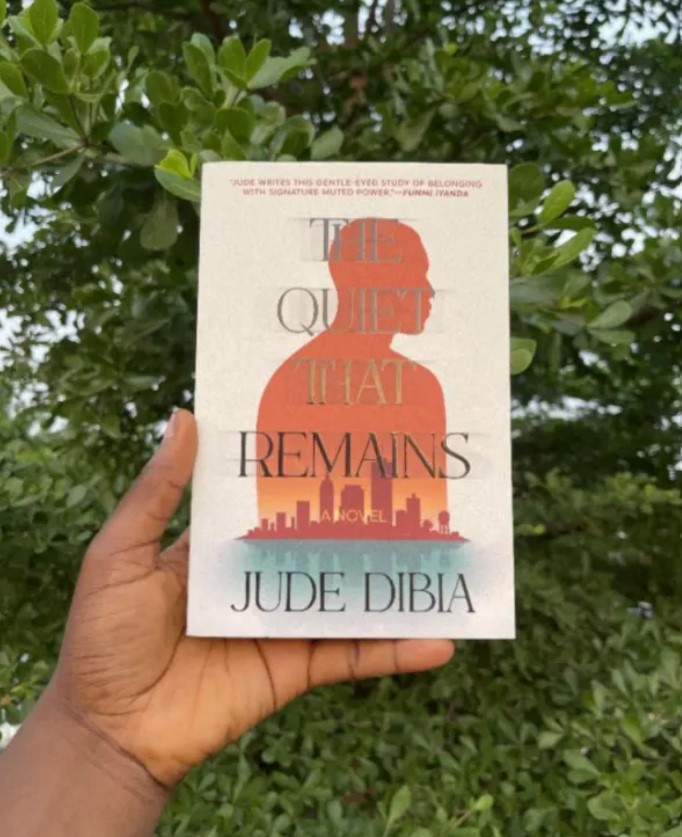
The Quiet That Remains is about many things, chief amongst them the concept of changing seasons and how we carry those we love alongside our ever-evolving selves; how we remain true to ourselves in a world that demands performance and passive obedience to its rules and roles.
It is noteworthy that Dibia’s characters do not slip into caricatures, especially in light of the activism-heavy direction of his storytelling. He imbues his characters with symbolism, though often on-the-nose, they remain richly explored as individual beings of their own, whispering close to the ears, not minding the message Dibia deploys them for; thereby accelerating said message.
Azubuike Obi is an Igbo storyteller who believes in the transformative power of language. He won second place in The Republic Student Writing Competition (2025) and was nominated for Chika Unigwe’s Awele Creative Trust Award (2024). His fiction and nonfiction have appeared online and in print in The Republic, The Weganda Review, Naira Stories, Afapinen, Efiko Magazine, and elsewhere. He is a regular contributor at Afrocritik.