

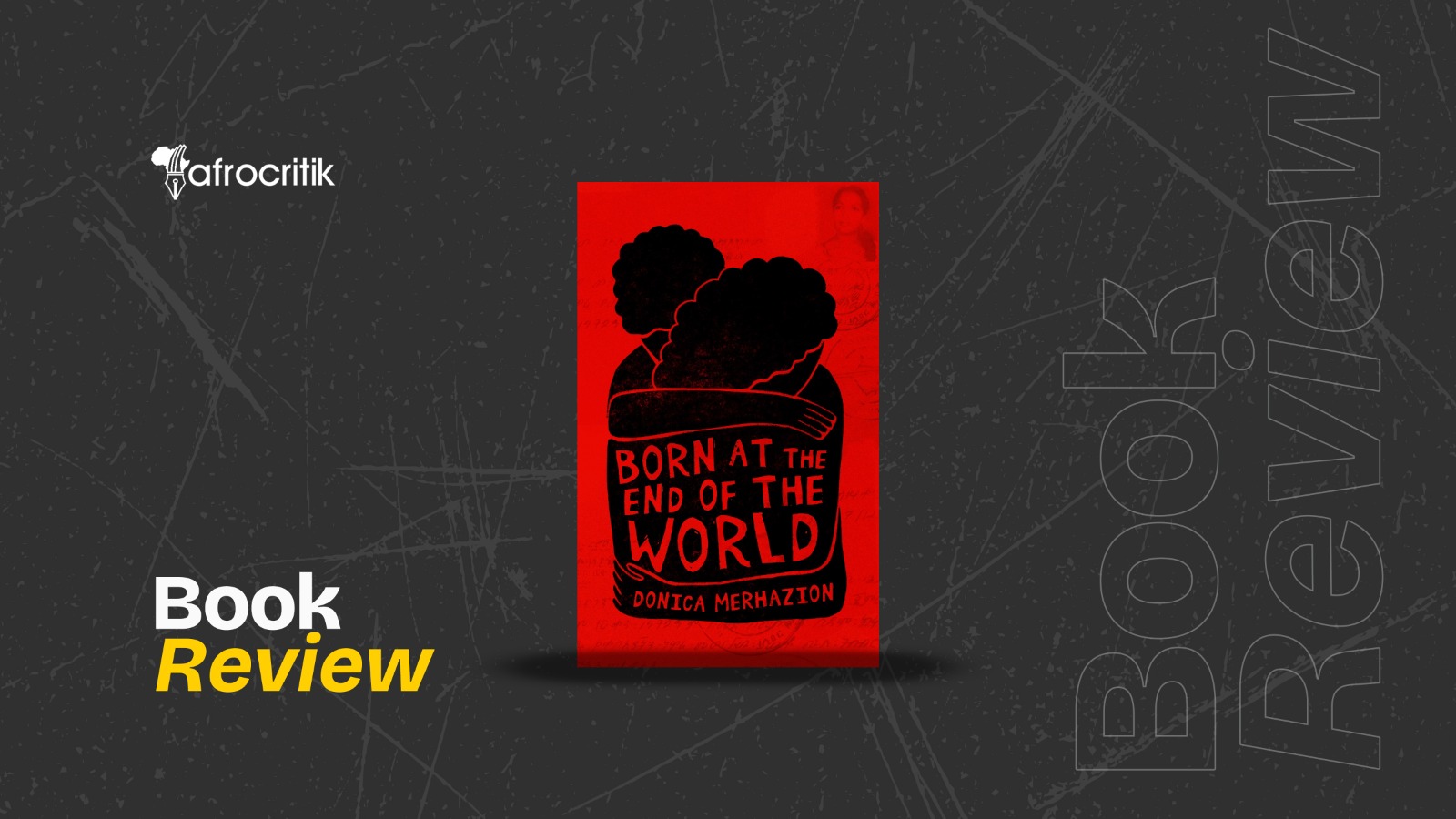

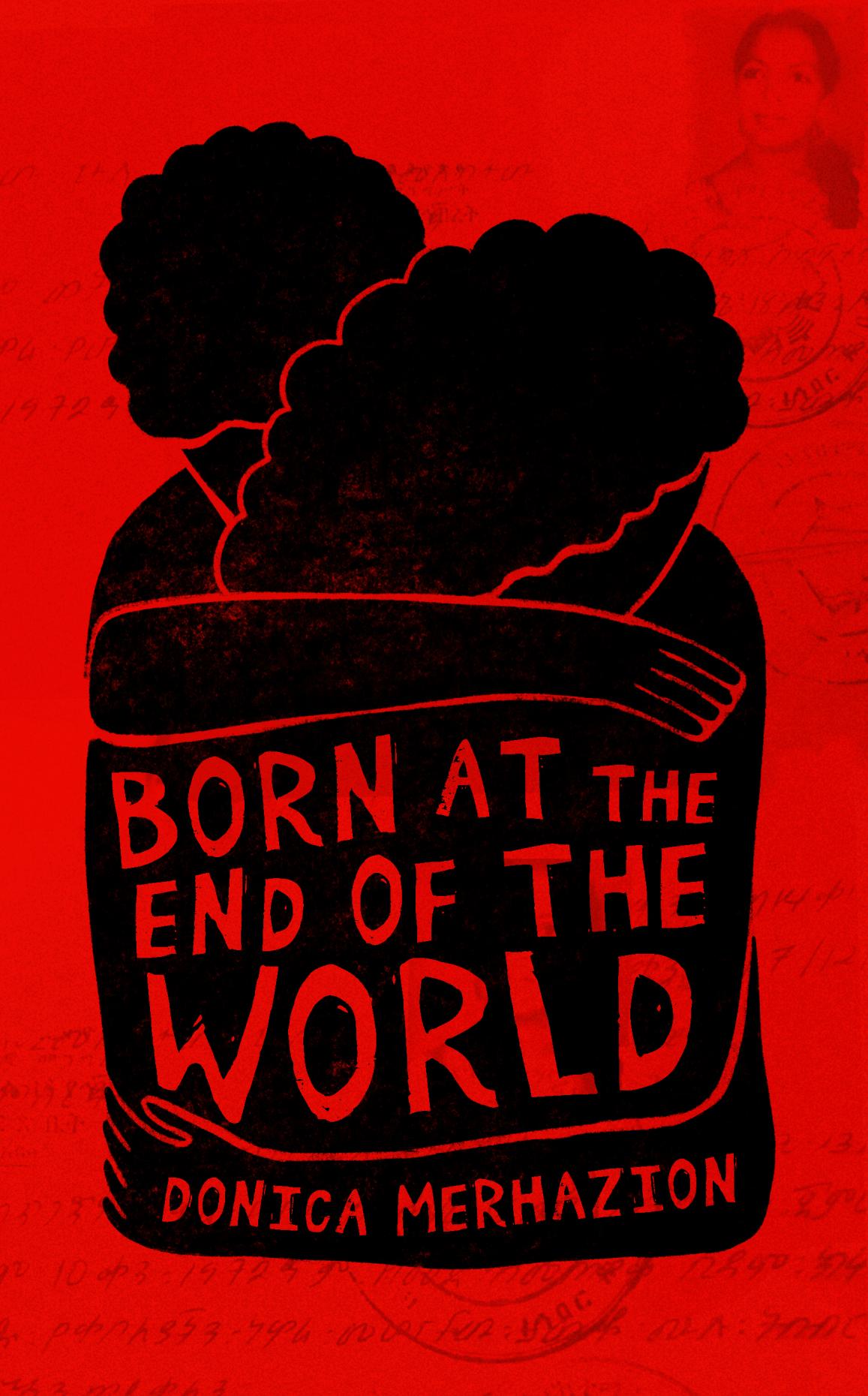
Inasmuch as Born at the End of the World is about love, it is also about language, the politics of language and the implications of these politics. Merhazion seeks to understand who we are behind our tongues, what ties bind and divide men on the basis of language.
By Azubuike Obi
Africa’s history is one particularly fraught with tension. This tension is often brought about as a result of colonial occupation and its aftermath, with the creation of nation-states. With all of the instability from succeeding wars, civil unrest, dictatorships and environmental disasters that have plagued our nations, stories abound. This wealth of history sits, waiting for the continent’s storytellers to awaken and begin to tell them, for who are we without our history, and how do we go further without understanding our past and learning necessary lessons?
From Chukwuemeka Ike’s Sunset at Dawn (1976) to Elma Shaw’s Redemption Road (2008) to Emmanuel Dongala’s The Stone Breakers (2010) to Imbolo Mbue’s How Beautiful We Were (2021) and Leila Aboulela’s River Spirit (2023), it is safe to say that Africa’s storytellers are rising to the task and handling it remarkably well. To this canon arrives Born at the End of the World, the debut novel of the Eritrean novelist, Donica Merhazion.
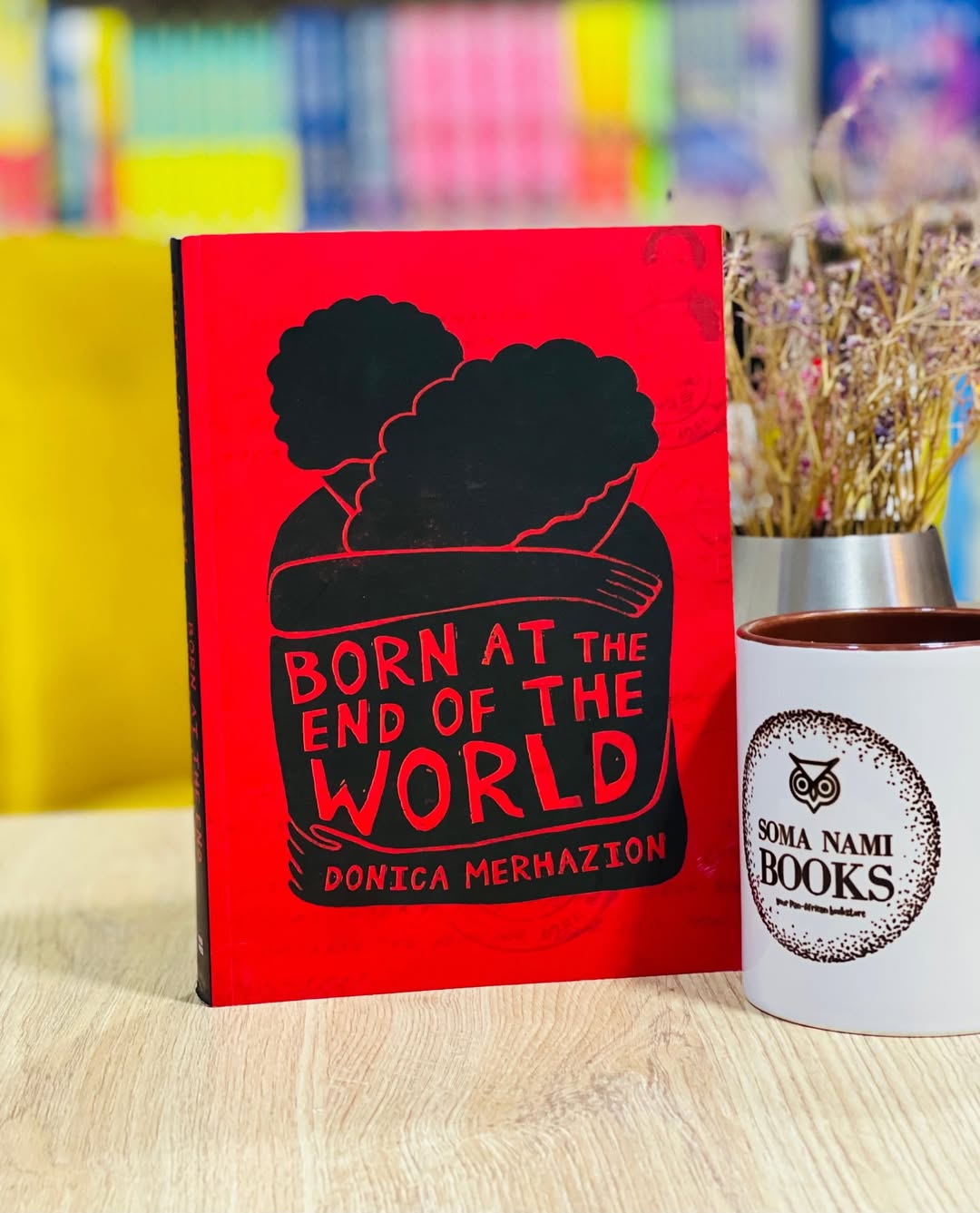
Based on Merhazion’s family history and told through shifting perspectives, the novel follows thirteen-year-old Elen as she flees an arranged marriage in her native Ethiopia. She moves in with her aunt in Asmara, the capital of Eritrea. Girmai, on the other hand, escapes the pernicious hand of his stepmother to fend for himself in Asmara’s unmerciful streets.
They both make names for themselves as the Derg overthrow the government and chaos ensues, bodies littering the streets, homes searched, suspected sympathisers of the Eritrean cause arrested and tortured. In a quest for justice, Girmai and Elen join the Eritrean People’s Liberation Force (EPLF) to fight against the Derg regime. Girmai finances the counterrevolutionaries from his successful business enterprise, while Elen uses the vantage point of her booming bar to serve as an informant. After a chance encounter, bristling passion begins to burn between them. Caught against a draconian rule, they wrestle to keep their heads while trying to save a dying country.
The story is set largely in Eritrea, against the backdrop of what is now known as the period of the Red Terror, from 1976-1978, though the novel itself charts a time period of eighteen years (1962-1980). The question of love forms the singular preoccupation from which other thematic elements unfold. Born at the End of the World explores love as it occurs between individuals and also as it forms and mutates between individuals and countries. And from the latter arise notions of home and belonging. The novel’s heroine, Elen, is born in Ethiopia but moves to Eritrea at a crucial juncture in her life. There, she becomes an adult, and as tension begins to rise in Asmara, she is forced to ask: “Where do I belong? …What are my children? How am I going to keep them safe? Which side is better for them?”
Inasmuch as Born at the End of World is about love, it is also about language, the politics of language and the implications of these politics. Merhazion seeks to understand who we are behind our tongues, what ties bind and divide men on the basis of language. This, she demonstrates extensively with Elen’s life.
First, when Elen escapes to Asmara and, following her aunt’s plotting, finds herself at a Catholic hospital, she learns an entirely new language (Amharic, which is Ethiopia’s official language) at the hospital because she wouldn’t “last long” in Asmara without it, as “the Emperor [Emperor Haile Selassie of Ethiopia] has declared Amharic the official language [of Eritrea]”. Here, Merhazion posits language as a tool used by oppressors against those they seek to oppress. If language can be erased, then culture can be erased. And if culture is erased, history too will fade.
Subsequently, Elen would be forced to oscillate between her Ethiopian origin and her found home in Eritrea in her bid to find belonging and keep her own head. In a later scene, when Elen briefly passes Sololo, waiting to leave for Nairobi, she deduces a language being communicated in as English, but understanding eludes her.
“She couldn’t make out the words, but they sounded like those she’d heard on the BBC radio bulletins she would pass over while searching for the EPLF radio station.” The novel itself, being written in English, underscores the politics of language already happening within its pages, further illustrating language as a colonial and political tool, its usage in contemporary times heavily influenced by imperialist powers. While there are occasional flashes of lyrical beauty, Merhazion’s prose is mostly simple, with minimal flair. This is the work of a writer with a story to tell and very little time or attention to be paid to style.
Merhazion is instead concerned with people and memories, particularly how the memories we share with those we love anchor us in hard times. Take, for instance, this passage culled from when the protagonist is faced with an agonising experience: “She leaned her head back against the wall and closed her eyes, slipping into the memories of the life she lost as the collective moans of pain slowly came back around her like white noise.”
In addition, Born at the End of the World investigates the concept of borders— its physical and mental manifestations, and the ways the human spirit traverses them. When Girmai’s hunting by the Derg Officials begins, he fakes his identity, changes to that of a shepherd to cross Eritrea’s borders with its numerous checkpoints; Elen, on her part, has to walk across long distances on foot with a baby hanging on her back as they cross porous borders— “The mountains seemed to glide further away with each step they took. Elen’s shoulders ached from Hiyab’s weight as she slept on her back. She ignored the burning in her legs and focused on placing one foot in front of the other.”

There is a vegetative air of dogged determination that trails Merhazion’s fictional recreations of her parents, especially as persons who find themselves plagued with the sort of adversities they encounter. One cannot help but root for them.
However, Merhazion’s overstated commitment to plot deals this novel a severe blow. In Born at the End of the World, particularly towards its last fifteen chapters, the author tends to summarise events, as though she’s trying to cram all the landmark journeys into the narrative. It is obvious she is trying to be faithful to her source material, but this results in an underinterrogation of the characters’ interior; they fail to reckon with the choices they make.
Elen and Girmai begin an enduring love affair, even though Girmai is married with children, yet not once is this moral dilemma addressed (aside from a statement of the fact, that is). There is a reiteration of leaving loved ones behind in their own selfish pursuit for their love, but little else as it pertains to the interior landscape. What may have been a much more nuanced, emotionally impactful novel is therefore lost.
The love story at the heart of Born at the End of the World (Elen and Girmai’s) is simple, elegantly moving at times, but a greater love—love for one’s homeland—is never simple; it is turbulent, full of ebbs and tides. In the face of terror, how do we continue loving something that is broken, and perhaps was never even ours? As we fight to survive, where does this love go?
In what forms does it morph into, and how do we keep loving a home whose mouth has become that of a shark? Though conclusions are not easy to reach, the position of Merhazion’s principal characters is clear on the matter: leave and continue loving from afar.
Azubuike Obi is an Igbo storyteller who believes in the transformative power of language. His fiction and nonfiction have appeared online and in print in The Republic, Efiko Magazine, Afapinen, Afrocritik, Naira Stories, and elsewhere. He was nominated for Chika Unigwe’s Awele Creative Trust Award and H.G Wells Short Story Competition in 2024, and is currently pursuing a Bachelor’s degree in English Language and Literature.