

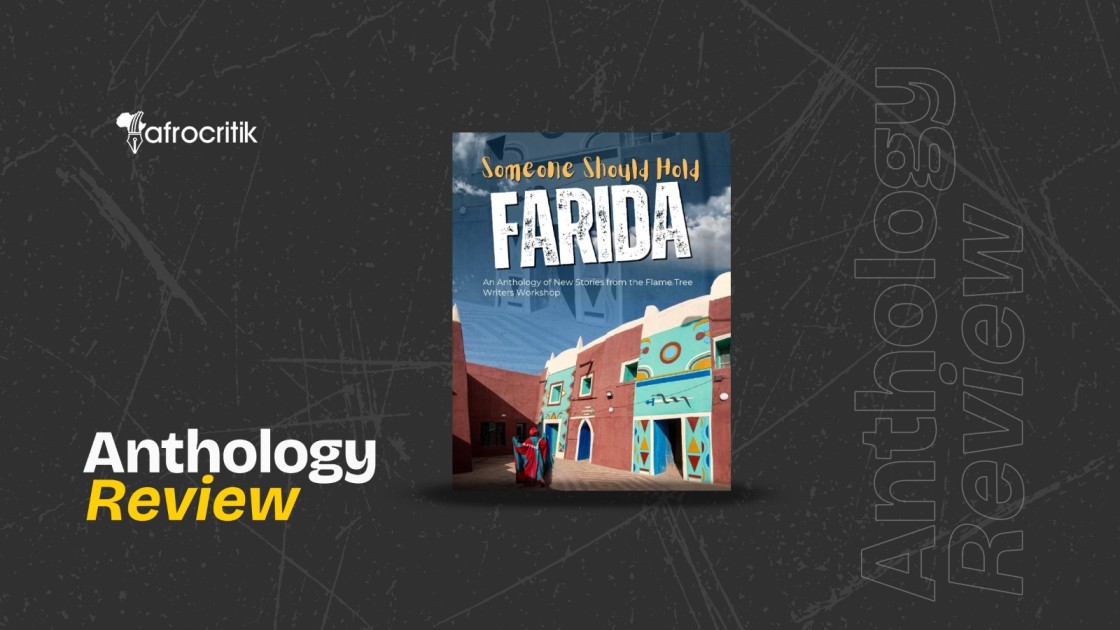

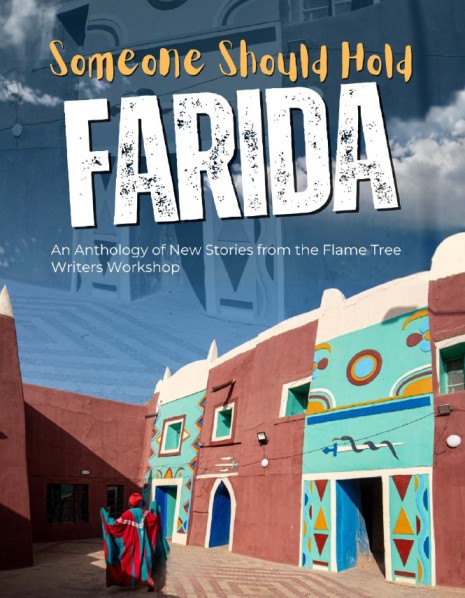
Someone Should Hold Farida pulses with characters who are aplomb, assured of their place in the world, as they try to make peace with a troubling past or to make space for love.
By Azubuike Obi
For a very long time, the entrenched image most Nigerians from the South have had of the North is that of a primitive land ravaged by terrorism, insurgency, poverty and child marriage. Indeed, villages in Borno are now being “governed” by Boko Haram insurgents. It is also equally true that a great percentage of young children from the north are out of school, and have become almajiris, just as it is true that girls as young as thirteen are being married off. But it would be foolhardy and dishonest to believe that that is all there is to the region.
This is why stories matter — to offer beyond a single story, to depict ordinary lives in their full complexity, without the implicit propaganda of new media. As regards stories that feature the quotidian lives of northerners, there has been a long-standing gap. And that gap is exactly what the overdue anthology, Someone Should Hold Farida, edited by the North’s foremost contemporary literary star, Abubakar Adam Ibrahim, covers.
This anthology of eighteen stories offers a rich palate of stories, from the contemporary to the primitive, from mysticism to realism.
The anthology sets its pace with “Big Head” from Hussani Abdulrahim, a cleverly told story about a young man who wakes up one day, only for residents of the village to realise he has grown a head twice his size. Soon after, he begins to exhibit clairvoyant powers. This story, about greed and possessiveness and the shifting nature of value, is told in the first person plural, “we”— a device Abdulrahim employs to zoom in and out of the consciousness and memory of different factions of the village, to see the occurrence from their distinct perspectives.

The shifting nature of value also occurs in Alewa Jonathan David’s “The Last Water Lord of Bare”, where we find a tug between modernity and tradition, between belief and its suspension in the face of sophistication. It tells the story of La-Dafle, who, following the drowning of Yakong, his closest friend, is forced to reckon with the myths upon which his family legend and heritage are built. David questions the place of belief in the lives of people who have only known the superstitious, and how they go on believing or disbelieving in the light of modern sophistication.
History looms. Edwin Mamman’s “Kala” has the weight of folklore behind it, an inspiring story about Mahboob who is destined to reclaim his family’s honour in a face-off with an archenemy. Nana Sule’s “The Interview” has superb pacing and masterfully managed intrigue. However, in telling its story of a Hausa family that lived through the Nigerian-Biafran war in present-day Imo State, it fails to sufficiently back up its historical context. We are told that two young Hausa boys lived in Igbo land during the war, yet there is no mention of any form of prejudice they themselves encountered at the time. It is hard to believe, especially when one considers the impact of war and the effect propaganda can have on how children relate to each other.
If characters are placed in a historical setting, it is pertinent that that history is lived through them, and is not experienced as merely he-said-she-said. On that note, “The Interview” fails to fully interrogate its characters and their relationship to their setting.
In the last three years, there has been a rise in reports of femicide— female killing by intimate partners. The United Nations reported that a woman is killed every ten minutes. Nigeria, too, has witnessed an unprecedented rise in femicide cases since 2025.
In this light, some of the stories anthologised here are making a case for the women whose lights have been taken by the men in their lives, their husbands in particular. Shedrack Akanbi and Zainab Abubakar in “Someone Should Hold Farida” and “Stepping on Thorns”, respectively, have done this through the eyes of the children of these women. Akanbi’s story is accomplished in its deployment of memory as a vehicle for interrogating the vestiges of violence, and Abubakar’s, though promising, lacks sufficient editorial support that may have provided the ideas there with the clarity needed. However, constrained by their choice of narrator, both of these stories fail to fully imagine the lives of these women whose lives have been taken.
“What Will People Say?” has a moving voice behind it even if it feels unfinished. In “What Will People Say?” Mansura Baba Ahmed chronicles the story of Safa, who has to marry at the age of fourteen to fulfil her father’s ambition. Told in conjunction with Jumai’s story, a woman who rebels from society’s conventions to live a full life, Ahmed highlights the utter lack of choice many women in northern Nigeria face when it concerns the people whom they partner with for the rest of their life, hence living a life plagued with dissatisfaction— unless when they choose to take destiny into their own hands even if it means to live a life of precarity.
Ghosts hover in and around: a dead child haunts Mwalin, and her father in “The Walls Have a Tongue”. Yoo encounters a magazine on a work trip that transports her to the scene of her sister’s death, forcing her to see her quest for justice from a different lens in Ameh Odachi’s “Realms Higher Than Us.” “Becoming Huda” from Safiiya Bello has a most promising premise: a young woman wakes up one morning to realise that her consciousness now inhabits another woman’s body.
The stories are accompanied by documentary-style original photos of the quotidian lives of the Hausa people by Sani Maikatanga. This does no small job in enriching the stories’ sense of place and belonging. On the subject of photography, “Yours Barmani”, pulsing with pathos, is a classic refugee story about two young women on the cusp of success after a modelling agency encounters their pictures on a photographer’s website.
The subject of childbirth and women’s bodies, though not viscerally explored, is adequately interrogated: Msendoo Tarter’s “Seember’s Cradle” is about one woman coming to terms with fertility issues and making a firm decision to seek viable alternatives, regardless of her husband’s refusal.

“Snip! Snip! Snip” from Hadiya Tilde follows the aftermath of a big reveal that severs the ties between a man and his wife. “Snip! Snip! Snip” queries the possibility of loving without conditions, and living or attempting to live with a partner whose future we can no longer reconcile with ours.

Mariam Abdullahi’s “Barka Da Sallah” is, amongst many things, about the loss of a child’s innocence and what it means to live in a culture where women are very often pitted against themselves at the benefit of men who continue to subject their bodies to debasement. “Barka Da Sallah” has something to say about HIV but, in addition to its other preoccupations, there’s very little space to elevate it.
Love, that thread that has the capacity to hold human beings together across time and space, regardless of differences, finds eloquent expression in Salamatu Usman’s “For Whom The Flames Endured” and in Yasmin Bawa’s “Ink Trails”. Usman’s story offers us Murad and Nadia whom we cannot help but root for, and Bawa’s is a thoroughly enjoyable love story.
While it is majorly about the love story of Sada and Oneshi, it is also about the lies we tell to maintain peace amongst the people we love, and what happens when those lies come bursting forth. Sada is swept into Oneshi’s world, but is unable to disclose the extent of her baggage to his family for fear of disapproval; however, as their matrimonial ties begin, the truth comes to the surface, threatening to upend everything Sada has put together.
Someone Should Hold Farida pulses with characters who are aplomb, assured of their place in the world, as they try to make peace with a troubling past or to make space for love. The stories in the anthology engage with myth and reality, with the natural and the supernatural, the personal and the collective, the seen and the unseen. There is no limit to what the northern story can look like. This is a necessary book.
Azubuike Obi is an Igbo storyteller who believes in the transformative power of language. He won second place in The Republic Student Writing Competition (2025), and was nominated for Chika Unigwe’s Awele Creative Trust Award (2024). His fiction and nonfiction have appeared online and in print in The Republic, The Weganda Review, Naira Stories, Afapinen, Efiko Magazine, and elsewhere. He is a regular contributor at Afrocritik.