

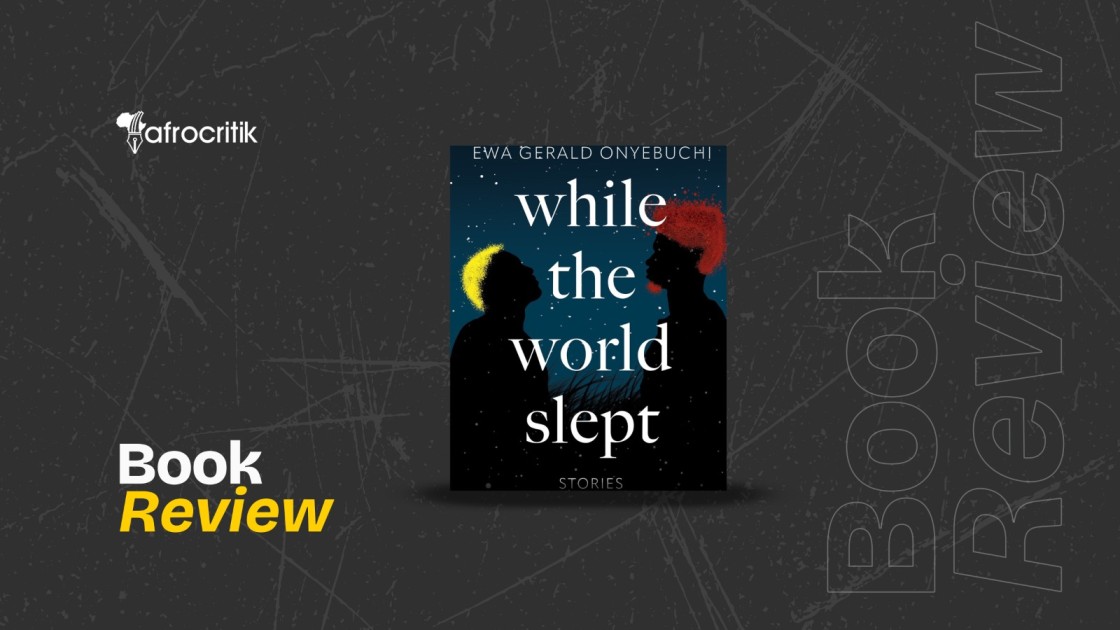

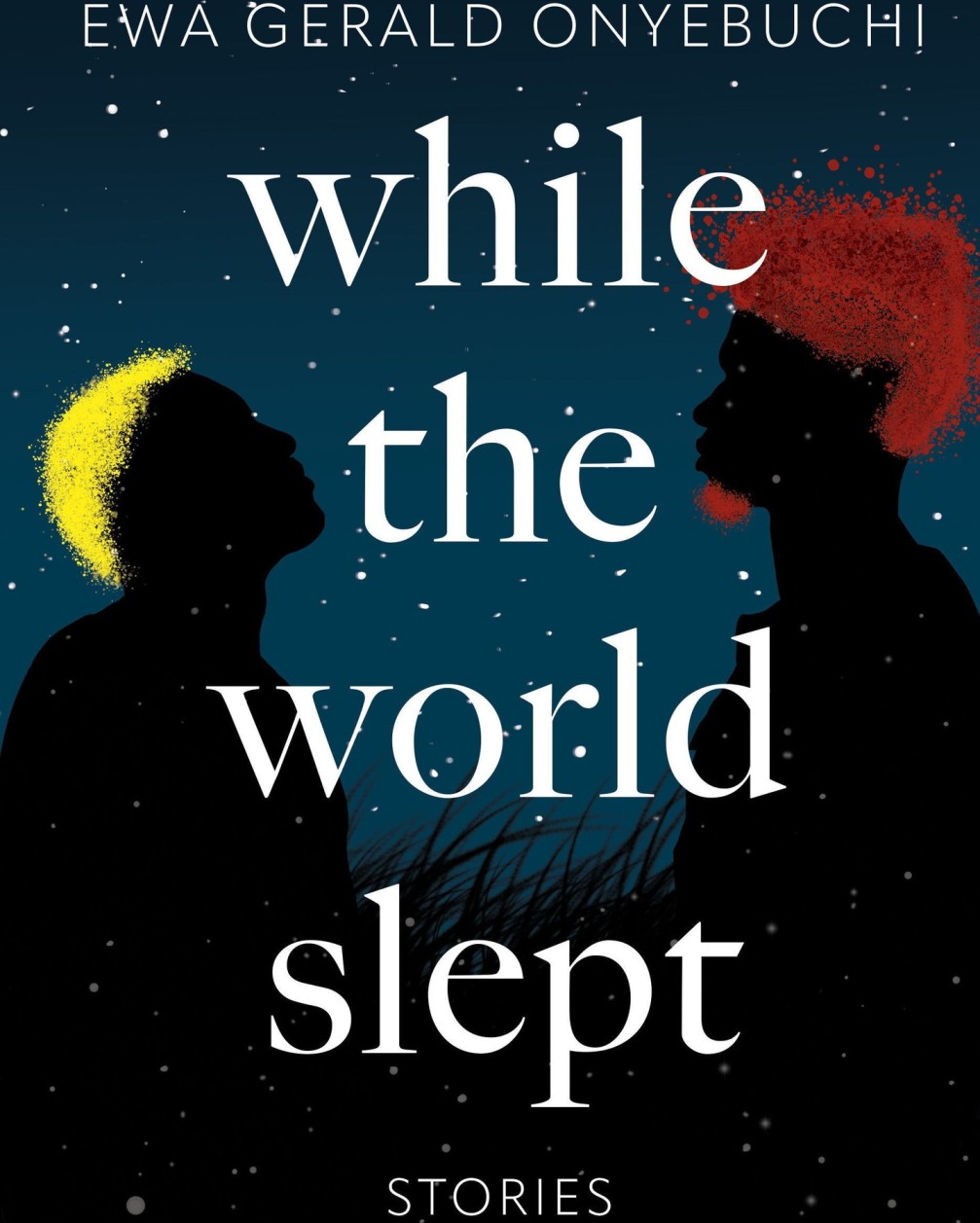
It is hardly possible to cross the bridges of the stories in While the World Slept and not be moved. The collection contains ten stories mostly focusing on the life of gay men in Nigeria, often caught between allegiances by the condition of their sexuality.
By Chimezie Chika
While the World Slept, the recently published debut collection by Ewa Gerald Onyebuchi, takes us across the many rivers of its characters’ emotions—grief, pain, regret, and lots of tears. But from the first story, we realise that Onyebuchi’s emotional riverscape all come from the same place: this world, this place, where gay people cannot be themselves, stifled every which way by family, society, and creed.
It is hardly possible to cross the bridges of the stories in While the World Slept and not be moved. The collection contains ten stories mostly focusing on the life of gay men in Nigeria, often caught between allegiances by the condition of their sexuality. This in-betweenness in their lives is undergirded by the multiple ambivalences of the love that occurs within and without them or the lack thereof, the shame they feel and those thrown their way, and the hurtful decisions they have to make (or ultimately decide not to make) about these quandaries.
The first story in the collection, “Ofure”, follows a married man who returns to the scene of his childhood love. It has been many years since he left his Niger Delta creek hometown where he once lived with his family, but all through the years of departure, he never forgot his first love, a boy living in penury with a widowed mother. It is a tender, nuanced story about the scars of love, poverty, and separation.
In “A Mother’s Love”, the second story, a couple clash constantly over marital and domestic troubles while their young son is getting bullied in school for being effeminate. This story contains notable moments of skill, though it is one of the stories in the collection that would’ve benefited from further narrative extensions.
One of While the World Slept’s best stories, “The Only One”, tells the devastating tale of a complicated relationship between two men involving men and women on both sides. A man’s moment of lust with a woman wracks him, even while he maintains a relationship with a married man, who eventually rejects him. This story sits at the intersection of gayness and bisexuality, but it carefully skirts the morality of Gozie’s and Collins’ affair to explore the dilemma of living in a world where one cannot quite decide what to be, how to be, and who to be loyal to.
“The Thing With Knowledge” is a story about a woman dealing with her husband’s infidelity, while trying to find ways to express love for her son Rueben, who is possibly a “different” child. Sections of this story contain genuinely moving narrative, but it is largely a forgettable one. By contrast, the next story, “The Beginning of the End”, is a fairly written story of two young men—one a youth corper, the other a student—being punished for their affair in a secondary school.
As the story opens, the two young men are standing in the principal’s office awaiting the school’s verdict on their public display of gay love at a party. The principal launches into a sermonising speech about his disappointment at their inappropriate and immoral behaviour. Finally, he dismisses the corper and suspends the student. The last scene, where the lovers meet in a bush close to the school, is remarkable for what it shows us about how near impossible it is to be gay in spaces where, amongst other pains, knowledge of your sexuality might be used to truncate your career prospects.
In “The Fragility of Hope”, another of the collection’s best stories, a dying gay man meets with an old lover, reminiscing about their past relationship and the fractures that finally separated them. Many years ago, their relationship was abruptly cut short when one of them was forced to marry by his mother.

This is a well-written story of a bittersweet romance between two men. One of the things one finds reading through While the World Slept is that the stories of gay people in this clime are filled with bitter or bittersweet memories. This is not to say that they are joyless, but we find that even within the capacious borders of joy, they mirror the tremors and strictures of the society where they have to live and love. These lives are not commonplace; they exist there at the liminal spaces between our society’s extremities. At one point, the dying man muses beatifically that “life isn’t black and white”. Clichéd as it is, it is also apt.
The titular story, “While the World Slept”, is one of the couple of stories that departs visibly from gay life. It is the sensitive story of Islamic terrorism in Northern Nigeria in which a young girl, Ladi, grieving the death of her brother at the hands of terrorists in Borno State, finds herself falling into the same mortal danger. Parts of this story read somewhat like a journalistic rundown of violence in northern Nigeria. That much of this comes to us through Ladi’s eyes makes it more palatable, though it can be quite sentimental.
In another notable story, “Adrift”, a married gay man begins an affair with another man while confronting his lack of feeling for his wife and her possible suspicion of his affair. In such an emotionally wrenching tale, all we see is a man grappling with the burden of living a life he does not want, a double life, in which he lacks the courage to live as free as he wants.


One of the most notable things about the stories in While the World Slept is that they often revolve around gay men in heterosexual marriages—a situation that, by degrees inside and outside of such marriages, guarantees the man’s lack of loyalty from the start, and of course the hetero-spouse’s endless pain. But this is what you get in a society that forces such men to hide and sequester their true identities.
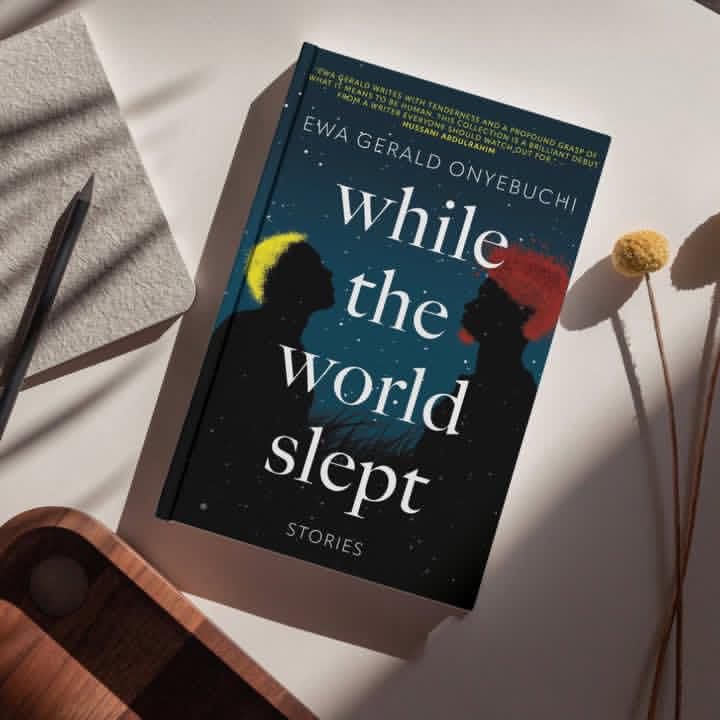
The titles of many of these stories are aphoristic in nature. Whether this is deliberate or coincidental is not clear, but they shed light on Onyebuchi’s desire to not just write gay lives, but guide us through the details of their experience, the lessons even, which we may typically overlook.
Onyebuchi’s writing has a quiet, gentle touch; not a few times do we encounter flashes of glittering prose: “His inability to achieve this sometimes drives him into a puddle of frustration and anger”, for example. His greatest ability is his emotional capacity to make us feel, and this is what keeps us reading. Otherwise, we do quite encounter more than passing instances of uneven writing.
In such instances, the writer’s overuse of the word “as”—mainly as a conjunction for subordinate clauses—grates on the skin; his writing would be infinitely more refined if he were to cut “as’s” littering the prose, alongside his frequent use of passive verbal qualifications in first-person narratives: “I thought, I remembered, he recalled.”
None of this is due to a want of range, for this author’s ability is everywhere on the page (he uses first, second, third person POVs); it is possibly a remediable editorial neglect. Nonetheless, he has penned a remarkable first book, a collection tracing the tender and moving stories of gay men striving to survive the ever-judging eyes of the world.
Chimezie Chika is a staff writer at Afrocritik. His short stories and essays have appeared in or forthcoming from, amongst other places, The Iowa Review, Dappled Things, Channel Magazine, Terrain.org, Lolwe, Isele Magazine, Efiko Magazine. He is the fiction editor of Ngiga Review. His interests range from culture, history, to art, literature, and the environment. You can find him on X @chimeziechika1