


Congo Boy is grittier than it is polished, but its grit has lustre, and Dembeasset’s compelling performance provides an anchor that steadies its 94-minute sail.
By Jerry Chiemeke
Congo Boy (2026), Rafiki Fariala’s sophomore feature following Nous, étudiants! (2022), mirrors the director’s own personal experience as a displaced Congolese creative searching for purpose. It is a coming-of-age story that refuses the easy comforts of the genre, choosing instead to sit inside the specific, punishing reality of statelessness.
In the film’s opening montage, a boy hauls a bucket between apartments, offering unsolicited washes for cars just to scrape a living. He drifts among other boys hustling through the day, their grind punctuated by bursts of improvised rap.
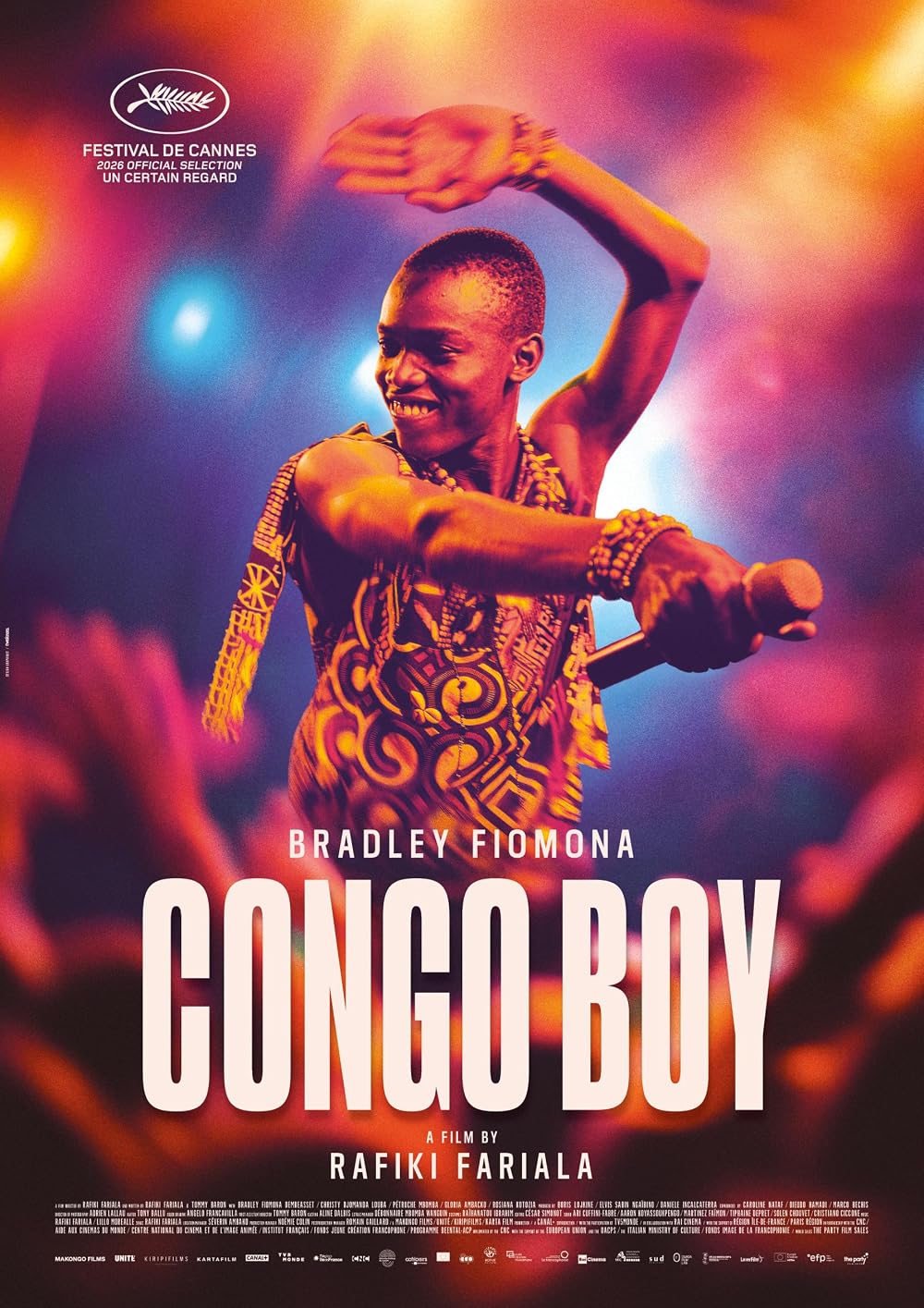
That boy is Robert Ebengo (played with striking assurance by debutant Bradley Fiomona Dembeasset), who flees Congo for the Central African Republic with his family to escape war, only to find that Bangui (the latter’s capital city) is equally destabilised by militia violence. His parents are imprisoned because of their refugee status, and his attempts to seek resettlement through the UNHCR collapse under administrative inertia. He shares a dingy apartment with his siblings, nights fractured by explosions and gunfire.
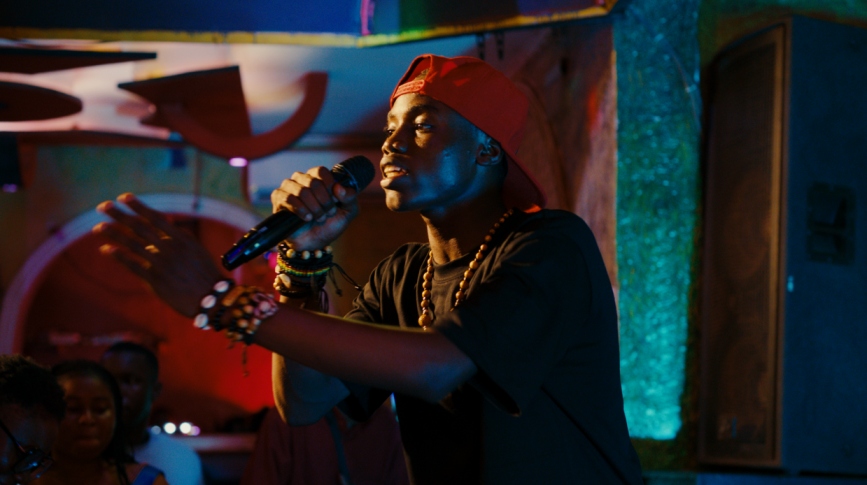
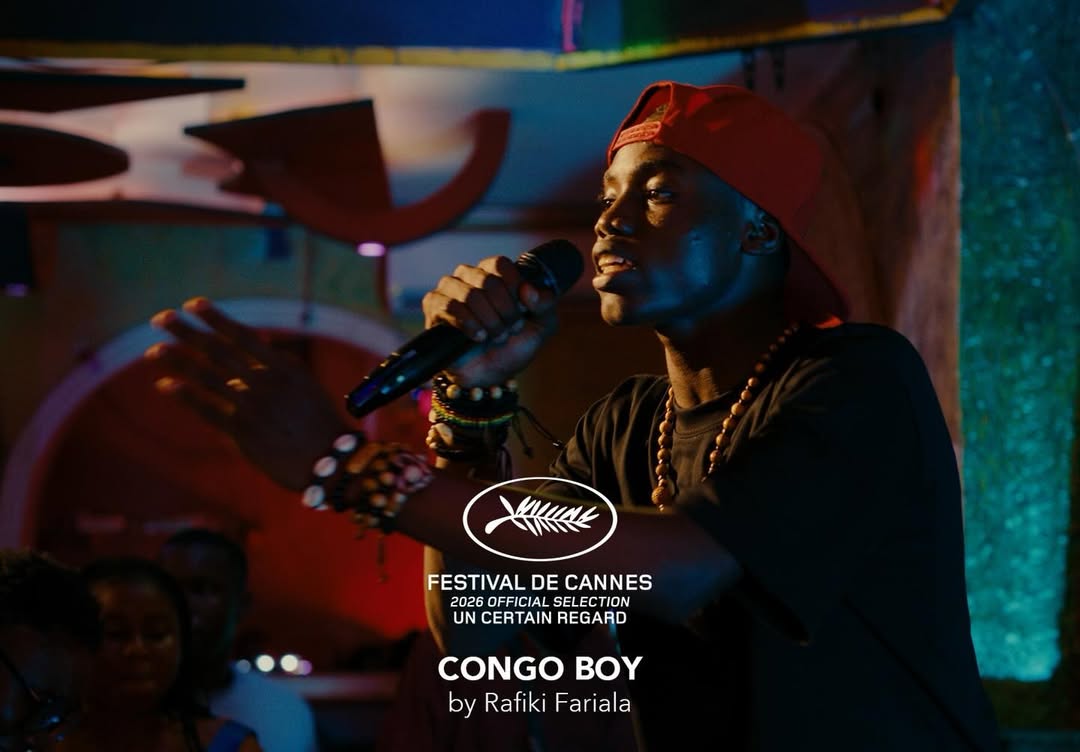
After dark, Robert and a friend slip into gigs as underground performers, defying his father’s insistence that he focus on school. One night, he gets the chance to perform at a nightclub after a fortuitous incident, catching the eye (and ear) of a producer named Sarapata, but his triumph is short-lived as police officers assault him on his way home.
Discrimination shadows him everywhere. At school, he is charged extra tuition simply for being a foreigner. Acquaintances and associates urge him to hide his origins, yet Robert senses that embracing his heritage, not burying it, is what will unlock new layers of his artistry.
In spite of serial misadventures, pockets of joy persist in music, family, dance and friendship. Robert clings to optimism even as militia raids drive his family into trepidation, even with disappointing examination results, even when a bullet lodges in his foot. It is impossible not to root for him.
Congo Boy explores identity, destitution, and survival with a deftness that manages to avoid the pitfalls of trauma or poverty voyeurism. The film leans on music as both an instrument and a vehicle for the hope that keeps surfacing despite the uncertainty surrounding the holder’s existence.
Quick cuts and vivid, textured shots capture the details of Robert’s home life. Adrien Lallau’s handheld cinematography stays close enough to generate real immediacy without tipping into shakiness for its own sake, and César Simonot’s editing gives the film a nervy, propulsive rhythm. It’s a smart creative choice: the film moves the way Robert has to move, alert and unsettled.


Where Congo Boy falters is in the places that ask for more patience than the film is willing to give. A continuity slip after Robert sustains a gunshot wound — limping in one shot, walking almost freely in the next — is a minor stumble, but the bigger issue is the ending, which trades the film’s hard-won specificity for something closer to a slogan. The final stretch reaches for national pride in strokes so broad and telegraphed that they sit at odds with everything the film has (rather conscientiously) done up to that point. The platitudes are too blatant, too on-the-nose. It’s the one place where the film seems to lose faith in its own collage and opt for didacticism instead.
Even so, this is a bold, textured piece of work, one that treats a refugee’s interior life with the urgency it deserves. Congo Boy is grittier than it is polished, but its grit has lustre, and Dembeasset’s compelling performance provides an anchor that steadies its 94-minute sail. To his credit, Fariala displays a great understanding of a phenomenon which eludes a lot of films about hardship: that dignity and desperation can share the same frame without one subduing the other.
*Congo Boy screened in the Centrepiece programme at the 2026 Toronto International Film Festival.
Jerry Chiemeke is a Nigerian-born writer, communications specialist, culture journalist and lawyer based in the United Kingdom. His writing has appeared in publications like Die Welt, The I Paper, The British Blacklist, The Africa Report, Berlinale Press, The Johannesburg Review of Books, Olongo Africa, The Lagos Review, Agbowo, Culture Custodian, and elsewhere. Chiemeke’s work has won or been nominated for the Pushcart Prize, Ken Saro Wiwa Prize, Diana Woods Memorial Award for Creative Nonfiction, Best Small Fictions, and the Quramo Writers Prize. He is the author of the short story collection “Dreaming of Ways to Understand You” (2020), the poetry chapbook “Notes For Nnedimma” (2019), and the hybrid manuscript “The Colours In These Leaves” (2017). For his work as a writer and critic, Chiemeke has been invited to the Cannes Film Festival, Sundance Film Festival, Berlinale, Toronto International Film Festival (TIFF), BFI London Film Festival, and the Lagos Book and Art Festival (LABAF).