


A touring party is rarely just the artiste. It can include musicians, dancers, managers, production managers, sound engineers, lighting technicians and other crew members, all of whom need to be able to enter, work and leave each territory on schedule. One delayed visa can therefore affect more than one person’s travel plans.
By Deborah Oyedijo
The answer is not simply that Africa lacks venues. The harder question is why, despite the obvious and increasingly proven demand for live African music, the infrastructure to turn that demand into a reliable touring circuit remains so uneven.
For fans, the frustration is easy to understand. An artiste announces a tour and cities across Europe, North America and Australia appear on the list. At the same time, African fans begin asking the familiar question: “What about Lagos or Accra, Nairobi, Kigali or Johannesburg?” Sometimes the answer eventually comes. Often, it does not. This can make the absence of African dates look like a failure of interest, as though artistes and promoters simply do not believe there are enough people willing to buy tickets. But the problem is more complicated than that.
A modern tour is not just an artiste, a stage and an audience. It is a chain of venues, promoters, production suppliers, freight companies, transport networks, immigration processes, customs systems, ticketing infrastructure and market data. When those systems already exist across a region, adding another city to a tour can be relatively straightforward. When they do not, every additional stop carries its own set of risks and costs.
This is where Africa’s touring gap begins.
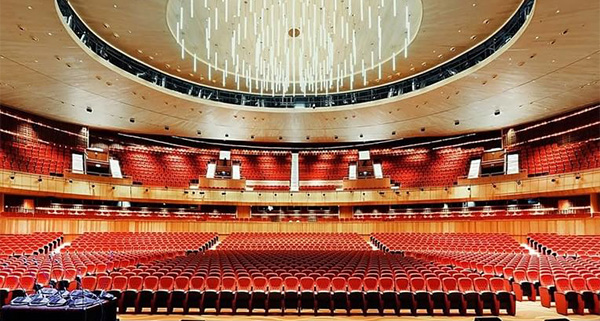
Consider the venue problem first. In North America, major touring artists have access to a deep network of indoor arenas, many of them in the 15,000 to 20,000-capacity range. The United States alone has dozens of arenas around this scale, including Madison Square Garden, Crypto.com Arena, United Centre, and many others. These buildings are not simply large rooms. They are purpose-built, multi-use entertainment infrastructure that can host basketball or hockey one night and a concert the next, with established loading areas, seating systems, production capabilities, hospitality facilities and teams accustomed to handling major touring productions.
That density matters because it gives promoters options. An artiste does not have to find the one suitable building in an entire country and build the economics of a tour around its availability. There is an existing network.
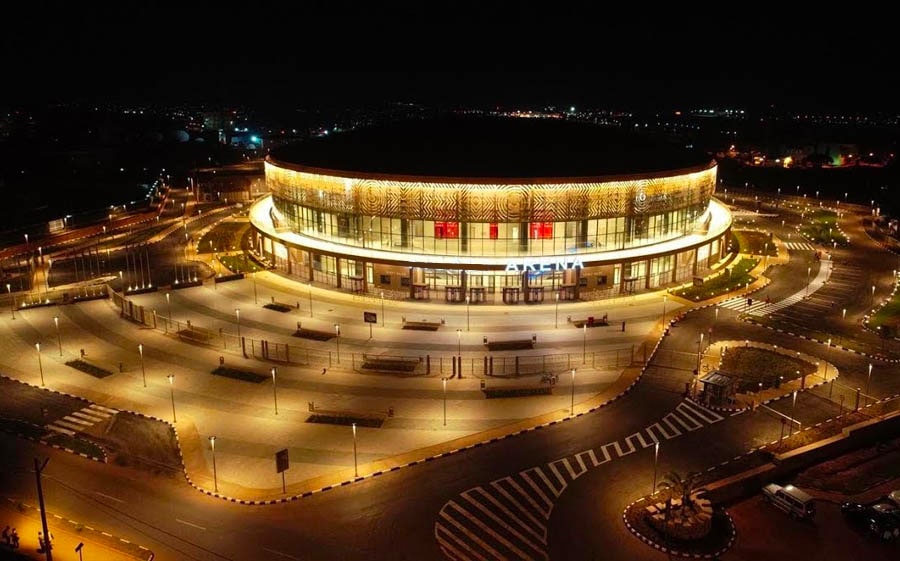
Outside South Africa, comparable options are much thinner across sub-Saharan Africa. BK Arena in Kigali is one of the clearest exceptions. The 10,000-capacity indoor arena, opened in 2019, was built at a reported cost of $104 million and is owned by Rwanda’s Ministry of Sports and Rwanda Housing Authority. Its existence matters not simply because it gives Rwanda somewhere to host a concert, but because it gives international promoters another credible stop on an African touring route.
Without enough suitable venues, artists cannot always be routed through African cities in the same way they are routed through European ones. A 20,000-capacity arena is not interchangeable with a stadium that can hold 50,000 people, and neither is automatically suitable for a 5,000-capacity show. The missing piece is not simply “bigger venues”. It is a sufficient range of safe, technically equipped, multi-purpose venues that allow promoters to match the size of an artiste’s audience to the economics of a particular city.
Then there is everything that has to happen before the artiste reaches the stage.
A major concert can require tonnes of equipment: staging, lighting, LED screens, sound systems, rigging, instruments and other technical equipment. If a local market cannot supply what a production requires, some of that equipment has to be imported or sourced from another African country. Once the tour crosses another border, the process begins again, with different customs requirements, temporary-import rules, permits and documentation.
The logistical problem is therefore bigger than the absence of equipment. It is the difficulty of moving that equipment efficiently.
Event-production companies working across Africa describe the continent’s touring reality as a market-by-market exercise because countries have different customs, tax, licensing and immigration requirements. Moving large quantities of production equipment across borders can involve carnet documentation, freight planning and local partners at multiple stops. Nigeria, for example, requires prior approval for temporary importation of certain equipment, with documentation and bonds involved in the process.
This is the hidden tax of touring Africa.
It does not necessarily appear as one giant line on a concert budget. It appears as extra freight, additional personnel, longer preparation periods, local equipment rentals, customs clearance costs, visas, accommodation and contingency planning. It appears in the time required to move equipment from one country to another and the risk attached to anything arriving late.
The consequences are becoming easier to see because some recent initiatives are deliberately trying to solve the problem at the circuit level. Move Afrika, Global Citizen’s pan-African touring initiative, was created around the idea of making African cities part of an actual touring circuit rather than treating each international concert as an isolated event. In Kigali in March 2026, Doja Cat’s performance at BK Arena was supported by local suppliers: Move Afrika says 98% of the audio and lighting fixtures, 95% per cent of the rigging and almost all stage components were sourced locally.
That detail is important. The goal is not simply to bring international artistes into Africa. It is to build enough local capability that the next show does not have to recreate the entire production system from scratch.
Visa requirements create another layer of friction. A touring party is rarely just the artiste. It can include musicians, dancers, managers, production managers, sound engineers, lighting technicians and other crew members, all of whom need to be able to enter, work and leave each territory on schedule. One delayed visa can therefore affect more than one person’s travel plans.
The recent controversy around Ayra Starr’s travel to South Africa following the cancellation of Tyla’s concert illustrates how easily visa issues can become part of the wider touring conversation, although the facts in that case were disputed. South Africa’s Consul-General to Nigeria later said her earlier visa rejection in 2024 resulted from an inappropriate yellow fever certificate, rather than a broader refusal to admit her or her team. The larger point is that entry requirements are not an abstract administrative concern for touring teams. They are part of the production schedule.
There is also a quieter problem: data.
A promoter deciding whether to add Lagos or Nairobi to an international tour needs more than evidence that an artiste is popular on social media. They need to estimate ticket demand, pricing, audience location, venue capacity and the likelihood that the economics of the show will work. Africa’s digital music ecosystem is producing more data than it did in the past, but live-event data remains less uniform across markets. Even industry research notes that ticketing market-share data can be difficult to verify because different operators measure differently and some keep their information private.
That uncertainty matters because demand and commercially actionable demand are not always the same thing. Fans can stream an artiste in huge numbers and still be spread across several countries, cities and income groups. A promoter has to know whether enough of those listeners will actually buy a ticket at the price required to stage the show.
And yet, there are already examples of what happens when the infrastructure exists.
South Africa is the clearest commercial example. The country has a mature live-entertainment ecosystem, with Big Concerts operating as part of Live Nation’s international network and regularly bringing global acts into the country. Its stadium infrastructure also gives major tours somewhere to land. FNB Stadium has hosted productions ranging from the 2018 Global Citizen Festival: Mandela 100, headlined by Beyoncé and JAY-Z, to Chris Brown’s two sold-out December 2024 shows, which drew more than 180,000 fans across the two nights.


The significance of South Africa is not that it has somehow eliminated the difficulties of touring in Africa. It is that years of commercial activity have produced an ecosystem in which major international concerts can be planned at scale. The promoter network, venues, suppliers, ticketing systems and audience history reinforce one another. Demand makes investment more attractive, and investment makes it easier to service demand.
Rwanda offers a different route.
BK Arena was not simply the result of a concert market gradually becoming large enough to require a 10,000-capacity arena. It was a major public infrastructure investment, owned by the country’s Ministry of Sports and Rwanda Housing Authority, and positioned within Rwanda’s broader ambition around business events, tourism and international activity. The venue has subsequently become a credible stop for major international productions. John Legend performed there in 2025, Kendrick Lamar’s Move Afrika tour stopped there in 2023, and Doja Cat headlined a sold-out Move Afrika show there in March 2026.
That makes Rwanda interesting for a different reason. South Africa shows what can happen when a commercial ecosystem develops around sustained demand. Rwanda shows what can happen when a government makes large-scale event infrastructure a deliberate investment before the market reaches the same level of maturity.
Neither model is a magic solution. But together, they challenge the idea that Africa’s touring gap is permanent.
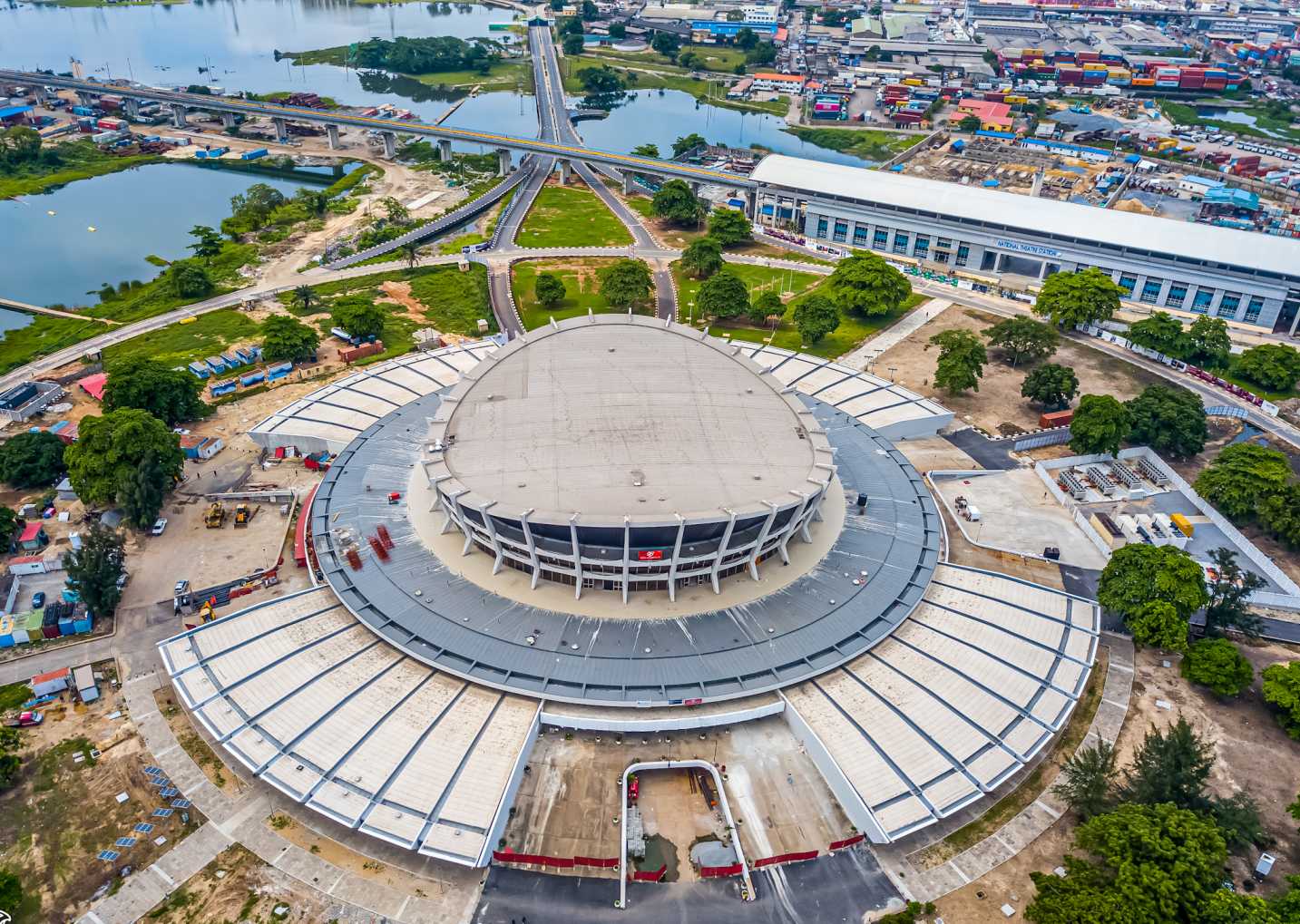
Nigeria, too, has at least one small signal in the same direction. The National Theatre, now the Wole Soyinka Centre for Culture and the Creative Arts, underwent a major renovation and was officially commissioned in October 2025 after a project involving the government and private-sector Bankers’ Committee. Dave’s first headline shows in Nigeria are now scheduled for the venue on October 16 and 17, 2026, placing the renovated complex on the itinerary of an international tour that has already travelled through North America, Australia and Europe. One venue does not solve Nigeria’s touring infrastructure problem, but it is a tangible example of the kind of investment that can expand what is possible.
The larger issue is therefore not whether African audiences exist. They do. PwC’s 2025–2029 Africa Entertainment and Media Outlook reported that live music ticket sales in South Africa generated $76 million in 2024, while Nigeria and Kenya each generated about $1 million, with all three markets showing continued growth after the pandemic. It also identified South Africa’s established entertainment infrastructure as a major reason for its position as the region’s live-entertainment hub.
The challenge is turning that appetite into a system that can support more cities, more venues and more tours.
When fans ask why their favourite artiste can perform in London but not Lagos, the answer is therefore rarely just about whether the artiste wants to come. A tour has to make sense on paper before it can happen on a stage. If the venue is uncertain, the equipment is expensive to move, visas are unpredictable, local suppliers are limited and reliable ticket-demand data is difficult to obtain, the cost of adding one more African date can become disproportionately high.
South Africa’s commercial ecosystem and Rwanda’s state-led infrastructure investment offer two different answers to that problem. Neither means the work is finished. But they demonstrate something more useful than another reminder that Africa is behind: the gap can be closed.
The question now is whether more African markets will build the venues, logistics networks, production capacity and information systems that turn individual concerts into something bigger: a continent that can be routed, not merely visited.
Deborah Oyedijo is a music business writer and entertainment lawyer-in-training with a focus on the African music industry. When she is not writing about music rights and culture, she is watching K-dramas or absorbing yet another documentary. Connect with her on IG and X: ayooyedijo