

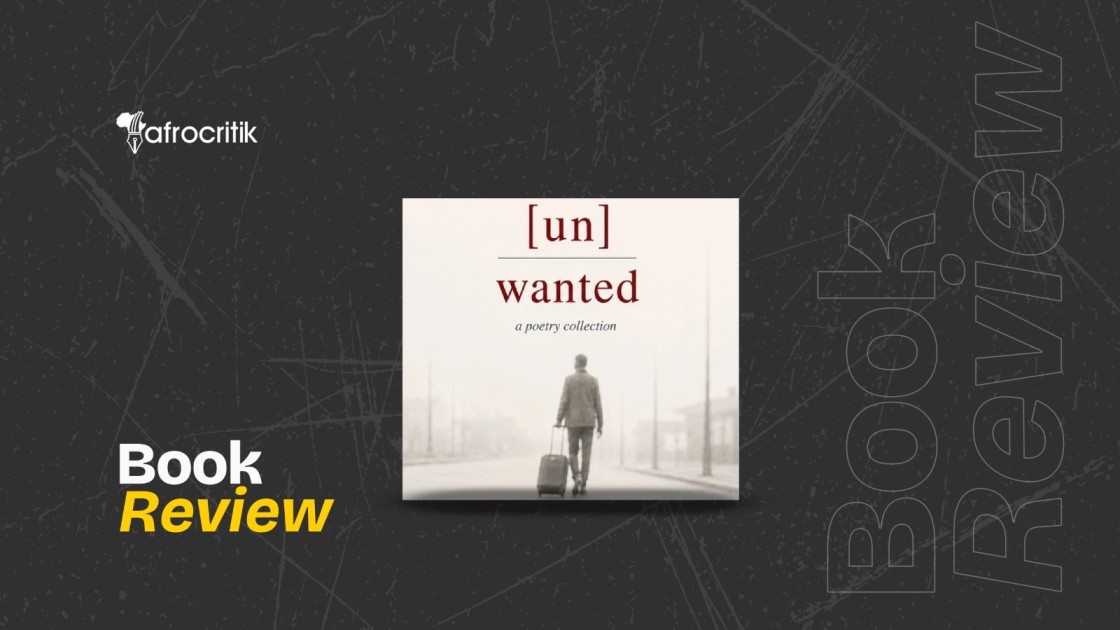

Unwanted is a chronicle of the will to leave and live by a young man with a voice, who feels his own country’s ostracism by design. This poetry, as anyone would have seen by now, is the poetry of a spoken word artiste.
By Chimezie Chika
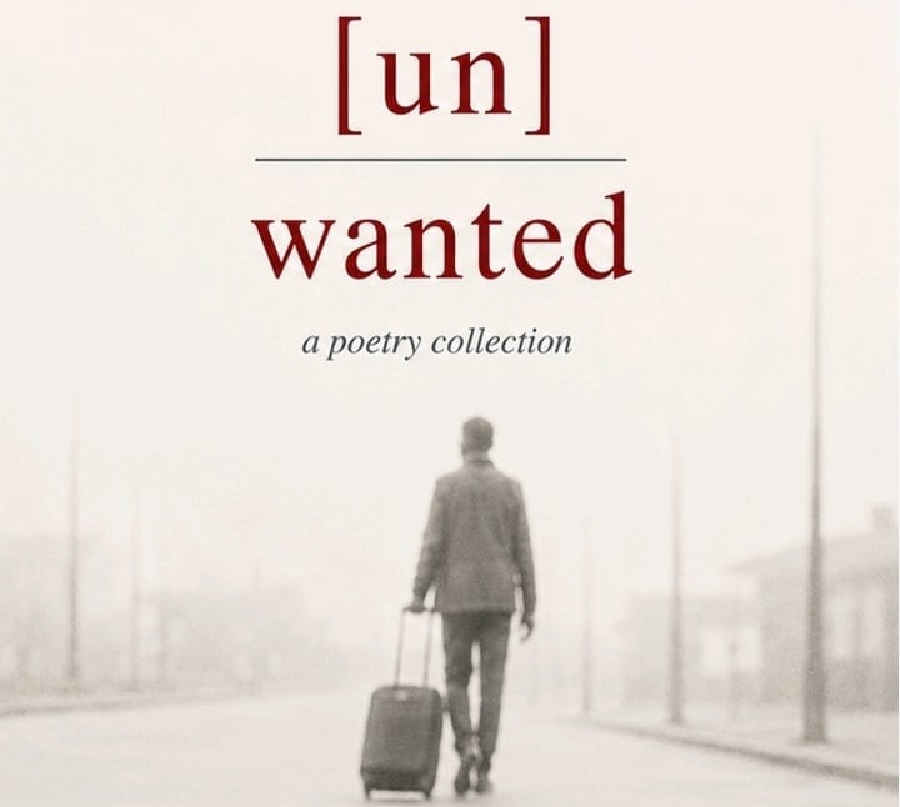
Poet and spoken-word artiste Emmanuel Eruemulor’s debut poetry collection, Unwanted, stages the drama of exile as a spiritual journey through national, personal, and transnational tribulations. The poet further reconstructs these three modes of confronting the world into dualities: national/personal, national/transnational, and personal/transnational. These dualities fit straight into the book’s three sections titled: Nigeria, Migrating, and The Clash of Cultures.
In the first part, Nigeria, in which we can find the national/personal construct, the first poem “Genesis, Interrupted” assumes a chronicle of beginnings using the biblical style of the Book of Genesis to conflate the national fate of Nigeria and the poet’s own familial ties to religion:
In the beginning there was oil,
and the oil was good,
and the oil was divided
among men who called themselves fathers
…
In the beginning there was a boy
in Zundert, son of a pastor,
who wanted nothing more
than to preach the same gospel
…
In the beginning there was also a map of Europe,
and a family who loved him
the way you love a chapter
These excerpts are so fundamental to the collection’s narrative project that one may be forgiven for thinking they are the entire poem. The poem also sets the tone for the rest of the book, snapshotting the book’s major themes. It prefigures the origins of the kind of strife that forces a person out of Nigeria. First, the country found oil and disintegrated into profound corruption.
Thence, the poet’s speaker places himself at the crossroads of this disintegration. He was born in Zundert as the son of a pastor, and grew up so devout that the church that nurtured him rejected him for more or less that reason. Then again, the poet pivoted to the other side of the narrative. We read: “In the beginning there was a river/that fed three hundred tongues/until someone drew a border/ with a ruler and a grudge/and called it unity”.
In the poet’s reckoning, as has been the stance of many a commentator, the error of Nigeria was bringing people of 300 ethnicities to form a country. This is a great observation, if not that the recourse to Nigeria’s diverse ethnicity as the impetus to its problems is a valid but one-dimensional problematising. Nigeria is simply not the only country with such diverse ethnicities. Its unique problem in this instance is that the colonists started by weaponising the country’s ethnic diversity for selfish reasons. Today, the country is still following that destructive blueprint.
But the poet is saying something important nonetheless. By placing himself at the national crossroads of existential failure and religious intolerance, he makes us see how a country’s destiny becomes the personal destiny of its citizens. This is what we consistently see in the first part. In the second poem, “Sunday Service, Tuesday Grave”, we see a slice of that religious strife in the bombing of churches. In another example of religious strife (“The Church that Buries Its Own”), the issues are placed within the workings of the church.
But this is not limited to the beats of jihadists. The poet also chronicles the lawless law enforcement in the country (in “The Boys in Black”, “Prayers at a Checkpoint”, etc.), exemplified by SARS—the police formation whose brutality led to the historic ENDSARS protests of 2020. That protest is memorised at length in Unwanted, beginning with the poem, “Toll Gate, Lekki” (and poems like “The Republic of Silence”), detailing the event of the Lekki Massacre, which, as it was later revealed, was a major failing of the Lagos State government:
They cut the lights first.
Darkness is a good editor —
it removes witnesses
before it removes people.
In the sequel to this poem titled, “October Twentieth”, the poet reveals that the poetic exercise is, for him, a form of resistance through memory. “I keep the date the way some people keep scripture/,” he writes. “Not because I want to relive it,/but because forgetting is how they win twice”.

And the story of Nigeria’s violence on its people—and no less on the poet—does not end here.
In Unwanted, Eruemulor offers an unsparing criticism of Nigeria’s fundamental divisions, alighting always on the question of tribe, ethnicity, and religion. While the tribalism problem is captured in, amongst other poems, “Names that Divide Us”, we find that Eruemulor spends far more time on perennial issues of corruption as the poet’s speaker witnessed it. Much of what he writes here is unsurprising.
Poems like “The Man in Agbada” and “A Politician Talks of Power/ A Voter Talks of Survival” (the last being doubtless one of the best in the collection), both being dramatic portraits of the corrupt politician, more so for the latter. Similar rhetoric can be found in the poem “Stolen Futures”, in which slivers a memorable couplet:

“They stole it slowly,/
which is the cruelest kind of theft”.
What can be said of Unwanted is that it is a poetry of lamentation—or poetry as a litany of woes. This poetry walks the same corridors as the poetry of Nigeria’s second generation of poets—a fact that says something about the long-suffering the country’s citizens have endured without respite. In other words, nothing has changed in nearly four decades. It is all within the scope of what we find in “Children of a Failing State”:
We learned generator maintenance
before we learned times tables.
We learned to queue for fuel
before we learned to queue for anything else.
We learned that our passports
were an escape hatch
before we learned what patriotism
was supposed to feel like.
Repeatedly in Unwanted, we get a variation of: this is a country whose citizens find futures outside of it rather than within it. As we go on to the second and third sections, which I have identified as following a pattern of national/transnational and personal/transnational dualities, the mantra of failure, woes, and lamentations of a country that has failed its people never ceases.
The only difference is that, in these places, they morph into exilic blues with their attendant problems of adjustment, racism, and the far-right politics oriented against immigrants and their desires. On a more technical level, the second part of this book might well be its best.
In hindsight, Unwanted is a chronicle of the will to leave and live by a young man with a voice, who feels his own country’s ostracism by design. This poetry, as anyone would have seen by now, is the poetry of a spoken word artiste. It is mostly bare-bones, plain-spoken chronicles that rely heavily on rhetoric. For this reason, it can become increasingly flat and repetitive the further one gets into it. Yet, it is a noble effort. Whatever its shortcomings, its honesty can be felt; and perhaps, that is enough to keep us going.
Chimezie Chika is a staff writer at Afrocritik. His short stories and essays have appeared in or forthcoming from, amongst other places, The Iowa Review, Dappled Things, Channel Magazine, Terrain.org, Lolwe, Isele Magazine, Efiko Magazine. He is the fiction editor of Ngiga Review. His interests range from culture, history, to art, literature, and the environment. You can find him on X @chimeziechika1