

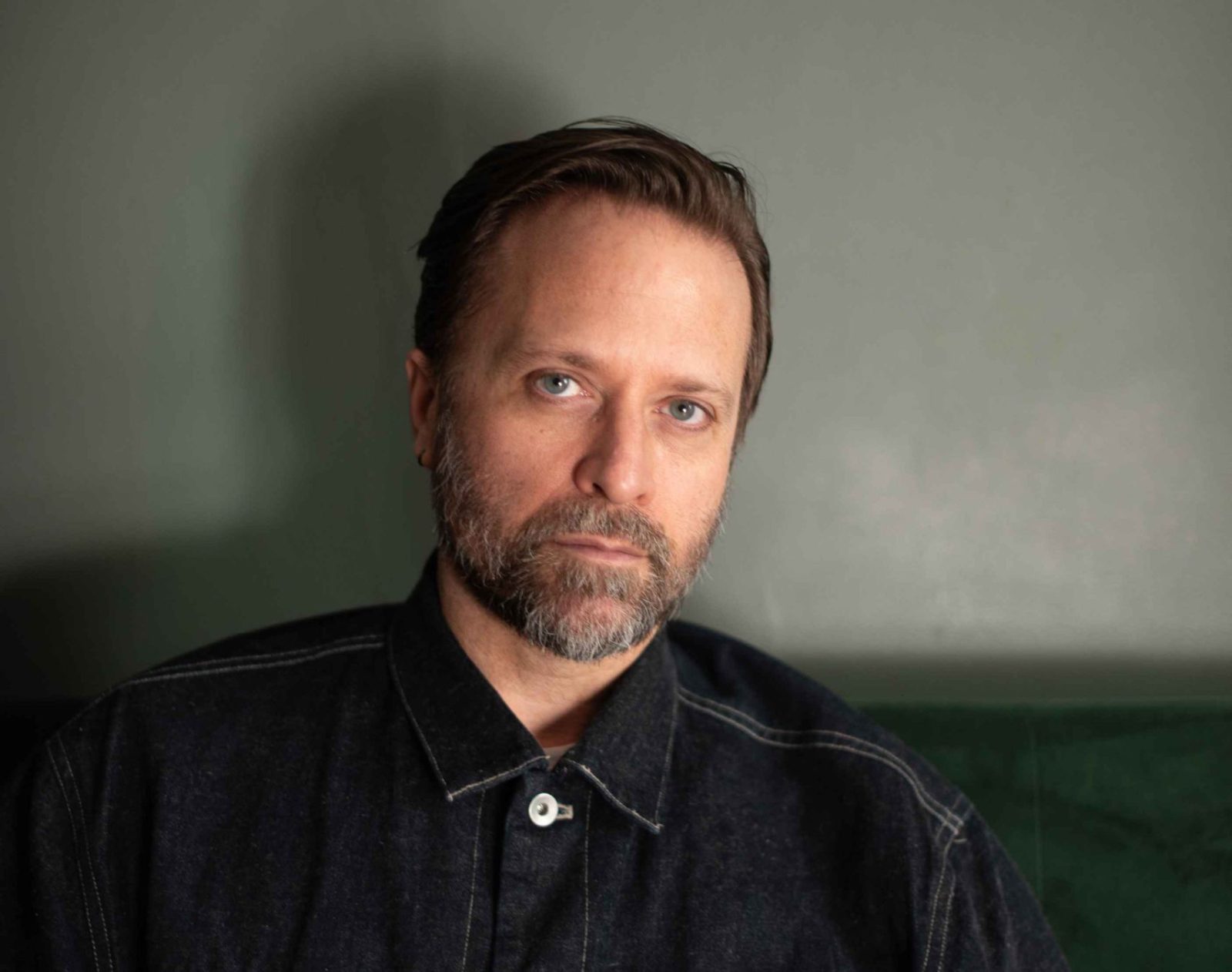

“There’s this complicated relationship that I will always have with who I am and where I come from, and this film was an incredible opportunity to unpack some of those feelings.” — John Trengove
By Jerry Chiemeke
Twenty-four years after Mark Behr’s novel first forced South African readers to sit inside the head of a child raised to inherit apartheid rather than simply witness it, director John Trengove has brought The Smell of Apples (2026) to the screen and, in doing so, extended a body of work almost singularly preoccupied with how masculinity gets built, brick by brick, inside institutions designed to reward it.
It’s a fitting subject for the South African filmmaker: from his 2014 short Ibhokhwe, through his Sundance-selected debut The Wound (2017), to his English-language pivot Manodrome (2023) with Jesse Eisenberg, Trengove has spent more than a decade tracing the private machinery of manhood — the rituals, the fathers, the silences — and what it costs the men and boys caught inside it.
As Trengove returns to South Africa’s political terrain, he crafts a drama that is as ethically rigorous as it is emotionally gripping, inviting audiences to confront the complicity that upholds violent systems. Set across five days, it follows 11-year-old Marnus (newcomer Dawian van der Westhuizen) as an ordinary summer of fishing, piano lessons and family ritual devolves into something closer to horror.
It’s 1974, and Marnus has no reason to suspect that anything in his life bears an undercurrent of darkness. His father Johan (Hilton Pelser) is a celebrated army general, his mother Leonor (Maude Sandham) is loving and determined to keep up appearances, and the family’s Black domestic worker Doreen (Celeste Matthews Wannenburgh) has known him long enough that his affection for her seems entirely genuine. But everything changes when his friend, Doreen’s grandson Neville, is wrongly accused of stealing a fishing rod and subjected to severe brutality. Marnus is jolted by the violence he witnesses, but he also finds that the façade that he had hitherto been draped in slowly begins to unravel.
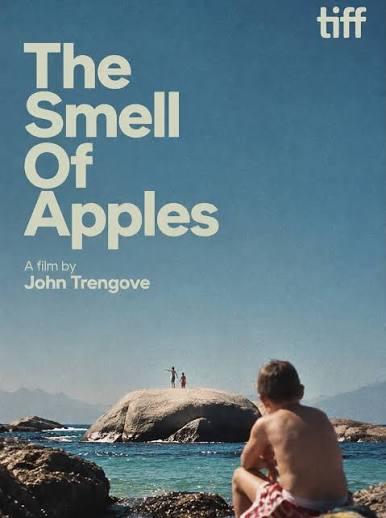
To his credit, Trengove resists making him a child racist caricature, instead painting him as a boy who can genuinely love the Black woman who helped raise him while still, without much thought, accepting a system built to keep her beneath him. The Smell of Apples is a film built on restraint, precision, and a refusal to look away from the quiet mechanisms of privilege
In this exclusive interview with Afrocritik, Trengove waxes lyrical about adapting Behr’s novel, staying inside a child’s limited point of view rather than following the book into adulthood, and why he keeps returning — from a Xhosa initiation camp to an American men’s-rights cult to a whites-only South African suburb — to the same essential question: how ordinary men are made.
*This interview has been edited for length and clarity.
What guided your decision to stay entirely within Marnus’s childhood perspective, and what did you gain or lose by removing the adult timeline?
The novel is a child’s monologue, spoken in the first person directly to the reader. It’s almost like you’re inside this stream of consciousness. So, I think what was very appealing about that is how a child’s limited perspective on the world mirrors this idea of a so-called white utopian bubble: there’s a kind of blinkered existence and a huge amount of control over what people can hear, see or be exposed to. The information they get through the media, church, or school is highly regulated. And so there was a natural affinity — and I think the book was already exploiting this very well — between this child’s limited perspective and the bigger idea of what this story is trying to talk about, which is this family that exists in an insulated bubble who are aware of what is going on outside it as well as what it takes to sustain it, but choose to be wilfully blind about these things.
At the same time, film is very different from literature, so we had to find a way. In the novel, you’ve got this inner monologue that’s driving the emotional engine of the story. For the film, obviously, I wasn’t really interested in using voiceovers; I wanted to find a cinematic way of getting to the same place, and that, I think, informs a lot of the decisions about what stays and what goes.
I was so immersed and enthralled by the story of being in the head of this young boy. I felt like it was more interesting to just stay with this child over the few days that he’s experiencing these things and then relying on the audience to make some kind of projection about what his future might be. I felt like everything that I was interested in talking about that was exciting to me about the novel was implicit in that part of the story, and so it was kind of an obvious thing to say, “okay, we’re making a film, we’re zooming in on this one particular section”. It simplifies the adaptation, and it really helped me to get to a distillation of what I wanted to talk about.
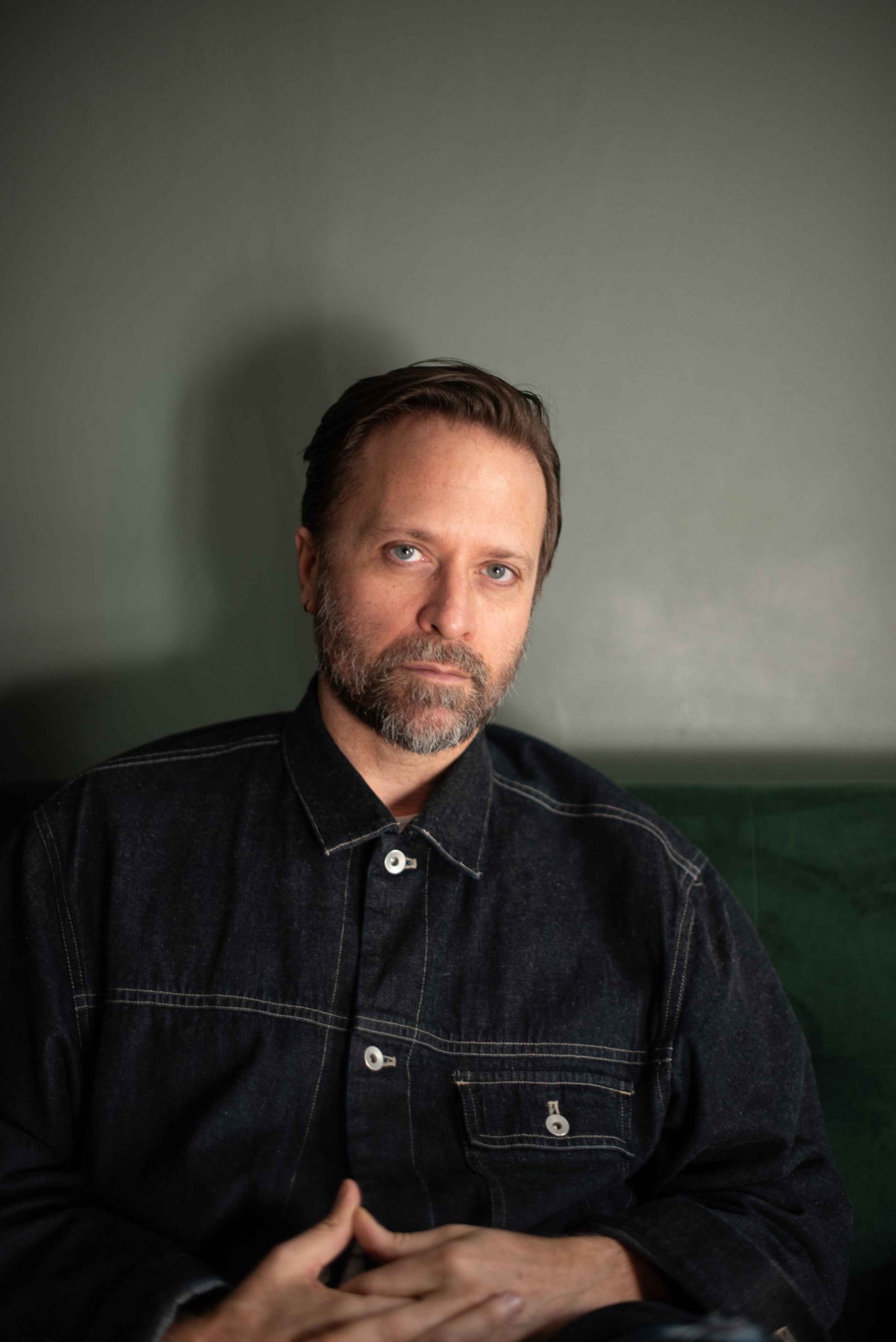
Behr’s book is semi-autobiographical. How much of your own research into his life, or your own experience growing up in South Africa, shaped which parts of the novel you kept close and which you reworked?
The reason I think I’ve been obsessed with the novel for most of my life is that I’m a white Afrikaans South African of a certain age; early parts of my childhood coincided with the end of apartheid. So when I first read the novel, it was a kind of revelation. It’s the first time that I’d read or encountered anything, any work of art that spoke to something so specific in my own experience. The story is obviously earlier than my own time, and my own circumstances were different from those of Marnus, and yet there is something very particular about growing up inside a regime like this, and benefiting from a regime like this. I didn’t realise (obviously) until after the fact how strange and unusual those experiences were, but I think what the novel did so well and what made me want to adapt it for many years is this experience of a child who is in a world that seems good on the surface, and yet there’s this undertow, this feeling that comes from hearing what adults say and knowing that there’s some kind of unrest happening in the township nearby.
These fragments of information that reach you through the ether create this underlying feeling that something is very wrong. For the longest time as a kid, you don’t necessarily have the vocabulary or the context to understand these things, but there’s this dichotomy between what you see and what you feel, and I think that’s what was always so special about the book.
The reason for adapting it in 2026 is different to what it would have been if I’d somehow had the opportunity in the early 1990s. At this stage, I almost feel like this is a kind of confessional; it’s about saying, “this is what we did, and these are the lengths that we had to go to to indoctrinate our children to sustain a system as brutal as apartheid”.
It’s a confessional because I’m talking about my own heritage and something that I have had conflicted feelings about throughout my entire life. It’s natural to want to belong to a community and feel connected to a culture, but when that community and that culture have such a dark and problematic legacy and baggage attached to it, you want to reject that, move away from that and inhabit a state of shame. So there’s this complicated relationship that I will always have with who I am and where I come from, and this film was just such an incredible opportunity to unpack some of those feelings.
I think it’s also a kind of warning. As a white South African, the one thing that I can offer the world is this portrait of how it happened for us as well as how we did it (apartheid), and to ask the audience to look at this and see how much of the world is still the same in some way. There are many resonances in other cultures today, especially as we are moving into an era of more dictatorship, white supremacist rhetoric, and right-wing uprisings.
The film intentionally keeps Black suffering at the periphery, mirroring the white family’s blind spots. How did you navigate the ethics of depicting apartheid through the eyes of its beneficiaries?
I feel that with a subject as complex as apartheid, it’s a bit like the Second World War, where there have been and continue to be so many films because there’s so much to be said and learnt from something like that. So, of course, there have been many extraordinary films about apartheid, especially documentaries, and in South Africa we have gone through a period of “apartheid fatigue” because (at the time) there was a sense that people were tired and wanted to move on. But I also think that we’re now in a time where the “born free generation” have come of age and there’s perhaps a newfound interest in the subject.
I see our film as something that sits alongside many works that have dealt with apartheid, and it’s one fragment of a kaleidoscope that requires constant interrogation. The Smell of Apples is one additional layer of perspective, and in terms of the form, the point of the film is hinting at an atrocity which is out there that we don’t see. I think that in order to convey the true perversity of what was going on in those suburban households, it was necessary to rigidly hold on to that perspective.
In the early 1990s, there was a spate of films that attempted to somehow encapsulate what had happened to us, and I think they fell into a trap of trying to summarise the whole thing and come up with an ethos as well as a mood that would somehow transition us from one era into another. I think that now, perhaps we are (relatively) free of that desire to explain everything. This means that now we can really go back, look through more specific lenses, and carry out an in-depth examination.
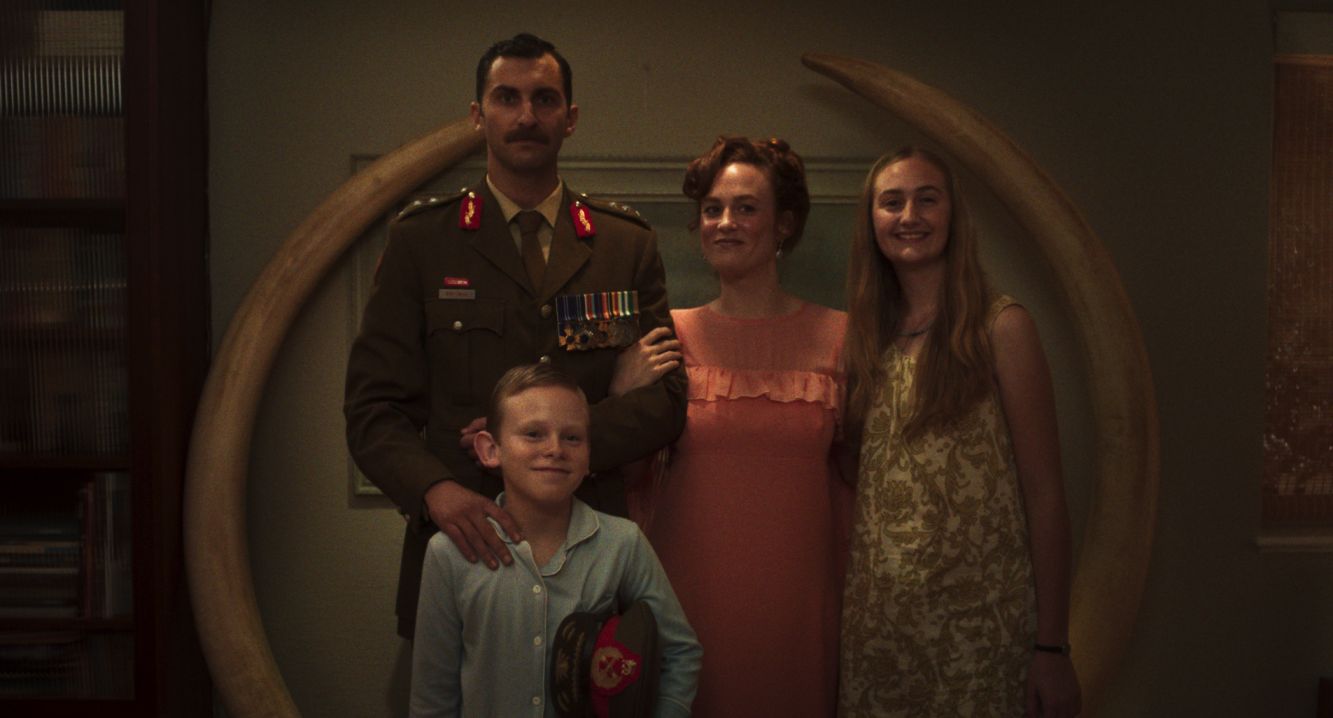
Johan is affectionate, authoritarian, and ideologically rigid. How did you calibrate his character so that Marnus’s love for him feels real even as the audience recoils?
It was central to the novel, and it’s central to the film as well. The crisis that this father-son relationship creates for the child is that there is this immediate and seemingly endless adoration of his father that translates to hero worship, but at the same time there is a weariness and fear (from Marnus’ perspective) that underpins their interactions.
The truth about father-son relationships in general is that you can have multiple realities existing: you can spend your life desperately trying to make someone happy, and they can turn out to be an abuser or tormentor. What makes it (abuse) so insidious is that it can take years for people to unravel the positive feelings of love from the realities of abuse, and that’s really what this dynamic is.
A lot of credit has to go to Hilton Pelser, who played Johan with a razor-sharp clarity and a complete commitment to the entire spectrum of that character. His performance is fearless. There’s a moment late in the film where his character is sitting on the couch, fielding questions from his son, whom he’s admonishing to do the right thing. You can tell from his performance that he knows he’s lying or that there’s some baggage that he’s handing to his son at that moment, and there’s an underlying sadness to his demeanour. We get to understand that while his character is truly evil, there’s a paternity he brings to the scene that doesn’t feel cynical, and these contradictions are what the film is about.
As an audience, we can see where this is going, and what we are watching is not so much the revelation of his misdeeds, but the boy’s struggle to reconcile these conflicting feelings about his father. I think Dawian (Marnus) was just able to really hold these contradictions in a manner that was astonishing – this is not something you can just teach a young person; it has to be innate.
Leonor navigates the family’s ideology differently. What conversations shaped her arc, especially around complicity?
With Leonor, the conversation I had with Maude (Sandham) is that I think the character has got an inner struggle, and that in a way leans into the themes of the film. Deep down, she knows who her husband is and that something might be going on in her own household. She has to first take this knowledge, stash it away in a little box, and then teach her children how to do that.
Initially, she’s just trying to shield them and constantly police what they are exposed to, and yet she can’t because the evil is right inside her home. Ultimately, she has made her decision to live with a monster and benefit not just from the life she has, but also from this society that she is playing her part in upholding, so there is a guilt she has to live with.
One more idea that I played with is that Leonor may have been an undiagnosed depressive in a time when these things weren’t really spoken about, so there’s this constantly exposed nerve inside of her that just keeps ratcheting up and ratcheting up.
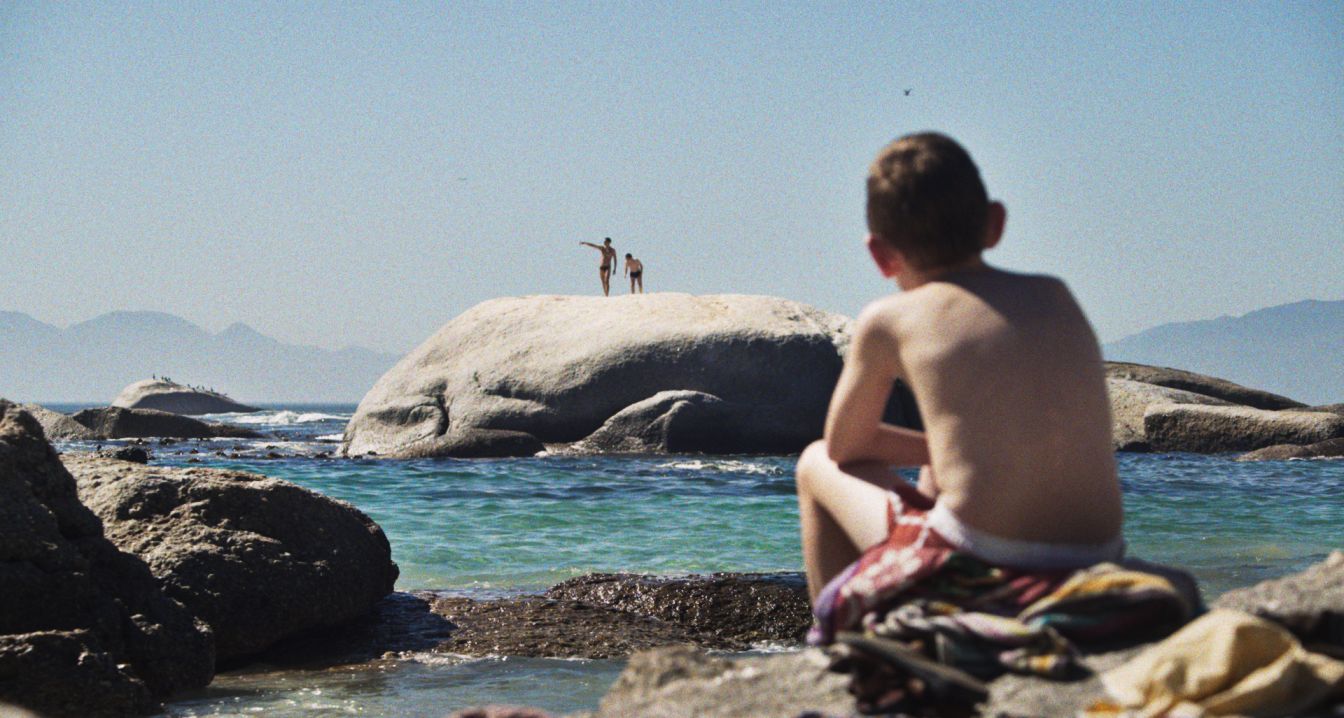
How did you stage the slideshow scene, and what did you want the audience to feel as family photos collided with images of torture?
The slideshow is an important scene, also quite late in the novel. Doing a cinematic adaptation of the slideshow was just so attractive because it’s essentially about the juxtaposition of images and putting an appearance of innocent family life against these depictions of atrocity. It’s the moment where the bubble bursts for the family, the truth comes seeping in through these walls that Leonor has been trying to build up, amid wilful blindness. It all comes crashing down, so it’s really the rupture for the film. We, together with Leonor and the children, have been in this bubble feeling something but not seeing it, and suddenly we see it.


In terms of constructing it (the slideshow), it was actually challenging. I went in with a lot of slides, and I planned to refine them in the edit room, but it also meant that the scene was drawn out and didn’t have a lot of tension on set. There was a banality which involved watching slides and occasional interactions. It took us a long time, and it was a tiring, technical scene to shoot. We also had to censor some of the slides because there were children on set.
It was really in the edit room where we started to craft these moments and these tensions, then make choices about the images we wanted (or didn’t want) to see. I think it’s a testament to the craft of (editor) Matthew Swanepoel because it’s really an editor’s scene. Unlike a lot of other scenes in the film, which are single takes held by the actors and the mise-en-scene, this was about what you see and what you don’t see.
I’m very proud of the scene and the actors. It was a lot to produce. We were using archival images; we were also creating some additional images and used a little bit of Photoshop. We used family photos from various sources, and something that I’m happy about is that we used family images from Mark Behr’s own childhood – it was just a very satisfying way of bringing his autobiographical texture into the film. The book was a work of fiction, but he drew from a lot of his own experiences in writing it.
What did you ask of Lennert Hillege (cinematographer) in terms of camera work for a film whose style is hinged on withholding and slow disclosure?
First of all, Lennert is a very talented cinematographer. It was a real honour to work with him, and I feel like he helped to elevate my work. We spoke a lot about perspective and where the camera should be, and I think what was there for us from the beginning was this idea that we didn’t want to be too immersive.
We didn’t want to be seduced into a children’s story, which I think the first half of the film could have easily been if we sat on Marnus’ shoulder and constantly cut to his POV. We made the choice to hang back a little bit, observe and cut as little as possible. That was also some sort of guiding principle where it’s not so much about the length of shots, but giving the cuts themselves a kind of meaning.
Furthermore, I felt that the world needed to be beautiful. There’s a certain kind of seduction in the landscape and in this idealised world that would sit in a dynamic tension with the darkness of the story, so that was also something that we were very cognisant of.
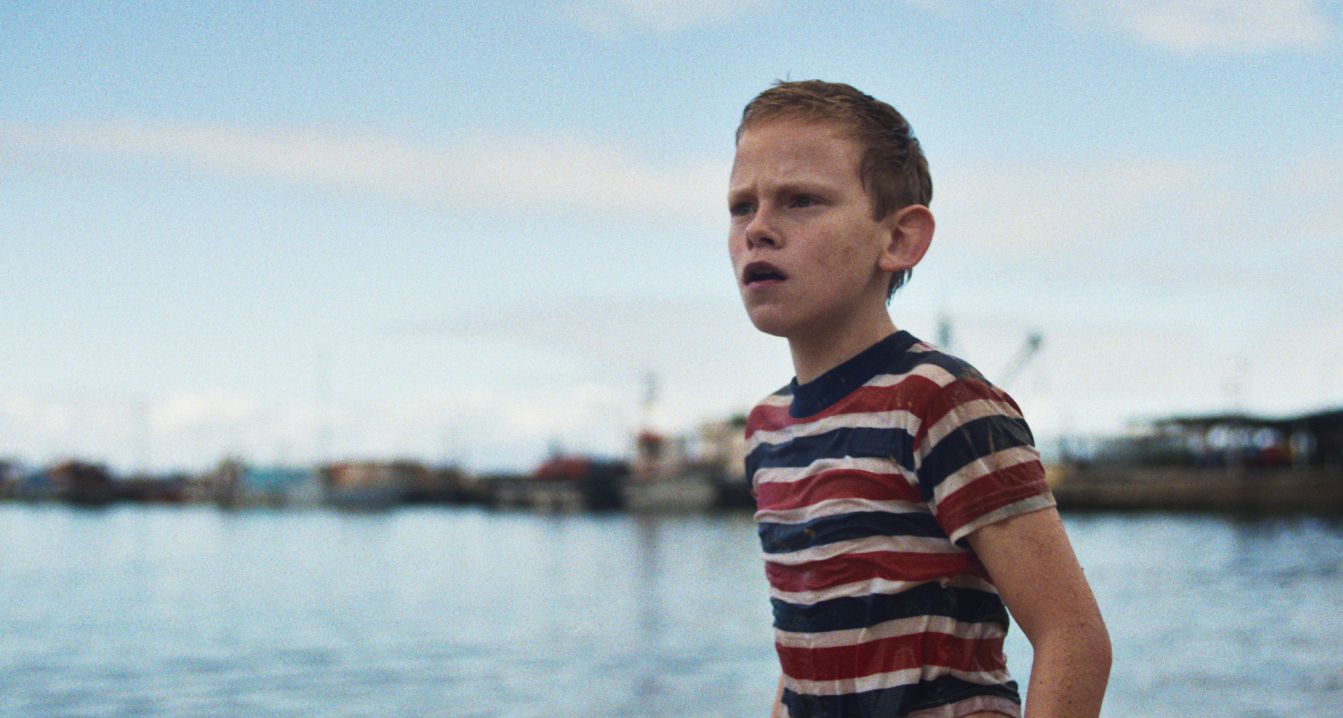
Your father, Wim Trengove, was a well-known anti-apartheid advocate. Does a film like this feel like it’s in conversation with that history in your own family?
I was introduced to the world and the idea of apartheid through my parents. They framed it for me: at a certain point I would be hearing something from school, or something would be taught, then they would ask me about it, and they would literally undo a lot of the things that I was being taught or expected to perceive as normal. That wasn’t always easy as a little kid to be in a world that has a certain ideology, only to come home and be told that all of it is wrong, but as an adult I now understand, and I’m grateful for all those experiences.
The Wound and Manodrome both interrogate masculinity from very different angles: queerness and incel radicalisation, respectively. Where does The Smell of Apples fit into this thematic leaning for you?
For me, The Smell of Apples was an opportunity to talk about whiteness and unpack something of my own experience, but of course there’s this complicated father-son relationship that is at the heart of it. So, in a way, it felt like I was able to come into this world through something that I have interrogated and explored in the past, and look at it through the eyes of a child. This project represents much more than thinking about masculinity; it’s the opportunity to work through a child’s perspective and talk about race in a way that I haven’t often seen people do, at least in a manner that was resonant with me.
You can’t really talk about something like apartheid without also talking about patriarchy: the idea of respecting fathers at all costs, a family closing ranks to protect its image, the idea that we have to find our place and always obey. All of these patriarchal rules are there to uphold a system like apartheid, and they also create a cover for other kinds of abuse, as we see in the film.
It’s not a coincidence that there was an exceptionally high incidence of these abusive practices happening in the family home under apartheid in a white suburban context, and I think that they go hand in hand because the thing that upholds apartheid is the same thing that covers up these other crimes. Then you have this kind of society where (white) men are elevated to a certain status as gods of their universe.
Essentially, there’s a kind of power given to a man like Johan that starts to break down any sense of moral boundary: if he’s capable of these kinds of atrocities in a war context, then he is capable of acting on his darkest impulses without any sense of regret. So the intersectionality of these different societal structures and how they support each other is what I always find interesting.
*The Smell of Apples had its world premiere at the 2026 Toronto International Film Festival.
Jerry Chiemeke is a Nigerian-born writer, communications specialist, culture journalist and lawyer based in the United Kingdom. His writing has appeared in publications like Die Welt, The I Paper, The British Blacklist, The Africa Report, Berlinale Press, The Johannesburg Review of Books, Olongo Africa, The Lagos Review, Agbowo, Culture Custodian, and elsewhere. Chiemeke’s work has won or been nominated for the Pushcart Prize, Ken Saro-Wiwa Prize, Diana Woods Memorial Award for Creative Nonfiction, Best Small Fictions, and the Quramo Writers Prize. He is the author of the short story collection Dreaming of Ways to Understand You (2020), the poetry chapbook Notes For Nnedimma (2019), and the hybrid manuscript The Colours In These Leaves (2017). For his work as a writer and critic, Chiemeke has been invited to the Cannes Film Festival, Sundance Film Festival, Berlinale, Toronto International Film Festival (TIFF), BFI London Film Festival, and the Lagos Book and Art Festival (LABAF).