

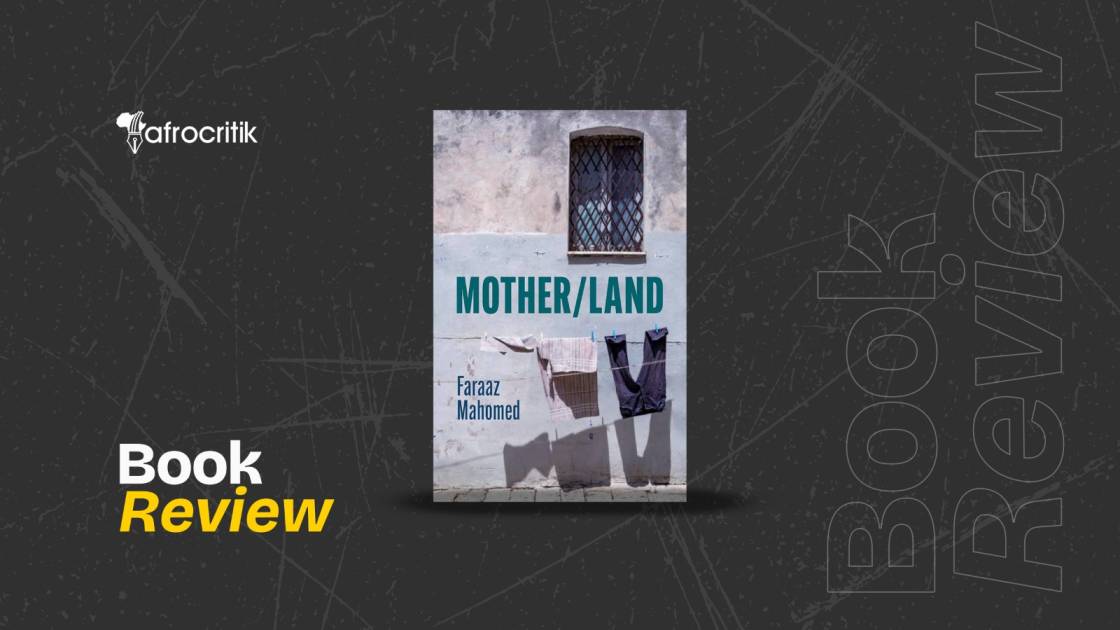

Mother/Land contends with race, home, identity and belonging—the ways in which they shape individual human beings and the tensions laden in our understanding of them, and even more keenly, how that understanding marks a fear in us about the world our children will inherit.
By Azubuike Obi
History, they say, is more present than past; its vestiges reverberate in the lives of the generations that follow, and the actions and inactions of the people of that epoch continue to impact how their descendants react to particular occurrences that shaped the lives of their fathers and grandfathers.
In Mother/Land (2026), the first novel from the South African writer Faraaz Mahomed, the history is Apartheid, and more specifically, the Group Areas Act of 1950, which dispossessed indigenous people of their homes, forcing them to move to newly created townships and further divided the country on the basis of colour.
The novel opens with Rhodes Must Fall, on the day a student, Chumani Maxwele, heaped faecal matter on the statue of Cecil John Rhodes on campus at the University of Cape Town. The movement sprang from a need to interrogate the place of Rhodes—and other symbols of South Africa’s Apartheid chapter—and the anti-Black policies he championed during his time in South Africa. It was also around this time that the Black Lives Matter movement gained weight, forcing people all over the world to reckon with centuries-old history of discrimination and segregation.
Mother/Land finds Salim Rahmat at the centre of this. On a train in New York, en route to Columbia, the university where he is a law professor, he scrolled through the news from home. Unbeknownst to him, a woman named Bertha would visit his office that morning, with news that would fundamentally change his understanding of his place as a Brown man in the world.
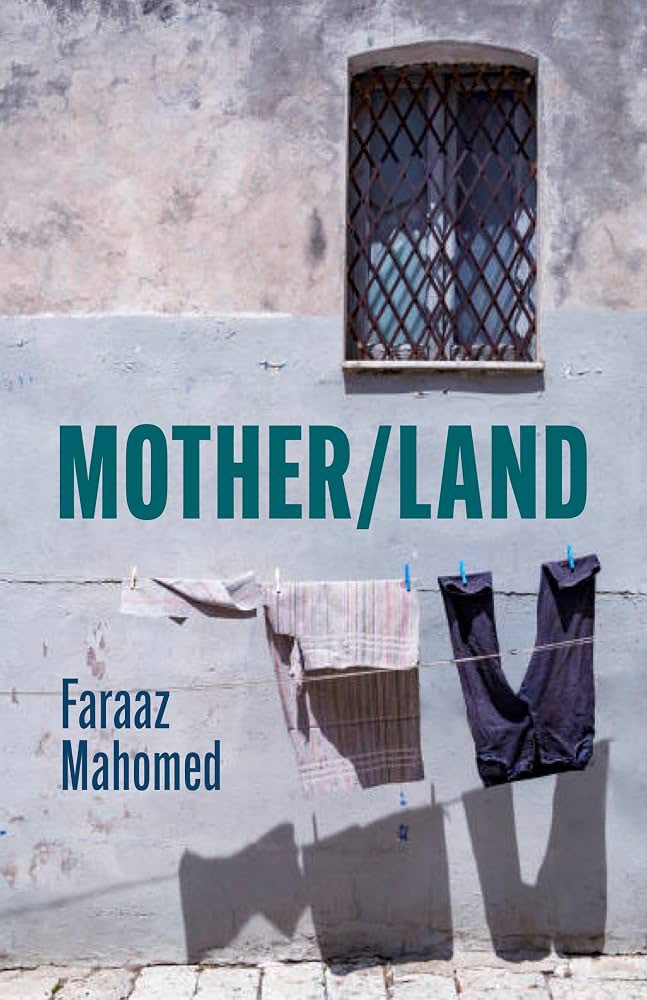
That revelation and the questions that follow are the novel’s central preoccupation. The story is told through a trifecta of voices—Salim, Sawligha and Aa’isha—from different generations of one family as the novelist makes a candid, thought-provoking engagement to provide answers.
The novel zooms in and out of time, seeing the past through Sawligha’s eyes, and the present through the differing perspectives of Salim and Aa’isha. Sawligha’s sections investigate forbidden love in Apartheid South Africa, providing answers on the transgressive nature of desire, while Salim’s reckon with the consequences of that desire and how one goes on living when they learn that they harbour immense dislike for part of what has formed them, and how that information may affect the life-and-death decisions they must make.
In Mahomed’s Mother/Land, South Africa is not unknowable, but the present yields meaning only to those who are cognisant of the history that shaped it. Through Aa’isha’s sections that are both naive and precocious, Mahomed attempts to strip away South Africa’s present makeup in order to have a concrete understanding of the first home he knew. In this way, the novel could be said to be reminiscent of J. M. Coetzee’s taut novel Disgrace (1999).
In Mother/Land, Mahomed is committed to the construction of Salim’s identity. From the very first page, we are made to understand the entirety of his in-betweenness, a man straddling two worlds—a Coloured man in South Africa and a Brown man in America. Thula, in Imbolo Mbue’s How Beautiful We Were (2019), puts it more succinctly: “…Being born to parents from two different parts of the world made him a man from somewhere and elsewhere but sadly from nowhere.”
Through the addition of an eclectic law register in Salim’s first-person narration, identity then transcends appearance and home country to include occupation and how idiolects of particular individuals are shaped by their persona and profession. In no small way, this lends the novel a very literary and sophisticated air, regardless of the abundant manifestations of the metaphysical.
Apparitions of important reckonings flit past the pages as Salim is said to be “thousands of miles from Cape Town and yet just a few hallucinations or memories or determined arguments about the bends of history away.” The slash in the title alludes to Salim being haunted by both his mother and his motherland, forcing readers to interact with what is real and what may be imagined, and the indelible marks they leave on the lives we live and the stories we tell.
At the margins of the narrative lies Mahomed’s inquiry into home, the way the relationship diaspora Africans have with the motherland changes as America or any part of the world abroad they reside in changes them—how they imbibe stereotypical notions of what Africa is. This is especially interrogated with Salim’s wife Nahya, who, on a trip to South Africa, “didn’t like to admit her Americanness, but it showed in the wipes, in the malaria tablets we were being forced to take even though Cape Town had been malaria-free for decades, in the go-bag she was probably packing in case we needed to make a run for the airport.”

In addition, Mother/Land contends with race, home, identity and belonging—the ways in which they shape individual human beings and the tensions laden in our understanding of them, and even more keenly, how that understanding marks a fear in us about the world our children will inherit. In doing so, Mother/Land presents an awareness of the shifting waves we find ourselves in today, perhaps better than any novel of the same subject from a debut novelist in recent memory. This is especially evident in Salim’s observation of what his daughter’s life may look like.
Take, for instance, this passage: “My eyes landed on Aa’isha, on the world she was inheriting, and on all the ways it would sever her, cause her to question herself, shred her until she was just a word or a segment of a person—an almost someone, with hyphens and qualifiers, a something-American.”
As much as Mother/Land is a novel of history and people and places, it is also a novel of the mind, filled with acutely wise ruminations on race and home and people, even if suspiciously glib at certain points, the delight marred by the improbability of the insights at the exact point in which they occur, like when Salim hears “another sound in the background” of a call and sharply describes: “[It was] a softer voice with less pique. It was a gentle lilt, murmurs of Rondebosch mingling with the sophistry of the East Coast.”
Though it is clear the description has been predetermined by the author and likely does not occur to the character at that time given the limited information he has, its beauty is just as gratifying as it is to live in Salim’s mind for the length of the novel, to watch and listen to his thoughts on his society and his place in it, to bear witness as a mind adept at people and psychology tries to make meaning of the happenings around him.
Ultimately, Mother/Land is a novel about the unbecoming of history by a writer attuned to history and its reverberations on contemporary life. A potential classic, I daresay.
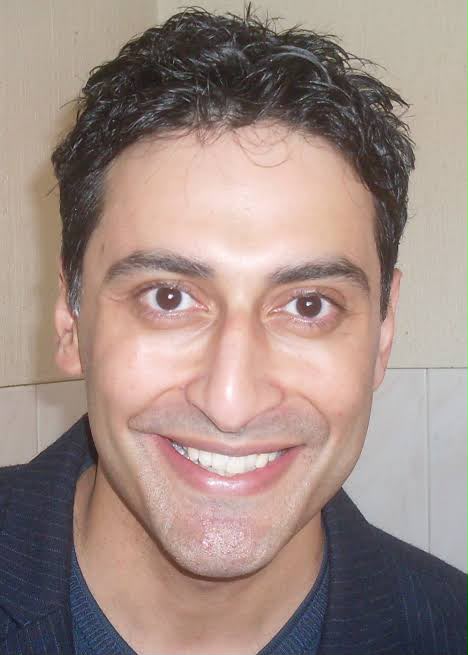
Azubuike Obi is an Igbo storyteller who believes in the transformative power of language. He won second place in The Republic Student Writing Competition (2025), and was nominated for Chika Unigwe’s Awele Creative Trust Award (2024). His fiction and nonfiction have appeared online and in print in The Republic, The Weganda Review, Naira Stories, Afapinen, Efiko Magazine, and elsewhere. He is a regular contributor at Afrocritik.