

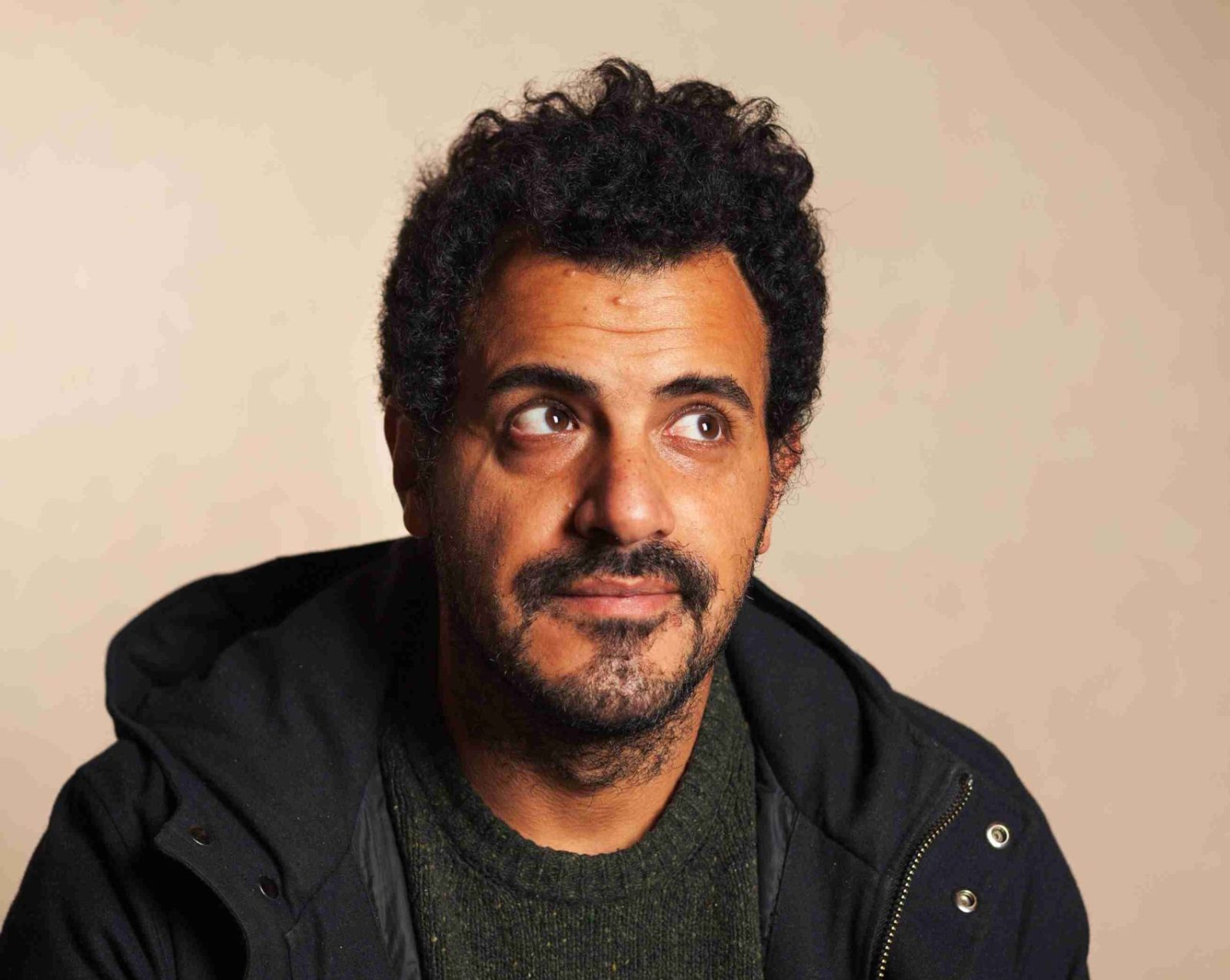

“We never film reality as it is with ourselves in the equation. We’re not a security camera. We necessarily have a gaze, and I enjoyed interrogating that gaze” — Saïd Hamich Benlarbi.
By Vivian Nneka Nwajiaku
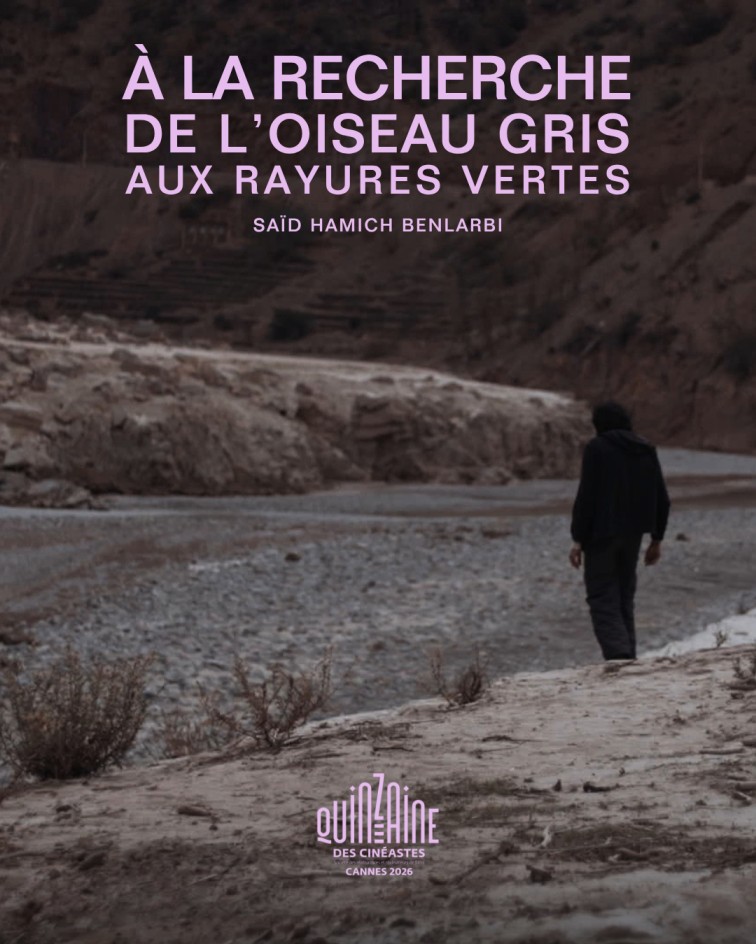
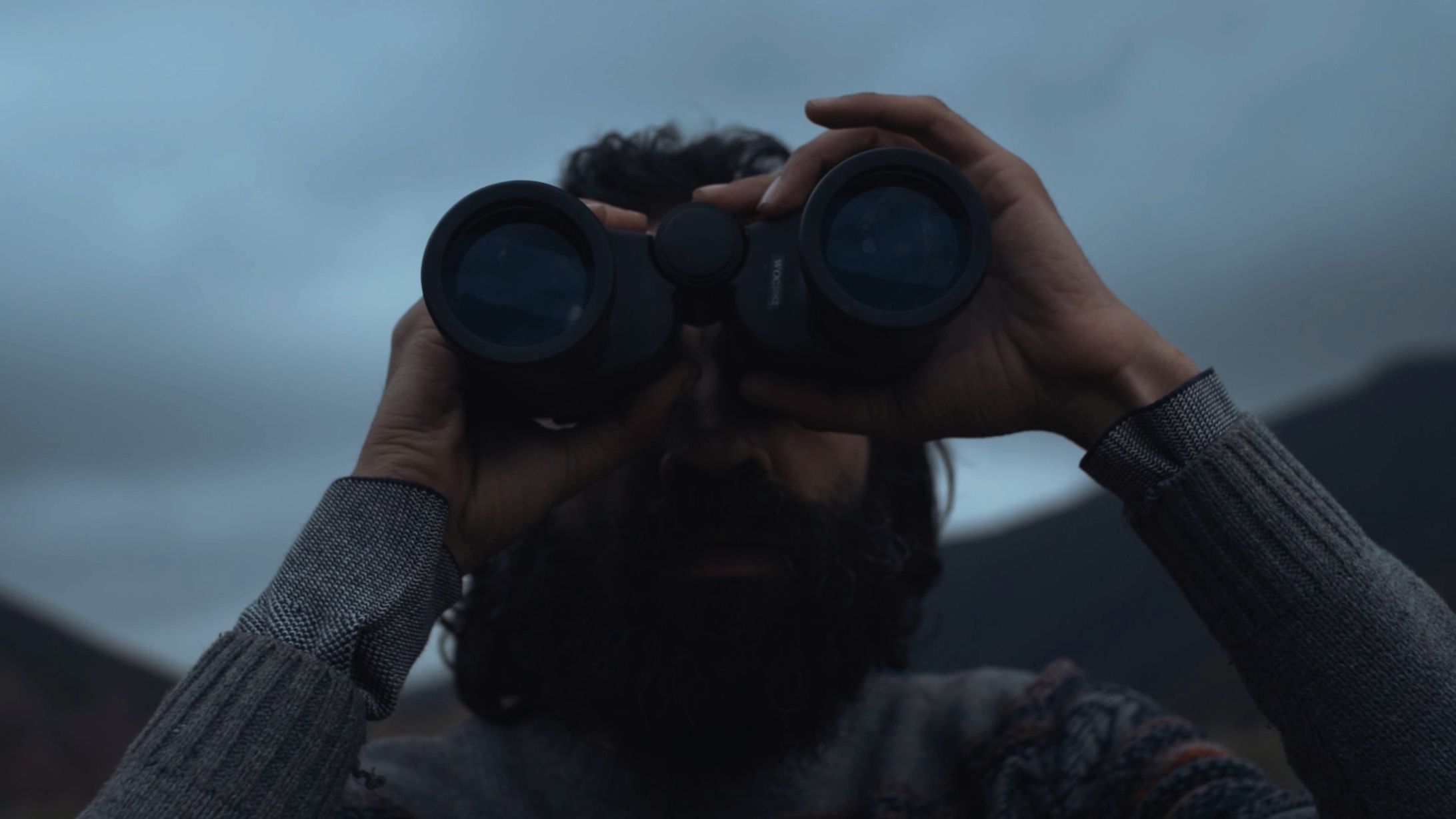
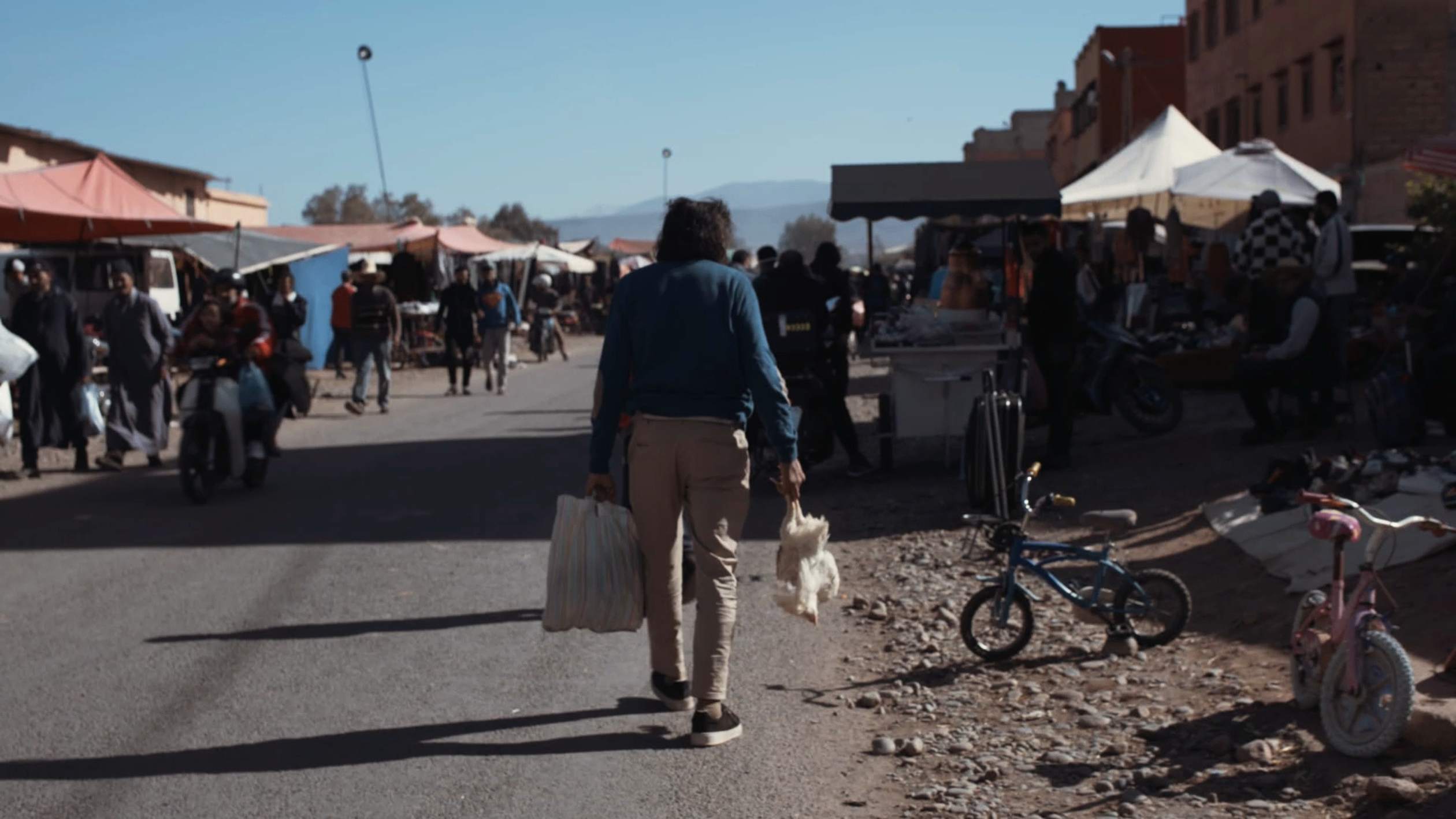
A road trip and a quest become the vehicle for processing grief in In Search of the Grey Bird with Green Stripes (À la Recherche de l’Oiseau Gris aux Rayures Vertes), a docu-drama by Moroccan-French filmmaker Saïd Hamich Benlarbi. A co-production between France and Morocco, the medium-length film follows Sellam, a water dowser in Morocco, as he travels the roads of the Atlas Mountains in search of a mysterious bird, accompanied by an unseen filmmaking crew.
Written and directed by Benlarbi, In Search of the Grey Bird with Green Stripes initially appears to be an obscure documentary about an unusual subject. Indeed, there is an early scene in the docu-drama where Sellam says to the offscreen crew: “I still don’t know why you’re following me. There are better things to film in this world.” But as Sellam’s quest progresses and stalls, what ultimately unfolds is a poignant story about grief and the search for closure, as well as a study of how people avoid confronting internal struggles by projecting those feelings onto external events.
With documentaries, there is always some concern as to the extent to which the cameras and the filmmakers influence the reality being captured. In Search of the Grey Bird with Green Stripes uses this concern to its advantage, exhibiting an acute awareness of the camera while blurring the line between documentary and fiction. This approach is evident in both the character of Sellam and the landscapes of the Atlas Mountains, which the film explores and engages with as a character in their own right.
In Search of the Grey Bird with Green Stripes had its world premiere last month at the Directors’ Fortnight (Quinzaine des Cinéastes), a parallel section of the Cannes Film Festival. It is one of two Cannes 2026 selections to feature Benlarbi in the credits, the second being Strawberries, a feature film by Moroccan-French director Laïla Marrakchi, on which Benlarbi served as co-producer.
But even before 2026, Saïd Hamich Benlarbi had already established a presence at Cannes, as the writer-director of Across the Sea, a 2024 Queer Palm nominee; an executive producer on Sirat, directed by Oliver Laxe, which won the Jury Prize at Cannes in 2025; the producer of Déserts, directed by Faouzi Bensaïdi, which screened at the Directors’ Fortnight in 2023; and the producer of Les Meutes (Hounds), directed by Kamal Lazraq, which won the Un Certain Regard Jury Prize in 2023.
In this exclusive interview with Afrocritik, Saïd Hamich Benlarbi discusses In Search of the Grey Bird with Green Stripes, reflecting on grief, the practice of water dowsing, humanity’s relationships with land, and the porous boundaries between documentary and fiction.
*This interview has been edited for style.
Congratulations on the Cannes screening of In Search of the Grey Bird with Green Stripes. How does it feel to have established such a strong presence at a prestigious festival like Cannes?
Thank you. It always feels wonderful to be in Cannes, which remains such an important place for launching films, whether from an economic standpoint or a more symbolic one in terms of critical reception. I was obviously very happy to be here before with my previous film Across the Sea, and even more so this year with this medium-length film, which I made with even greater freedom and very limited means. So, it was truly a wonderful surprise.
Being in Cannes is always a pleasure, as it was with Sirat last year or with other Moroccan films we’ve produced in the past, like Les Meutes or Déserts. It’s always a joyful moment of celebration.
Your filmography hints at an interest in identifying stories that are universally resonant but also uncommon onscreen. What drew you to this particular story?
What drew me to this story was its everyday quality, the portrait of someone practising a trade that is both deeply necessary and simple, alongside the almost mystical dimension of his belief in what he does.
Initially, I wanted to make a documentary about a water dowser, because I had a piece of land with a friend, and since then, that friend has passed away. We [had] brought in a dowser who came and was both deeply impressive and very funny, and that’s how I arrived at this subject. Then grief came to layer itself onto that land and that story. My relationship to that land, to this idea of digging a well and searching for water, became coloured by grief.
The land is located south of Marrakech, and so very quickly came the idea of making this mockumentary, where I tried to interrogate our relationship to landscape, our relationship to the soil, and how that relationship can nourish reflection and allow this process of grieving.
The two dimensions of the project merged, and I found it to be a quite powerful parallel: telling the story of a quest. That quest can be very ordinary, very concrete, yet deeply powerful, like water; it can also be more spiritual, more mystical, or even verging on madness. Those are the layers that interested me in the film, between documentary and fiction, between the prosaic and the mystical.
For most non-indigenous audiences, it would be their first exposure to the practice of water dowsing. What did you learn about this aspect of Moroccan culture in the course of production?
It’s very common in Morocco. My father is a farmer, so it’s something I know a little about. Finding water underground, in regions where it is scarce, is genuinely critical to the survival of many farmers, and there is no science that can solve the equation with certainty. Since water is the source of life, it gives rise to a great many beliefs and theories, whether true or not.
Considering that the film is a docu-fiction, how much of the story is fiction, and how much is based on true events or a real person?
Yes, initially I took a documentary approach to this profession and this landscape. At first, I really wanted to film those landscapes, which evoked a lot of emotions for me. I’m thinking, for example, of a film like Werner Herzog’s Fata Morgana, a film I love very much, where there’s a voice-over, music, and landscapes. And then, I incorporated fiction into this quest.
Everything that has a somewhat spiritual dimension is fiction, but it was shot like a documentary. Sellam is played by an actor called Oussama Oussous. We used techniques similar to those of a news report, but within a very light fictional framework. We gave the actor a lot of freedom but the narrative remains fictional.
Why did you approach the film as a docu-fiction in the first place?
I believe the power of cinema can sometimes be very simple, and this approach allowed me to work in a very free yet very strong way with the actor, the camera, and the landscape. It’s the approach itself that appealed to me at first, and then the relationship with the audience, with myself as narrator, became something I greatly enjoyed.
Why do we film a story? How do we film it? From what point of view? What I love about this setup is that it questions perspective. That’s what draws me to it: it can be very funny while at the same time carrying real weight in terms of reflection. What is truth? What is a scene being filmed? And doesn’t the act of filming inevitably alter what is being filmed? That seems self-evident to me, we never film reality as it is with ourselves in the equation. We’re not a security camera. We necessarily have a gaze, and I enjoyed interrogating that gaze.


In Search of the Grey Bird with Green Stripes practically doubles as a nature documentary in the way it captures the landscapes on the journey through the Atlas Mountains. How did you approach filming the landscapes?
At the beginning, I wanted to make a documentary about this dowser. But when I wanted to film those landscapes, they were no longer agricultural landscapes. They had become landscapes of grief, because I was carrying that experience, and I knew they held a very heavy melancholy within them. At least, that’s what I saw in them.
For me, landscapes carry a very powerful emotional charge, and that’s why I wanted this film to unfold in a car, moving through those landscapes, because it allows you to relive things. I find it’s a device that works almost cathartically. We shot a great deal of rolling footage of landscapes, and it allowed me to immerse the actor and the crew in the film’s emotional register. We filmed a lot while listening to music, shooting almost as if we were in a documentary, as if someone were living through grief, listening to music, crossing those landscapes.
Coming back to Fata Morgana, it’s always been something I’ve deeply loved. Spaces and places inhabit us far more than we realise. I’ve filmed a great deal in cities, and I found something beautiful in these non-urban landscapes with their majestic, ancient quality, onto which you can project so much more. And I thought it was a fitting allegory for grief: after all, we bury our dead, and they come to inhabit our landscapes.
For a film like this, being both an emotional journey and a physical journey where a lot of time is spent on the road or just capturing the landscapes, immersive music is certainly important. What was your vision for the film’s music?
I often write and think about the film while listening to music. Music in general holds a great importance in my life. It helps me every day, as I think it does for many people. So, I had the idea fairly quickly of giving the film this small narrative device: he (Mr Sellam) finds a USB key that was sent to him [as] a gift. And as he says himself, music is a map: a geographical map, but also an emotional one.
I don’t like things that are too explicit. Just watching him wait and listen to a song like Ali N. Askin’s “Mara Beboos” conveys a lot more than any explanation could. I love traversing the character’s emotional map, the emotional map of the landscapes, through music, because I find that music carries an immense evocative power. Many people relate to the world that way, through music, and I felt that mattered.
And so, it was important to me, even if it could be recreated in post-production, to shoot the rolling landscape sequences while listening to music, because it put me in the right mood and helped me understand what I was doing, even if that isn’t always the easiest thing to do.
Having made this film and shown it to the public, what has stayed with you the most throughout this experience?
I work as a producer, and as a director, I genuinely try to make the films that matter most to me, the most honest ones—which doesn’t necessarily mean big budgets or feature-length projects. I try to make films at the length they call for, and with the means they call for. I started this film with very limited resources, and I was very happy with that experiment. I knew it was coming from somewhere deep within me and that I wasn’t deceiving myself by making it.
So, I was very moved to show it to an audience, because I had revealed a part of myself. I had given something sincere. If people were moved by this story, by this landscape, that makes the film feel all the more necessary, and I feel I completed a chapter by finishing it.
Vivian Nneka Nwajiaku is a writer, film critic, TV lover, and occasional storyteller writing from Lagos. She has a master’s degree in law but spends most of her time watching, reading about and discussing films and TV shows. She’s particularly concerned about what art has to say about society’s relationship with women. Connect with her on X @Nneka_V