



At Johnny’s Room Live, Wisdom Ihekwuaba and Azuka Olie demonstrated how thoughtful musical direction can elevate a performance beyond entertainment into an emotional experience.
By Yinoluwa Olowofoyeku
At Johnny’s Room Live in London on 25th May 2026, the spotlight naturally belonged to Johnny Drille and Ossy Brown. The audience responded to the vocals, the choreography, the romance and the stagecraft in real time. Yet beneath the visible performance existed another layer of artistry—one that quietly controlled the emotional movement of the evening itself. That layer was the music.
Produced by Wisdom Ihekwuaba and co-produced by Azuka Olie, the live arrangements behind Ossy Brown’s guest performance at EartH Theatre became one of the night’s most understated achievements. Together, both creatives built a sonic environment that did more than support the performance; it actively shaped how the audience experienced it emotionally.
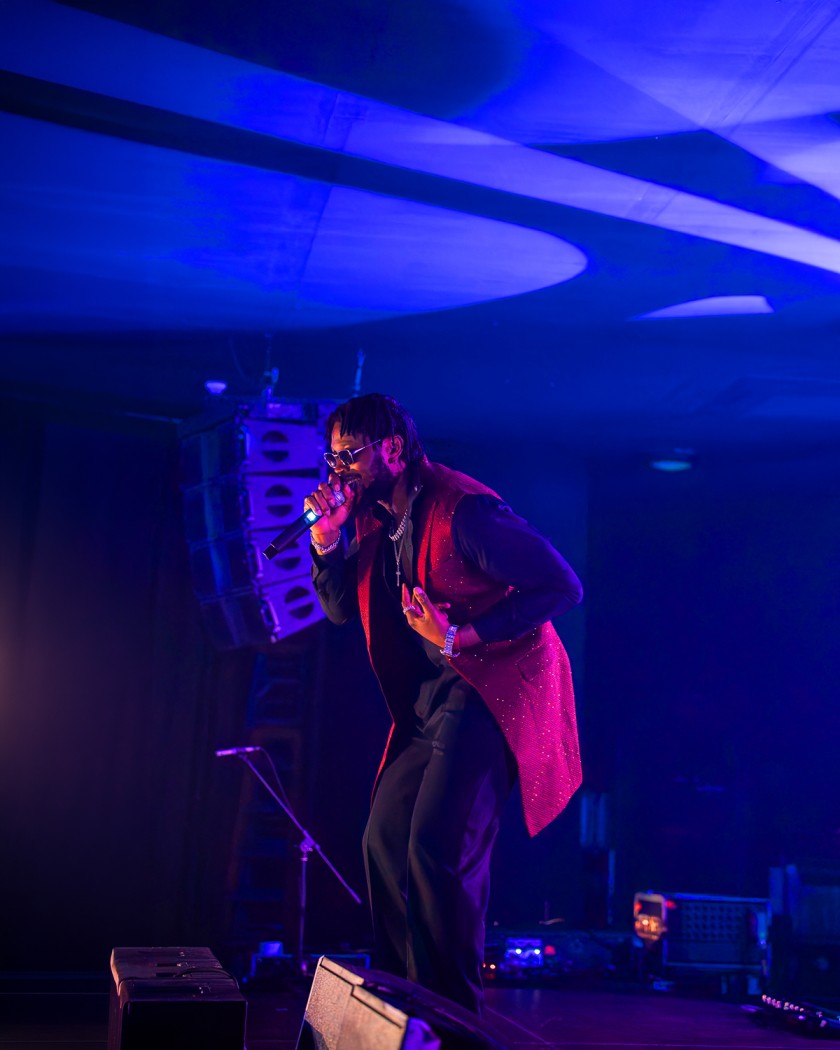
What made the production especially effective was its sense of restraint. Rather than reconstructing the songs beyond recognition for the sake of spectacle, the live arrangements focused on expansion rather than replacement. Wisdom Ihekwuaba’s production framework preserved the emotional identity and musical integrity of the original records, while Azuka Olie’s co-production introduced additional textures that widened the atmosphere without compromising intimacy.
That balance became the defining strength of the set. From the opening moments, “Number One”, the production demonstrated careful emotional pacing. The smooth 100 BPM groove was not treated as a dramatic opener designed to overwhelm the audience. Instead, the arrangement unfolded patiently, allowing listeners to settle gradually into the emotional tone of the performance.
By the transition into “Slow Whyne”, the sonic energy evolved naturally. Additional live drum accents, layered synths and sharper rhythmic phrasing elevated the room’s momentum without disrupting the fluidity established earlier in the set. The venue transformed into a dancefloor, yet the production never abandoned the romantic emotional core that defines Ossy Brown’s music. This discipline deserves recognition.
Afrobeats and Afro-R&B live arrangements often struggle with balance. Excessive percussion, overcrowded instrumentation and unnecessary layering can unintentionally overpower vocal subtlety. Here, however, Wisdom Ihekwuaba and Azuka Olie displayed a sophisticated understanding of sonic spacing. Ossy Brown’s harmonies, melodic adlibs and vocal inflections remained consistently present because the music understood when to lead and when to retreat.

The true strength of the musical direction, however, became apparent when an unexpected production challenge emerged. A reported communication breakdown regarding the event schedule resulted in the stage lighting failing to activate for much of Ossy Brown’s performance. In an instant, one of the most powerful tools available to live entertainment disappeared. The significance of that moment cannot be overstated.
Lighting often acts as an emotional amplifier, guiding audience attention and reinforcing dramatic moments. Without it, the responsibility for sustaining audience immersion shifted almost entirely to the music, the performer and the arrangements.
Rather than exposing weaknesses in the set, the situation revealed the effectiveness of the musical direction. The audience remained engaged not because of visual spectacle, but because the music continued to communicate. The arrangements carried enough emotional weight to sustain attention despite the absence of a major production element. In many ways, the performance became an unintended stress test for the work of Wisdom Ihekwuaba and Azuka Olie.

Azuka Olie’s co-production influence became particularly noticeable in the atmospheric details of the arrangements. The added synth textures and instrumental layering created emotional depth without making the music feel sonically congested. Rather than demanding attention for themselves, these choices quietly intensified the audience’s immersion.
This became especially evident during “Lova”, the emotional peak of the performance. As Ossy Brown leaned into the romantic theatre of the song, including a dramatic shout-out to a presumed lover in the audience and the presentation of a rose to a woman in the front row, the music remained intentionally controlled beneath the moment. The arrangement framed the emotion instead of competing against it, allowing the interaction to feel sincere rather than manufactured.
By the final chorus, when audience members collectively sang “my lover, lover lover” back toward the stage, the production had already accomplished its objective: it had transformed spectators into participants.


Equally impressive was how the musical direction helped bridge the emotional transition into Johnny Drille’s headline set. Although both artistes occupy different shades of Afro-R&B, the arrangements created continuity between their respective artistic worlds, allowing the event to feel cohesive from one performance to the next.
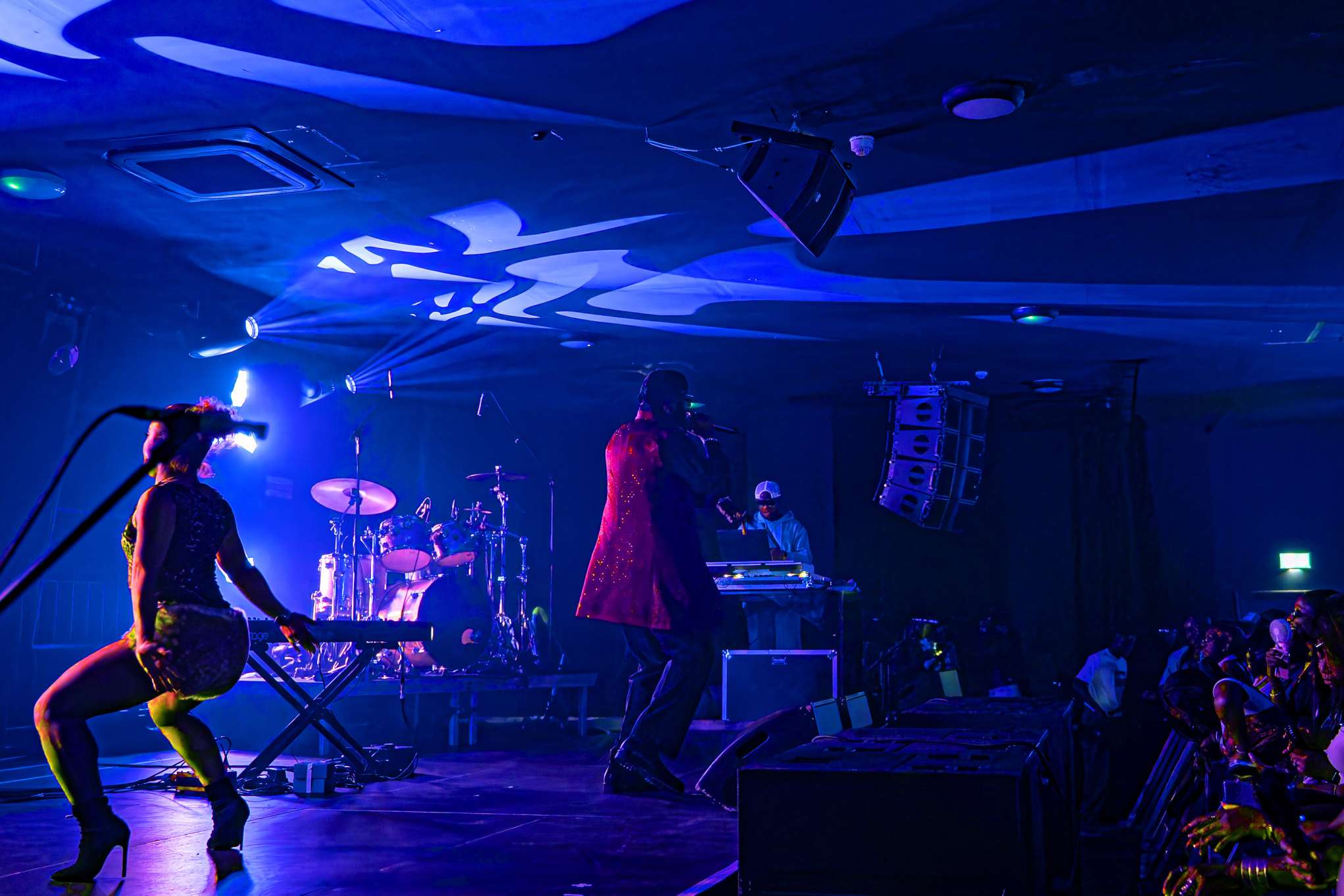
If there was any limitation, it stemmed less from the production itself and more from the brevity of the set. The arrangements introduced enough fresh musical ideas to suggest stronger possibilities that a longer performance could have explored more fully. Certain instrumental textures and transitions hinted at an even broader live musical language that remained only partially revealed.
Still, that lingering curiosity ultimately reinforces the success of the production rather than exposing any weakness within it.
At Johnny’s Room Live, Wisdom Ihekwuaba and Azuka Olie demonstrated how thoughtful musical direction can elevate a performance beyond entertainment into an emotional experience. Through disciplined arrangement choices, textured sonic layering and an intuitive understanding of audience psychology, they transformed a fifteen-minute guest appearance into one of the evening’s most immersive artistic moments.
More importantly, when circumstances unexpectedly stripped away a key element of live spectacle, the music remained strong enough to carry the performance on its own. Few endorsements of a production team’s work could be more convincing than that.
Yinoluwa “Yinoluu” Olowofoyeku is a multi-disciplinary artist and creative who finds expression in various media. His music can be found across all platforms, and he welcomes interaction on his social media @Yinoluu.