

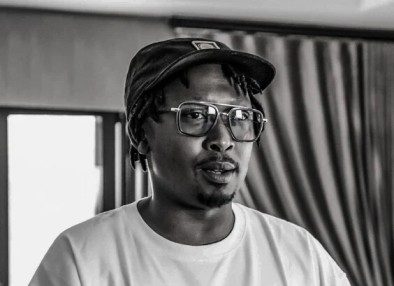

“There are many violent killings in black communities in South Africa, with a significant number of victims being women. Patriarchy is still deeply rooted within these communities, and it often exists alongside a culture where gangsterism is glorified.” – Kagiso Samuel Leburu
By Adedamola Jones Adedayo
Gender-based violence often goes unchecked in societies where patriarchy is prioritised and women’s rights are treated lightly. This awareness is what Kagiso Samuel Leburu, director of Balaclava (2025), explores with nuance in the largely domestic setting of the short film.
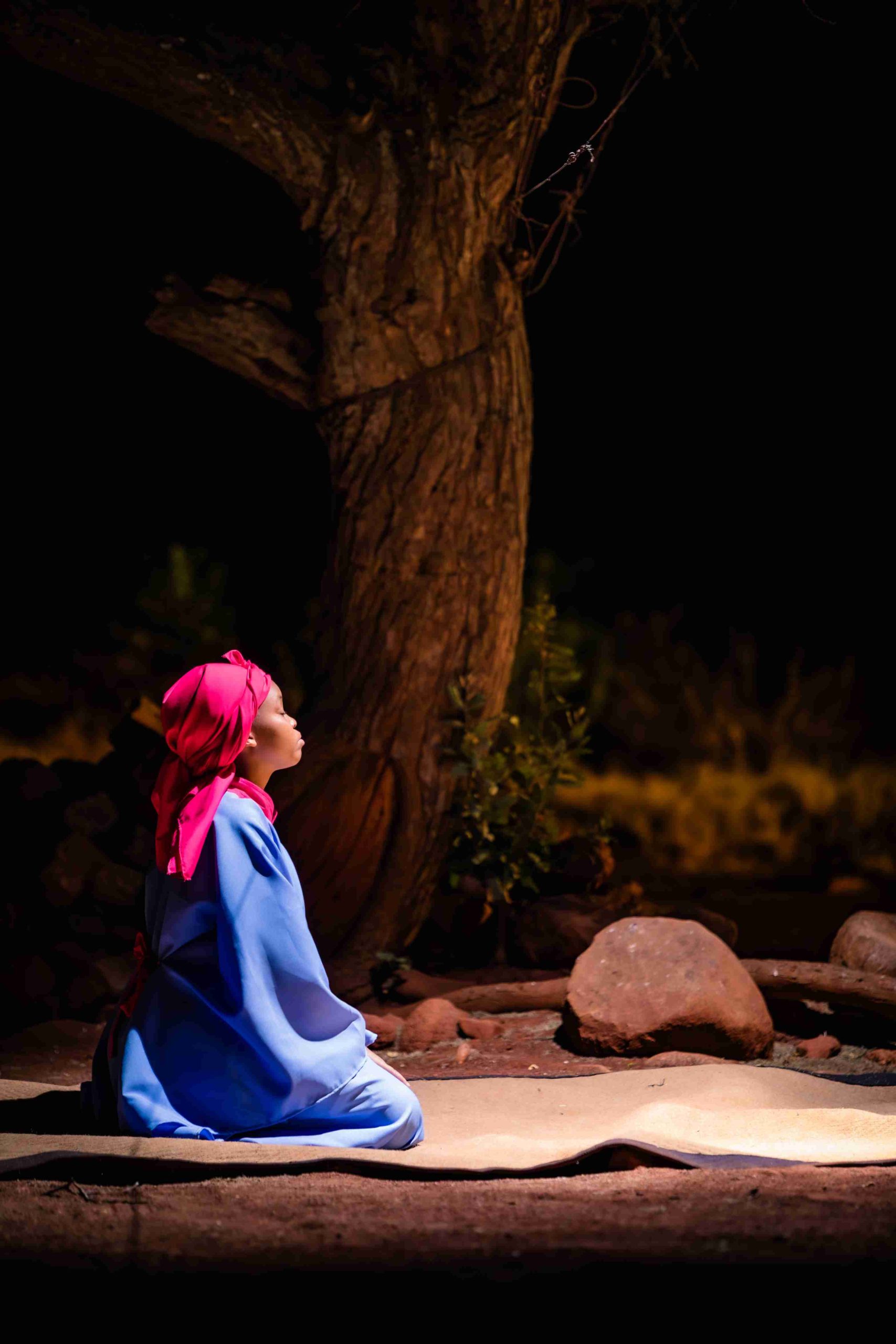
The film opens with an outdoor church scene: a priest (played by Collen Modise) stands before a congregation of women dressed in blue and pink, gathered under a withering tree. They sing with hymnal enthusiasm. Yet, within these fleeting moments, one of the congregants, Maya (Lethabo Mekoa), a young woman, appears distant and unconvinced, her face subtly marked by worry.
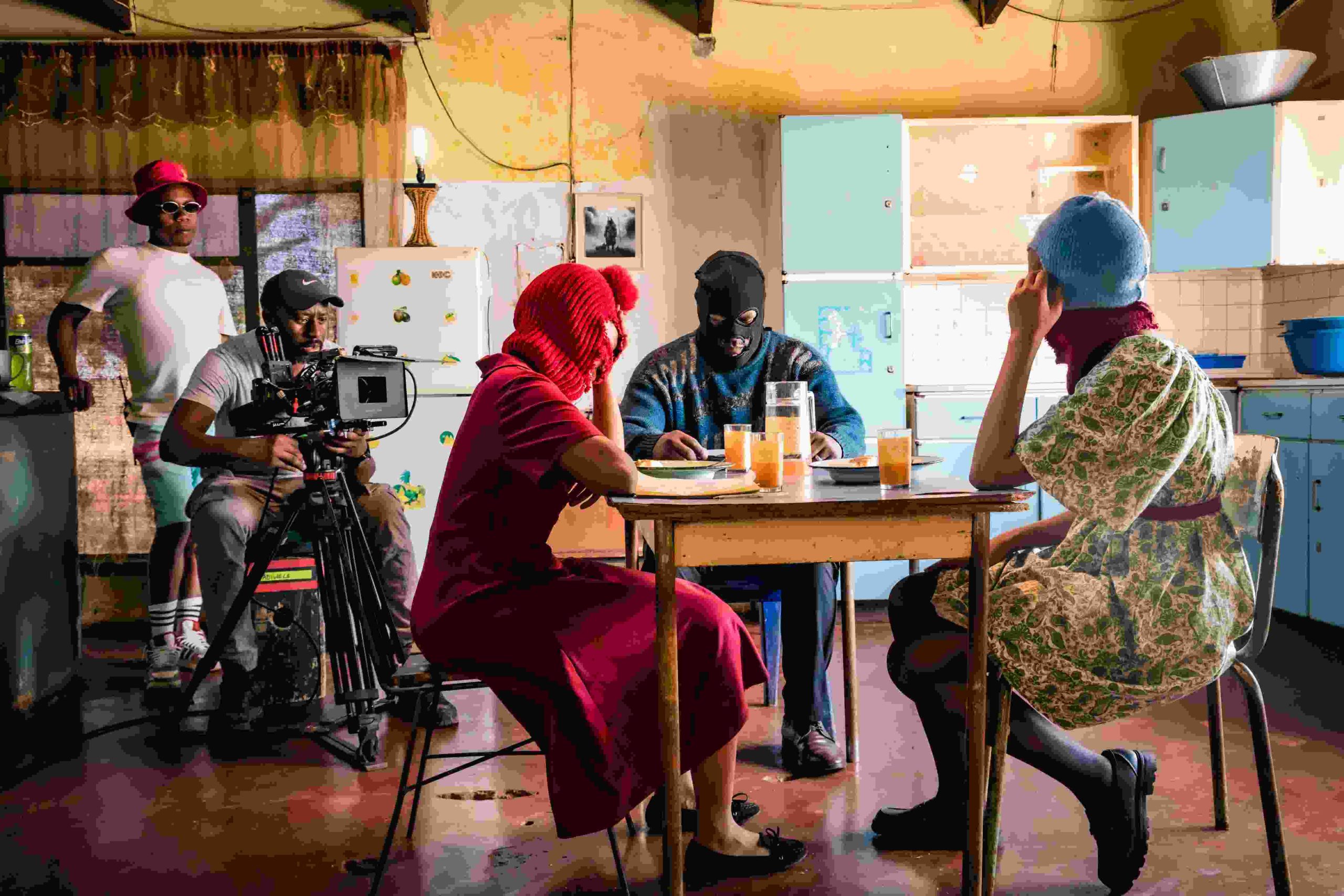
The audience is then transported into the priest’s home, where he lives with his wife (Mannini Mokhothu) and daughter (the same young woman from the opening scene). Here, silence becomes a language that expresses unspoken tensions. All three characters wear balaclavas, headgear covering the neck, head, and often parts of the face, concealing facial features, gestures and complex emotions. There is no dialogue; only fragments of background sounds and reactions like the daughter’s tears reinforce the film’s palpably monotonous and oppressive atmosphere. It’s easy to see through the narrative and fish out the salient themes, even without the offering of gore or explicit violence, a testament to the creative acumen of Leburu.
Leburu, a Johannesburg-born filmmaker known for genres ranging from action to comedy, with feature titles like The Butcher’s Soul (2024), Boda Smandana (2024) and Neelan & Kevin (2024) to his name, doubles as cinematographer. His vision is supported by the film’s producer and editor, Bonolo Bogopane, who favours quick transitions, and frequent collaborator Mapitso Ralephata, who serves as co-executive producer. Through Balaclava, the creative team presents a short drama woven around identity crisis, human complexity and a pattern of violence in South African history.
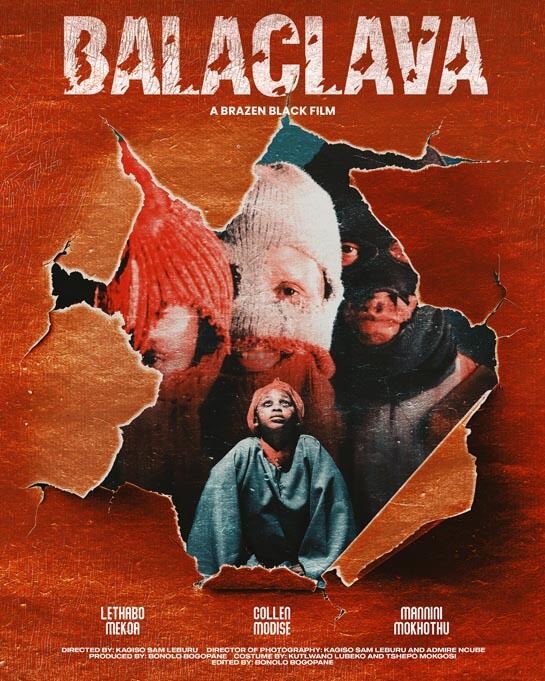
Balaclava premiered globally at the 2025 American Black Film Festival (ABFF) in Miami Beach, US, and has also screened at the Independent Shorts Awards where it won a Gold Award for Best Indie Short and an Award of Excellence Special Jury Mention, Women Take Lead Event 2025, Soweto International Film Festival 2025, Africa Rising International Film Festival (ARIFF) 2025, Hollywood African Cinema Connection 2025, Nolly Femme Shorts Programme 2025, Big SYN international Film Festival London 2025, Matatu Film Stage 2025, and the recent edition of Joburg Film Festival.
In this interview with Afrocritik, Kagiso Samuel Leburu discusses the artistic and technical choices behind Balaclava.
*This conversation has been edited for clarity.
What inspired the title “Balaclava”?
It came from a conversation I was having about how every individual on earth wears a mask. Not everyone knows the real you. To different people, you are different things. Some hate you, some love you. When you look at society, whether in religion or politics, perception shapes reality.
Leaders can be seen as heroes or villains depending on who is looking. But the one mask that feels universal, the one symbol everyone recognises and can attach meaning to, is the balaclava. It is globally understood and almost always tied to crime. That is why I chose that title. No matter what other mask you think of, once you see a balaclava, it carries a very specific weight. And that is what led me to name the film “Balaclava”.
How intentional were you about representing prejudice against women and the girl child?
It was quite intentional. It initially came from conversations I was having with a female colleague about how little we truly know one another. At some point in that conversation, she said something that stayed with me, that South African men are very violent. What made it more striking was how personal it was for her. She said that every single morning, as a South African woman, she wakes up afraid because she does not know what she might encounter, even in familiar environments. She told me that even though we have worked together for a long time, there is still a level of uncertainty because she has never seen me angry or in a truly difficult situation. That really forced me to reflect.
There are many violent killings in black communities in South Africa, with a significant number of victims being women. Patriarchy is still deeply rooted within these communities, and it often exists alongside a culture where gangsterism is glorified. You even see situations where individuals implicated in serious crimes are still admired.
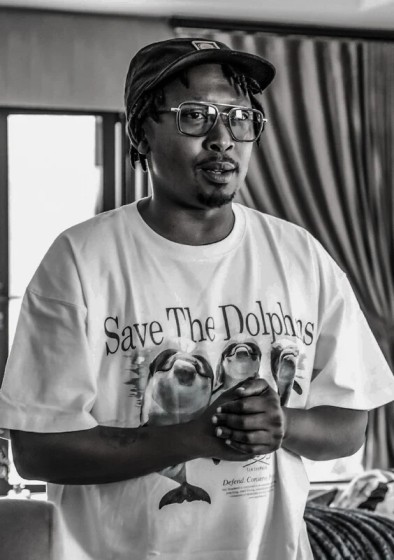
A major case currently before the Madlanga Commission of Inquiry involves Vusimuzi “Cat” Matlala, who, despite being in prison and implicated in multiple killings, has drawn social media reactions from some people who describe him as attractive and even view him in a positive, almost heroic light. That points to a deeper issue where criminality is often mistaken for strength or dominance.
So, for me, the representation of prejudice and violence against women and the girl child is not accidental. This film confronts that reality and asks difficult questions about who we are and what we continue to normalise.
What informed your stylistic choices, including the minimalist approach and use of silence?
I borrowed from church designs in South Africa, where you would find a priest and their congregation gathering under trees. They do not necessarily have a building like a church. They wear white clothes around them, and that was one of the things that inspired the whole look of my film. I wanted my project to carry that feeling.
So when you are watching it, you need to understand that there is a level of oppression that does not necessarily come from places of governance or ministerial positions. It comes from the lowest point, from small gatherings, where if you can influence the right people, the rest follow. The pastor in the film has just started. His church is barely a year or two old, and the congregation is predominantly women. Women are the ones who pray for us. As Africans, our mothers keep us in prayer. That is something I needed to represent.
The film is also influenced by how Africans prayed before the Westerners came to colonise us. The big tree they pray under is important. You see that there are no chairs, and people sit on the floor. This is because, in the Zulu culture, women do not sit in chairs. They sit on a mat called a ganzi. The Zionist churches are also very big in places like KwaZulu-Natal within the Zulu culture.
My approach to the visual style is rooted in artistry and emotion. We used upside-down shots to create tension and evoke a sense of unease for the audience. And yet I needed to make the film as minimalistic as possible. You can see if someone has bad intentions without them speaking. Someone can say “I love you”, but their eyes will tell you if they truly do. That was very intentional for me. The performance is based purely on the eyes because the voice can lie, but the eyes do not lie.
Then, in the film, when Maya was inside the house, feeling trapped, it was important for us to experiment with the sound design, particularly the sounds of children playing outside, to highlight the contrast between a child experiencing a normal childhood and one living through abuse.
I chose to shoot during the day on the RED Komodo because of its high dynamic range and the distinctive RED look. Another reason for that, apart from budget limitations, is that the story needed to be told in a space where you think you are safe.

As you see in the film, the girl seeks refuge in prayer at night, searching for answers in darkness when none are found in the light. There is an African proverb that whatever happens in the dark will come to light. But the film presents the opposite idea, that whatever happens in the light can also surface in the dark. It implores us not to think that bad things only happen at night.
How did you approach writing the story and developing your key characters, the three of whom are particularly taciturn?
It was a collaborative effort because I wrote it with Tebatso Mashishi. I had initially written a one-page synopsis before asking him to help me because I felt I was missing certain pieces in the story. At the beginning, the mother was not part of the film until he introduced the character into the narrative. Originally, it was purely the story about a father and a daughter, with the absence of a mother. We wanted a story about fathers, men who were supposed to be of honour or in high positions or elsewhere, some of whom are responsible for oppressing the youth.
Also, in South Africa, it is common to see young girls dating much older men, sometimes married men, creating an imbalance in dating culture. These young girls are often used and abused by older men. That reality formed the basis of the story. Then Tebatso came in and said that if I continued in that direction alone, the story would not land the way I wanted it to land. He felt the story needed certain themes, including suicide and patriarchy. He gave me notes that helped me reshape and deepen the story.
I still needed to ensure that it remained about a young girl and an elderly male figure. That core relationship had to stay. Then, I also needed to include the in-between characters, the ones we do not usually speak about, which is the wife and mother. All of these elements needed to be reflected because they speak to the broader reality of South Africa, to the state of the country.
Where exactly in South Africa is this filmed, and how did you approach funding it?
It was filmed in the Northwest, and it cost me around 400,000 Rands. I raised the funds through my freelance work as a director in the film industry. I literally raised the money myself to shoot it. What also helped was the equipment I had at my disposal. A friend of mine granted me access to the equipment for free. That really worked in our favour. Because of that, the expenses were not too high.
How would you interpret the ending of the film, which appears to be a rebellious unfolding and counterpoint to the crux of the narrative? Would you say it was influenced by the girl’s prayers or something else?
The girl was the first one to remove her mask, right? And if you pay attention to the whole film, you will see that the mother is always smiling behind the mask—until the point where she removes her mask. This shows that you can get power from the least expected places. The girl gathers her power from prayers at night, and that results in her mother also standing up to the father.
The ending of the film is intentionally open-ended. Audiences at festivals, both locally and internationally, have had different interpretations; some believe Maya ended her father’s life, while others feel the priest was responsible. It is left to the audience to decide based on how the story unfolds for them. Even for me, I still don’t know exactly what happened to the priest. I would encourage people to watch the film and draw their own conclusions about the ending.
Adedamola Adedayo is a film journalist and critic with a special interest in African cinema. Through writing and audiovisual mediums, he creates conversations around cinema in Africa and the Diaspora. You can find him on Instagram @jonesthegoodboy and X on AdedamolaAdeda4.