
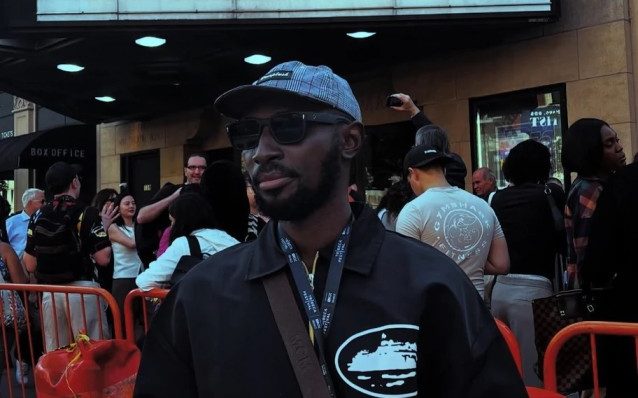


“I want audiences to see that Africa has a lot to offer world cinema, especially at a time when conversations around remakes and superheroes dominate the industry, and the world is increasingly looking to hear from us.” — Shimataver Igbawua
By Adedamola Jones Adedayo
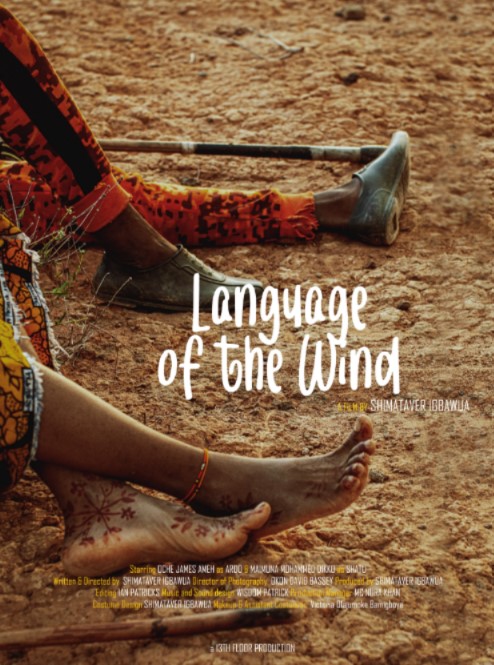
Language of the Wind (2026), written and directed by Shimataver Igbawua, is a story about youthful aspirations, cultural expectations and the changing realities of a community caught between preserving its traditions and adapting to a changing world. Set in a Fulani herders’ community in Northern Nigeria, the film follows Shatu (Maimuna Mohammed Dikko), a 16-year-old girl whose desire for greater independence and a different future puts her at odds with the expectations placed on her.
Through her relationship with Ardo (Oche James Ameh), the film explores questions of gender equity, marriage, identity and the gradual erosion of traditional livelihoods, while situating its characters within the wider tensions between farmers and herders. Rather than approaching these issues solely through conflict, Igbawua offers an intimate portrait of everyday Fulani existence, drawing attention to a community and way of life rarely explored with such attention in mainstream Nigerian cinema.
Following his short film Salamatu’s Rhapsody (2025), which also examines a young Northern Nigerian woman’s struggle to pursue her ambitions against societal expectations, Language of the Wind marks Igbawua’s feature directorial debut. The film was selected for Villa del Cine Festival 2026, competing in the festival’s Best International Debut Film category, marking its Colombian and South American premiere. Now, with its recent screening at Film Africa, the film offers further opportunity for a Northern Nigerian story, told largely in Hausa, to reach more international audiences beyond its immediate cultural setting.
With its observant camera, pastoral landscapes and emphasis on the rhythms of everyday life, the film adopts a distinctly intimate and documentary-inspired approach to storytelling. In an interview with Afrocritik, the Igbawua dissects the film, sharing the inspiration behind the project, his approach to portraying Fulani culture and gender relations, as well as other realities informing its narrative and where it stands in the projection of underrepresented storytelling within the broader context of African cinema.
What inspired the title Language of the Wind?
Wind represents freedom. In the environment where the story is set, the guy spends most of his time outside and is always with the wind. We played around with several titles before settling on this one. When “Language of the Wind” came, it encapsulated everything. Personally, what made me settle on it as a producer was its memorability.
It appears a bit lengthy and mouthful, yet it is easy to remember. As a producer, you have to be careful when choosing your title. I remember Morgan Freeman talking about The Shawshank Redemption (1994), saying that when it came out, he thought they had a great title. Little did he know that the title itself would become an impediment to the film’s word of mouth. I had that in mind while searching for a title. I needed something that would encapsulate the story and be memorable.
How intentional were you about reflecting tensions between personal aspirations and traditional expectations?
It’s easy to fall into the trap of seeing the story simply as one about personal aspirations versus tradition and the clash between the two, which, of course, it is. But while writing the script and making the film, I wanted to avoid making that too obvious. I wanted to tell a story about Shatu. The clash between different values and everything else happens as she goes about her life.
If you pay close attention, Shatu is not entirely against tradition or her people. She wants more in terms of personal aspirations, but she is also young, just 16. I thought about my own life and that of most teenagers. Sometimes, you are just full of energy and dreams, without being entirely sure of what is out there. That’s how I wanted to portray her.
I intended to portray her in a way that does not simply make her appear opposed to tradition. I wanted her to be someone who is youthful, ambitious and wants more. At the same time, she likes her people and their traditions. At her stage in life, she has grown up watching her people live the same way, but she wants something more.
There is a particular scene under the tree [where] she goes back and forth with Aldo. He talks about the people, tradition and how the farmers have taken their jobs and land. Then she says something along the lines of agreeing that the farmers have taken their land. That is my way of showing that she is not someone who hates everything about her tradition. She is simply young and full of dreams. It just happens that these aspirations clash with other things around her.
How did you conceptualise the characters of Shatu and Ardo, particularly in establishing Shatu’s inquisitive nature and her desire to challenge societal expectations of women?
Let me give you a little backstory on how the character of Shatu came to be. Years ago, I was in Benue State, in a place called Gboko, with a couple of friends. We were young, around 20 or 21. If you know these herders, there are women who come out to hawk fresh meat, as we saw in the film. Most of the time, they are rather quiet and don’t talk much.
On this particular day, we were teasing one of the ladies, as we usually did, but little did we know that we had met our match. This girl stood up to us, went back and forth with us and challenged one of my friends who had threatened to fight her. She demanded her rights, stood up for what she wanted, and got her money. As she was walking away, she stopped, turned around and asked, “Is there anyone who still wants to dare me?” That is the foundation of Shatu’s character.
The encounter stayed with me, and when I started writing the script, that girl guided me. I imagined what someone like her would be in her own community and how she would navigate life there. When we went to shoot the film, we visited an actual community, and I kid you not, the women there hardly spoke. The young girls were married off early. The man who gave us his cows and land to use had four wives. That experience further informed the character of the young girl I had encountered in Gboko and played a role in how I developed Shatu.
And then, speaking of Ardo, that’s the guy. I don’t think people will necessarily get this, but my most serious attempt at addressing gender equity in this film is not necessarily through the girl. It’s through the guy. When telling a story about gender balance, we are often tempted to approach it from the woman’s perspective. But the man also has to be educated.
Ardo shows that it is okay to allow your wife to speak up. Within their community, it is uncommon for a man to give his wife that opportunity. Once a man gets married, the woman is expected to have little say, and they are expected to start having children. But Ardo tells her, let’s wait a little and understand ourselves so that we can give our children a better life. He understands his wife and reasons with her.
However, there is a reality on the ground. There are people they represent. The name Ardo means leader of our people. He was named as someone destined to lead the next generation. So, he sees what is happening to his people. There is significant urban migration, with many young men moving to urban areas. Their lands are being encroached upon, fences are going up, and they are being told they cannot graze in certain places. There is a real tradition that is gradually fading away. So, as much as I want to consider you, I cannot be blind to what is happening. That explains his reluctance to completely give in to Shatu’s demands. He is not simply being stubborn or deliberately fighting against his wife.
The camera often lingers on the couple’s everyday activities, from herding cattle and grazing to hawking milk, practices deeply rooted in Fulani culture. These intimate observations lend the film a documentary sensibility. How intentional were you about this approach to documenting aspects of Fulani existence?
First, I knew I was telling a story that was pretty much a two-hander. I understood that if I didn’t let the audience see these people and their everyday lives, by the time the story progressed to where it was just the two of them in the bush, they might not quite follow. Secondly, I wanted it to have that documentary feel. I wanted people to see them in their everyday lives, going about their activities. The moment you become familiar with their lifestyle, you are able to connect with them when the story progresses, and the conflict emerges.
Another thing is that I’m very big on bringing underrepresented voices, communities and individuals to the big screen. You’re Nigerian, and I can almost bet that you’ve never seen a Fulani couple having their marriage. You’ve seen them and their cows, but you hardly get to see how they live. Their everyday existence is rarely represented on screen, even within Nigeria, let alone outside the country. I didn’t want to rush that aspect of the story. To an extent, it was also me, as a storyteller and filmmaker, trying to avoid certain tropes I see in Nollywood. I wanted realism. I wanted it to feel like these were people simply living their lives.
The film is also situated within the wider context of farmer-herder conflicts in Nigeria, where tensions over land, livelihoods, and access to resources have had profound consequences on farmlands and communities. How did you approach this dimension of the story?
We used an actual herders’ community home. We had animal wranglers, young guys around Ardo’s age, who worked with us. The scene in the evening when Ardo brings back the cows, for instance, authentically represents a ritual that happens when they return. You light a fire for the cows at night and bring fresh leaves as well. All of that was important to me.
Another thing is the contemporary issue about the clash between farmers and cattle herders. We see this a lot, and there have been many stories about it. I hope I was able to achieve what I set out to do: bring that conversation into the film while tilting it towards peace. That was my goal.
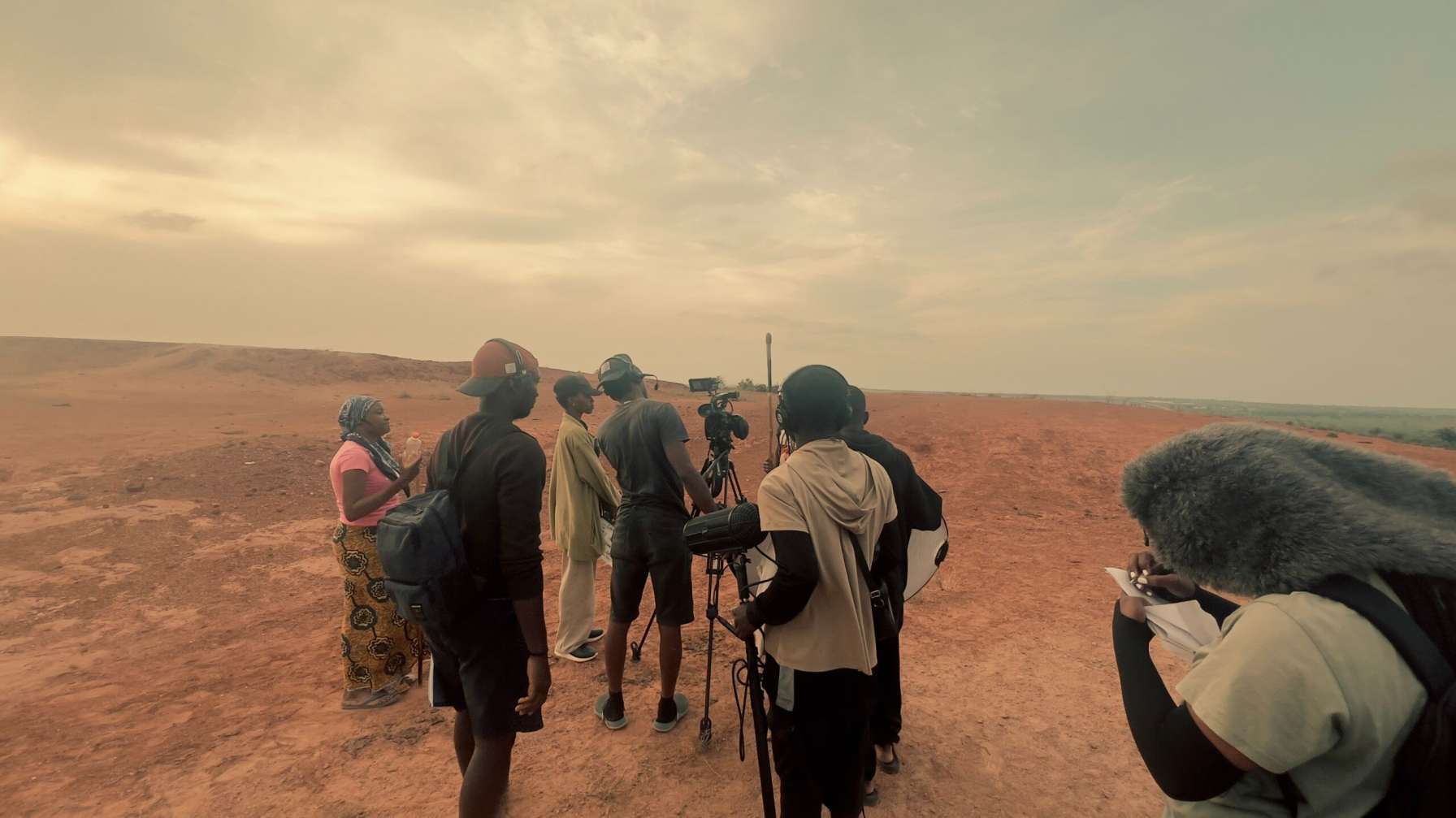
Could you walk us through your collaboration with the cinematographer Okon David Bassey in capturing the landscape and using its visual qualities to reflect the characters’ relationship with their environment and Fulani culture?
I [am] thankful to David Okon Bassey for coming on board. He’s a genius. I had a meeting with him, shared the script and explained my vision. I wanted the film to be realistic, with an observant camera, and I also explained how I wanted the scenery to play along. After that, I hardly had to say anything. Even on set, I would simply do my blocking and leave very little for the cinematographer to interpret. Most of the work you see in the film is because he understood what we were trying to achieve. Our collaboration was very smooth.
Northern Nigerian stories and languages remain underrepresented in mainstream Nigerian cinema and among Nigerian films gaining international recognition. What do you think accounts for this gap, and what role can films like Language of the Wind play in bringing Northern Nigerian stories to wider audiences?
I will start with its selection for Film Africa 2026. How significant is it for a proper Northern Nigerian story to be selected for a platform where it is screened alongside official Oscar submissions from countries like Nigeria, Kenya and Rwanda? The film was rejected in so many places because it didn’t resonate with their audiences, or they didn’t understand what we were trying to show. If not for platforms like Film Africa, which welcome stories from across the continent and the African diaspora, some of us would not have the opportunity to push our narratives and tell our stories.
The second thing is having people like us who are willing to tell these stories as they are. If I’m being honest, there’s a growing movement of filmmakers going to the North or incorporating elements of Northern Nigeria into their films. You see more Kannywood actors being cast, and there is progress. I think part of the reason is the oversaturation of Southern Nigerian stories, so people are looking for something fresh.
However, I’ve noticed that much of this representation remains at the surface level. This is why we need people like me who understand the nuances, the underrepresented people, and the different angles and perspectives. Part of the problem here is that the North is not as open as the South. We need people from Northern Nigeria to become more open to creators and storytellers who want to tell their stories. Language of the Wind has definitely paved the way for Northern stories to travel further.

Language of the Wind is your feature debut, following your short film Salamatu’s Rhapsody. Both films explore women’s empowerment and the tensions between traditional values and modern aspirations. How have your perspectives on these themes evolved from your short film to your feature debut, and what continues to draw you to stories about women navigating the expectations and limitations imposed by their cultural environments?
Salamatu’s Rhapsody brought to the fore the struggles of female rappers in Northern Nigeria, and the story is currently being developed into a feature film. The woman who played the lead in that film is actually a rapper. Just two weeks before we started rehearsals, she had to shut down her Instagram account and quit rapping. When I dug deeper, I discovered that the community and society were putting her under so much pressure that she had to quit, even though her music was positive and uplifting.
It’s my desire to tell stories that are important because they affect people’s lives. I also want to tell stories about hidden and underrepresented voices. It might seem as though I’m focused on women, which I’m proud of as someone who champions gender-equitable storytelling, but there’s also an underlying interest in finding unique characters that people have not seen before. I might continue to portray women breaking traditions or challenging cultural restraints, but at the end of the day, each story has its own freshness and offers the world something it has not seen before.
With Language of the Wind screening at Film Africa and reaching international audiences, what does this milestone mean to you, and what do you hope viewers can take away from it?
I hope international viewers come away with a renewed appreciation for stories like this, and that they thank platforms like Film Africa for recognising and showcasing authentic, realistic stories from this part of the world. Secondly, I hope they immerse themselves in the story, connect with the characters and learn from their experiences.
I want audiences to see that Africa has a lot to offer world cinema, especially at a time when conversations around remakes and superheroes dominate the industry, and the world is increasingly looking to hear from us. Africa is the next frontier for authentic global storytelling, with fresh, rich and universally relevant themes.
Adedamola Jones Adedayo is a film journalist and critic with special interest in African cinema. Through writing and audiovisual mediums, he creates conversations around cinema in Africa and the Diaspora. You can find him on Instagram @jonesthegoodboy and X on AdedamolaAdeda4.