

A song can elevate a video in seconds, but using it without the right permissions can quietly determine whether that video makes money, gets muted, or disappears entirely.
By Deborah Oyedijo
For many content creators, the experience is familiar. You spend hours editing a video, upload it, and within a short time, it is either muted, deleted, demonetised, or taken down altogether. It often feels sudden, even unfair, but in most cases, the system is working exactly as it was designed to. The issue is not limited to a particular platform or to creators outside the continent. Across Africa, creators are running into the same problem, often without a clear understanding of why it is happening.
The starting point is understanding that every commercially released song contains two separate copyrights. The first is the composition, which covers the melody and lyrics created by songwriters and publishers. The second is the sound recording, commonly referred to as the master, which captures the song’s performance. Using music in a video means engaging with both of these rights, even if most creators are only aware of one.
When a song is paired with moving images, what is required is a synchronisation licence. This licence comes from the composition side and permits the use of the underlying song in visual content. Without it, the use is unauthorised, regardless of whether the song was purchased or credited. Mechanical rights, which traditionally relate to reproduction, are less central for video creators but can still become relevant where content is distributed or stored in ways that reproduce the music alongside it.
This is where a common misunderstanding begins. Buying a song on platforms such as Apple Music or streaming it on Spotify only provides a personal licence to listen. It does not grant the right to use that song in a video, upload it to a platform, or monetise content built around it. The gap between what creators assume they have paid for and what they are actually allowed to do is where many problems begin.
On YouTube, this gap is enforced through a system known as Content ID. Rights holders upload their music to a database, and YouTube automatically scans every video uploaded to the platform against it. When a match is found, the rights holder can choose to monetise the video, track its performance, or block it entirely. What matters here is that Content ID is not a legal judgment. It is an automated enforcement tool built into YouTube’s infrastructure, and its decisions are applied almost instantly.
The scale of this system also means it is not always precise. Millions of claims are made within short periods, and while many are valid, others are disputed or reversed. For creators, the practical reality is that a claim can affect a video long before any detailed verification takes place. This has become increasingly visible in recent cases involving African filmmakers.
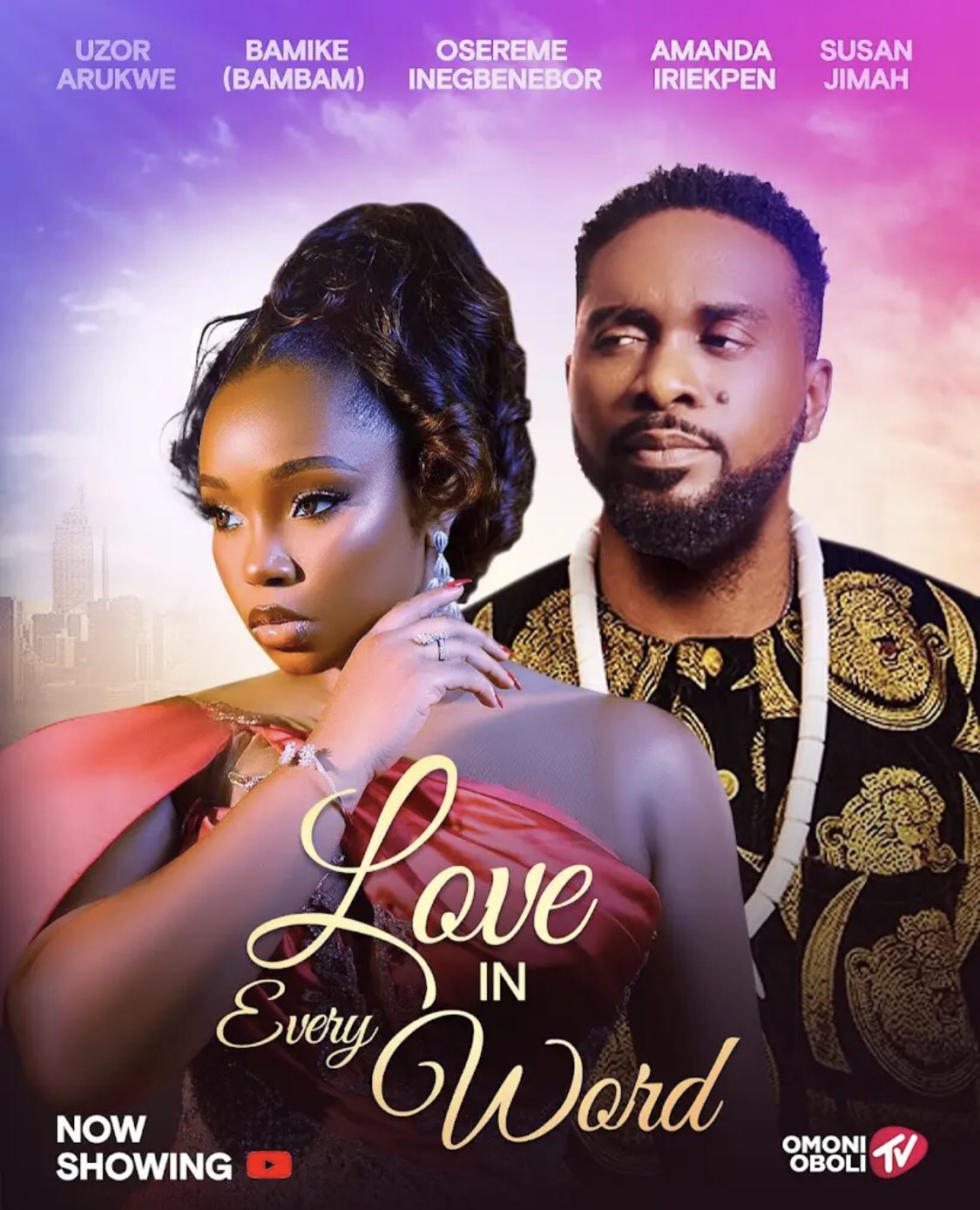
In March 2025, Love In Every Word, produced by Omoni Oboli, was taken down from YouTube after amassing millions of views within just a few days. The takedown followed a copyright claim filed by Chinonso Obiora, who asserted ownership over a specific drone footage and aerial videography that was used in the film without his authorisation. through his company, Skyberry Studios. Although the film was later restored after the dispute was addressed, the incident demonstrated how quickly a claim from an individual, not necessarily a major label or publisher, can interrupt distribution and revenue.
A similar pattern emerged in the case of Bimbo Ademoye. Her film, To Be a Friend, was removed from YouTube after generating millions of views due to copyright issues connected to its soundtrack. Shortly after, another of her films, Where Love Lives, became the subject of a separate dispute when an individual identified as Emmanuel Davies claimed ownership of a song used in the film and redirected its monetisation. Ademoye maintained that she had secured proper rights to use the track, and the situation escalated into legal action. These cases show not only how unlicensed use can trigger enforcement, but also how the system itself can be exploited in ways that complicate legitimate use.
A different model operates on platforms such as TikTok, where many users assume they are fully protected. TikTok functions through blanket licensing agreements negotiated directly with major labels and publishers. When a creator uses music from TikTok’s in-app library, that use is covered within the platform. The licence exists between TikTok and the rights holders, not between the creator and the music.
The limitation becomes clear the moment that content leaves the platform. If a video created on TikTok is downloaded and uploaded to YouTube, the original licence does not follow it. The same piece of content that was permitted on one platform may trigger a claim on another because each operates under a different rights framework. In addition, TikTok’s licences primarily cover major catalogues, which means that independent or regional music may not be included even within the app itself.
Alongside these structural issues, several persistent myths continue to affect how creators approach music use. One of the most common is the belief that crediting an artiste is sufficient. In practice, attribution does not replace permission. A caption acknowledging the original creator has no legal effect without a licence.
Another widespread misconception relates to fair use. Many creators assume that short clips or transformative editing will protect them. While the flexible fair use doctrine in the United States weighs multiple factors on a case-by-case basis, most African copyright laws rely on narrower exceptions known as fair dealing (or permitted uses).
In Nigeria, the Copyright Act 2022 adopts a more flexible fair dealing approach using the phrase “for purposes such as” together with fairness factors, though background music in commercial entertainment content rarely qualifies. Kenya’s framework has evolved through Supreme Court interpretation toward greater flexibility resembling fair use, while Ghana permits specific uses for research, criticism, review, and reporting current events, provided the source is acknowledged, and the dealing is fair. South Africa currently applies a traditional fair dealing provision limited to purposes like research, criticism, and review, with a broader fair use-style exception proposed in the long-debated Copyright Amendment Bill.
There is also the assumption that purchasing a track grants broader usage rights. As already noted, this is limited to personal listening. Similarly, no fixed duration makes unauthorised use acceptable. Even brief excerpts can be identified and claimed through automated systems.
Legal use, in contrast, is relatively straightforward in principle, even if it requires more effort in practice. It involves obtaining a synchronisation licence from the relevant rights holder, using music from legitimate royalty-free libraries, working with Creative Commons material within its stated conditions, or creating and owning original music outright. Each of these routes provides a clear basis for using music without risking enforcement.
For creators working across African markets, a few practical steps can significantly reduce exposure. It is important to document all permissions in writing and retain proof of licences before publishing any content. Where original music is commissioned, the agreement should clearly state who owns the rights, rather than relying on informal understandings. If a claim arises, having this documentation is often the difference between a successful dispute and a lost revenue stream.
Understanding the difference between a Content ID claim and a copyright strike is equally important. A claim may redirect revenue or limit visibility, but it does not immediately threaten a channel. A strike, on the other hand, carries more serious consequences, and repeated violations can lead to account termination. Knowing how to respond to each situation is part of managing a creator’s long-term presence on these platforms.
The broader picture is that African creators are building audiences that extend far beyond their immediate environments. Their content circulates globally, generates revenue across platforms, and competes within an increasingly structured digital economy. The licensing systems that govern music use were not designed with this growth in mind, but they apply fully nonetheless.
Understanding how these systems operate is therefore not just a technical advantage. It is a necessary part of sustaining creative work in an environment where a single song choice can determine whether a video earns, disappears, or becomes the subject of a dispute.
Deborah Oyedijo is a music business writer and entertainment lawyer-in-training with a focus on the African music industry. When she is not writing about music rights and culture, she is watching K-dramas or absorbing yet another documentary. Connect with her on IG and X: ayooyedijo