



The real measure of the First Features Project will not be twelve credits on twelve filmographies, but what those credits make possible afterwards.
By Joseph Jonathan
The first feature is a peculiar thing in Nollywood. It can be a calling card, a rite of passage, a career breakthrough, or, sometimes, simply proof that someone was finally given the chance. For an industry that has spent decades building its reputation around prolific filmmaking, getting to the first feature remains an oddly formidable achievement. There are writers who never get to direct, actors who never get to direct, cinematographers who never get to direct, and short-film directors whose ambitions remain trapped in the space between promise and production.
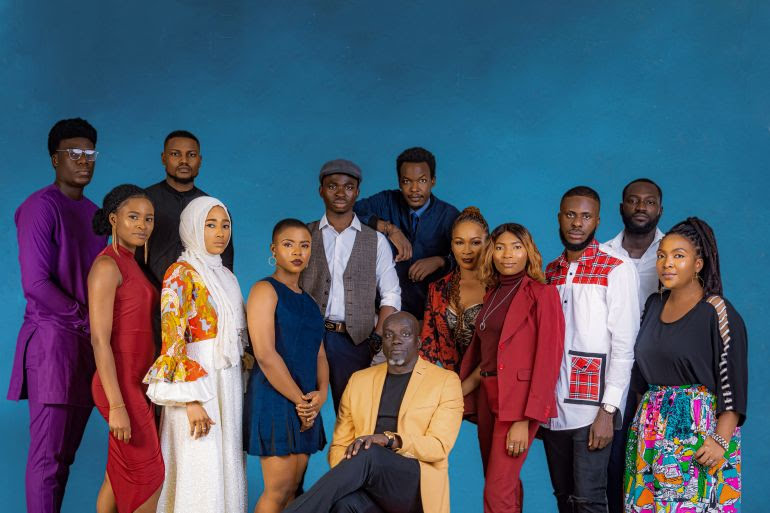
The First Features Project was designed to intervene in that space. Launched in 2020 by Natives Filmworks and Michelangelo Productions, the initiative set out to give twelve emerging Nigerian directors the training, mentorship and financing required to cross the threshold into feature filmmaking.
Six years later, with The Almajiri (2026) completing the original slate, the experiment is over, or at least its first chapter is. The twelve films are now there to be watched, judged and argued over. More importantly, the filmmakers are now out in the industry, where the protections of a structured programme no longer exist.
That makes this an opportune moment to ask a question more consequential than whether First Features produced twelve good films. What happens to filmmakers after their first feature? Can a programme designed to solve the access problem also create the conditions for sustainable careers? And what does it mean that, just as these questions begin to emerge, First Features is expanding beyond Nigeria to St. Kitts and Nevis, with ambitions for a wider Africa-and-Diaspora filmmaking ecosystem?
Perhaps the most revealing thing about First Features is that its real test was never going to be whether twelve films could be made. It was whether those twelve films could become beginnings.
The Problem First Features Was Trying to Solve
Nollywood’s reputation for speed can obscure how difficult it is to move from working in the industry to directing a feature. An industry can produce hundreds of films a year and still offer relatively few meaningful opportunities for someone directing their first one. The problem is not necessarily a shortage of people with ideas, training or practical experience. It is the question of who is trusted with the money, personnel and risk required to turn those things into a feature film. That is the gap First Features attempted to occupy.
Its premise was straightforward: identify filmmakers with demonstrated potential but without a feature-directing credit, then give them the resources and structure to cross that threshold. But calling the participants “new filmmakers” can be misleading. Some were already deeply embedded in the industry, only occupying different positions within it. Wingonia Ikpi had worked as a screenwriter, producer and talent manager. Toluwani Obayan Osibe was already an established screenwriter. Courage Obayuwana had experience in cinematography and editing. Jammal Ibrahim had worked as an actor. Korede Azeez had already directed a film for Netflix and UNESCO’s African Folktales Reimagined (2023).
This distinction matters because it reveals what First Features was really testing. It was not simply asking whether unknown talents could be discovered. It was asking whether experienced practitioners could be given a deliberate pathway into feature directing. That pathway matters in an industry where opportunity can still depend heavily on networks, reputation and the willingness of financiers or producers to take a chance on someone without a feature credit.
A short film may demonstrate skill, but it does not necessarily convince an investor to entrust someone with a feature. Years spent writing, producing, acting or working behind the camera may establish competence without ever resolving the question of whether that person can lead an entire feature production.
First Features effectively treated that question as something that could be answered through practice rather than prolonged waiting. That also meant accepting that the resulting films would not all be equally accomplished. Some would be more confident than others; some would reveal stronger directorial identities; some would expose the limitations of their makers. But that unevenness is precisely what makes the project worth examining.
If the programme had attempted to eliminate every possibility of failure, it would have been testing whether professionals could reproduce a predetermined formula. Instead, it created room for twelve filmmakers to discover what they might do with the opportunity. The first problem, then, was access. First Features removed one of the most consequential barriers between being an experienced film practitioner and becoming a feature director. The more difficult question is what those filmmakers did once that barrier was gone.
What Did They Produce?
The easiest answer is twelve feature films. The more interesting answer is twelve different responses to the same opportunity.
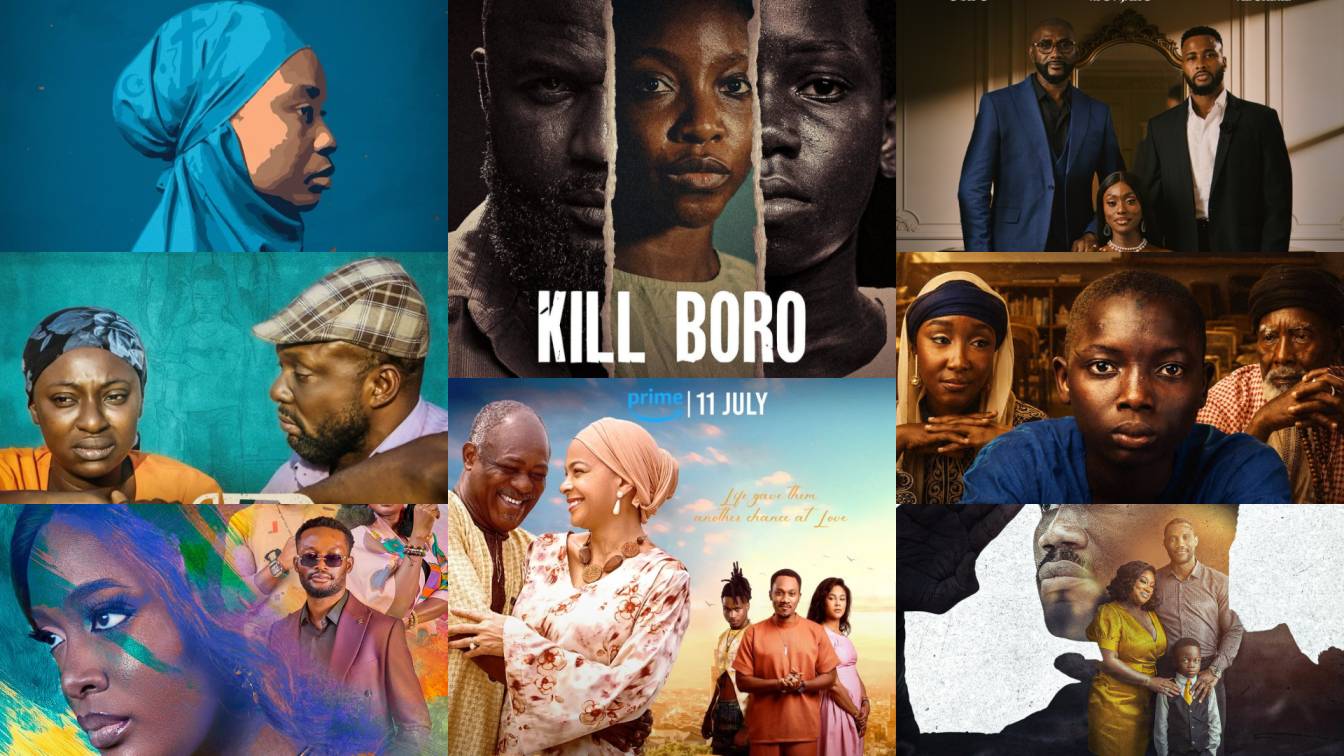
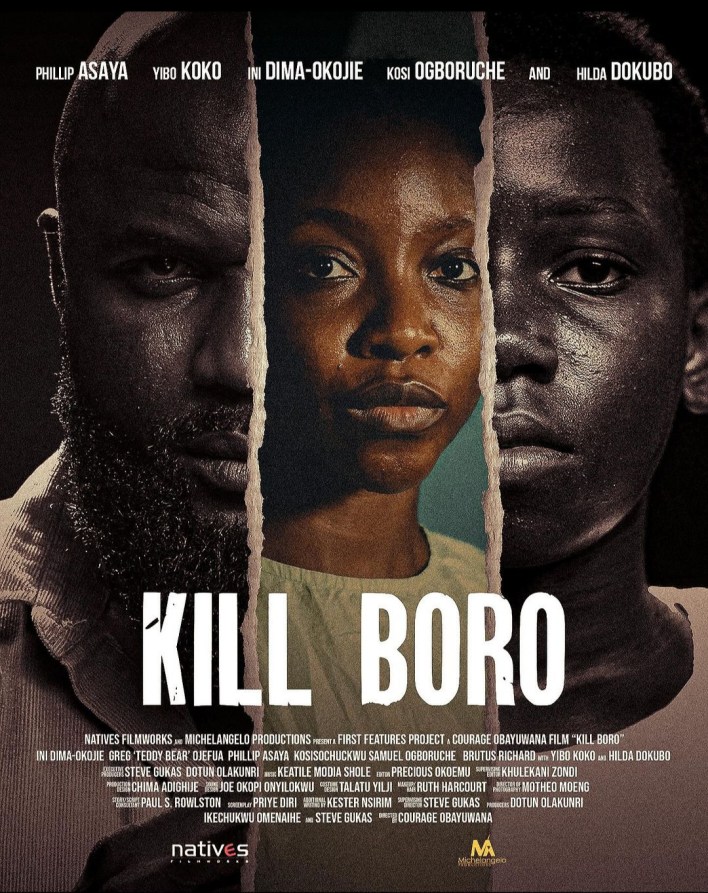
Viewed together, the First Features slate does not reveal a house style so much as a range of instincts. Kill Boro (2024) and The Almajiri turn toward social realities, using specific Nigerian settings to explore domestic violence, education, poverty and the complicated moral choices surrounding them. At Ease (2024) similarly takes on a difficult subject (military trauma and survivor’s guilt) without reducing its protagonist to his condition.
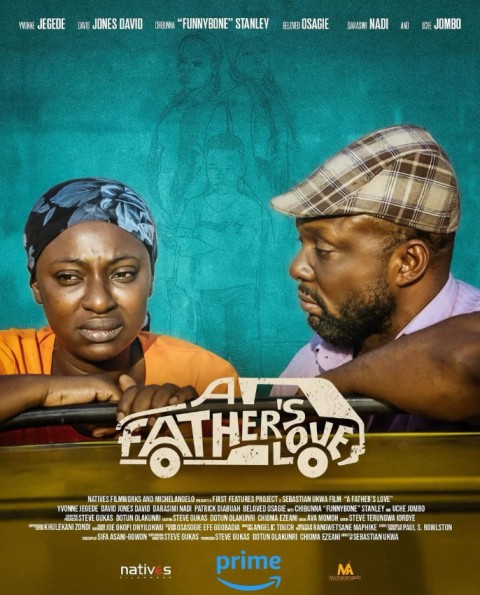
Katangari Goes to Town (2025) takes a different route, adapting the conventions of the detective story to a Nigerian environment, while It Blooms in June (2024) and Love and Life (2023) are more interested in coming-of-age, friendship and intimate relationships. The Lost Days (2025), A Father’s Love (2024) and A Danfo Christmas (2024) lean into family and community. Elsewhere, Colour Me True (2025) is preoccupied with identity and performance, while The Anniversary (2025) experiments with contained psychological drama.
The significance is not that every experiment worked. They did not. Some films struggle with pacing, some with dialogue, some with character development or the confidence to follow an intriguing premise to its most difficult conclusions. Others are undermined by technical inconsistencies. But the recurring weaknesses are revealing too. They show filmmakers negotiating the conventions they have inherited from Nollywood while attempting to establish their own voices within them. That negotiation is perhaps the most valuable thing the slate makes visible.
In Katangari Goes to Town, familiar whodunit conventions are filtered through Nigerian ideas of authority, community and justice. The Almajiri resists the temptation to turn its debate over Islamic and Western education into a simple contest between enlightenment and backwardness.

Kill Boro locates a familiar story of domestic violence within the specific social and geographical realities of the Niger Delta. Colour Me True starts with a premise about celebrity, identity and the performance of self in the social-media age, even if the film does not ultimately interrogate those ideas as deeply as it could. These films are most interesting when they stop trying merely to demonstrate competence and begin making choices that suggest what their directors want to say. That is what the twelve films ultimately produced beyond their running times: evidence of possibility.
A programme that gives filmmakers their first feature cannot manufacture twelve fully formed auteurs. Nor should it. A first feature is partly an experiment in discovering what kind of filmmaker someone might become. Some of these films are polished but cautious; others are uneven but more adventurous. Some reveal strong visual instincts, others a sensitivity to performance or place. The differences matter because the programme did not simply produce twelve directors who could now say they had made a feature. It created a body of work through which their individual tendencies could begin to emerge.
The films, therefore, should not be judged only by the question of whether they were “good enough”. Their greater value lies in what they expose about filmmaking when access is deliberately widened: the ideas filmmakers choose, the conventions they retain, the risks they take, and the limitations they have yet to outgrow. First Features did not produce twelve finished filmmakers. It produced twelve beginnings and, more importantly, enough evidence to see what those beginnings might become.
The Filmmakers After First Features
A first feature changes a filmmaker’s position in the industry. Before it, the question is whether they can be trusted to make one. After it, there is at least an answer. But that answer only becomes meaningful if it changes what they are able to do next.
This is where the trajectories of the First Features filmmakers become more revealing than the credits themselves. The programme can provide training, mentorship, financing and the extraordinary advantage of making a feature without first having to convince the industry to take that initial risk. It cannot, however, automatically provide the next opportunity.
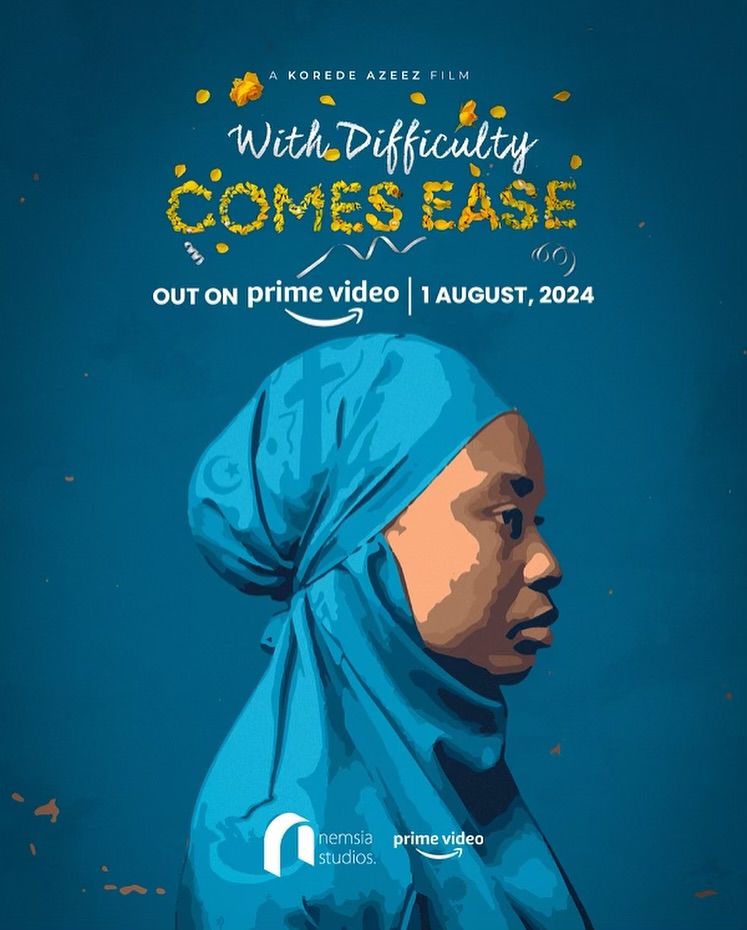
Some filmmakers have demonstrated that the first feature can become a genuine career transition. Korede Azeez, for instance, entered First Features after directing for African Folktales Reimagined, and followed It Blooms in June with With Difficulty Comes Ease (2024), another feature that went on to streaming.
Prosper Edesiri moved from Cake (2022) to The Anniversary within the First Features slate and has since directed Rent a Romance (2026). Reuben Reng similarly directed two films through the programme, demonstrating that First Features could offer not merely a debut but repeated opportunities to develop a directorial practice.
These trajectories matter because they complicate the idea of what a “first-time director” means. For some participants, First Features was not the beginning of a film career but the moment when an existing career acquired a new direction. A screenwriter became a director. An actor became a director. A cinematographer or editor moved into a position where they had to make decisions about the entire film rather than one component of it. But the evidence is necessarily uneven.
Continued participation in the film industry is not the same as continued opportunity to direct. A filmmaker can remain active as a writer, producer, actor, cinematographer or other crew member without necessarily securing another feature as director. That does not mean the first feature failed, nor does it mean those filmmakers have disappeared. It means the structural problem First Features addressed does not end when the film is completed.
This is the central limitation of any first-feature intervention. It can remove the initial barrier without controlling what happens beyond it. The difference is important because filmmaking careers are built through repetition. One feature can demonstrate potential; several features allow a director to develop a body of work, refine their instincts, build relationships and become a more predictable proposition for financiers and producers. The first film gives a filmmaker evidence. The films that follow determine what that evidence is worth.
This is also why the mixed quality of the First Features slate should not be treated as a contradiction of the programme’s purpose. If the initiative exists to create a pathway rather than manufacture instant mastery, then the more important question is whether its participants are now better positioned to pursue that pathway independently. The answer appears to be yes for some. For others, it remains unresolved.
That unresolved quality is not necessarily a verdict on First Features. It is a reminder of what the programme could and could not control. It successfully changed the answer to one question—“Have you directed a feature?”—for twelve filmmakers. The harder question is what the industry does with that answer once the programme is no longer standing behind them.
One Film Is Not Yet a Career
There is another part of the First Features experiment that becomes visible only after the films leave the programme: what happens between making a film and building a career around having made it.
First Features eventually got its films onto Prime Video, giving the slate a level of distribution that many independent Nigerian filmmakers struggle to secure. That matters. A feature that remains unseen cannot easily function as a calling card, however promising it may be. But availability is not the same thing as discovery. A film can be on a major streaming platform and still struggle to find an audience, generate conversation or become the kind of work that makes producers and financiers want to see what its director will do next.
This distinction is crucial because the original intervention was strongest at the beginning of the filmmaking chain. It identified filmmakers, developed their projects, trained and mentored them, financed production and ultimately helped get the films into the marketplace. But the value of that chain does not end with distribution. There is another sequence afterwards: audiences watch the films, critics and the industry respond, filmmakers gain visibility, new relationships form, and those relationships ideally lead to another project. That feedback loop is where a first feature begins to acquire professional value.
The First Features films provide evidence that this can happen. Kill Boro and The Lost Days, for instance, received Best Debut Feature Film nominations at the 2025 Africa Movie Academy Awards (AMAA).
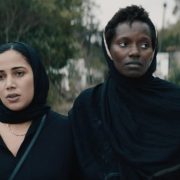
Such recognition does not prove that either the individual films or the wider project has succeeded commercially, but it demonstrates how a programme-generated film can move beyond its immediate production context and enter wider industry conversations. Yet awards and platform availability are only part of the equation. What matters more in the long term is whether the filmmaker becomes easier to finance, easier to commission and easier for audiences to recognise. A first film can establish a credit; a sustained career requires that credit to have consequences.
This is particularly important in an industry where visibility is often concentrated around established names. If a programme gives twelve people their first opportunity but the next set of opportunities continues to circulate among the same familiar directors, then the intervention has widened access only temporarily.
The real structural change occurs when the new entrants begin to participate in the system independently, when their first film helps them secure a second, their second strengthens their bargaining power, and their growing reputation allows them to attract collaborators and eventually create opportunities for others.
That is why the audience matters beyond the question of whether people enjoyed a particular film. Audiences are part of the infrastructure of filmmaking. Their attention tells platforms what to acquire, producers what kinds of filmmakers might be worth backing and filmmakers which kinds of stories can travel. Critical attention does something similar, giving a film and its maker a language through which the wider industry can understand their value.
The First Features Project therefore solved a significant problem, but not the entire problem. It demonstrated that films could be made by people who might otherwise have struggled to get that first opportunity. The harder task is ensuring that those films generate enough visibility, relationships and momentum to make the next opportunity possible. A catalogue is not yet an ecosystem. Twelve films can prove that access works. Only what happens around and after those films can prove that the access is sustainable.
The Second Experiment
The expansion of the First Features Project to St. Kitts and Nevis changes the scale of the question. The Nigerian iteration was fundamentally about access: could twelve filmmakers without feature-directing credits be given the resources and support to make one? The next phase is attempting something more expansive.
With the project opening its doors to filmmakers across Africa and the Diaspora, and plans for a talent incubation facility, international faculty and stronger connections between Africa and the Caribbean, First Features is no longer only intervening in Nollywood’s first-feature problem. It is proposing a broader filmmaking ecosystem. That ambition makes the Nigerian project useful not simply as a success story, but as a test case. The question now is: what exactly is being scaled?
If what is being exported is the basic model (find promising filmmakers, train them, mentor them and finance their first features), then the Nigerian experience offers a compelling precedent. It has shown that a structured intervention can move filmmakers across a threshold that the wider industry often leaves to chance. But a transnational programme introduces complications that a single-country intervention does not.
Filmmakers working across Africa and the Diaspora do not share one industry, one funding structure, one audience or one filmmaking culture. The networks that make a project viable in Lagos may not operate the same way in Accra, Nairobi, Kingston or Basseterre. The ambition, therefore, cannot simply be to make more films. It has to be to make the relationships around those films more durable.
That means thinking beyond development and production toward the full chain that turns filmmaking into an ecosystem: financing, collaboration, distribution, audiences, subsequent projects and reinvestment. A filmmaker who makes a first feature in St. Kitts but has no clearer route to a second film has received an opportunity, but not necessarily a sustainable career. Likewise, a film that travels internationally but does not create meaningful professional relationships for its makers may expand the project’s catalogue without expanding its ecosystem.
This is where the Caribbean component becomes particularly interesting. The partnership creates the possibility of something more than an African programme relocated outside Nigeria: an exchange between creative communities with connected histories and distinct contemporary industries. Africa and the Caribbean have long been linked culturally, but a filmmaking initiative can turn that connection into something more practical: co-productions, shared expertise, new audiences, new financing relationships and stories that move between territories rather than remaining confined to one market.
First Features therefore enters its second experiment with a more difficult responsibility. The Nigerian chapter demonstrated that access can be constructed. St. Kitts and Nevis will test whether that access can be connected across borders. Its success should not be measured simply by how many new first features emerge from the next phase.
It should be measured by whether those filmmakers can move through the same ecosystem that the project is trying to build, from opportunity to audience, from audience to another opportunity, and eventually from beneficiaries of the system to builders of it. The first experiment asked whether a door could be opened. The second must determine whether there is a road on the other side.
The First Features Project began with a simple proposition: that talented filmmakers should not have to wait indefinitely for permission to make their first feature. Six years and twelve films later, that proposition has been tested and, in many respects, vindicated. The films are uneven, the careers are still unfolding, and the project has not solved every structural problem in Nollywood. But it has demonstrated that access to feature filmmaking can be deliberately created rather than left entirely to chance.
Its most important legacy, however, may still be ahead of it. The real measure of the First Features Project will not be twelve credits on twelve filmographies, but what those credits make possible afterwards. If first films become second films, if second films become careers, and if those careers eventually create opportunities for another generation, then the project will have produced something larger than a successful slate.
Now, as First Features expands and imagines a wider Africa-and-Diaspora ecosystem, the experiment enters its more difficult chapter. It no longer has to prove that filmmakers can be given first chances. It has to prove that first chances can become infrastructure. Because the point of a beginning is not simply that something started. It is that something continues.
Joseph Jonathan is a historian who seeks to understand how film shapes our cultural identity as a people. He believes that history is more about the future than the past. When he’s not writing about film, you can catch him listening to music or discussing politics. He tweets @Chukwu2big.