

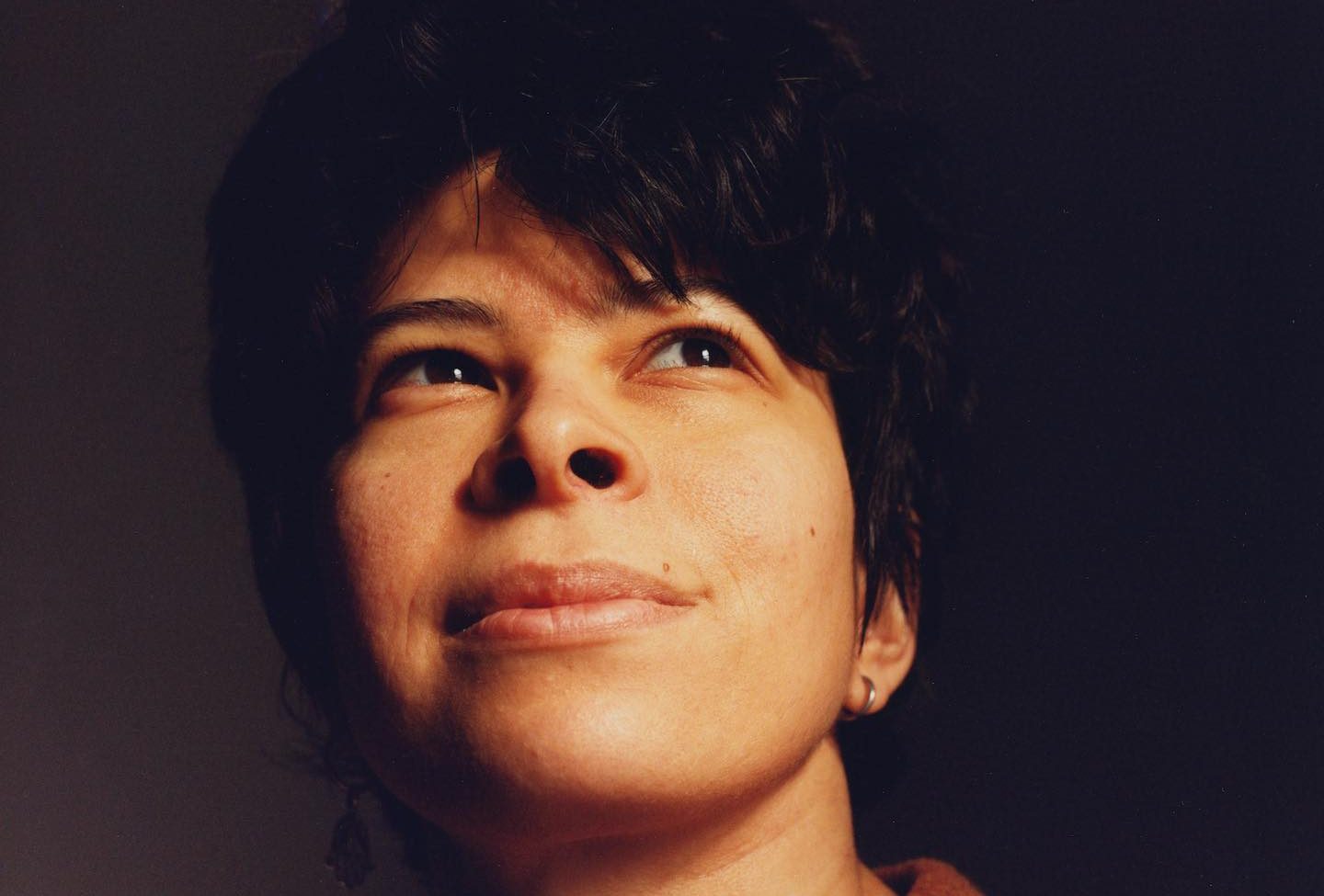

“I think cinema has a responsibility to look for the human being behind the law, the category, the number. Their love, sadness, anger, dreams. People who migrate are often spoken about as a single body, but there is never only one story.” – Sarra Ryma
By Vivian Nneka Nwajiaku
There is no shortage of art that features birds as symbols of freedom, with their cages evoking restriction. Artistes have drawn on that imagery to explore themes around migration, in particular. At a time when migration has become increasingly politicised, and young Africans and Arabs are often disproportionately affected by restrictive migration policies, the bird as a metaphor for migration feels especially resonant in North Africa, a region that serves as an essential geographical bridge for millions of birds migrating between Europe and sub-Saharan Africa.
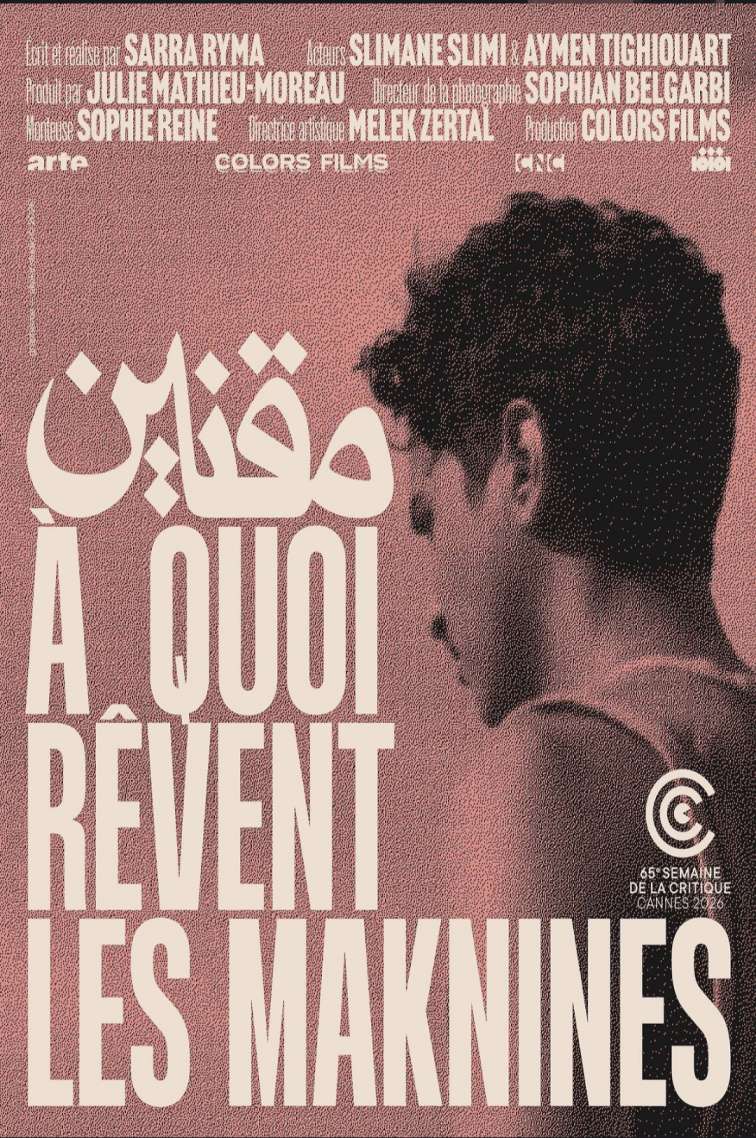
What Do the Maknines Dream Of (À Quoi Rêvent les Maknines) (2026) relies on one such species—the endangered but beloved goldfinch known in Algeria as the maknine—to tell the story of two young Algerian men (played by Slimane Slimi and Aymen Tighiouart) and the desire to leave.
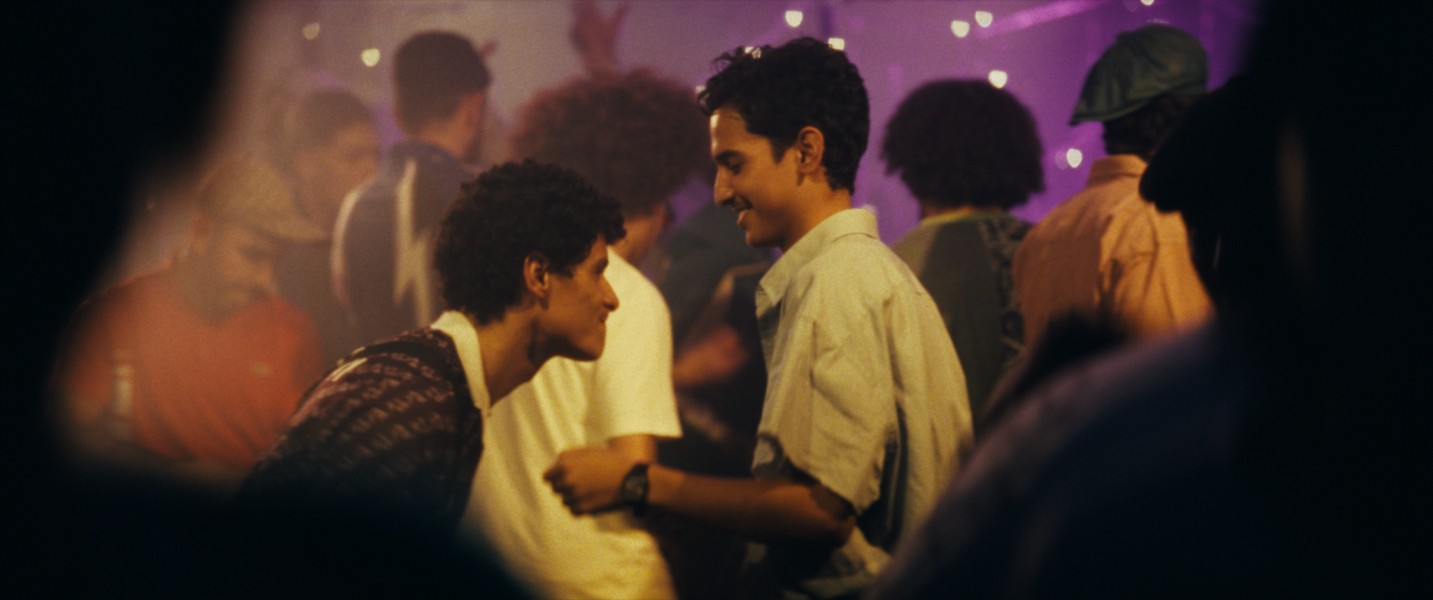
A France-Algeria co-production supported by the French National Centre for Cinema and the Moving Image (CNC), Arte France, and the Arab Fund for Arts and Culture (AFAC), the short film is written and directed by France-based French-Algerian filmmaker Sarra Ryma. It follows Kacim, who raises and sells caged maknines, and his friend Malek, an aspiring musician, as they wander the streets of Algiers, raising money and making plans to cross the Mediterranean.
Though different in genre, style, and format, What Do the Maknines Dream Of recalls The Bird’s Placebo (2026), Tunisian filmmaker Rami Jarboui’s animated short about a disabled young man who comes into possession of a rare bird that grants him the opportunity to travel the world. Like The Bird’s Placebo, which premiered at the Sundance Film Festival earlier this year, What Do the Maknines Dream Of had its world premiere at the Critics’ Week section at the Cannes Film Festival, joining the ever-growing body of migration-themed African films on some of the world’s biggest film stages.
In this conversation with Afrocritik ahead of the 2026 Melbourne International Film Festival, Sarra Ryma discusses What Do the Maknines Dream Of, reflecting on love, migration, and the symbolic place of birds in Algerian culture.
There seems to be an interesting relationship between people and birds in North Africa, especially the maknine in Algeria, and a curious way that relationship intersects with young people’s desire to leave. Why do you think the maknines, and birds more generally, are such a fitting metaphor through which to tell a story like this?
I think it begins with birds in general. North Africa is the last shore before Europe. Every year, we watch migratory birds cross the Mediterranean and come back. When you grow up dreaming of crossing that same sea, there is something almost irritating in watching a bird do it so easily. No passport. No visa. They seem freer than we are.
Algeria has always looked towards the Mediterranean. There is a long history of sailors, trade and movement. Today, many people feel unable to travel, as if someone has broken their wings. And the dream is not always to leave for Europe forever. Sometimes, it is simply to be free to go, to see the world, and perhaps to return.
The maknine has a particular place in Algerian culture. Its song belongs to the musical imagination of chaâbi, and there is also the story of Mohamed El Badji, who wrote “Ya Maknine Ezzine” while imprisoned in Serkadji during the War of Independence. A prison guard reportedly compared him to a bird singing in a cage. There is also a story that he later asked his mother to release the maknines he kept at home. I have always been moved by that story.
There is a strange contradiction in loving this bird so much and keeping it inside a small cage. Men who feel trapped themselves reproduce the same violence on the bird they admire. That paradox became a way for me to think about the human condition, and about the film.
What birthed the central characters in What Do the Maknines Dream of?
At first, the film came from trying to understand why I had left Algeria. I wanted to understand the person who wants to go. The more I searched for a reason, the less convincing each answer became. Nothing felt deep enough. Maybe I simply needed to get far away from the world I knew. But I felt I was missing the real question.
When I went back and spoke with my brother, who stayed in Algeria, I began to wonder whether the person who stayed was not the more mysterious character. There is something grounded in that choice, but also something I still cannot explain. In the first versions, the central character was the one who left. Little by little, the film turned towards the one who could not leave, and perhaps did not entirely know why.
That dynamic between staying and leaving is central to the film. You’ve shared what drew you to that tension, but do you think that for some people, the reason for leaving may be more about collective aspiration than personal desire?
Yes, the desire to leave is shaped by politics, history and the images we grow up with. But there are also as many reasons as there are people. Sometimes it is difficult to understand the choice we did not make. I left. I can try to understand why someone stays, but perhaps I never fully will. The film does not have an answer either.
For me, it remains like opening a cage. Some birds fly out immediately. Others stay. Maybe they are afraid. Maybe the cage has become familiar. Maybe it is not a cage to them. I do not know. That uncertainty is probably the only honest answer I have.

There’s a remarkable sensitivity to the friendship between Malek and Kacim, and it can be understood or misunderstood as romantic. What was your intention in framing that relationship in that way?
At first, I imagined a more recognisable love story, between a man and a woman, or between two men. Then, I realised I wanted to speak about love before it is named. Malek and Kacim might be brothers, lovers, or very close friends. The story does not change. If you love someone enough to make that sacrifice, I do not need to decide whether their love is physical.
In a society where love is difficult to speak about, especially between young men, it mattered to return to the feeling itself, before all the weight we place on it. At that age, friendship can contain everything. Tenderness, desire, loyalty, fear. Perhaps that is why it feels so pure, and why it is so hard to say aloud.
That calls to mind a song from the film, “Algerian Love”, which I found very striking. You wrote it yourself. Where did it come from?
I wrote the first part, and then it grew with the actors, Slimane Slimi and Aymen Tighiouart, and with composers. So it was a collaboration. The first title was “Love Sauce Algérienne”. Sauce algérienne is this spicy sauce you find in kebab shops in France. The name always made me laugh because it was called Algerian, but I had never seen it in Algeria when I was growing up. The song began with that joke. Somewhere along the way, “Love Sauce Algérienne” became “Algerian Love”.
To borrow a question from one of your characters, what does Algerian love mean to you?
I think we can be intense in the way we speak about love. Maybe it comes from our history, and maybe from how difficult love can be to name openly. In Algerian Arabic, we say “nmout 3lik”, “I would die for you”, as a way of saying “I love you”. I wanted to take the expression literally.
Kacim does not die for Malek, but he gives up the thing he loves most. For me, that is Algerian love in the film: sacrifice. Our generation did not live through the War of Independence, but we inherited a history in which freedom is bound to sacrifice, and sometimes to death. I think those histories remain inside the language, and inside the way we imagine love.
Speaking more generally about the film’s music, What Do the Maknines Dream Of is defined by both sound and silence, from birdsong to the sounds of the city, the use of music both as part of the score and as part of the story, and the way Kacim often retreats into himself. What was your vision for the film’s soundscape, and what role did sound play in expressing the emotional lives of your characters?
Algiers is a very noisy city. The air, the birds, the traffic, the people, life itself. For me, the film is about a separation between the two characters, but also between Malek and the city. He wants to leave her, so I wanted to give her a voice.


At first, Algiers is everywhere. She is noisy, almost talking to them. Then the silence arrives. Not only Kacim’s silence, but the city’s too. As if she were sad to see someone else leave.
For me, making the film was a way of giving a voice to Algiers. I left her too, and I’m sad for her. I didn’t say goodbye when I left. When I came back, she had changed. Maybe I had changed too. So the film became a way of saying to her: this time, I will listen to you. You can speak. You can be angry. You can be sad about the people who leave you.
The songs give the boys a language for emotions they cannot express directly. At that age, and in that context, singing can feel safer than speaking. I wanted sound to carry what they were too shy, or perhaps too afraid, to say.
We are living in a moment when migration has become increasingly politicised. Do you think cinema has a responsibility to confront and complicate conversations around migration?
I think cinema has a responsibility to look for the human being behind the law, the category, the number. Their love, sadness, anger, dreams. People who migrate are often spoken about as a single body, but there is never only one story.
There are migration stories far more tragic than the one in my film, and they need to be told. But that does not mean this quieter story should not exist. Some people leave to survive. Others leave because they have a dream, or because the world has been shown to them and then placed out of reach. We need all of these stories. Perhaps when there are enough of them, it becomes harder to reduce people to a crisis.
As you said, some are not essentially about survival. But ultimately, even for people whose circumstances seem less desperate, it can still feel like life or death. As Malek puts it, “it’s sail or die”.
Yes. Any dream can feel like life or death to the person carrying it. Someone who grows up in the French countryside and dreams of Paris may feel that urgency too. The difference is that their movement is considered normal. For many Africans and Arabs, the desire to travel is treated as suspicious unless it can be justified by extreme suffering.
During casting, young men told me they had crossed to Europe simply to watch Real Madrid play, or to travel by bus for a few weeks before returning to Algeria. They did not necessarily want to abandon their country. They wanted to see the world.
Europeans can come to Algeria, look around, say how beautiful it is, and go home. Many Algerians are denied the same ordinary freedom. They see the world on screens, but cannot easily enter it. That creates frustration. It also makes Europe more mythical because it is so difficult to reach. Migration can be a question of survival, but sometimes it is simply part of a life. We tend to forget that.
If What Do the Maknines Dream Of leaves the audience with one lingering question, what do you hope that question is?
What is Algerian love? And perhaps, what is love in general? The film is about leaving and staying, but underneath that, for me, it is about how we love. What we ask from love. What we are willing to give up for it.
Vivian Nneka Nwajiaku is a writer and film critic writing from Lagos. She has a master’s degree in law but spends most of her time consuming, studying and discussing film and TV. She’s particularly concerned about what art has to say about society’s relationship with women. Connect with her on X @Nneka_Viv