



Love is a Machinery succeeds because Anendlessocean treats its central theme literally; love, examined here, is never just felt but built, maintained, and occasionally repaired.
By Emmanuel “Waziri” Okoro
Anendlessocean (real name Ayobami Emmanuel Alli-Hakeem) has built his career on a singular conviction: that his artistry shouldn’t be confined to a single genre’s expectations. He proved as much in 2024 with Hexagon, a five-track EP that turned his attention, for the first time at length, to romantic love — a departure from the Soul Gospel sound that introduced him to Nigerian and global audiences through tracks like “Alakori”, “Nazarene”, and “Bire”, and projects like Apeirogon (2021), Decagon (2023), and Octagon (2024).
Sceptre followed in 2025, returning him to that gospel foundation. Now, with Love is a Machinery, Anendlessocean gives romantic love the canvas a full album affords: 11 tracks across 35 minutes that explore the subject with a depth and patience Hexagon, by virtue of its length, could only gesture toward. And if there’s ever something to expect from him, it’s that whatever theme he explores, he commits to it fully.
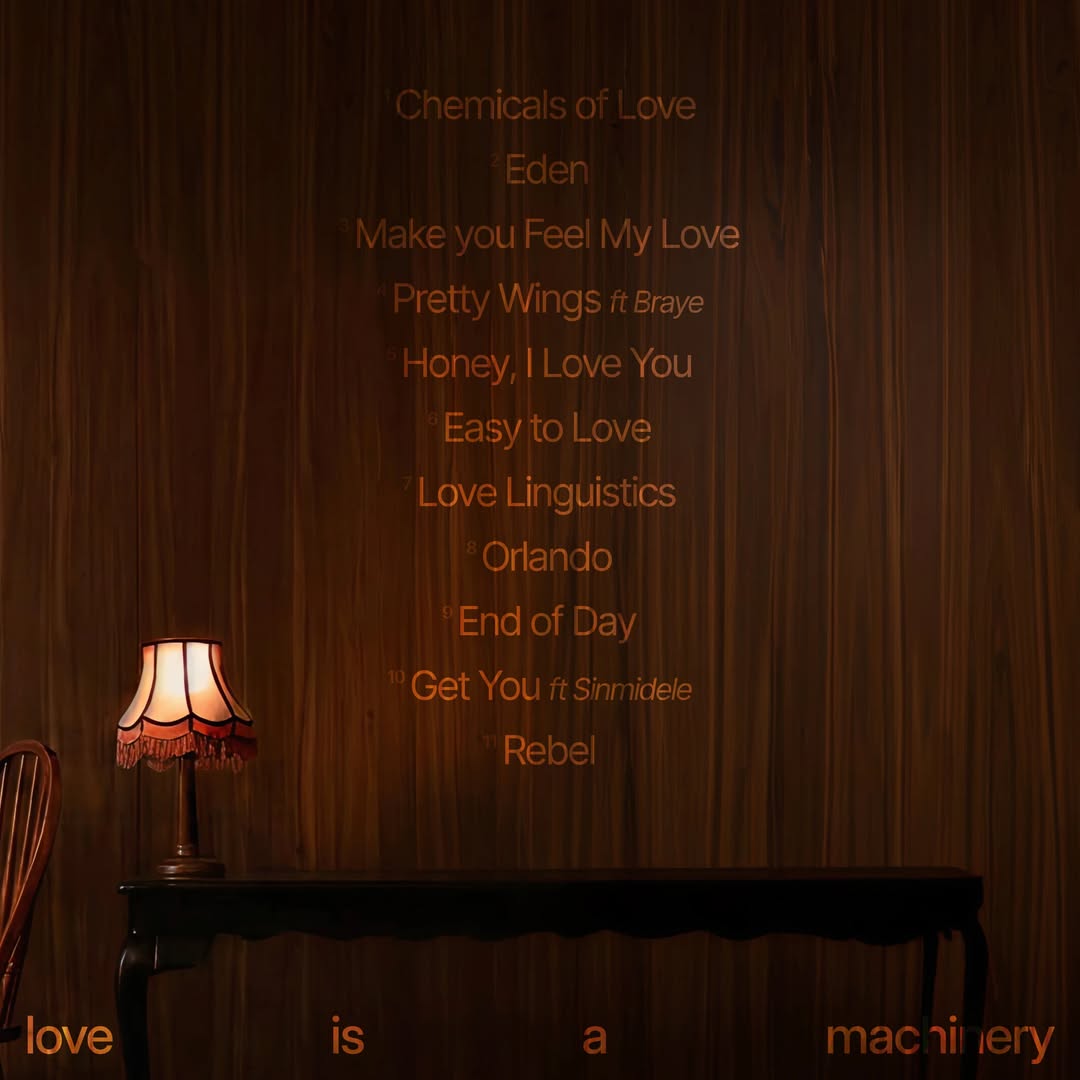
Love is a Machinery opens with “Chemicals of Love”, a mid-tempo groove built around the rush of a new love. There’s a soulfulness in the way he delivers these affirmations: “I know you were made for me/ I was made for you/ We were made for us”. Interestingly, Anendlessocean resists idealising romantic love into perpetual perfection, as he beckons on his muse to experience “the wild, the unthinkable, beautiful and the not so beautiful things”, acknowledging that genuine intimacy inevitably encompasses discomfort alongside ecstasy. “Chemicals of Love” is a fitting opener and establishes the album’s emotional core.
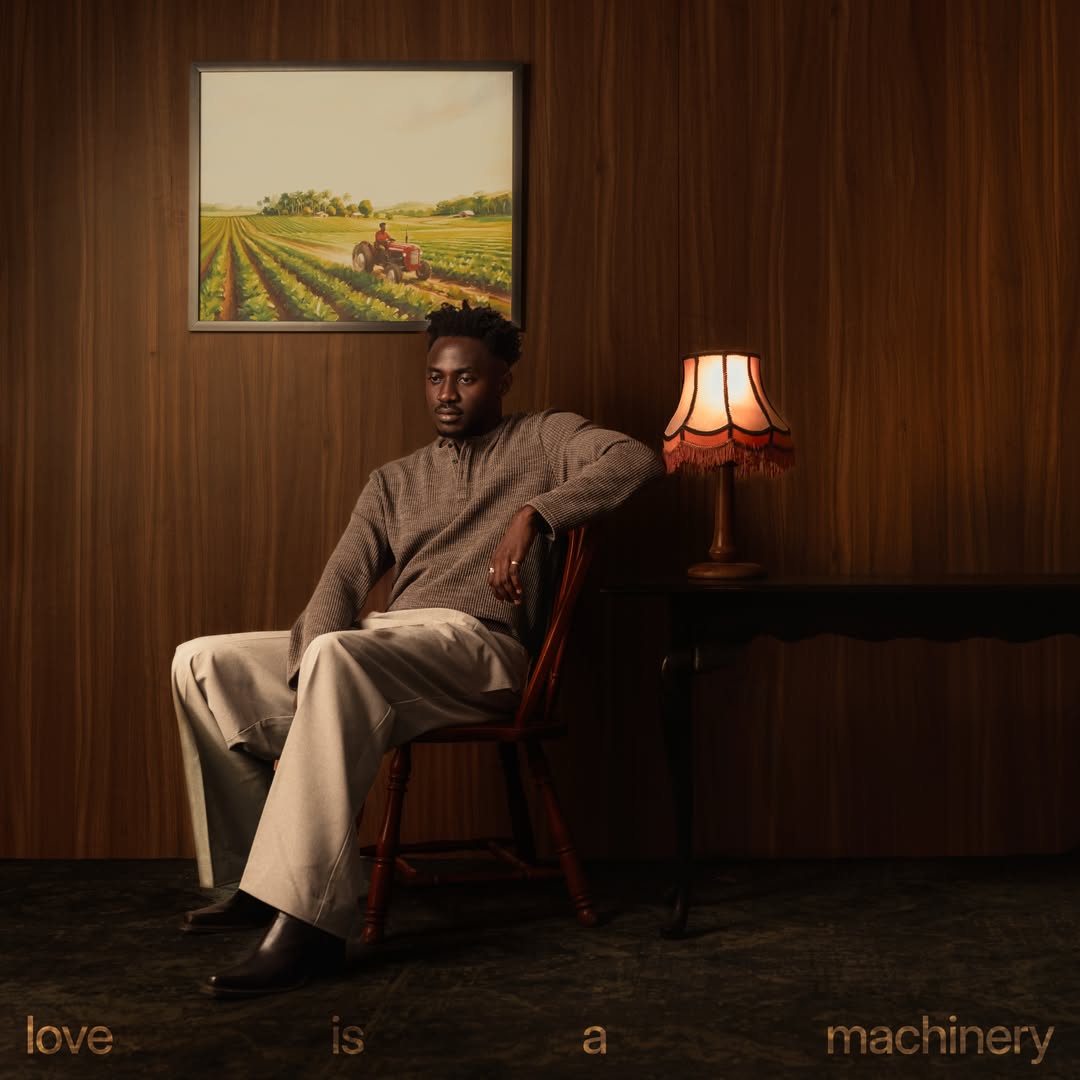
On “Eden”, the “Love Practitioner” crooner paints his muse as something sacred, borrowing imagery from the biblical Garden of Eden to suggest beauty and perhaps divine intentionality. The refrain “God made you for me” ties into the first song and somewhat frames romance not as coincidence but as providence. Love is a Machinery’s single, “Make You Feel My Love”, feels less like a grand declaration and more like a private conversation between lovers, as evidenced in his code-switching between English and Yoruba. Addressing his lover as “Iwo l’ololufe o” (“you, my beloved”), he counters whatever insecurities she may carry: “Praise be to God yea He made you / Don’t chew the lies that they fed you”. It will not be far-fetched to see this song included in wedding playlists.
On the Reggae-infused Outgun Onkar production, “Pretty Wings”, Anendlessocean taps Braye to deliver a ballad on the beauty and grace of their muses. The two artistes complement each other well, bringing distinct perspectives and vocal textures that add dynamism to the song as they celebrate the women who inspire them. “Honey, I Love You” leans into devotion as commitment made audible. Over the slow-tempo number bolstered by acoustic guitar plucks, Anendlessocean frames intimacy as access, not performance. There’s an immediacy when he croons, “Come en suite/ Don’t you run from me/ I wanna know you within”, as it subtly signals a shift from external admiration to internal proximity.
It is quite easy for an album of this nature to fall into the trap of monotony as the theme remains fixed. However, with exquisite songwriting, Anendlessocean looks for new pockets to explore. On the St. Oasis-produced “Easy to Love”, Anendlessocean outlines a softer, more restrained register of affection. He adopts the role of steady presence and caretaker: “Can I be the one to hold you by dawn and to lay you by dusk?” and “I’ll be there when you close your eyes, every time you get up” stretch intimacy across the full span of daily life.
On the Amapiano-infused “Love Linguistics”, Anendlessocean anchors love in restoration with lines like, “Light me up / The world’s in darkness / Fix my bones they kinda broken”. Here, his muse is positioned as illumination in a world of absence. There is a sense of urgency in “Rendezvous the time and place/ Clocked me/ I’m too desperate”, where desire is not abstract but time-bound, almost impatient.

Love is a Machinery makes a sonic shift with “Orlando”, an Indie rendition that sees the singer embracing a looser, organic expression of affection. While the track subtly references saxophonist Orlando Julius — one of the stalwarts of Afrobeat — commitment and devotion shine through these lines: “You suppose be my Julie/ Just the two of us” and “Birds of a feather / We stick together till the end” emphasise compatibility.
The self-produced “End of Day” is one of the gems of the album, a colourful record that feels like running into the sunset with your lover in your arms. Over its breezy, glowing arrangement, he expands the romantic palette with more imagery: “Unconditional, your love work like it’s magic / I feel your high vibration, tiki tiki articulation / You look a lot like we made it”. This song gathers the album’s motifs and distils them into a sunlit declaration of permanence.
Afro-Soul singer and songwriter Simnidele makes an appearance on “Get You”, and the collaboration proves to be one of the album’s strongest moments. Both artistes sing almost every line together, their voices intertwining to create harmonies that mirror the emotional unity the lyrics celebrate. The recurring refrain, “Who would’ve thought I would get you?/ They don’t know what we’ve been through/ The half of it”, acknowledges that their union has survived unseen trials, making the joy of finally finding each other feel all the more rewarding.
Love is a Machinery closes with “Rebel”, a slow-tempo ballad that sees Anendlessocean deliver one final declaration of devotion to his muse. Stripped of the conceptual flourishes that colour much of the album, the song is anchored by vulnerability, with the singer sounding completely demystified as he bares his soul.
Anendlessocean’s songwriting throughout Love is a Machinery favours directness over abstraction, and that choice mostly serves him well. He’s not reaching for clever wordplay so much as clarity, declaring rather than implying, and naming the feeling rather than circling it.
The album’s sonic range is one of its quieter strengths. Anendlessocean and his collaborators move through mid-tempo soul, Reggae-tinged balladry, Amapiano log drums, acoustic intimacy, and an Indie detour without the transitions ever feeling like genre tourism. Each palette is chosen to match a specific emotional register rather than for novelty’s sake. In hindsight, it’s a more adventurous sonic palette than the project’s lyrical content might suggest on paper.
Love is a Machinery succeeds because Anendlessocean treats its central theme literally; love, examined here, is never just felt but built, maintained, and occasionally repaired. After Hexagon hinted at this terrain, this album finally gives his romanticism the space to be thorough, sonically varied, and sequenced with real care. It is, by some distance, his most complete love letter yet.


Lyricism – 1.7
Tracklisting – 1.5
Sound Engineering – 1.6
Vocalisation – 1.6
Listening Experience – 1.6
Rating – 8/10
Emmanuel “Waziri” Okoro is a Nigerian writer and journo with an insatiable knack for music and pop culture, with bylines on Afrocritik, PM News, Tribune, The Sun, ThisDay, Vanguard, and The Guardian. When he’s not writing, you will find him arguing why Arsenal FC is the best football club in the multiverse. Connect with him on Twitter, Instagram, and Threads: @BughiLorde.