

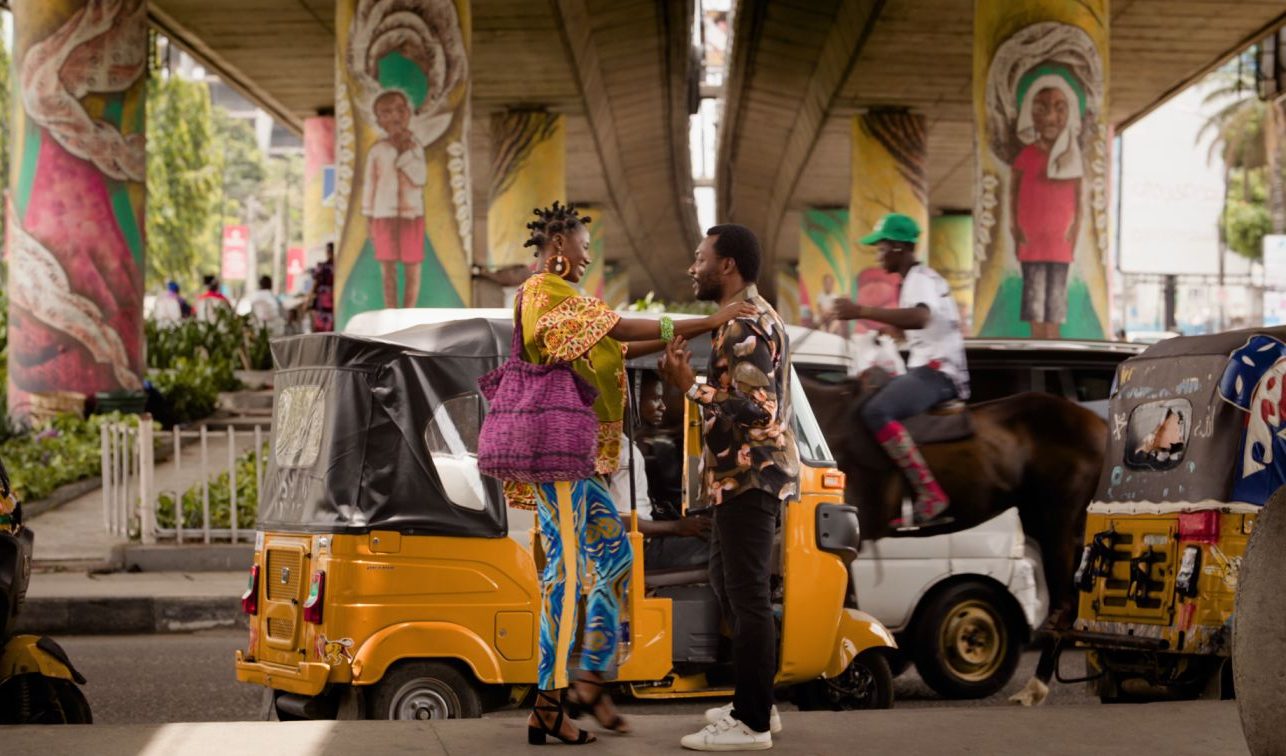


Film incubators offer intensive programmes designed to help directors, producers, screenwriters and other designated film professionals navigate the developmental stage of their projects.
By Adedamola Jones Adedayo
Weeks ago, the Baxu Maam Incubator, a talent and project accelerator for producers, announced its inaugural cohort of six film producers from four West African countries, its selected participants being Kalista SY (Kalista Production), Mada Ndiaye (Artmada) and Moustapha Amdy (Nataal Production) from Senegal, Pedro Soulé (KS Cinema) from Cape Verde, Med Leminme Rajel (Culturim Agency) from Mauritania and Gahité Fofana (Bafila Films) from Guinea. With the first edition set to offer intensive digital and in-person workshops, access to international markets, and personalised consultations, Baxu Maam hopes to sustain a system of mentorship, business skills acquisition, and technical development.
What immediately stands out with this newly launched initiative is the intentionality of its scope and target audience. There’s a rule requiring admission only of producers, excluding film professionals from other departments. Another is that producers must have at least five years of experience, which suggests a fairly amateurish-to-moderate filmography per individual as a qualifier. Also, rather than involving the entire West Africa or Sub-Saharan Africa, the initiative focuses on “nationals of Cape Verde, Gambia, Guinea, Guinea-Bissau, Mauritania and Senegal”, according to the website.
Altogether, the development with Baxu Maam calls attention to the nature of film incubators as hubs for the strategic re-engineering of African cinema, as infrastructure for talent development, finance facilitation and market access. Acknowledging the precarious state of African cinema, it becomes important to examine the specific ways in which film incubators foster transformation. My approach to analysis here involves a detailed breakdown of how these film incubators operate on the continent, with case studies and comparative insights to back it up.
Understanding Film Incubators
The term “incubator”, within the world of film, can be loosely used to address any form or system through which emerging film professionals are groomed to become better at their craft and pursue opportunities accordingly. It could typically refer to film labs, markets, units, workshops, festivals and other similar initiatives that provide mentorship, training, funding, networking, and distribution access to those in need of them. While incubators may pave the way for startup capital, they are not always film funds in the strict sense. The focus is on transforming projects of early-stage creative entrepreneurs into viable business ventures through strategic exposure and connections. Also regarded as accelerators, film incubators offer intensive programmes designed to help directors, producers, screenwriters and other designated film professionals navigate the developmental stage of their projects, providing opportunities to transform ideas into viable films while focusing on specific formats or genres such as short films, documentary or region-specific storytelling.
The emergence of film incubators catering to Africa is primarily rooted in the post-colonial era. Before then, there were other film initiatives, which were not considered incubators. As Valérie Orlando rightly notes in the book New African Cinema (Quick Takes: Movies and Popular Culture) (2017), “postcolonial film development really has its roots in the colonial enterprises and structures set up by the former coloniser.” What existed in place of “incubators” during this colonial period were state-controlled training units, missionary media programmes and colonial film services, all made for propaganda and administrative control rather than producing independent filmmakers.
Film was viewed as a tool for subjugation and governance, not an art form for the appreciation of African cultural values. Africans had limited access to funding and equipment, with racial and institutional barriers discouraging authentic African storytelling. Some African filmmakers from French colonies got trained in Europe, such as Ousmane Sembène, who received film training in the Soviet Union, which would then be instrumental to his pursuits in African cinema, enhancing his soft landing as one of the founding fathers of African cinema. Sembène would become one of the first cineastes from a former French colony to actively embark on the decolonisation of African cinema, beginning with the remaking of his French-language film, Mandabi (The Money Order, 1968) into Wolof, a Senegalese language.
A major film setup that dominated the British colonial administration was the Colonial Film Unit (CFU), established in 1939 at the outbreak of the Second World War, across several colonial territories, until 1955 when it was dissolved as colonies began securing independence. Though the CFU was slated for filmmaking in British territories, forging a network through which film travelled across Africa, it also became a pedagogical instrument in the hands of colonial governments.
Around the 1940s, the CFU had opened training schools in territories like Ghana (then Gold Coast), Jamaica and Cyprus, a political decision taken in preparation for the relinquishment of power to the colonies, with that of Ghana particularly catering to the entire West Africa. These schools would later prepare the foundation for African filmmakers to be absorbed into and recognised by emerging postcolonial domestic film units in the coming years.
Since the late twentieth century, film incubators or accelerators in Africa have existed in different forms, often anchored by festivals, non-governmental organisations and global cultural institutions. The biennial Carthage Film Festival (Journées Cinématographiques de Carthage, JCC) came into existence around 1966 in Tunisia, becoming one of the earliest postcolonial film festivals on the African continent, even though it primarily served North Africa and the entire Arab world. The festival launched the Takmil Workshops, a major incubator initiative, in later years as part of the Carthage Pro segment, designed to provide professional support and finance to Arab and African filmmakers, usually in the post-production stages of their projects.
The Pan-African Film and Television Festival of Ouagadougou (Le Festival panafricain du cinéma et de la télévision de Ouagadougou, FESPACO) was founded in 1969, becoming Africa’s most important film festival showcasing African films in the world. Unlike JCC, which settled three years earlier on the continent, FESPACO had genuinely Afrocentric leanings, for which it amassed popularity. Taking place biannually in Burkina Faso’s capital city, it became a meeting place for filmmakers and potential European investors and distributors seeking to support the international exhibition of bold and promising projects.
A key developmental initiative of the festival is the Yennenga Workshops, structured into three programmes: Yennenga Academy, which equips young African film talents with the tools and skills needed to thrive in the film industry, Yennenga Post-production, which is committed to supporting films in the post-production stage, and Yennenga Co-Production, targeting fiction feature film projects that are in development and in need of financial partners, co-production, and international distribution. The Academy has provisions for workshops, masterclasses and mentorship sessions from trusted experts, serving as a pipeline for the empowerment of more creatives in the industry.
Also of importance to the rise of postcolonial African cinema and film accelerators is the Pan-African Federation of Filmmakers (Fédération panafricaine des cinéastes, FEPACI), which arose from the 1969 Pan-African Festival of Algiers (PANAF), organised by Algeria in collaboration with the Organisation of African Unity (OAU), and was officially launched in 1970 in Tunis, Tunisia, setting out as a large community of filmmakers committed to the advocacy for African filmmaking.
Since its formation, FEPACI has sought the interest of African cinema, liaising with other initiatives to encourage industry collaborations, professional development and film policy. The organisation continues to play a key role in the evolution of African cinema through key initiatives such as The Pan-African Film and Audiovisual Fund, under the auspices of the African Union, which provides finance opportunity for African productions; Pan-African Alliance of Screenwriters and Directors (originally L’Alliance Panafricaine des Scénaristes et Réalisateurs, APASER), which safeguards creators’ rights; and The African Film Heritage Project, aimed at protecting, rejuvenating and promoting African classics.
The development of postcolonial African cinema remains fragmented and often subjected to the eclectic worldviews and peculiarities that pertain to each nation-state that makes up the continent. In the 1980s and 1990s, most African countries, which were already decades free from the shackles of colonialism, were beginning to acquire strong artistic identities that found expression in the explosion of home video and cinema culture.
South Africa had a slightly unique situation. The termination of apartheid rule and the establishment of a multiracial democracy occurred in 1994, giving rise to a new phase of South African cinema characterised by the reassessment of the country’s past, a confrontation with the filmic legacy of apartheid, and an engagement with post-apartheid issues through forms and styles reflective of South African life.
Around that time, M-Net, a South African pay television channel that had been in existence since 1986, launched a New Directions incubator to equip neophyte screenwriters and directors with production training and experience. The first rollout of films came from South Africa, after which Kenya and Nigeria were incorporated.
As of 2002, the initiative had produced 26 shorts and two feature films by emerging filmmakers from Ethiopia, Kenya, Nigeria, Tanzania and South Africa. Beneficiaries included Waiting for Valdez (2002), written by Teddy Mattera and directed by Dumisani Phakathi (South Africa); A Barber’s Wisdom (2001), written by Paul Emema, produced by Tajudeen Adetokunboh and directed by Amaka Igwe (Nigeria); The Father (2001), written by Manyezewel Endashaw, produced by Majida Abdi and directed by Ermias Woldemlak (Ethiopia); and Surrender (2001), directed by Celine Gilbert (Tanzania/Zimbabwe). While the M-Net programme may have been entirely discontinued, it remains central to the history of African-led film development initiatives.
To a considerable extent, the growth of African cinema has been shaped by the popularisation of independent filmmaking. Independent filmmaking, in this sense, describes a do-it-yourself approach to filmmaking that involves individuals learning the ropes of production and undertaking funding and distribution with minimal or no efforts from state-backed film structures and dominant production outfits. Cara Moyer-Duncan, in a 2011 article titled New Directions, No Audiences: Independent Black Filmmaking in Post-Apartheid South Africa, describes independent cinema as modest-budget, privately funded productions that offer alternative perspectives to superordinate societal ideology and are marked by frequent experimentations called “avant-garde or counter-cinema”.
Independent filmmaking became the right choice for developing African creatives with little to no chance against the largely orthodox, underfunded and unstructured realities of film industries in Africa.
From the 2000s onwards, more incubators and accelerators were created to empower these independent filmmakers, often involving partnerships with international organisations. France-based association Ardèche Images founded Africadoc, a network of African documentary filmmakers, in 2002, initially catering to Francophone African countries. Through the annual “Tenk” meetings in Senegal, the association organised writing residencies to nurture new documentary film projects and connect projects with African and European partners. Maisha Film Lab was launched in 2004 with its focus on East African screenwriters and filmmakers (Kenya, Tanzania, Rwanda and Uganda), partnering with key film festivals in the region such as the Kenya International Film Festival, the Zanzibar International Film Festival, the Bayimba International Festival of the Arts, and the Rwanda Film Festival.
In 2009, Zimbabwean author and filmmaker Tsitsi Dangarembga established the Institute of Creative Arts for Progress in Africa (ICAPA), which, fourteen years later, led to the formation of the Creative Africa Storytelling for the Screen Incubator (CASSI), a programme designed to build African capacity in animation, live action, documentary, television series and multimedia. One of the earliest structured film development labs in West Africa is Ouaga Film Lab, which launched in 2016.
While it is not an offspring of FESPACO, Ouaga Film Lab often collaborates with the festival to support young talent, aligning its values with the festival’s activities. MultiChoice Talent Factory (MTF) came into existence in 2018, curating a 12-month training programme, with regional academies set in Nigeria, Kenya and Zambia.
A year later, Film Lab Zanzibar was launched as a local regional film and arts community with a vision to professionalise filmmaking in Tanzania and across the rest of the Swahili world through targeted training and networking avenues. More recent Africa-led accelerators that have emerged since the 2020s and are equally worth noting are Durban FilmMart Institute (DFMI, 2020) from South Africa, Film Lab Africa (2023), African Producers Accelerators (APA, 2025) and S16 Film Labs (2026).
While a growing number of Africa-led and locally rooted film incubators exist, it is important to recognise the significant ecosystem of international programmes that, despite not being based on the continent or spearheaded by Africans, have accommodated African filmmakers.
Popular examples are platforms such as Berlinale Talents, which has consistently featured Africans in its development labs; La Résidence du Festival de Cannes, a programme of Cannes Film Festival for supporting emerging filmmakers and screenwriters worldwide, with South African filmmaker Dian Weys as its most recent African beneficiary from the 2025 edition; Red Sea SeriesLab, which turns to creators across the Arab world, Africa and Asia; TorinoFilmLab, which is generally committed to script and production development; and the Sundance Institute, whose labs and grants have impacted African storytellers, including Kenya’s Wanuri Kahiu (Rafiki, 2018) Lesotho’s Lemohang Jeremiah Mosese (This Is Not a Burial, It’s a Resurrection, 2019), Zambia’s Rungano Nyoni (I Am Not a Witch, 2017), Sudan’s Amjad Abu Alala (You Will Die at Twenty, 2019) and Nigeria’s Olive Nwosu (Lady, 2026) all of whom benefitted from the Screenwriters Lab.

These international incubators provide the leverage for African creatives to access co-production and transnational distribution networks that may not be readily available within local industries. They become a viable option for the foregrounding of African voices.
However, these incubators may stimulate critical thoughts around ownership, narrative framing and the power imbalance that comes into play when Western frameworks dictate which African stories see the light of the day or not and how “favoured” stories get circulated. In the end, their contribution cannot be denied, as they constitute part of a hybrid support system where African and non-African narratives continually shape the present and future of storytelling.
Mentorship and Skill Acquisition
The fundamental purpose of film incubators is talent development. Talent development in film refers to the structured process of discovering, nurturing, training and supporting individuals towards building sustainable careers in film.
At the base of talent development is mentorship and skill acquisition. This has to do with acquainting emerging filmmakers with knowledge about the creative and practical aspects of filmmaking through guidance, training and real-world exposure. It often involves connecting experienced filmmakers with less experienced ones so that the latter can learn from the former. Many Africa-focused film training programmes and schools prioritise mentorship and skill acquisition as the first step to cultivating a new generation of creators, mostly with attention to independent filmmakers.
Springing from West Africa, Ouaga Film Lab positions itself as a space for connecting African film talents and professionals with different laboratories, funds and financiers across the world. Every year, the Lab invites 10 to 12 film projects with their producers and directors to its incubation programme in Ouagadougou, Burkina Faso. As of 2023, the Lab had welcomed 132 participants from 23 African countries, of which 70% were men and 30% women.
Another key incubator is MultiChoice Talent Factory (MTF), a premier film institute and educational system that operates regionally in West Africa, East Africa and Southern Africa. MTF runs a year-long, fully-funded residential training programme that covers areas such as scriptwriting, directing, cinematography, post-production, art direction, production management, sound recording and broadcasting.
Every year, MTF Academies based in Lagos, Nairobi and Lusaka produce classes of graduates that are released into the continent’s film industry. The Lagos-based Academy has a longstanding regional educational partnership with the School of Media and Communication, Pan-Atlantic University in Lagos, while its course is created in tandem with international collaborators, the New York Film Academy (NYFA) and Zee World. These partnerships enable MTF to deliver workshops and lectures that meet world-class standards so that graduates can compete favourably in the international cinema ecosystem. They also provide internship opportunities that allow MTF students to further their career growth.
Then, there is Talents Durban, a training and development programme for rising film professionals in Africa, originally created by the Berlin International Film Festival in 2007 to recognise the partnership between the Germany-based globally recognised film festival and the South Africa-based Durban International Film Festival. However, since 2019, Talents Durban has been functioning under the auspices of Durban FilmMart Institute (DFMI), as part of DFMI’s structures aimed at attracting domestic and international investments for African film content.

Talents Durban enables mentorship and skill acquisition through programmes such as Storytelling Lab, which targets three projects in development each for features, shorts and TV/web series; Doc Lab, which offers hands-on training to selected three talents with documentary projects; Animation Lab, which is open to animation screenwriters and directors with projects in development; and Talent Press, which grooms emerging African film critics and journalists. By catering to diverse media formats and genres, Talents Durban shows tolerance for all manners of expression and self-expression that are reflective of the limitless possibilities of the African experience.
Financing and Production Support
Poor funding constitutes a major barrier to effective storytelling, as African creatives are often forced to operate with limited resources that hamper the magnitude of ambition and production vision. Many filmmakers begin with making short films as a means to gain legitimacy and attract production support and investment offers from private individuals and groups that can help them actualise bigger projects.
Although there are available government-backed film funds across African countries for the purpose of financing filmmaking and the creative industry, accessing such funds may be difficult due to red tape, nepotism, corruption and structures devoid of meritocracy. The Ghanaian government, for instance, announced a GH¢20 million film fund for this year, but as noted in an earlier Afrocritik analysis on the fund, there have been no clear instructions on how funds will be disbursed and put to use.
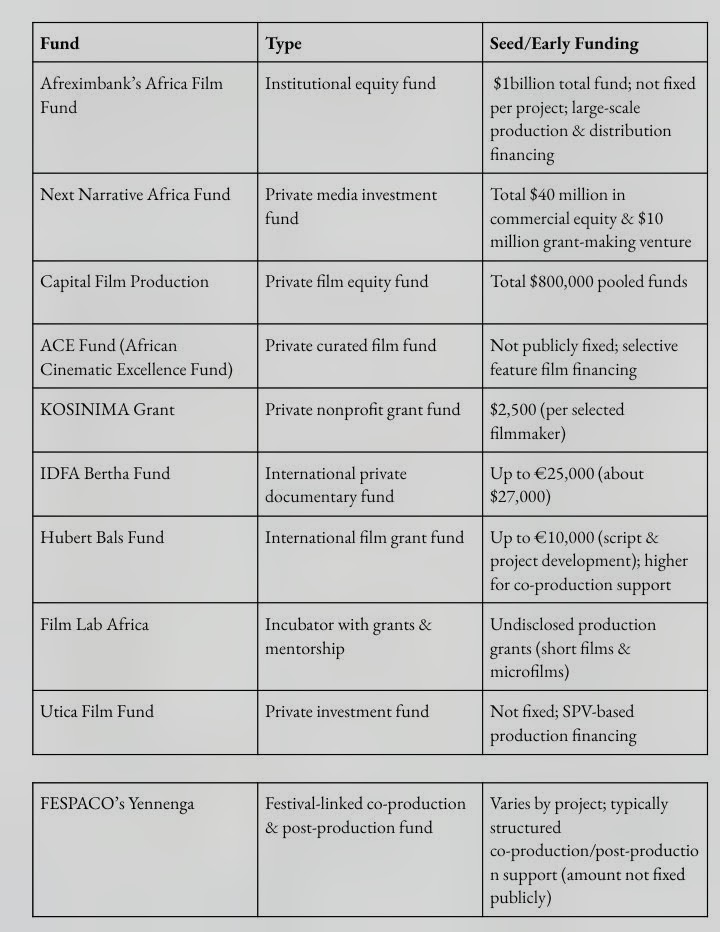
With the aid of incubators, African filmmakers can access seed funding, grants and co-production networks based on merit, boycotting shenanigans that may come with the quest for state-backed film funds. Initiatives such as KOSINIMA Short Film Grant, Film Lab Africa and Hubert Bals Fund (HBF), for instance, have designated grants for emerging filmmakers that meet their criteria. Every year, the KOSINIMA Short Film Grant gives $2,500 each to four filmmakers in Africa or the African diaspora, including beneficiaries who may come from Europe, the United States, the Caribbean, and Latin America.

The grant is strictly expected to go into production or post-production, which excludes projects in their incipient or pre-production stages from consideration. Hubert Bals Fund (HBF) targets eight early-stage projects from filmmakers in low-infrastructure regions, offering up to €60,000 to each of them through its HBF+Europe support schemes. Similarly, in 2023, Film Lab Africa 2023 offered undisclosed production grants to ten short films shot on professional cameras and another ten microfilms created with smartphones, pairing grant recipients with mentors from the UK and Nigeria—a selection acknowledging that strong storytelling can emerge from different production scales and digital tools or gadgets.
The image below gives a summarised comparison of selected Africa-targeted seed/early funding initiatives (film funds catering to Africa).
Market Access and Distribution

The film business goes beyond just the creative segment as it involves access to market and distribution avenues through which emerging filmmakers can get exposed to the right audiences, often across diverse regions. Due to the volatile nature of most business ventures in Africa, including the creative industry, many African filmmakers face barriers such as distribution challenges, limited international exposure and copyright infringement or piracy that trample on sustainability. Emerging filmmakers are mostly at risk of losing out. Considering these, incubators expose such filmmakers to market opportunities by creating pathways to festivals, streaming platforms and co-production deals.
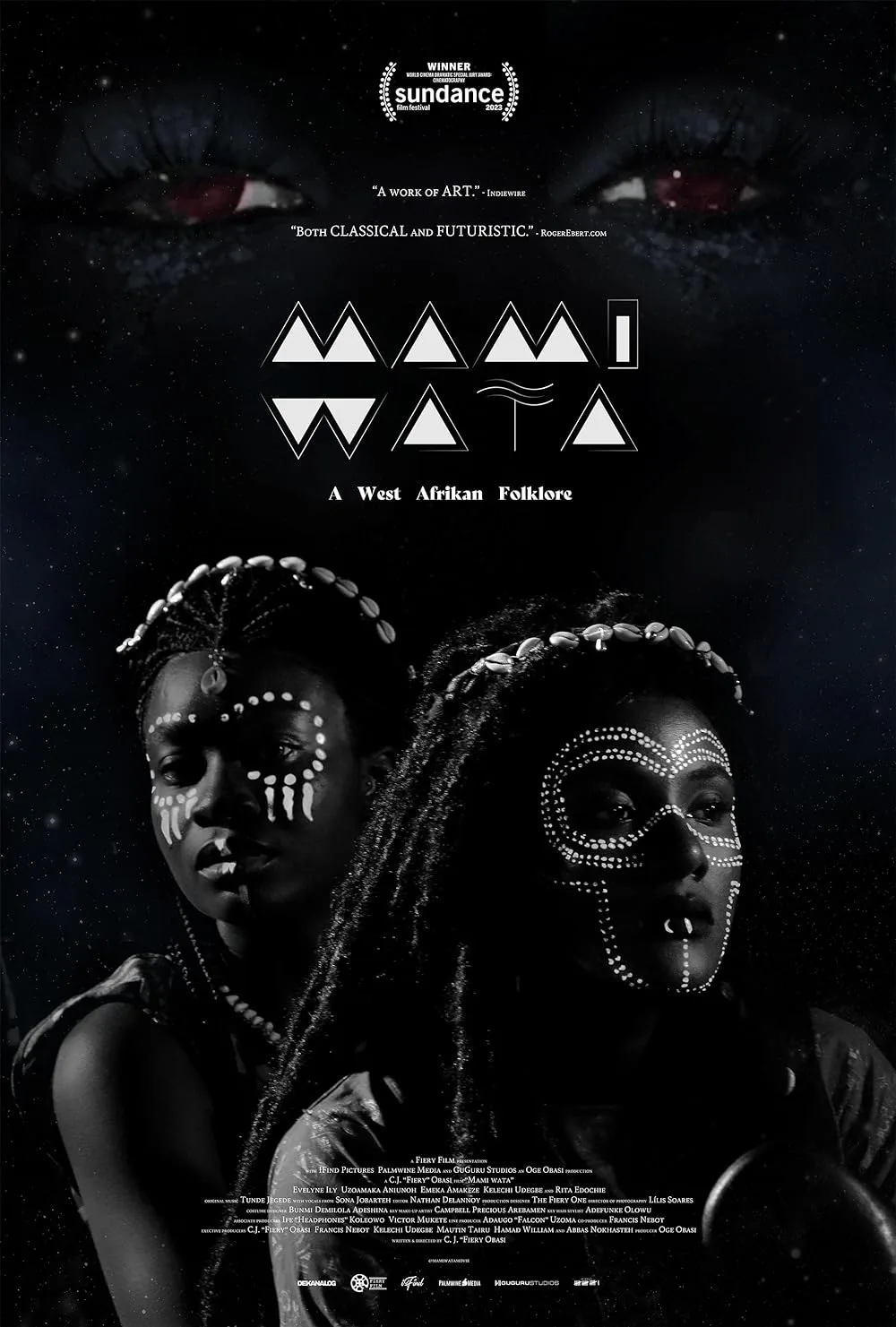
The European Audiovisual Entrepreneurs (EAVE) Prize at Ouaga Film Lab, which is one of the major awards given during the annual project development programme of the lab, primarily connects African producers and projects to European industry networks. The Prize essentially offers a scholarship for a producer to get involved in the EAVE Producers Workshop in Europe, often backed by partners like the Film Fund Luxembourg. A notable beneficiary is the Nigerian producer Oge Obasi, who won the EAVE Prize at Ouaga Film Lab 2018 for Mami Wata (directed by C.J. Obasi, 2023) and gained access to the international market in the desire for support.
Being one of the most prestigious film festivals in Africa, FESPACO serves as a market and distribution hub, bringing together sales agents, streaming platform representatives, international distributors, festival programmers and other important individuals and groups in the industry. Films screened at FESPACO gain visibility before these industry stakeholders, with filmmakers in attendance also having network access.
This heightens the probability of securing a distribution deal. FESPACO has served as a continental amplifier for films such as C. J. Obasi’s Mami Wata (2023), which, following its Sundance premiere, won multiple awards at FESPACO and secured a North American distribution deal with Dekanalog; and Abderrahmane Sissako’s Heremakono (2002), which won Étalon de Yennenga (Grand Prize) at the 18th FESPACO in 2003, following its 2002 Cannes premiere, a path through which it became a globally circulated arthouse film.
In its commitment to putting African cinema on the global stage, Durban FilmMart (DFM) helps African films secure co-production and distribution deals, with special attention to platforming marginalised voices and narratives and fostering inclusivity. Its pan-African mantra has been particularly reinforced through its efforts on projects such as Egypt’s Aisha Can Fly Away (2025) which was pitched at DFM 2022 and premiered in Un Certain Regard at Cannes Film Festival 2025, and Kenya’s How To Build A Library (2025), a documentary pitched at DFM 2020, which was screened at Sundance Film Festival and International Film Festival Rotterdam. Both films made Afrocritik’s list of the most remarkable African feature films of 2025.

Outside the continent, various specially designated film markets, mostly arms or subsets of film festivals, exist. These include the film markets often referred to as the “Big three”: Marché du Film (France), an initiative of Cannes known to attract over 15,000 people from over the world; European Film Market (EFM, Berlin, Germany), which is affiliated with Berlin International Film Festival and brings together 12,000 participants to discover new talent and transact; and American Film Market (AFM, Los Angeles, USA), an annual one-week event during which production companies strike billion-dollar worth of deals for independent films. These international markets provide the leverage for stories and talents from different parts of the world to compete favourably in the global film ecosystem and generate revenue.
Insights, Challenges and Recommendations
The foregoing proves that Africa-targeted film incubators serve as parallel infrastructure, often functioning as alternatives to weak, inconsistent or restrictive state structures. While emerging filmmakers may have a difficult time gaining legitimacy and acceptance in self-obsessed or highly fragmented mainstream film industries with gatekeepers, film incubators provide alternative routes to bypassing institutional bottlenecks. They bridge gaps in training, funding and distribution. For filmmakers coming from societies with oppressive film policies that may forestall access to mainstream distribution channels or cinemas in specific regions, film incubators soften the market approach through connections with international distributors and partners.
Take, for example, Wanuri Kahiu’s Rafiki, which faced rejection back at home under Kenyan laws for its lesbian storyline yet gained immense visibility through the incubator-like festival circuit, particularly its Cannes debut, an unprecedented feat for a Kenyan film.
Another key insight is that Africa-targeted film incubators have mechanisms for ensuring a shift from skill acquisition and training to industry integration. Many incubators offer diverse initiatives that cater to different stages of development for filmmakers, making this gradual shift possible. The shift results in project development, market preparedness and business literacy for the filmmakers.
A third “truth” that has been established is the existence of a hybrid ecosystem model for film incubators, where Africa-led incubators coexist with intercontinental labs and festivals. Both coexist rather than compete with each other, and may even collaborate purposefully—such as partnerships between the British Council and Film Lab Africa, and Realness Institute and Locarno Film Festival. The interesting point in this reality is the existence of patterned but fluid operational strategies for the incubators, allowing them to evolve or recalibrate when necessary.
Also, with film incubators, there is the gnawing acknowledgement of a short film pipeline as an entry strategy that is suitable for budding filmmakers. For a long time, these incubators have mostly treated short films as a means to an end, as proof-of-concept tools and gateways to feature financing.
However, this seems to be changing in recent times, with platforms such as the African International Short Film Market (AISFM), launched in May 2025, positioning itself as a messiah for the short film sub-industry, recognising the format as an autonomous or self-sufficient entity, not a stopgap, deserving of being serviced in a similar fashion as features.
Despite the purposefulness of Africa-targeted film incubators, they are not immune to challenges, often encountering ones ranging from structural to limitations in scope and ownership concerns. In the area of funding, some grants may be limited in size relative to production realities, serving as a partial palliative, which then compels concerned underfunded filmmakers to cut costs in ways that either reduce production quality or affect the storyline.
The heavy reliance on external funding bodies, for instance, Europeans, for African stories grants these bodies control over local storytelling. Since, as funders, these international incubators provide rules and guidelines, they influence narrative framing and story selection, which may lead to privileging “exportable” African stories over those grounded in local realities. Ultimately, the involvement of foreign co-productions creates conflicts around creative autonomy and cultural ownership.
Such is the case, for instance, with Akinola Davies Jr.’s My Father’s Shadow (2025), a Nigerian-UK co-production chiefly funded by BBC Film, British Film Institute and Irish company Element Pictures, but rooted in Nigerian realities, whose classification as a “Nollywood” film has been called into question.

In African countries where insecurity and socio-political instability are rife, film markets and programmes may witness low attendance, with a reduced audience equally affecting engagement and prospects for films in attendance. Culture writer Joseph Jonathan acknowledges this concern in his article FESPACO: An Enduring Role in Promoting African Cinema, pointing out how Burkina Faso’s struggles with insurgency hamper the magnitude and image of the festival.
Then, there is the language barrier, which also influences the extent to which Africans from linguistically and culturally unaligned regions may interact with one another. For instance, the divides between Sub-Saharan and North Africa on the one hand, and Anglophone, Francophone and Lusophone regions on the other hand, may have influences over inclusivity and accessibility.
Notwithstanding the aforementioned challenges, Africa-targeted film incubators must continue to build local film networks and create long-term support systems for alumni communities. This ensures consistency and sustainability in the pursuit of more daring storytelling quests. That way, alumni can be motivated to launch other sustainable Africa-led and visionary incubators.
A good support system may even empower the alumni to get into positions of power in respective countries that enable them to implement policies and infrastructural development towards the preservation of the creative industry. It is equally important for Africa-led incubators to encourage more intra-continental co-productions. Programmes should target collaborations between African filmmakers and productions across different regions and boundaries on the continent, with a view towards amplifying the ideal Pan-African image and eliciting intentional, collective and perennial commitment to the future of African cinema.
Adedamola Jones Adedayo is a film journalist and critic with special interest in African cinema. Through writing and audiovisual mediums, he creates conversations around cinema in Africa and the Diaspora. You can find him on Instagram @jonesthegoodboy and X on AdedamolaAdeda4.
Cover photo credit: Imago