

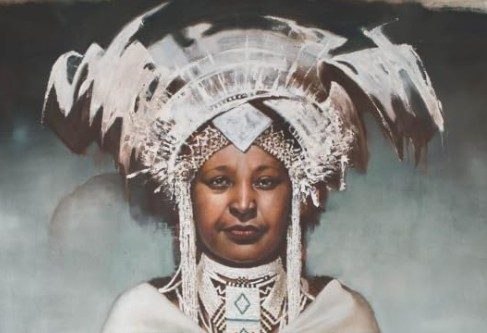

The Trials of Winnie Mandela sets out to re-educate the world and re-evaluate the legacy of Winnie Mandela.
By Vivian Nneka Nwajiaku
Only three months ago, in February, we shone our spotlight on Antoine Fuqua’s Nelson Mandela documentary, Troublemaker: The Mandela Tapes, which had just premiered at the 2026 Sundance Film Festival. Troublemaker recounts the story of Nelson Mandela amid the struggle against apartheid, through audio recordings from an interview between Richard Stengel, an American journalist, and Nelson Mandela himself.
This month, we turn our attention to an even more troublesome anti-apartheid revolutionary whose legacy is revisited in The Trials of Winnie Mandela. A Netflix documentary series, The Trials of Winnie Mandela documents the late Winnie Madikizela-Mandela: South Africa’s first black medical social worker, a former head of the Women’s League of the liberation-focused African National Congress (ANC) political party, a former member of the South African Parliament, and the freedom fighter who did much more than hold the fort while her then-husband, Nelson Mandela, was in prison.
Referred to by many as the “Mother of the Nation”, Winnie Mandela became one of the most influential voices during the anti-apartheid struggle, and consequently one of those most persecuted by the apartheid government. The story of South Africa’s liberation simply cannot be told without her. Yet, over time, she also became one of the country’s most divisive figures, with her reputation severely complicated by acts of extreme violence linked to her as well as scandals in her personal life.
The Trials of Winnie Mandela, a seven-part documentary series by Mandy Jacobson, C.A. van Aswegen, and Ivor Ichikowitz, sets out to re-educate the world and re-evaluate the legacy of Winnie, telling her story from multiple perspectives. Interviews are granted by friends, foes, and the aggrieved, White and Black alike—from colleagues, experts, and former apartheid officers, to those who suffered fatal losses from incidents connected to her. But most of the story is told by Winnie Mandela herself, in interview clips from various moments in her life, in footage from the anti-apartheid struggle, and in videos where the ageing legend shares her story with her granddaughters, Swati Mandela-Dlamini and Zaziwe Manaway.
The documentary traces her journey from the loss of her mother as a child, her relationship with her father, and her marriage to Nelson Mandela, to her participation in the liberation struggle, her multiple arrests, her torturous time in solitary confinement and banishment, raising children under aggressive conditions while her husband was in hiding or in prison, and the daily risks and losses she endured as a target of the apartheid administration.
“Why Winnie Mandela in particular?” asks Nkululeko Mahlangu, a graffiti artist based in Soweto who paints political figures, to which he answers himself: “We’ve always represented the struggle in a masculine form. We’ve never really looked at the role that women have played.” Although there have been attempts to tell stories about female apartheid-era freedom fighters—most famously 2011’s Winnie Mandela, starring Jennifer Hudson—there is typically more focus on male freedom fighters, with less interest in the role of women.
Indeed, in one episode of the documentary, Swati Mandela-Dlamini talks about asking people on the streets about Winnie Mandela and receiving surprising feedback. “Do you know how many people said they’d never even heard of her? So many,” Mandela-Dlamini notes. “I will not let them permanently remove her from history because that’s just not okay. For me, her and Granddad (Nelson Mandela) should be in the same sentence.”
The Trials of Winnie Mandela makes an effort to fill this gap, but it also goes beyond just Winnie Mandela herself, even if very slightly. “The women have long been more militant in their resistance to the Apartheid laws in South Africa than have been their menfolk,” a reporter is heard saying on an audio recording. Winnie Mandela sits with other women, like Rita Ndzanga, who fought for the end of apartheid. And interviewees speak of women like Sophie Tema who participated in the struggle, alongside Winnie Mandela.
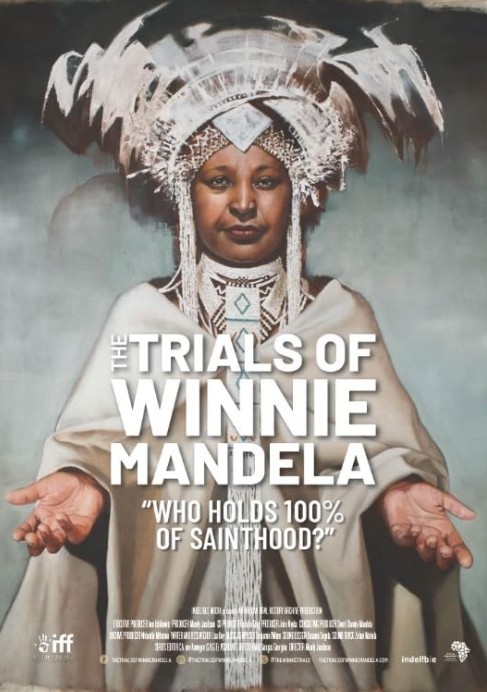
However, The Trials of Winnie Mandela does not shy away from Winnie Mandela’s controversies. There is a lot that the documentary captures in its seven episodes, including Winnie Mandela’s alcoholism, infidelity scandals, the breakdown of her marriage with Nelson Mandela, allegations of corruption and misuse of government office, and her eventual sidelining after the hard-fought freedom is finally won. But the most consequential issue is her alleged involvement in flagrant human rights abuses and several gruesome assaults and murders.
In her fight for liberation, Winnie Mandela was alleged to have physically assaulted multiple young people. She endorsed, at least tacitly, the necklacing of alleged police informers and apartheid government collaborators. And she was implicated in kidnappings, torture, and murders, the most notorious being the murder of a 14-year-old child activist, James “Stompie Seipei” Moeketsi, for whose kidnapping she was eventually convicted.


The documentary series confronts these fundamental dents to her legacy while also attempting to draw a line from the trauma of the sacrificial life she lived in the struggle for the liberation of her people to the polarising legend she eventually became. “I actually get surprised that people get surprised at what I ultimately became,” she tells her grandchildren in the very first episode, although she later denies most of the crimes she is alleged to have committed.
The story the docuseries tells is extremely complex, one where the truth is never fully discovered and may forever remain contested. But The Trials of Winnie Mandela is really compelling work—insightful, revelatory, and essential. Placed side by side with other non-fiction films that centre the anti-apartheid struggle and its frontliners, the result is a fuller, more complete documentation of one of the world’s most important histories. But in its own right, it accomplishes a goal that is so very specifically significant: it documents how central women are to such histories, how historical women have rarely gotten away with actions and behaviours that historical men have often gotten away with, and how easily women are written out of history.
Runtime: 7 hours
The Trials of Winnie Mandela is streaming on Netflix here.
Vivian Nneka Nwajiaku is a writer and film critic writing from Lagos. She has a master’s degree in law but spends most of her time consuming, studying and discussing film and TV. She’s particularly concerned about what art has to say about society’s relationship with women. Connect with her on X @Nneka_Viv