


Despite the existence of more scattered film partnerships and informal collaborations across the continent, African cinema is becoming increasingly shaped by structured co-production agreements.
By Adedamola Jones Adedayo
On 9th March 1897, French inventors and pioneering filmmakers Auguste and Louis Lumière, also known as the Lumière brothers, sent their cameramen Eugene Promio and Francis Delie to film in Egypt for the first time, to feature landmarks in the country, as part of the brothers’ foundational efforts in popularising cinema globally. Two years earlier, the brothers had developed the cinématographe, a revolutionary motion picture device with which they made the uber-short “actuality” film, Workers Leaving the Lumière Factory (1895).
By November 1896, they had set up a show in Cairo through their Italian representative Henry Dello-Strologo in what became the city’s first-ever cinematographic screening. Evolving from merely exporting films entirely based on French life to making films outside their home country, the brothers leaned into the Egyptian landscape. While this attention to Egypt could be described as Africa’s unofficial initiation into the world of cinema, it also served as a precursor to the development of Africa’s co-production economy.
In the decades that followed, North Africa forged cinema relations with Europe, especially France, due to linguistic, social, and political commonalities. The Maghrebi region (composed of Algeria, Morocco, and Tunisia) had a somewhat adventurous engagement that encompassed international co-productions and transnational commercial exhibitions. Patricia Caillé, a researcher at Université de Strasbourg, in a 2013 journal article titled ‘Cinemas of the Maghreb’: Reflections on the Transnational and Polycentric Dimensions of Regional Cinema, makes this known in an attempt to shatter monolithic impressions about Maghrebi cinemas. Since the 1990s, as noted in the article, Algeria and Morocco had released 33 films each in France, with Tunisia churning out 31, during a period where Morocco generally led by volume and cinematic diversity.
The idea of “co-production” springs from the basic understanding of filmmaking as a collaborative experience often requiring financial, infrastructural, and marketing contributions that may transcend geographical boundaries, which is dependent on the magnitude of production vision. A co-production is supposed to be mutually beneficial to involved parties as it facilitates cultural exchange. The National Film and Video Foundation (NFVF) of South Africa identifies two types of co-productions: one in which creative control is shared between local and foreign partners, welcoming a mix of local and foreign on-screen talents and behind-the-scenes professionals; and the other being a clear-cut co-financing arrangement where a partner largely bankrolls the project while another undertakes the fieldwork.
In navigating the nature of film co-productions, however, it is important to distinguish partnerships from treaty-level agreements. The former suggests a flexible, loosely structured, and possibly short-lived deal between two or more producers from different territories, whereas the latter means overtly official agreements between governments geared towards long-term employment creation, creative hybridisation, and domestic industry development. Simply put, co-production partnerships focus on individual, immediate, usually single-project gains, while treaties between countries provide the template and grounds for filmic collaborations and span multiple projects across years.
Parrot Analytics describes a co-production treaty as “an official bilateral or multilateral framework” in which associated projects are considered national productions belonging to two or more countries. The framework exists to enable access to finance, incentives or regulatory benefits for filmmakers. Treaty rules include eligibility criteria, production economics, and operational standards guiding production companies. According to Parrot Analytics, these companies are expected to meet “nationality, expenditure, creative contribution, and documentation requirements that do not apply to informal cross-border deals” for which they may enjoy financing and market opportunities that influence the viability of the project.
The Rise of Treaty-Driven African Cinema
Despite the existence of more scattered film partnerships and informal collaborations across the continent, African cinema is becoming increasingly shaped by structured co-production agreements. From the post-independence era of the 1960s onwards, African countries have entered into co-production treaties with European governments.
One of the earliest known co-production treaties is the one between France and Tunisia, signed in Tunis on 31st May, 1974. The treaty mandated the creation of a mixed commission to oversee its implementation and clarified the ownership rights and limits of producers and countries. Under this arrangement, a jointly made film could be presented at international film festivals and events bearing the country of the majority producer. Otherwise, in the case of both countries being equally involved in production, the film would be acknowledged by the nationality of its director.
The France-Egypt co-production treaty was established on 9th September, 1987, signifying the French government’s genuinely structured approach in their cinematographic engagement with Egypt, as opposed to the Lumière brothers’ style. Expectedly anchored on the understanding of cinema as an expression of national values, cultural identity, and a propeller of international relations, the Agreement welcomes co-production films subject to the approval of France’s Centre National de la Cinématographie (CNC) and Egypt’s Ministry of Cultural Affairs.
Another early co-production treaty was that of France and Morocco, which was undertaken by the governments of the French Republic and Kingdom of Morocco and signed in Rabat on 27th July 1977. This agreement demanded a contribution by producers from both countries split between 70% and 30% per film, with minority participation further reducible to 10% as agreed upon by film authorities from concerned countries. It required key members of the production team to be nationals of Spain or Morocco, or residents in Spain. The treaty also made provisions for a mixed film commission which, through its annual meeting, would review and oversee implementation, resolve conflicts, and make amendments in relation to stipulations of the agreement towards the mutual benefit of both film industries and countries.
On 11th November, 1992, the states of the Arab Maghreb Union reached a formal agreement concerning film co-production relations. Algeria, Tunisia, Libya, Morocco, and Mauritania were all involved in the treaty, binding the entire region as a force of African filmmaking. The multilateral treaty made provisions for “Maghreb production”, allowing film projects to be presented at international festivals by the contributing country with the largest financial percentage or the country to which the director belongs.
Another France-Tunisia co-production agreement was signed on 16th November, 1994, twenty years after the initial one. Unlike the 1974 agreement, the 1994 agreement pegged its contribution percentages at 20% and 80% for minority and majority producers, respectively. The 1994 agreement also broadened the scope of co-production consideration beyond nationals and residents of France and Tunisia to include key practitioners from other North African states—a clarity lacking in the 1974 agreement. Additionally, the 1994 agreement allocated credits, trailers, and promotional materials from co-produced films to all concerned parties, including other countries in multilateral deals, as opposed to the 1974 agreement, where such materials explicitly identified the film as a Franco-Tunisian co-production. Despite the differences that existed between both treaties, much of their content bore similar weight and insinuations, constituting the bedrock of collaborations between filmmakers and talents from both countries.
South Africa’s longest-standing co-production treaty is with Canada, originating on 5th November, 1997. It remained the country’s only such agreement until 2003. As of March 2007, twenty-seven co-productions had been achieved under the agreement. Standard features of the 1997 South Africa-Canada co-production treaty, like other agreements, acknowledge “competent authorities”, specify qualifications and set standards for engagement with co-producers. The agreement, however, has its own unique provisions, such as a clause which allows producers in their formative stage to be favoured provided that financing is not a problem, and a special rule mandating the presence of South African or Canadian personnel in third-country location shooting. Almost three decades later, the 1997 Agreement would be displaced by a modernised audio-visual treaty which became effective from 1st January, 2026.
Morocco and Spain entered into a cinematographic co-production and exchange agreement that was signed in Rabat in April 1998. This Agreement, which remains extant, stipulates that up to six films per year may benefit from the co-production status provided that they meet high production standards, revolve around a minimum budget of 100 pesetas or its dirham equivalent, have minority participation between 10% and 25% which may be purely financial, meet nationality conditions for the majority country, and include revenue-sharing clauses. The Agreement opens participation not only to nationals or residents of Morocco and Spain but also members of the European Union (EU) insofar as production still includes Moroccan and Spanish technicians and personnel.
Morocco also entered into an agreement with Egypt in Rabat on 29th September 1999, which persists to date. As with other treaties, film projects here require approval from competent authorities and are considered national films in each country eligible for financial support mechanisms, incentives, infrastructural access, and screening quotas.
Other noteworthy formal agreements from the 1990s are Burkina Faso-France (1st March, 1991), Angola-Portugal (12th April, 1991), Cameroon-France (signed 30th August 1993), Côte d’Ivoire-France (signed 2nd March, 1995), Senegal-France (signed 2nd June 1992), São Tomé and Príncipe-Portugal (signed 29th October, 1993), and Guinea-France (signed 21st December, 1993).
The 2000s to 2010s gave rise to more treaties involving African countries. South Africa’s NFVF identifies South Africa-Italy (2003), South Africa-Germany (2004), South Africa-UK (2004), South Africa-France (following a 2004 Co-operation Agreement on Cinema), South Africa-Australia (2010), South Africa-New Zealand (2011), and South Africa-Ireland (2012). The Moroccan Cinematographic Centre (CCM, Centre Cinématographique Marocain) recognises Morocco-Belgium (signed on 16th February, 2000), Morocco-Argentina (signed on 14th March, 2000), Morocco-UK (signed on 12th October, 2009), Morocco-Côte d’Ivoire (signed on 28th November, 2011), Morocco-Benin Republic (signed on 30th March, 2013), Morocco-Niger (signed on 23rd June, 2013), and Morocco-Portugal (signed 5th December, 2017). Agreements that fall within this period also include France-Algeria (4th December, 2007) and the CNC-Mali cooperation (signed at Cannes 2015).
Africa’s Emerging Treaty Landscape (2020–June 2026): Expansion and Structural Gaps
Africa’s co-production treaty landscape presents an uneven front that is still taking shape. South Africa is the most connected co-production hub on the continent with not less than eleven active treaties, whereas France remains the non-African country with the highest number of treaty-level agreements involving African countries (eleven), followed by Portugal (five). These European co-production ties to Africa can best be explained by the continent’s historical interaction with colonialism through which cultural, artistic, and linguistic legacies were created.
African Film Press reports that out of fifty-four African countries, only twenty-one are confirmed to have existing agreements while thirty-three have no traceable official record of such agreements. This reflects either the relatively cautious engagement of African governments—both among themselves and with non-African states—or the historical sparseness of institution-driven intelligence and documentation around Africa’s filmmaking and audiovisual treaty economy.
Since 2020, following the COVID-19 pandemic that gripped the world, African cinema has been defined by increased international financing cooperation and attention to streaming (particularly following Netflix’s platforming of her first-ever African Original, Queen Sono, on 28th February, 2020). With Netflix and other investors collaborating with African filmmakers, the non-treaty co-production sector expanded significantly, seemingly generating momentum for treaty-based co-productions as well.
Results of an assessment of Africa’s co-production treaty economy from 2020 till June 2026 vary. North Africa maintains its long-standing Euro-linked production zones without adding new ones. Emerging West African participation is evident, courtesy of Nigeria, Côte d’Ivoire and Senegal. East and Central Africa remain underrepresented, with only Kenya boasting a recent formal engagement. South Africa maintains its leading position with additional treaties while its regional monopoly remains unchallenged.
A detailed breakdown of African co-production agreements and cooperation frameworks from 2020 till June 2026 is provided below as “Appendix”. Altogether, these agreements demonstrate a gradual broadening of Africa’s treaty-based audiovisual relationships, even though benefits remain concentrated among a relatively small number of countries.
Economic Logic and Cultural Implications of Co-Production
Co-production arising from specialised agreements and treaties often provides more creative leeway, economic headstart, and market opportunities for filmmakers. This comes off as a risk-sharing venture whereby production and marketing commitments are divided between two or multiple parties. Because the financial and technical burden of the entire production is not borne by a single company or entity, risks can be well managed to deliver work that appeals to myriad interests, while also increasing the chances of accessing film funds, third-party grants, and tax incentives.
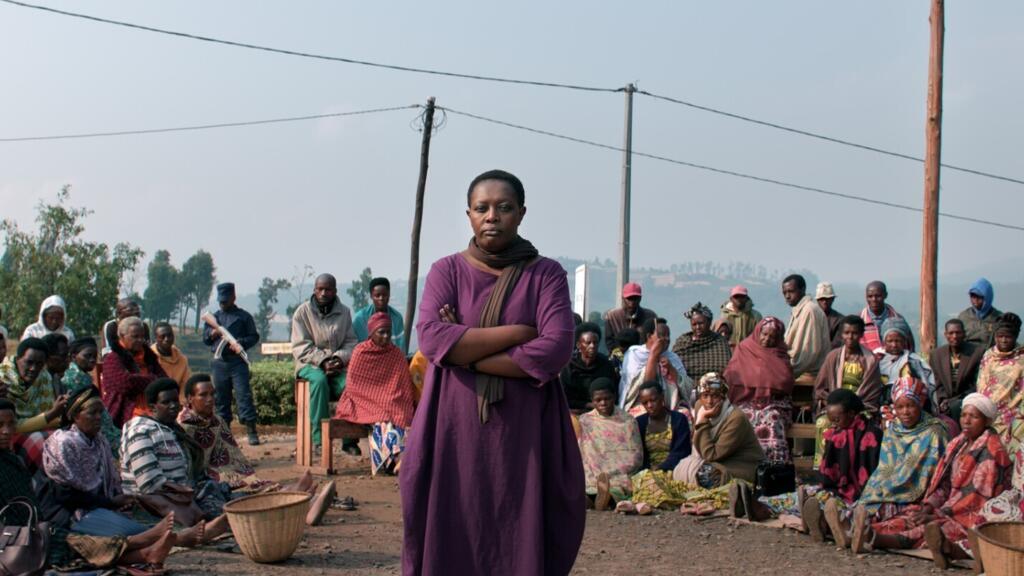
Furthermore, co-production ultimately serves as an entry point to prestigious festivals. Already, there is a growing number of African co-productions that are gaining access to international platforms courtesy of strategic partnerships and positioning. Recent examples include Neptune Frost (2021), Lingui, The Sacred Bonds (2021), Goodbye Julia (2023), Banel & Adama (2023), and My Father’s Shadow (2025). Neptune Frost, a Rwanda-US co-production, premiered at the Directors’ Fortnight section of the 2021 Cannes Film Festival, after which it screened at the New York Film Festival the same year and at Sundance a year after. Lingui, The Sacred Bonds, a co-production involving France, Chad, Germany and Belgium, screened at Cannes. Goodbye, Julia, a co-production involving Sudan, Egypt, Germany, Sweden, France and Saudi Arabia, debuted in Un Certain Regard at the 76th Cannes and was also initially nominated as Sudan’s candidate for Best International Feature Film at the 2024 Academy Awards. Banel and Adama, co-produced by France, Mali and Senegal, premiered at Cannes 2023 where it competed for the Palme d’Or. Likewise, My Father’s Shadow, a Nigeria-UK co-production, made history in 2025 as the first Nigerian feature film selected for the Cannes official lineup.

While measurable indicators and economic logic count, one should not be completely fixated on them when assessing the overall benefits of co-production. In this regard, co-production facilitates cultural and creative exchange between participating countries, leading to the circulation of ideas, skills and artistic practices across borders. At the same time, these collaborations cannot be dissociated from broader geopolitical dynamics.
For example, France’s extensive co-production relationships with countries in North and Sub-Saharan Africa reveal historical ties that continually influence contemporary cultural engagement, eliciting concerns about the exercise of soft power and the prevalence of neocolonial influences. Even in situations where co-production takes place between two entities with no obvious historical or cultural connection, core values such as pluralism and freedom of expression are propagated.
For arthouse cinema that struggles to secure funding and support due to controversial and political subject matter, co-production creates alternative avenues for acceptability. In a publication titled The Legal Framework for International Co-productions, the European Audiovisual Observatory (EAO) explains that co-production increases the possibilities for such projects because they can seek public support from other countries involved in the co-production provided the requirements to qualify as “national” work are met.
An Ideal African Co-production Treaty Future?
Africa’s co-production treaty economy has an appetite for Europe, which is understandable considering the historical ties between both continents and the cultural and economic influence of the West. Formal intra-continental agreements involving African territories are historically underexplored. Of the eight bilateral co-production agreements forged from 2020 till June 2026, only one (2022 Kenya-South Africa) involves two African states; whereas within this period, Africa has yielded several co-produced films involving multiple African states on a non-treaty basis. This suggests that rather than a lack of willingness among African filmmakers to collaborate within intra-continental borders, the problem is the questionable commitment of African governments towards institutionalising such collaborations through formal co-production frameworks and treaty arrangements.
It must, however, be noted that expanding Africa’s co-production network is only one part of building a sustainable continental film ecosystem. While treaties may enable access to production finance, technical expertise and festival exposure, their long-term value depends on the possibility of co-produced films reaching diverse audiences across multiple distribution formats. Here, EAO points out that regarding collaboration, there is a need to treat distributors the same way as producers. This means having similar measures in place “to incentivise collaboration amongst distributors” for co-productions to stand better chances of reaching targeted audiences and designated markets.
Predicting the future of African cinema, including its treaty co-production landscape, is tricky. The film business here is volatile. The continent suffers from political and economic instabilities that limit its potential. Yet, the rise of new African-centred streaming engines and infrastructures, captured in an Afrocritik essay titled “Streaming Africa: Predicting the Growth and Adoption of Online Video Platforms Across African Markets (2026–2031)”, provides room for hope. More tolerable and mass-minded digital streaming avenues plus improved economies would trigger an efflorescent continental distribution landscape. Add that to the presence of willing African financiers and institutions, and it could mean a rethinking of Africa’s dependence on Europe-centred co-production structures.
Appendix: African Co-Production Treaty Agreements and Cooperation Frameworks (2020–June 2026)
Côte d’Ivoire-Belgium
Title/Type: Audiovisual Co-Production Agreement between the Government of the Republic of Côte d’Ivoire and the Government of the French Community of Belgium
Intent:
- to establish the legal framework necessary to enable the parties to cooperate in the development of audiovisual co-productions between them.
- to promote cultural exchange and strengthen the audiovisual industries of both parties
- to facilitate jointly produced works that qualify as national productions in each territory
Execution:
- confirmation of official co-production status for eligible audiovisual works (film, television, animation, documentary, etc.)
- co-productions to be undertaken by recognised production companies from the parties, with financial contributions split between 20% and 80%
- mandated proportional artistic, technical, and financial participation from each party
- participation of producers from third states allowed under specified conditions
- subject to system of prior approval by respective administrative authorities
- establishment of joint commission to oversee implementation, monitor balance in co-productions and address operational concerns
Regulation:
- Signed 27th June, 2025, Abidjan, Côte d’Ivoire
- Agreement in force for a period of five years, subject to automatic renewal for successive five-year periods, unless terminated with six months’ written notice through diplomatic channels.
- Revenues, exploitation rights and distribution arrangements governed by co-production contract and generally proportional to each producer’s financial commitment
- Projects must comply with laws and regulations governing the audiovisual sector in each jurisdiction
- Disputes arising from agreement interpretation or implementation are to be resolved through diplomatic channels
Source(s): Communauté française Wallonie-Bruxelles (CFWB)
Kenya-South Africa
Title/Type: Agreement Between The Government of The Republic of Kenya and The Government of The Republic of South Africa On Audiovisual Co-production
Intent:
- to provide an effective co-production landscape between the two countries.
- to enhance sector growth through increased access to international finance, skills transfer, and the removal of audiovisual trade barriers.
- to stimulate the economic growth of the film, television, video, and new media production and distribution industries in both countries
Execution:
- establishment of joint commission to facilitate agreement implementation, recommend amendments where necessary, with annual meetings alternating between Kenya and South Africa
- designation of the National Film and Video Foundation (NFVF) and the Kenya Film Commission (KFC) as competent authorities responsible for agreement implementation
- designation of the Department of Sport, Arts and Culture (South Africa) and the Ministry of Youth Affairs, Sports and the Arts (Kenya) as administrative authorities in charge of overall agreement.
Regulation:
- Signed 9th November, 2022
- Agreement in force for two years, with successive automatic one-year renewal until termination
- Termination of agreement by either party giving a three-month written notice to the other party
Source (s): Kenya Film Commission (KFC)
Kenya-China
Title/Type: Memorandum of Understanding between Kenya and China on Film Development and Co-Production Cooperation (Signed between Kenya’s Ministry of Youth Affairs, Arts and Sports and the China Film Administration during the 2023 China–Kenya Film Festival in Nairobi)
Intent:
- to foster diplomatic and cultural ties between China and Kenya through film
- to facilitate co-productions between artists, filmmakers, producers and technicians from both countries and boost collective film industry growth.
- to deliver high-quality film and art products aimed at global markets.
- to showcase Kenyan-produced films on the international stage
Execution:
While the actual document isn’t publicly available, reports suggest execution will involve:
- co-production arrangements and institution-based collaborations involving both countries
- film festivals and cultural exchange screenings
- workshops and masterclasses for up-and-coming and established filmmakers
- technology and expertise sharing from the Chinese film industry
Regulation:
- signed 15th August, 2023
- functions as a cooperation framework rather than a treaty with clear-cut co-production quotas/financing obligations
- duration unconfirmed
Source(s): CFA, Screen Global Production

Nigeria-France
Title/Type: Nigeria–France Cooperation Agreement on Film Production (facilitated by France’s CNC and the Nigerian Film Corporation)
Intent:
- to create environment for expertise in film production, distribution and archiving involving filmmakers from both countries
- to strengthen bilateral relations between France and Nigeria
- to ensure transference of skills and best practices, preserved films and exhibition from both countries
- agreement supposedly inspired by the UNESCO convention of 2005 emphasising protection and promotion of diverse cultural expressions, with Nigeria and France as signatories.
Execution:
- Call for proposals/submission to committee
- Technical Committee set up, composed of stakeholders from Nigeria, France, Hollywood and other developed film industries
- 135,000 Euro grant by the French government to Nigerian producers
- adoption of local locations for film projects
- market expansion and skill development between both countries
- positioning of Nigeria’s creative industry for more investment opportunities
- exhibition of quality Nigeria-produced films in French cinemas, under CNC supervision
Regulation:
- in effect from 14th January, 2020
- two-year agreement
Source(s): Nigerian Investment Promotion Commission (NIPC), Agence Ecofin
Nigeria-Brazil
Title/Type: Nigeria-Brazil Audiovisual Co-production Agreement
Intent:
- to promote African and Afro-Brazilian narratives
- to present local stories on a global stage
- to serve as a bridge between continents, cultures and creative economies
- to drive innovation, create jobs and boost creative industries that tie people of both countries historically and culturally.
Regulation: signed 24th June, 2025
Source(s): Afrocritik, Deadline (secondary reports only)
Senegal-Belgium
Title/Type: Cinematographic Co-Production Agreement Between the Government of the French Community of Belgium and the Government of the Republic of Senegal
Intent:
- to create a framework for cinematographic and audio-visual co-production between Belgium and Senegal
- to support the development of the film industries of both parties
- to bolster cultural and economic ties between both countries through joint film productions
- to encourage exchanges of professionals, training, and participation in festivals and film markets
Execution:
- signed between the Government of the French Community of Belgium and the Government of the Republic of Senegal
- co-produced works granted national film status in both parties
- binding on audio-visual works of diverse genres and formats, including fiction, documentary and animation
- provision of joint commission to oversee implementation of the agreement
Regulation:
- signed 12th April, 2021
- effective from 6th May, 2021
- minority co-producer participation must range between 20% and 80%
- financial-only participation is generally prohibited except in exceptional approved cases
- co-productions must comply with the national laws and regulations of both parties
- approved co-productions benefit from national advantages and incentives available in each country
Source(s): CFWB Co-production Guide, Wallonie-Bruxelles International (WBI).
South Africa-France
Title/Type: Agreement Between The Government of The Republic of South Africa and The Government of the French Republic on Cinematographic and Audio-visual Co-production
Intent:
- to update the legal framework for the cinematographic and audio-visual co-operation between both parties
- to foster co-operation in the cinematographic and audio-visual field between them
- to promote their common film heritage
Execution:
- implementation of the agreement created on the National Film and Video Foundation (NFVF) on behalf of the South African government and the Centre national du cinéma et de I’image animée (CNC) for the French Republic
- financial contributions for each co-producing party ranging from 20% to 80%, with exceptional circumstances permitting 10% to 90%
- creation of a joint committee with an equal number of representatives to facilitate the application agreement, to convene every two years alternately between South Africa and France
Regulation:
- Signed 21st May, 2022 (replaces 2010 agreement signed at Cannes)
- Co-productions to align with laws and regulations of each of the parties and their respective international commitments
Source(s): National Film and Video Foundation (NFVF)
South Africa-Canada
Title/Type: Audiovisual Co-production Agreement Between The Government of The Republic of South Africa and The Government Of Canada
Intent:
- to contribute to the vitality of the audiovisual industries of both parties
- to contribute to the development of economic and cultural exchanges in both countries
- to promote international cooperation, aligning with the UNESCO Convention on the Protection and Promotion of the Diversity of Cultural Expressions, done at Paris on 20th October, 2005
Execution:
- competent authorities for agreement implementation are the Department of Sports, Arts and Culture (South Africa) and its successor, and the Department of Canadian Heritage and its successor (Canada)
- co-production involving producers of both parties, with optional allowable third-state producer participation
- copyright and revenues shared in proportion to producers’ financial contributions and no less than the minimum 15% of the total production budget
Regulation:
- Signed 3rd September, 2024 at FAME Week Africa in Cape Town (replaces 1997 treaty)
- Officially enacted on 1st January, 2026
Source(s): NFVF, Parliament of South Africa
Adedamola Jones Adedayo is a film journalist and critic with special interest in African cinema. Through writing and audiovisual mediums, he creates conversations around cinema in Africa and the Diaspora. You can find him on Instagram @jonesthegoodboy and X on AdedamolaAdeda4.