


Putting funds in the right areas of intellect-oriented culture is the only way to keep the pipeline of innovation in our society full and functional.
By Chimezie Chika
There is a sentiment in developmental economics that culture is the true measure of a country’s development. This idea rests on the premise that a society that respects and builds its cultural structures advances through the development of the mind and the core social and ethical values that sustain it. Raymond Williams, in his essay, “Culture and Society”, argues that “culture is ordinary”—it is about the quotidian aspects of life: language, work, politics, the arts, etc. He argues further that “The progress of culture is dependent on the progress of the material conditions for culture… Yet all through history there is a constant interaction between culture and social organisation”.
One might ask why this is the case. Quite simple: culture shapes human behaviour; culture shapes how people perceive, interact, and engage with the world. The best kind of culture promotes ideas of refinement and the edification of the mind; the worst kind of culture produces mind rot and immoral regressions.
This means that something like education and reading yields infinitely more value for a culture—simply because they continue to produce results for society—than the lowbrow kitsch of popular culture’s ephemeral fixations. Because culture gives people a sense of identity and belonging and determines the direction of a society’s collective mind, the type of culture a society promotes or consumes is a great indicator of where that society’s values reside.
This is why I say right away that Nigeria today is a society going through profound cultural rot. The kind of structures and establishments that promote serious minds and innovation are de-emphasised in favour of the mindless obsessions of low-yield popular culture such as is now rampant on Nigerian social media. We are now saddled with a country that produces and platforms profoundly shallow individuals such as those who now dominate live-streaming platforms.
Why there is a place perhaps for the brain-rot these individuals unwittingly promote among the younger populations, it makes for a horrible fact to realise that they have begun to dominate discourses in a country in dire need of scientific, literary, and cultural innovation and refinement. These individuals get rewarded by corporate bodies for promoting meaningless content; they get rewarded for being unsophisticated, inarticulate, uninformed, and illiterate.
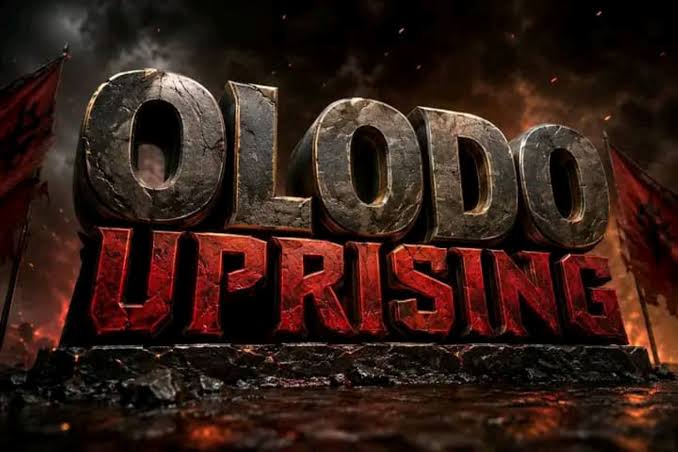
An entrenched social and mental decadence resides in the places where the elites of this country channel funding. That alone speaks volumes. And validates entertainer Ycee’s coinage of the phrase “Olodo Uprising”—which is that we are experiencing a historic revolution, only that it is a revolution of idiots.
In short, when a society begins to promote values and individuals that regress rather than progress society, it is clear that such a society wants to keep its people in thrall, locked in tiny individual bubbles of influence and celebrity culture, never allowed to understand the larger picture of the world. Another result of this is the absence of culturedness among the elite—a most terrible affair, for a cultured elite is one that truly understands the value of education, art, literature, and other branches of culture that helped to create the human civilisation we enjoy today.
Cultural advancement happens on a purely educational and social level. It is determined by the needs a society creates for itself, which then forces it to innovate, for there is no such advancement without innovation. It will not benefit us if our society is evolving to create the worst kind of outcomes: a confederacy of dunces who can neither innovate nor understand the simplest notion of how their societies function. Instead, we want our societies to evolve in a progressive direction through some of the things I have already mentioned: education, innovation, social institutions, economic development, and cultural exchange.
As everyone scampers around presently to prove that they are neither part of an Olodo Culture nor of its much-vaunted “uprising”, it will certainly benefit us to carefully examine how this society promotes the core drivers of valuable culture. How well are we doing in education? The statistics doesn’t look good. The most damning is that Nigeria has one of the lowest budgetary allocations on education in Africa. The meaning of this is that the Nigerian government seems to be making deliberate efforts to keep the vast majority of its citizens dumb, the reasons being rather not too far-fetched (if you know, you know, as they say). We can also ask similar questions about how Nigeria promotes innovation and social institutions, and the answers will still not look good.
The work of advancing our culture and rescuing it from anti-intellectual forces ganged up against it can be as simple as funding a literary festival, and one such is the Umuofia Arts and Books Festival, which just concluded its fourth edition at the International Conference Centre in Enugu between 9 and 11th of July this year. Before I break down some of what the festival offered, let me explain what book and art festivals do for the culture of a place.
Book festivals acculturate the core drivers of valuable culture. Things like education, innovation, and social institutions (of which book festivals are one) exist and complement each other, but book festivals turn them into tangible items of culture. This means that they are no longer happening as singular or niche experiences; groups of people, nay the entire society, country, are seeing it as a perpetual trend, as fashionable, as irreplaceable markers of class or value. This also means that book and art festivals will topicalise and celebrate intelligence, intellect, and invention in the same way contemporary philistine society trends celebrity/ influencer gossip and violence. Instead of a culture that endlessly discusses dating trends and petty patriarchal wars, the culture will become fixated on healthy intellectual engagement around books, art, education, politics, and society’s needs around them.
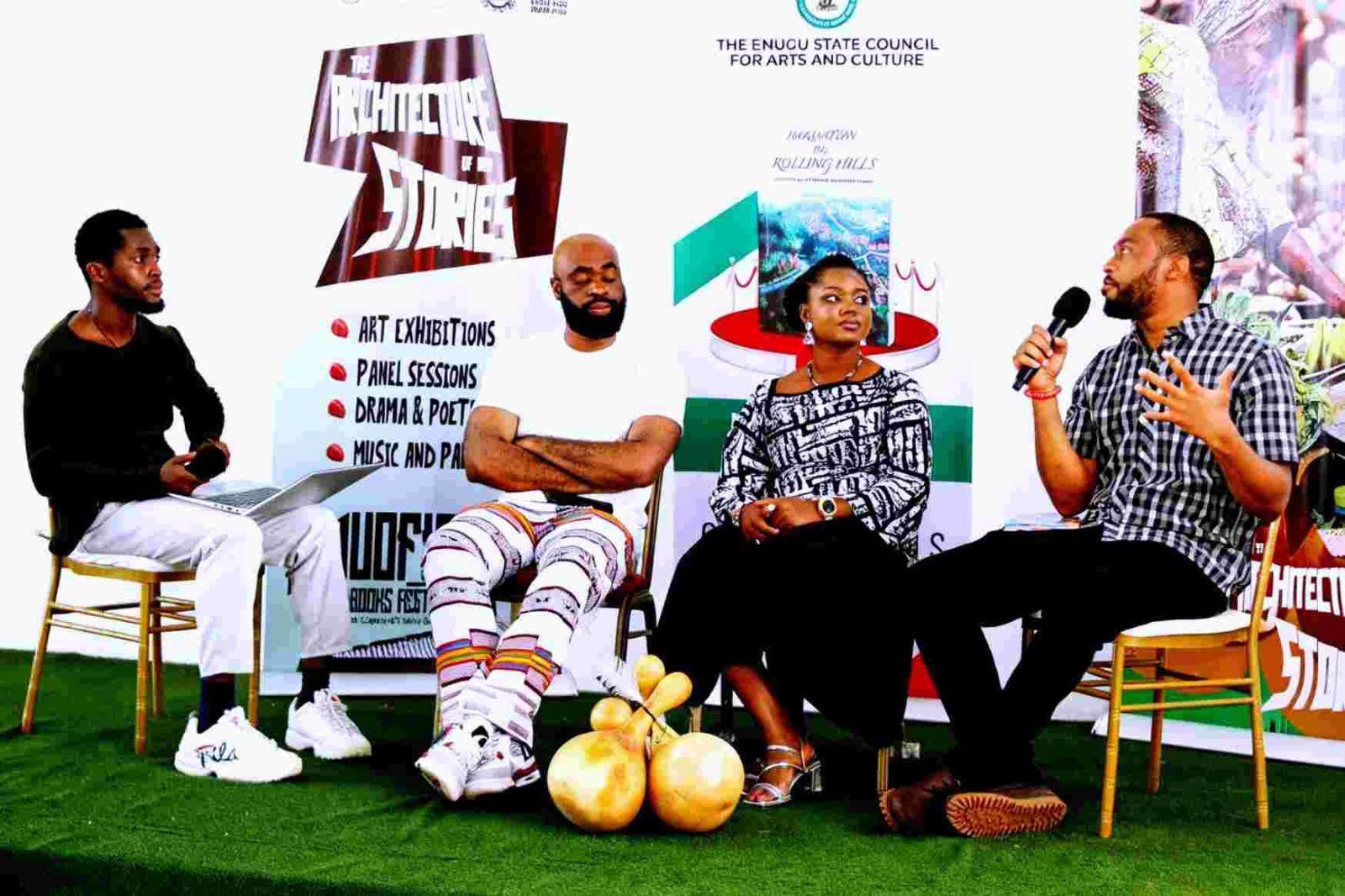
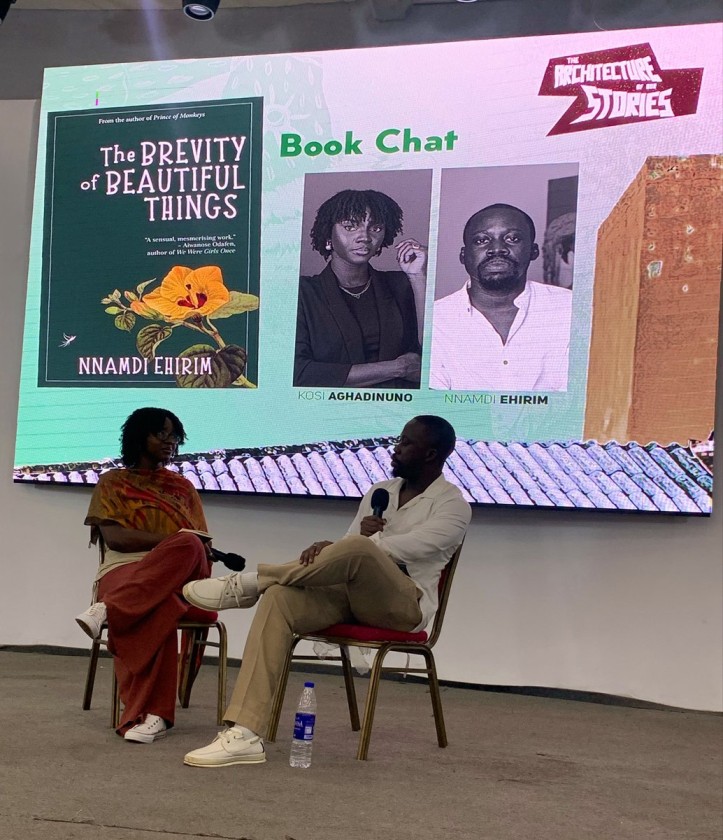
In relation to this, Umuofia Arts and Book Festival featured an art exhibition, drawing lessons, music, poetry, book discussions, author interviews, and panel discussions on criticism, AI discourse in literature, women’s support systems, influencer culture, publishing, and others. One of the highlights of the first day is the panel on “Building Communities Around the Arts”, in which panellists discussed the importance of establishing communities that support art. The imperative of such discussion is that—shame to corporate bodies and individuals in the Southeast—for a region and people that are historically known for their thoroughly artistic cosmology and ways of life, support for the arts has dwindled exponentially. There is no reason why the same people who have produced Igboukwu bronzes in antiquity cannot today support UmuofiaBookFest, which is the only full-fledged literary and arts festival in the Southeast, and the first to be established after decades of literary silence.
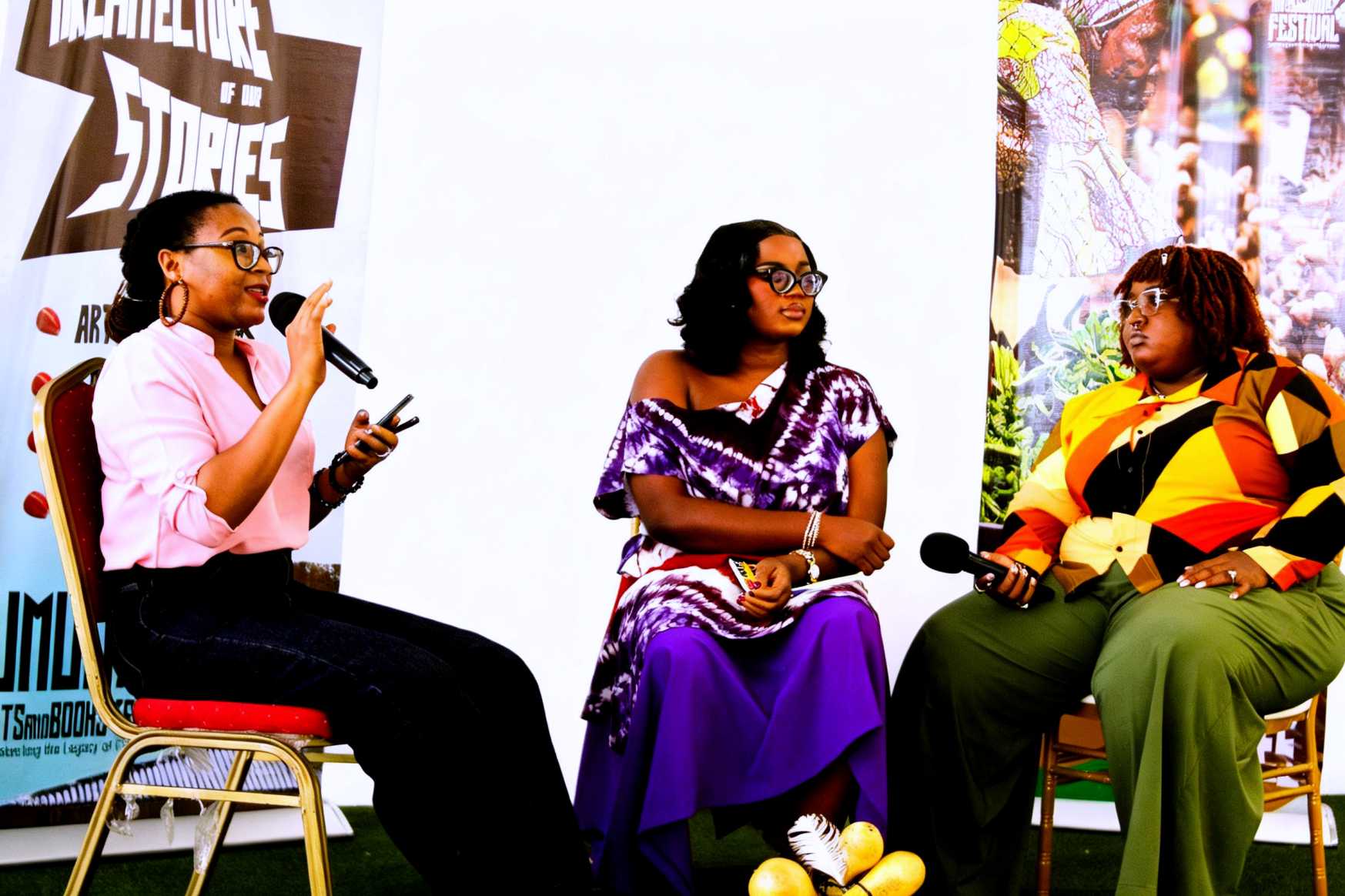
Another highlight of the first day is the panel on “AI and the Postcolonial Literature of the Global South”, in which panellists—of whom I was one of—discussed the implications of the incursion of AI into literature. I opined here that any conversation around emergent AI use in literature should be an ethical one (seconding co-panellist Chiedoziem’s reference to it being a deliberate engineering by capitalist systems hoping to bank on equally engineered brain rot and short-attention epidemic). As I have written elsewhere, a person who uses a generative LLM to “write” cannot be a “writer” for the simple reason that the semantic, physical, and mental requirements of writing are completely divorced from AI engagement.

On the second day, the highlight is the panel on “Women in Academia, STEM, and the gap in political representation,” in which fearsomely brilliant and multi-talented Chinwendu Nwangwa and the filmmaker and writer Harachi Nnamchi held the stage spellbound with their opinions on the need to build empowering support channels involving women, for women, and by women. Other highlights include an Audio Listening Experience by the literary magazine AFREADA and the poet Amu-Nnadi’s performance of a poem titled “Ọgadagidi” from his new collection, Eucalyptus, accompanied by an Nsukka mbem chanter—a wholesome poetic experience.
The final day had hotly debated panels on “The Crucifixion of the Literary Critic” and “The Influencer’s Influence on Literary Culture”, which had Ms Nwangwa again holding attention on how influencer culture can help authors, writers, and book influencers in a system that is rigged to exploit them. Audience contributions here highlighted the legal framework that can close all avenues of exploitation. The panel on Music, which came last on that day, also highlighted the same thing against the background of what success means for a Nigerian musical artiste in a system dominated by capitalist conglomerates.
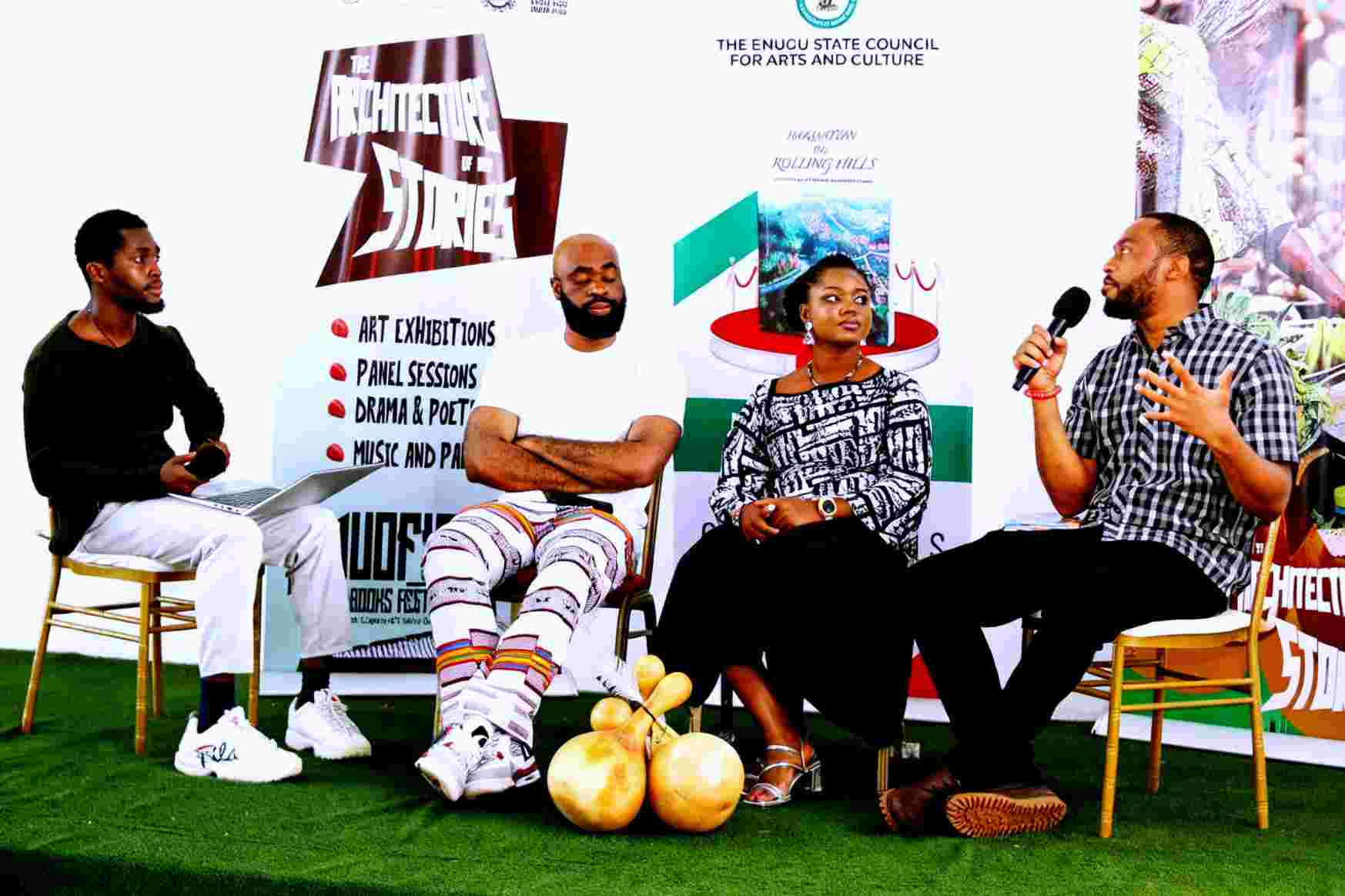
A movement is afoot in Southeastern Nigeria. A culture of persistent intellectual engagement is emerging powerfully among the debris of an Olodo Culture which, according to AFREADA Fiction Editor Chidera Ike-Akaenyi in one of her panels, is attempting to “itirise” everything. At the expense of sounding like an affiliate marketer, I am saying that if the same region that has produced the likes of Chinụa Achebe, Chukwuemeka Ike, Chimamanda Ngozi Adichie, Chigozie Obioma in literature and the likes of Uche Okeke and Demas Nwoko in art wants to continue to birth such colossal individuals that would contribute to the advancement of our culture, then they must finance the good things happening at the Umuofia Book Festival. This year, Umuofia Arts and Book Festival came of age, its guests coming from far-flung places across the country and beyond. It has become a marketplace of ideas and intellectual experience—something this country needs direly.
Even more, one feels Igbo culture and its alternative contemporary iterations breathing and living there. But we must understand now that we cannot watch institutions that acculturate intellectual value struggle without adequate support for years. We must also realise that the moment we stop innovating as we seem to be doing—barring islands of influence such as Umuofia Book Fest, TFA festival, Alex Onyia, etc—we will become utterly irrelevant as a people.
This is therefore a Mayday call. Umuofia has operated on the goodwill of individuals for four years. The Enugu State government—which helped this year through its culture ministry—as well as corporate bodies must now come forward with the finance to make an institution out of it—and with respect to the resilience of those who formed and ran it for years.
Amidst the profound philistinism of contemporary social culture in Nigeria and particularly southeast Nigeria, where people concentrate value on anti-intellectual materialism at the expense of the mental aspects of cultural development, which is the first and most valuable of all, the elite of southeast Nigeria must understand that one cannot fake mental (which is cultural) refinement: material wealth that eschews mental wealth is useless and will likely be hard to sustain. Putting funds in the right areas of intellect-oriented culture is the only way to keep the pipeline of innovation in our society full and functional.
Chimezie Chika is a staff writer at Afrocritik. His short stories and essays have appeared in or forthcoming from, amongst other places, The Weganda Review, The Republic, The Iowa Review, Terrain.org, Isele Magazine, Lolwe, Fahmidan Journal, Efiko Magazine, Dappled Things, and Channel Magazine. He is the fiction editor of Ngiga Review. His interests range from culture and history to art, literature, and the environment. You can find him on X @chimeziechika1