

“I became increasingly interested in the fact that when I speak about myself, I am also speaking through people who came before me”. – Chinụa Ezenwa-Ohaeto
By Chimezie Chika
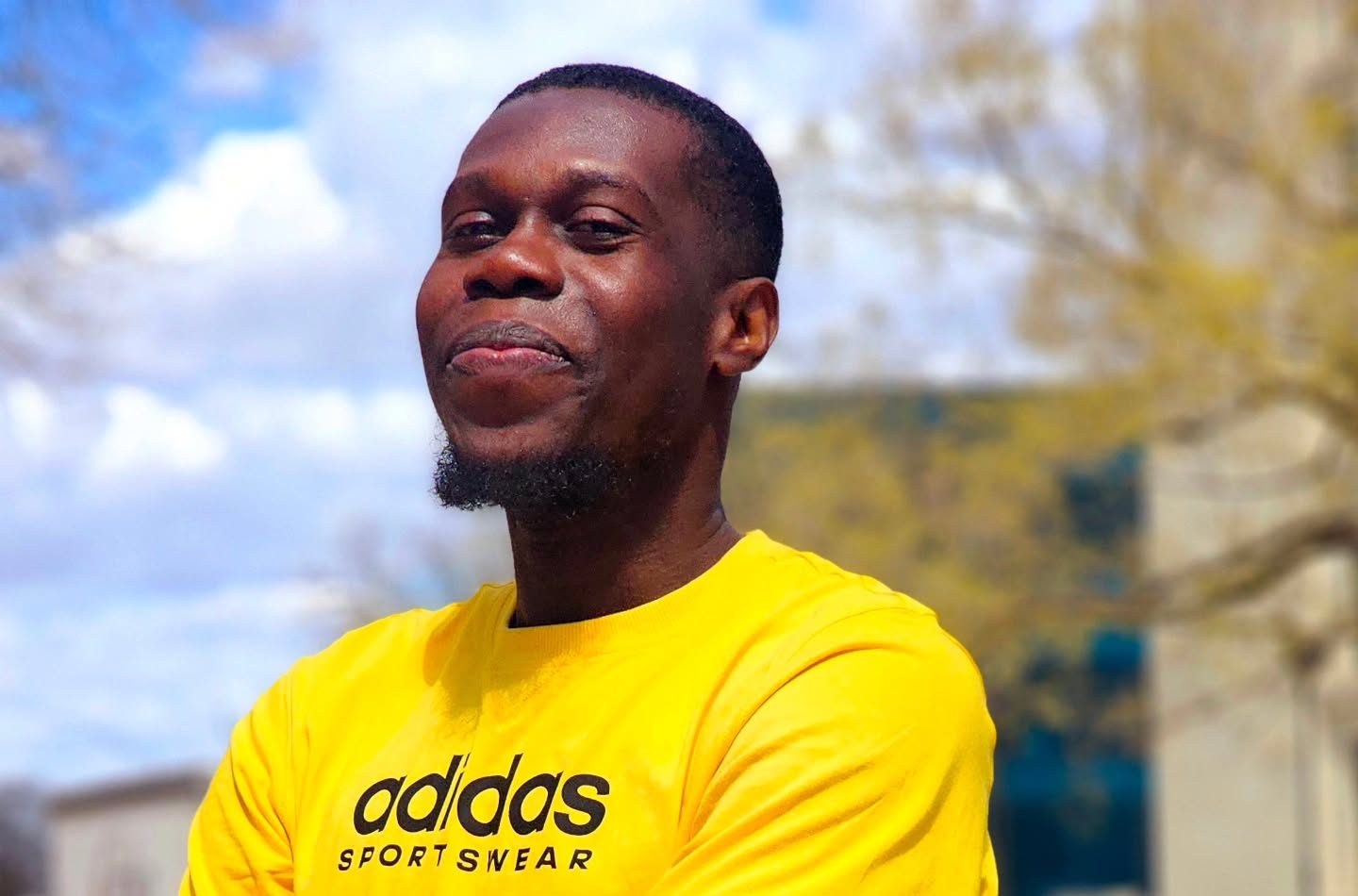
Chinụa Ezenwa-Ohaeto is one of the better-known poets amongst my contemporaries. He has been a recipient of numerous awards, including the Italian Castello di Duino Poesia Prize in 2018, the Sevhage/Angus Poetry Prize in 2019, and the Balcones Prize in 2026. His poetry and essays have seen publication in venues such as Poetry Ireland Review, Oxford Poetry, Massachusetts Review, Frontier, Palette, The Common, Southword Magazine, Colorado Review, Mud Season Review, Notre Dame Review, Anmly, Joyland and The Republic.
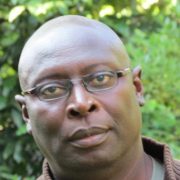
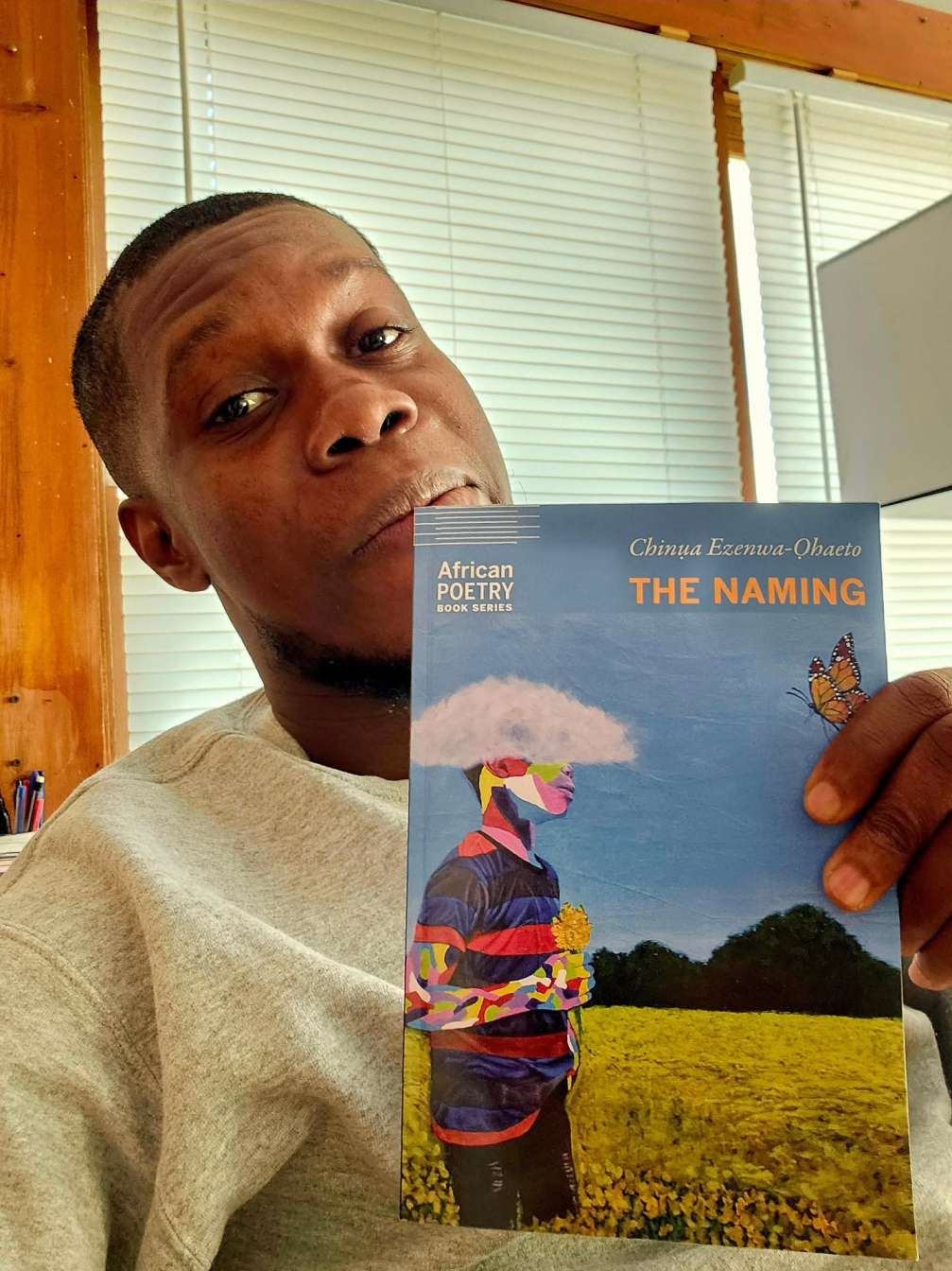
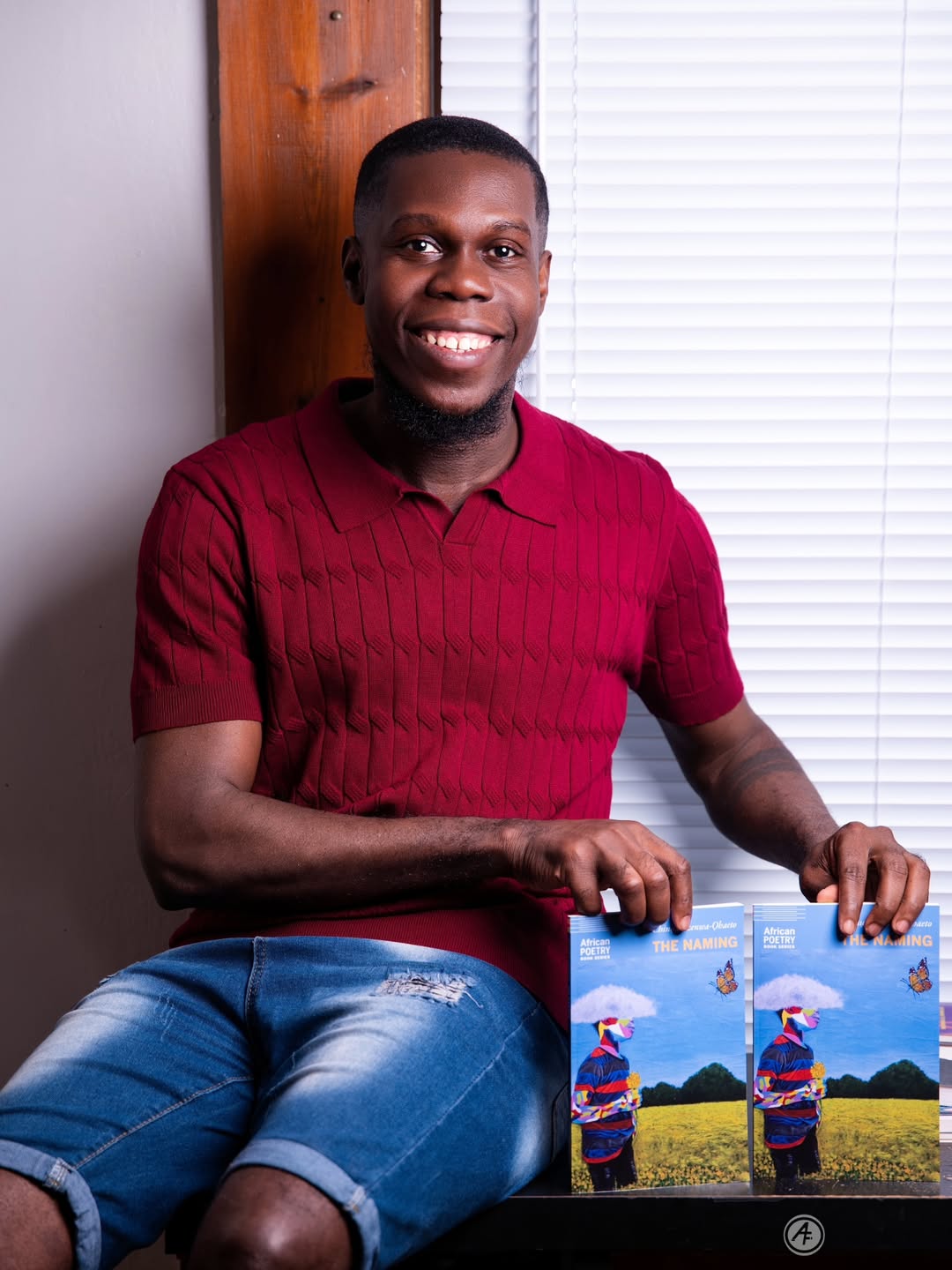
In its 2025 anticipated list of books, Afrocritik described his debut collection of poetry, The Naming (2025), as a work that: “conflates family history, Igbo ontology and the legends of origin and belonging in order to trace and name a lineage full of greatness and esoteric knowledge. Grandly conceived and thematically cohesive, this is poetry of great oral power.”
Chinụa studied up to master’s level in the English and Literature department at the Nnamdi Azikiwe University, Awka, where his parents also taught for many years. His father, prior to his death in 2005, was a well-known critic and poet who authored the only authorised biography of Achebe thus far and also jointly won (with Gabriel Okara) the Nigeria Prize for Literature in 2005. Chinụa, who is presently a PhD candidate at the University of Nebraska-Lincoln, was named after his father’s literary mentor, and has on many occasions described his father as his greatest influence.
In this interview, Chinụa speaks to me on The Naming and on the craft of poetry in general.
What would you say is the central focus of your career as a poet?
The central focus of my career as a poet has always been an inquiry into memory, Igbo ontology and belonging. I mean this in the way the self is shaped by those who have been here before me and the unseen forces that move through me. My work often returns to questions of home because of where I am now, ecological consciousness, and the metaphysical ramifications of me as an Igbo person. I am interested in how poetry can hold complexity without resolving it all the time; sometimes that’s how I feel about life generally
At the same time, that focus keeps shifting. I do not believe in a fixed centre. Practically, I am also at a stage where the central focus of my career includes sustainability and visibility: I need a poetry teaching position, book awards, if they happen, and book contracts for publication. I do not subscribe to writers who don’t share or make known what they want. I do because these wants are markers and structures that allow the work to remain in conversation. Recognition enables continuity, I think. Teaching allows me to nurture other voices while sharpening my own. So the centre keeps shifting, but it always returns to this: to make work that is rigorous and cultural. To add to the above, I have been thinking of writing a novel, but I do not know where and how to begin it.

When did you conceive The Naming? How long did it take you to write the book?
I already had two poetry manuscripts before I went to America in 2022. This particular collection was written between 2020 and 2021. The title has always been The Naming, but the thematic tropes changed over time. The road to publication began when Professor Kwame Dawes informed me, after one of his classes, that he would like to work with me, although he criticised me at the time for always looking for shortcuts. So I sent him my manuscript.
For a long time, I didn’t hear from him. And when I reached out, he told me that I should send the work to other publishers. I figured he didn’t want to directly tell me that the work was not what it should be. He only said I should dissemble the manuscript and pick only the strongest poems. In my frustrated state, I began to read one of my father’s poetry collections, The Chants of a Minstrel, and saw how the poems cohered around one theme. That was the inspiration I needed to rework the entire manuscript. I resubmitted it to Dawes in 2023, and it was accepted by the University of Nebraska Press in 2024.
Part of what I am trying to ask is: how did you develop the central idea of the collection—the new thematic focus? Did you immediately set on making poems that fit? Did you rework old ones or did you develop the poems gradually over time?
I reworked the old ones and made a few poems to fit into the theme. This was not done once. Some were also created and recreated during the editing period with Kwame Dawes. Some were also created and edited after discussions with you. And with Abuchi Modilim, especially his story about how his father and uncle looked after one another during the Nigerian Civil War. One major factor was that I tried to give an Igbo touch to many of the poems.
The Naming is a coming-of-age autobiographical collection. In it, you trace your ancestral lineage in the first part titled “Our Father’s Fathers”, and then into the second and third parts where you detail formative memories, philosophies, and psychological trauma. What influenced this deeply personal approach to poetry? Are there strategies and instigations?
I think the personal approach in The Naming began with a realisation, apart from noticing that my poems, as of the time of making the manuscript, already have traces of my ancestors, that the self is never entirely singular. I became increasingly interested in the fact that when I speak about myself, I am also speaking through people who came before me.
So, my ancestors were a way of moving backwards before moving inward: before asking who I am and why I am, I needed to ask who had made my existence possible and the things I inherited from them.
There were also several instigations. One was my father’s death, his father’s death and the difficulty of understanding grief. His words to me—“Chinua, put your feelings down”—eventually, I would say, were almost an instruction for the entire collection. Another was my mother’s work on Igbo naming and the realisation that, in Igbo cosmology, a name can, in its essence, have an argument about the parent’s life, destiny, character, divinity, and the circumstances of one’s arrival into the world. On the other hand, the autobiographical element, then, was employed to move between what I am able to remember, what I have been told, what I can research, what I imagine, and what I cannot know.
Therefore, the book is interested in the instability of memory itself. Over time, the scholarship on contemporary African poetry has increasingly attended to this relationship between familial and what might be called postmemory. That conversation feels particularly relevant to The Naming, but I did not begin writing the poems with that critical vocabulary in mind; the poems came first from the pressure of trying to understand my own lineage.
I also wanted the collection to resist the idea that ancestry belongs exclusively to the past. The past is constantly being revised by the present, while the present is already producing the history that future generations will know about.
That is why the collection moves from ancestors and homesteads into childhood, family, Nigeria’s contemporary realities, migration, violence, grief, and the imagination of possible futures. The three sections are therefore less a straight chronological progression than a movement across time. Perhaps the most important strategy was to allow the personal and the past to remain in conversation without forcing one to explain the other.
Quite interesting that you say this. It appears that your parents’ work converges with yours—that is, the link between ancestry and names/naming. And when you consider that alongside what you call the familial and the postmemory—the personal and the present (and I agree that the present is constantly reproducing history)—it becomes clear that you used this collection to merge the story of your family’s antiquity with its present fate, embodied in you as an Ohaeto and as a Nigerian. From what you said, I am thinking of the first section, Our Father’s Fathers, as ancestral/familial, and the second and last sections, Worries and Dear Hope, as postmemory. Do you agree?
I would like to say that I am from Okoro Obashi. Obashi gave birth to Ibegwa, who gave birth to Ohaeto, and it went on for like two or three generations until I appeared in the lineage. And yes, I agree with that reading, though I would complicate the distinction slightly. The first “Our Father’s Fathers” is certainly the most explicitly ancestral and familial section, but I see the three sections less as separate categories than as movements within the same temporal and psychological continuum.
The collection begins by looking backwards, toward the lives and migrations that precede me. Then, a few other things followed. The collection itself is by way of going to one’s homestead and speaking with his ancestors.
Therefore, in that speaking and relation, I think of the sections “Worries” and “Dear Hope” as extending those ancestral tropes into postmemory, particularly in the way experiences I did not necessarily witness firsthand are remembered and reimagined through some events in Nigeria and the lives of my parents, great-grandparents, and community. I would also see it as sharing what has happened and is happening with one’s ancestors, then asking them to help.
On the other hand, the term postmemory also interests me because memory here is not expressed as retrospective. As you know, the present keeps reproducing and revising the past. For example, Nigeria’s political realities and the anxieties surrounding its disheartening current state become contemporary forms of older histories.
So, yes, I would accept the distinction between “Our Father’s Fathers” as ancestral/familial, where the ancestors are summoned; and “Worries” and “Dear Hope” as postmemory, on the account that the ancestors are told about the ongoing. I would not want the boundaries between the sections to be too rigid. The sections are deliberately in conversation with one another, a progression.
How do you approach writing poetry? What is your creative process?
My creative process is not governed by a single method. I approach each poem differently, depending on what I am thinking about, what I have been reading, what I am experiencing, and sometimes what life demands of me at a particular moment. There are times when I have to force myself to write because I want to remain active, to keep moving, to feel that I am making progress, even when I am not certain that what I produce will be good.
Sometimes a poem begins as an exercise, something I write without much conviction, only to discover later that there is an image, a line, or an idea worth returning to. The first draft does not always have to be successful; sometimes, its purpose is to give me something to work with.
At other times, a poem is almost fully formed in my head. I may have its structure, its movement, or even some of its language before I sit down to write. There are also poems that begin with a feeling I cannot immediately explain. I may be troubled by something, moved by a memory, or caught in an emotional state like quarrelling or bantering. Writing it then turns into a way of investigating that feeling. I do not always begin with a clear understanding of what I want to say.
I must say that reading is another important part of my process. A poem, a novel, an essay, or even a particular turn of phrase can challenge me and make me reconsider what language can do. And, to be honest, there are practical circumstances that bring me to the page as well. Sometimes I need money, and I have to write something for which I will be paid. I do not think it is necessary to romanticise the writing life by pretending that poems are produced only through inspiration or some mysterious calling. Writers have material needs, obligations, and deadlines. These realities can affect what we write and when we write it. The challenge is to bring the same seriousness to the work.
However, I would distinguish between writing a poem and making a manuscript. They are two different processes. Writing a poem is, in many ways, generally easier. At least for me. Making a manuscript requires a lot of me to step back from individual poems and consider what happens in all of the poems. Sometimes, I have to do research or call friends to help me with a piece of information or where to research a context deployed in a manuscript. Some poems get removed, adjusted, cut into pieces and so on. It’s a difficult exercise, I would say. I am even imprisoned by my thoughts at night, questioning the credibility of the manuscript.
For me, a manuscript should not be a gathering of the strongest poems I have written or have impressive openings in the first fifteen pages to capture the attention of the editor or so. I understand the thinking behind it, but I do not want to construct a book as a sequence of impressive openings. I want the collection to have its own logic of discovery and movement. Or even a story to it. All I know, we are all storytellers. A manuscript needs an internal life of its own. There must be a reason these poems belong together, even if that reason is not immediately obvious.
That is a splendid statement, and I agree. A manuscript, whatever it is, needs an internal life of its own. I know that you have been profoundly influenced by your father, but it would be interesting to know which other poets have influenced you.
I have been influenced by a good number of poets and novelists. At the moment, I am reading everything I can find by Kei Miller. He is exceptional in the way he takes almost any aspect of human behaviour, even something as ordinary as sneezing or the fear of light in its different spectrums, and finds a way to make it do literary work.
Before this, after years of putting off his work, I finally spent time reading Derek Walcott, and I have been marvelling at his attention to the natural world and the precision with which he renders the details of a scene. He made me conscious of how much a place can offer, and how much I can draw from just paying attention to it. I don’t know why it took me many years to read him.
On the contrary, I don’t think my influence generally comes from writers or one thing. It can come from music or a film. These days, I find myself hunting for real-life events and trying to reimagine them in my writing. Some of my friends in the United States, for instance, are unfamiliar with what we call a vulcaniser here. I don’t know if it is the issue of paying for air or the issue of their air stations located within gas stations being free. I guess that they are more accustomed to workshops for tyre repairs. These small differences interest me.
So, that makes me hugely interested in the mundane, in the strange little performances people put on to get through the day. Imagine someone who urgently needs to urinate and wants to avoid arrest or confrontation for doing so in public. He walks into a parking lot, urinates on the tyre of a parked car, while pretending the car belongs to him. It is an ordinary, almost absurd moment, but it has this embarrassment and improvisation that alert me. I can give a few more examples of this. These days, that is where much of my attention goes. They influence me, too.
Normalcy and outrage can vary from culture to culture, or from place to place. Urinating on the tyre of a car is perhaps scandalous in the States. In Nigeria, it is just another day of seeing shege. Are there particular kinds of poetry you prefer? What of peers?
As a teacher and writer, I am bound to know as much as possible, you know. But I have noticed that I am increasingly drawn to narrative poetry, though I prefer poems that combine narrative and lyricism. As for my peers, I read everyone. I want to know what they are working on, especially when it comes close to my own interests. The level of craft, particularly in language, has risen considerably, and I am always open to learning from my peers as much as from anyone else, dead or alive.
Why so? What do you find most interesting about narrative poetry?
I love stories so much. I would confess that I didn’t use to know that poems could have stories in them. I mean, cause-effect-resolution or no-resolution pattern. Of course, I know lyrical poems can tell stories, but what draws me to narrative poetry is its compactness, which is one of the many, especially when the poem is a bit short. Another is its driving force. The most common driving force, for me, is juxtaposition. Yes, there is that. I love how a poet can take an entire life, a strange encounter, and make it into lines.
Something is fascinating about how much a poem can leave unsaid, and how it can give anyone enough to imagine or be fascinated. I can say, for sure, that the best narrative poems do leave me with the feeling that I have come into contact with a whole world, even if I have only glimpsed a small part of it. One thing I am doing now with this form is to make my lines a bit shorter. For whatever reason, this is a recent feeling; I don’t like long lines. To have my desired control, I make the lines short in my new poems.
Let’s return to the book’s most pervasive motif: names and naming. What does naming mean? What does it represent? In Igbo culture, a name represents more than just an appellation. It carries history and circumstances. In Odinani, the act of naming is a highly potent act of spiritual agency. To name a thing is to give it life-force and to bring it into existence, or to bring what is hidden out of the dark crevices. This is true for many reasons, one of them being resident in the Odinani belief that the tongue holds great power and is capable of creation. Ọnụ mmadụ bụ ọnụ mmụọ—the mouth of a human being is the mouth of the spirits. Starting with the poem “Naming”, what were you looking for when you named in this book? And you named very many things.
Yes, I named and mentioned a lot of things. To name something is, in a way, to acknowledge its existence. I think it is important to begin by saying that The Naming is itself an act of naming. In writing this book, I have tried to recover, remember, and call into presence people, places, experiences, and ways of understanding the world that are immediate to me but are sometimes forgotten, overlooked, or pushed to the margins.
The book names my ancestors, my family, Nigeria, my childhood, my adulthood, moments of joy and humour, experiences of loss, things I do not fully understand, and experiences that are personal and collective to my identity.
The poem, “Naming,” establishes much of what I wanted to explore in the collection. The poem touches different kinds of experience, including private anxieties, family relationships, national realities, and questions about existence. I wanted naming to accommodate all these things. I would say that we name things, but forget we are also affected by these names and their meanings. The idea of shared power interests me because it suggests that naming is reciprocal: we participate in the world by giving things meaning, but the world also gives meaning to us.

There is another dimension to this: we do not come into the world as entirely independent individuals. We come through people that precede us. In many ways, we are already named in a way. I wanted to explore that relationship between what is given to us and what we eventually choose to make of it. Therefore, the book also attempts to name what is difficult to understand and search for ways of imagining what comes next.
Ancestors are a dominant presence in The Naming. From your collection, there is the understanding that we are a people who believe in ancestral veneration. We venerate them as the First People, as the originators of our language and existence. What do you think is their place in the Igbo psyche? There are particular connotations of ancestry in your work that connect history to belief. The poems, “Marley’s Lyrics in Two Parts or Where Does It Hurt the Most?” and “Okụzụ”, strike to the heart. The first tells us of the defiance of Igbo captives centuries ago who refused to be enslaved on the shores of America. The second is an extraordinary poem about perseverance and brotherly love told to you by the writer, Abuchi Modilim. Together they acknowledge that we are a defiant and persevering people.
The ancestors occupy a central place in the Igbo psyche because they should not only belong to the past. They established the foundations upon which we stand. This understanding of ancestry is important to The Naming, but I am also interested in what happens when we look beyond the familiar accounts of ancestry and begin to recover the past. The poem “Marley’s Lyrics in Two Parts or Where Does It Hurt The Most?” is one example of this engagement.
The poem begins with the 1803 Igbo Landing at Dunbar Creek on St. Simons Island, Georgia, where a group of enslaved Igbo captives reportedly chose death by drowning rather than submit to enslavement. I was drawn to the extraordinary defiance in that history. The poem addresses these captives as “our fathers’ fathers” because they are our ancestors. But the poem is also concerned with the violence of historical erasure. I approached this history from several directions, especially through the documented record, through imagination, and through the emotional aspect of those who came after.
“Okụzụ,” on the other hand, explores brotherly love against the backdrop of the Nigerian Civil War. Abuchi Modilim told me the story because it was about his uncle and father, who are now ancestors and remembered dearly. I was so moved by it that I wanted to make myself part of the story through retelling it. What struck me was the extraordinary act of love at the centre of so much violence and devastation. The bombing destroys homes, schools, farms, and playgrounds, as in wars.
Yet Ekeokwu, Abuchi Modilim’s father, abandons everything, rides more than a hundred miles in search of his injured brother, and eventually carries him home to care for him. I was interested in this particular expression of love. I wanted to preserve the tenderness of that moment without diminishing the horror of the war.
Much of the collection is a prayer, beginning with a plea to Chukwu Okike or “Our Father’s Fathers”, the ancestors of the land—although the arc of the poems makes these ancestors yours, your lineage and Nigeria’s. The poem, “Unfurling”, begins like ịgo ọfọ—the Odinani prayer over ọjị, nzu, and edo. You begin: “I greet you, Chukwu Okike, God of all/existence, here is kola/to thank you for life,/good health, and opportunities. … To you my Chi, I give this kola, asking you/to present my requests anywhere they matter.” The same supplicatory tone can be found in “Mercy”, “A Call’s Dusk”, “What I Said to God, Chukwu Okike”, and others. I believe that prayer and poetry are concomitant existences in the highly oracular performance of Igbo culture, particularly Odinani religion. Prayer itself, regardless of religious persuasion, is always a poetic performance. It is interesting how your poems replicate the ritualised performance of Odinani. What can you say about the relationship between prayer and poetry?
I think prayer and poetry are closely related, particularly within the Igbo understanding of spirituality and the performative traditions of Odinani. In writing these poems, I wanted to replicate, as faithfully as possible, the way Igbo people acknowledge their ancestors and approach their Chi, through kola and libation. I wanted the poems to feel as close to an actual ritual as possible by recreating its movement, language, tone, and atmosphere on the page.
And this was important because prayer in Igbo culture is not always a private conversation between an individual and God. It can be a communal act involving the ancestors, the living, the land, and the spiritual forces. In “Unfurling,” for instance, the speaker approaches Chukwu Okike and the ancestors with kola, just as one might in an actual act of prayer or libation. The language is deliberately supplicatory because I wanted the reader to feel the poem almost as a participant.
I also think poetry offers a way of preserving these forms of spiritual expression. With everything happening now, I think we are coming to the point where we will lose most of the things that make us Igbo. I must say that some of the things in our culture are difficult to translate into written language without losing their texture and significance. By allowing the poems to assume the form and rhythm of prayer and libation, I was trying to retain something of that experience.
Many of the poems are incantatory and have elements of Igbo chants. Via their folkloric nature, you recuperate myths, legends, philosophies, proverbs, elemental metaphors, and sites of meaning. I think that to think of poetry as incantation is to also think of it as story-building (although there is always the possibility of echolalia). It’s the way Igbo chants work: each new introduction to the ongoing lyric adds new horizons of images and metaphors to the existing story. This is why the poem, “Okụzụ”, shows the ultimate Igbo spirit, both in cadence and meaning. Reading it, one thinks of mbem, or what we call abụ owu in my hometown, Umuaka. I am curious about the fine details of how the poem was made. Was the poem difficult to write?
I must admit that “Okụzụ” was quite difficult to write, particularly because I was consciously trying to venture into mbem. I wanted to see how much of that poetic tradition I could bring into a contemporary poem without losing its essential character. At some point, I submitted the poem for a workshop, but it was not received as poetry in the conventional sense.
The response was that there were too many things happening in it, too many images, movements, and ideas competing for attention. But that, interestingly, is part of how mbem works. It does not necessarily move in a straight line or remain within one image or thought. One idea opens the door to another, and the poem keeps expanding through these associations.
I would admit that I faltered at certain points in trying to achieve this. Translating the movement of an oral poetic tradition into a written poem is not easy. There is a difference between hearing a chant performed and attempting to reproduce its energy on the page. One conscious choice I made was not to restrict the poem to the immediate story of the two brothers. I wanted the story of Nwankwo and Ekeokwu to open into the larger history of Okụzụ, the war, the destruction of communities, and the possibilities of human love.
This movement from one story to another, from the individual to the communal, is something I was interested in exploring through mbem and in other poems like “Once Upon a Girl, a Place of History”, which I think is really close to mbem. So, while I cannot claim to have reproduced mbem perfectly, I was trying to understand its internal logic and allow that logic to influence how I constructed the poems. I think the difficulty was part of the learning process.
“Once Upon a Girl, a Place of History” closely follows mbem structure indeed! I have referred earlier to “Marley’s Lyrics”, another consequential poem. It seems to follow the motifs of naming and ancestors into the racial past. Here, you are naming the defiance and dignity of your ancestors, the same lineage of the Igbo captives who in 1803 drowned themselves in an event now known as the Igbo Landing. From that auspicious moment in history, you produced great poetic commentary: “Even the wind itself bore witness. And Rosewell King,/with his own eyes during the landing,/saw 75 bodies in the openings of history”. The evidence of rigorous research is built into this poem and many others in the collection. What did it take to research these poems?
Researching these poems required me to go through historical records at the Love Library at the University of Nebraska-Lincoln. “Marley’s Lyrics” was not particularly difficult because I knew what I was looking for and what I wanted to understand about the history of the Igbo Landing. I read about the event, the people involved, and the circumstances surrounding their resistance. The second part of the poem, for instance, draws on stories, according to the poem, I heard from my uncle and from my mother’s place of birth. They were imagined. I wanted to bring these different angles together without losing their emotional and cultural significance.
You were shortlisted for the Balcones Prize. How do you feel about it?
I feel grateful and encouraged. Being shortlisted for the Balcones Prize is a wonderful recognition, and I am particularly happy that The Naming is finding its way to readers and receiving this kind of attention. I am grateful to the University of Nebraska Press, the African Poetry Book Fund, and everyone who has supported the book. Grateful to Kwame Dawes.
I am grateful to my uncles and aunts who answered my numerous questions about my origin and the people who came before me. I am also grateful to you for explaining the “Akpu” Tree when I was trying to understand the bridge between the living and the dead. Grateful for life and family members. And friends too numerous to mention. More than anything, I hope the recognition brings the collection to more readers and opens up further conversations.
Are you working on any new projects?
Yes, I am currently working on a new poetry collection titled February Memories. The collection is a dialogue between a seeker and a diviner, Dibia Afa. I am particularly interested in bringing, where necessary, the structure and language of Igbo divination into the form of the poems. This work is situated within the symbolic space of February, Ọnwa Mbụ, the first month of the Igbo calendar. I look forward to where this will lead me.
Chimezie Chika is a senior staff writer at Afrocritik. His short stories and essays have appeared in or forthcoming from, amongst other places, The Iowa Review, Dappled Things, Channel Magazine, Terrain.org, Lolwe, Isele Magazine, Efiko Magazine. He is the fiction editor of Ngiga Review. His interests range from culture, history, to art, literature, and the environment. You can find him on X @chimeziechika1