


Alechenu does well in its pursuit of social relevance, but the narrative is dampened by a predictable resolution that could also be explained away as a consequence of its limited ambition.
By Adedamola Jones Adedayo
A typical Biodun Stephen film avoids overcomplicating things. It presents a straightforward narrative, often featuring drama, humour, romance and characters that ordinary Nigerians can relate to. Her stories embrace quick emotional appeal, with plots optimised for commercial engagement through sentimentality, familiar archetypes, a focus on human vulnerabilities and easy, often predictable narrative resolutions.
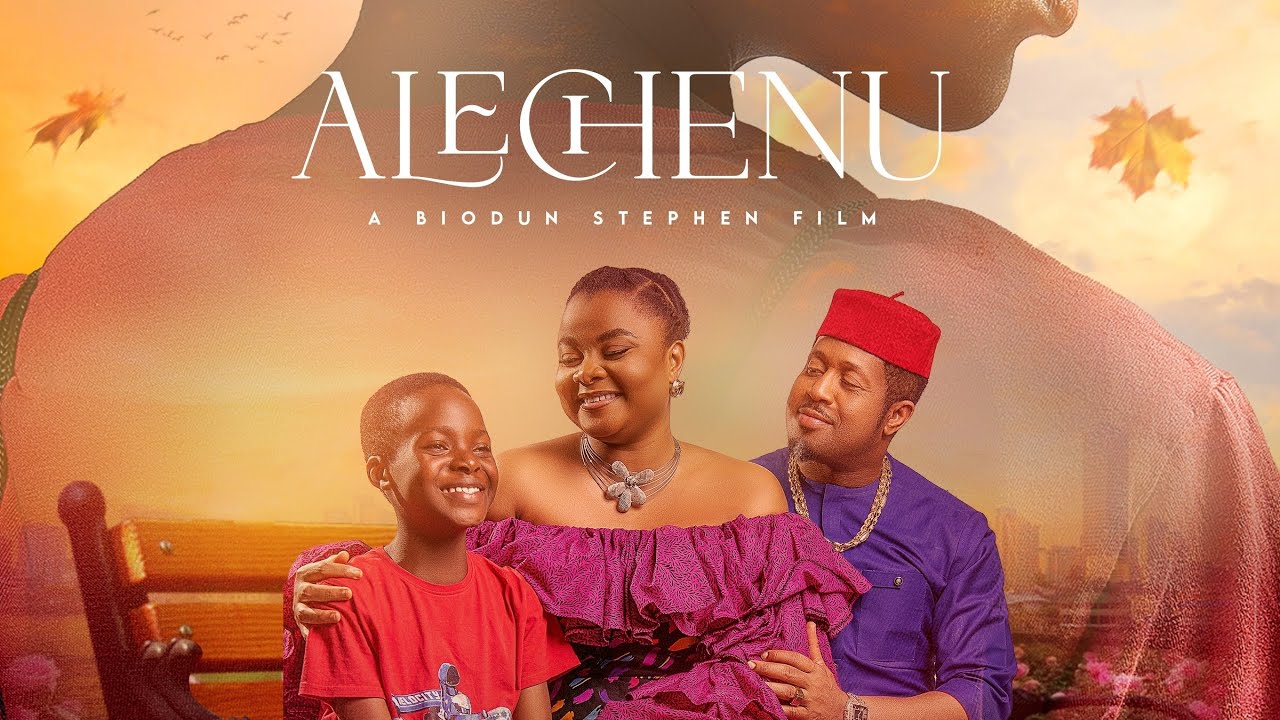
Previous titles in the director’s filmography, such as Introducing the Kujus (2020) and Sistá (2022), bear these patterns. The groundwork is equally laid in Alechenu, Stephen’s latest emotional drama, where attention is cast on the eponymous protagonist, a 13-year-old autistic boy who embarks on a journey to Lagos in search of a mother he never knew, all by himself.
Alechenu poses as a social reality drama, walking the audience through a stark, grim slice of the human world, reflecting themes of parenthood, identity conflict, child abuse, jungle justice, betrayal, and the search for closure. Royal Aziomaku portrays the eponymous protagonist, infusing the character with a requisite taciturn and eccentric personality.
Stepping into the shoes of someone suffering from Autism Spectrum Disorder (ASD), also known as autism, the child actor embodies some of its inherent symptoms on screen: limited social interaction, delayed speech/language development, extraordinary attention to detail or pattern recognition, and strong analytical abilities. Aziomaku’s character, Alechenu, is remotely reminiscent of 12-year-old Halima, portrayed by child actor Darasimi Nadi, in Ella Chikezie’s 18-minute short film In Her Shoes (2025), who is also held back by autism as the girl struggles to find freedom and self-expression through sport while being misunderstood, bullied, humiliated and faced with family pressure.
In Stephen’s film, Alechenu is unable to articulate his thoughts appropriately and maintain steady eye contact. When he gets to Lagos, he tries to survive entirely on his own, optimistic about finding his mother, without any friend to keep him company. He is treated as a street urchin and mistaken for a miscreant, almost to the point of being lynched on a false accusation.

He demonstrates admirable problem-solving capabilities by repairing electronic gadgets without prior knowledge, through which he wins the hearts of people around him. After temporarily joining Mr and Mrs Obi. (played by Mike Ezuruonye and Bimbo Ademoye) in their apartment, he outsmarts the man in a video game, to the man’s astonishment—another instance in which Alechenu shows sound judgement, justifying the filmmaker’s autistic designation.
Overall, Alechenu is a weighty character, defined by a deeply meditative consciousness. Although the filmmaker denies the audience a conventional coming-of-age narrative that would allow his character to evolve and his “gifts” to mature into even greater accomplishments, the protagonist nonetheless maintains consistently recognisable behavioural patterns throughout the film.
Mike Ezuruonye portrays the character of Mr Obi, a well-to-do businessman with a compassionate and affable personality. He brings a comical angle to the execution of this role, often code-mixing Yoruba and Igbo languages and adopting mannerisms that leave behind a trail of humour. Central to the progress of the protagonist and projected as a sort of plot adhesive, this character saves Alechenu from being a victim of jungle justice, introduces him to his household despite his wife’s disapproval and spearheads the move to demystify the boy’s roots.
As Anna, wife to Mr Obi, Bimbo Ademoye delivers a performance that is neither spectacular nor disappointing. Her rendition is rather passable, as she shoulders the burden of a character forged from childhood trauma with poise and phlegm. During adolescence, the character endured rape, maltreatment and abuse at the hands of relatives she lived with, eventually becoming pregnant as a result of repeated sexual abuse.
Through the ordeals of this character, recalled using ample flashbacks, director Stephen designs a grass-to-grace, rags-to-riches, trial-to-triumph narrative that remains firmly anchored to the protagonist’s eventual change in fortune.
Stephen’s film treads with didactic caution. A sermon hides beneath the sheen of humour-powered drama and ruckus. Everyone eventually gets to see the film through the lenses of what is good and what is bad or objectionable. This includes musing over realities of child abuse, prejudice/violence against the female gender, and the consequences of breaching ethical boundaries.
While the film’s moralistic ideas are generally acceptable and in synchrony with the worldview of Nigerians, its emphasis on emboldening these lessons occasionally makes the drama feel overly instructive, with the audience robbed of the opportunity to prod their minds a bit more and arrive at independent moral conclusions.
Despite maintaining a moralistic and contemplative thread that prompts the audience to reflect on man’s inhumanity towards his fellow man, Alechenu stumbles when working with limited material to illuminate the protagonist’s predicament and journey. The transition from a more communal town setting to the cosmopolitan chaos of Lagos takes a toll on the young protagonist, but the film cheapens this process on screen, failing to capture the psychological and emotional weight of such a drastic change with sufficient depth.
Although the film does not hide the place of luck in Alechenu’s successful quest, it puts this too much in the faces of the audience. It feels almost as though anyone—and a teenager for that matter—could leave their remote town, settle into the harsh streets of Lagos, and soon get connected with the right people and circumstances to help them find their path without being distracted or misled—all within an unrealistic, sentimental, short period of time.

By cutting down on the travails of the protagonist, Stephen deprives the audience of experiencing the full emotional weight of his adventure. Additionally, well-intentioned scenes dedicated to amplifying the struggles to adapt to city life as a child outside the care of parents or guardians would not only have added meat to the narrative but also enhanced its sense of realism. It would have been equally compelling for the plot to see Alechenu gain recognition or receive a reward for the exceptional abilities for which he is repeatedly praised, particularly since the film positions itself as a social-mobility narrative.
In its representation of autism, the film panders to the savant syndrome, an uncommon condition in which a person shows prodigious abilities in a specific field despite having serious cognitive or mental challenges. This pattern is conspicuous in the portrayal of the protagonist, as the film associates his neurodivergence with exceptional technical and gaming abilities.
While this choice strengthens the character Alechenu and avoids presenting him through the lenses of his limitations, it comes with the risk of reducing autism to a convenient source of extraordinary talent. The savant trope is especially reductive because such exceptional abilities are not the norm with autistic people, and its repeated use in popular cinema can create the erroneous impression that autistic people must possess such exceptional qualities to be likeable individuals or valuable in society.
Alechenu does well in its pursuit of social relevance, but the narrative is dampened by a predictable resolution that could also be explained away as a consequence of its limited ambition. Halfway into the film, as the boy is treated with suspicion and subjected to intense scrutiny by the Obis, especially the wife Anna, the possibility of a biological connection between him and the household begins to emerge. By this point, the audience can already make a fair guess about how the story will unfold.
What remains is essentially a backstory to justify the connection, which eventually comes to fruition. In the end, as Alechenu reconfirms, it is clear what Biodun Stephen stands for: stories that guide the audience towards a morally unambiguous and familiar emotional destination without necessarily trying hard to impress or spring surprises on the audience.
Rating: 2.3/5
Adedamola Jones Adedayo is a film journalist and critic with special interest in African cinema. Through writing and audiovisual mediums, he creates conversations around cinema in Africa and the Diaspora. You can find him on Instagram @jonesthegoodboy and X on AdedamolaAdeda4.