

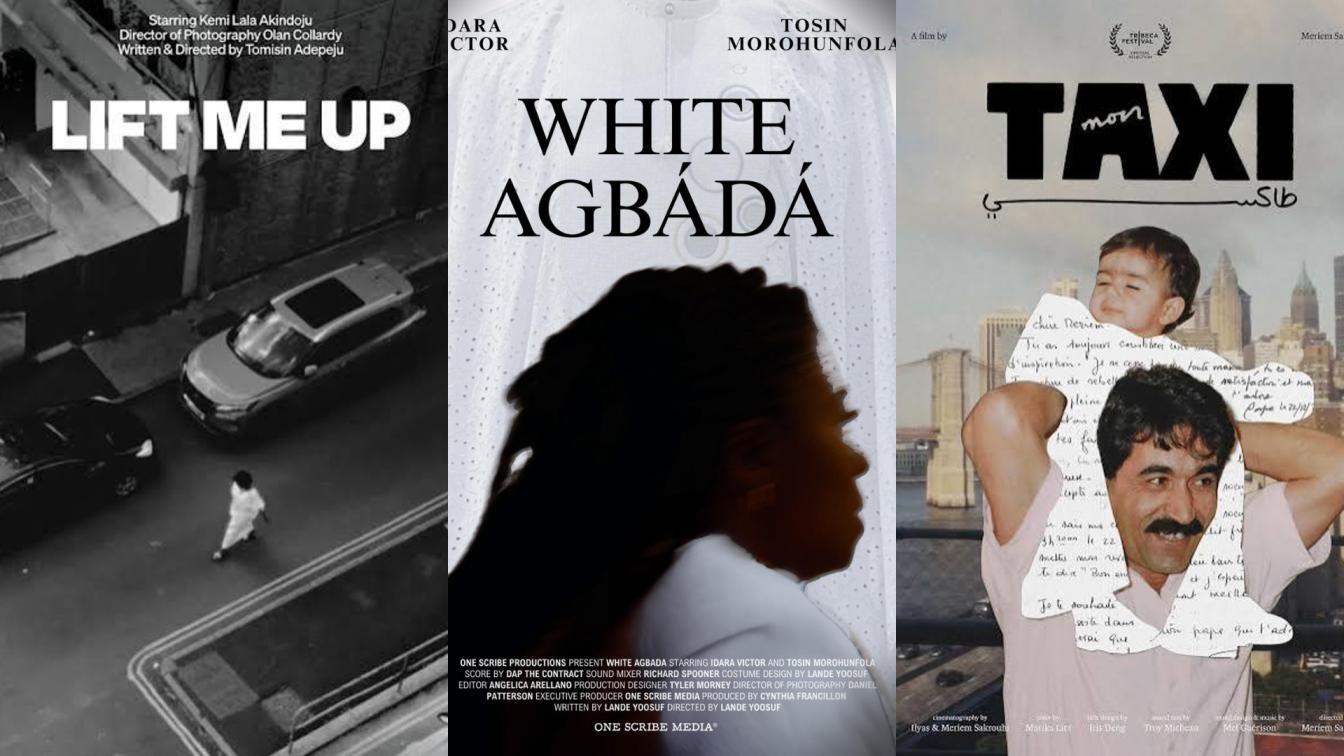

Each of the three films relies on social cues, cultural backdrops, symbols and a rich array of cinematic elements and techniques as they express their sentiments about the complex nature of human existence.
By Adedamola Jones Adedayo
Short films are known for their ability to expose audiences to diverse experiences within a limited runtime, revealing intimate and intense experiences that can be connected with broader experiences about identity, memory, spirituality and the human condition. At the recently concluded HollyShorts film festival, three Afrocentric films, Nigerian-British filmmaker Tomisin Adepeju’s Lift Me Up, Moroccan filmmaker Meriem Sakrouhi’s Mon Taxi and Nigerian-American filmmaker Lande Yoosof’s White Agbada, approach these themes from different perspectives.
Each of the three films relies on social cues, cultural backdrops, symbols and a rich array of cinematic elements and techniques as they express their sentiments about the complex nature of human existence. Both Adepeju and Yoosof tap into their Nigerian roots in diaspora-set narratives, with the former creating a universal atmosphere of grief, sobriety and uncertainty, and the latter announcing a more palpable connection with Yoruba ancestry and spirituality.
Likewise, Sakrouhi transforms bereavement into an intimate conversation with a departed father, engaging with memory and loss. Each film, examined individually below, demonstrates how longing can manifest as silence, remembrance, or a call for transformation.
Lift Me Up
What happens when what should be one’s fountain of love and happiness becomes a source of grief and foreboding? This question forms the premise of Lift Me Up, a short film written, produced and directed by Nigerian-British filmmaker Tomisin Adepeju.
Here, using black-and-white cinematography and magical realism, Adepeju embarks on a poetic, minimalist exploration of grief, uncertainty, and spirituality. The short film moves with a slow pace, driven more by character focus than narrative development, but giving rise to apprehension and a largely melancholic atmosphere.
Grief comes across as a state devoid of intense drama yet heavy with ill foreboding and rooted in helpless circumstances. Rather than resorting to wordy, evocative depictions, the film approaches it with restrained scrutiny, engaging the audience through symbols and visual imagery they are left to interpret.
Set in England, Lift Me Up stars Nigerian actress Lala Akindoju as Esther, a woman who approaches her husband’s health predicament with reticence and unspoken concern. With her husband gravely ill, Esther is thrown into a state of emotional turmoil, confronting the uncertainty of his condition and the possibility of a future without him.
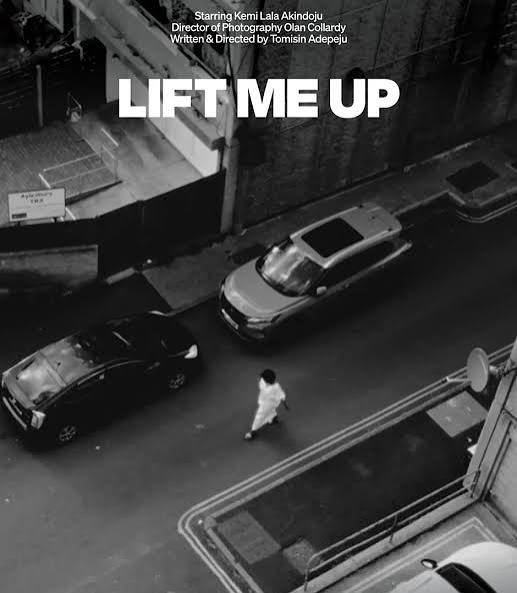
In what is an intimate, contemplative cinematic offering, Esther talks only when absolutely necessary, keeps her hair rough, looks distressed, lingers on her surroundings, often wanders off in imagination and wears a signature gloom typical of the bereaved. Endowed with observational ability and body language that compensates for the sparseness of verbal communication, the character dramatises what it means to be disconnected from a loved one and how such estrangement can affect one’s state of mind and psychological well-being.
Each scene in Lift Me Up carries a weight of memory, absence and an emotional gap, from the opening conversation between Esther and her son to the visitation from acquaintances and allies. The quiet prayers and silences leave behind an imprint of solidarity, yearning and collective grief, revealing how loss goes beyond the individual to become a shared emotional experience.
With the man seemingly in a vegetative state rather than dead, a sense of hope and redemption lingers. But this faint optimism often clashes with Esther’s otherworldly, trance-like reveries, creating a tension between the possibility of recovery and the unsettling weight of uncertainty and despair. In all, Adepeju carefully preserves the production’s Nigerian essence through its opening soundtrack and use of the Yoruba language, launching an appreciable cultural backdrop into universal themes of love, grief, longing, community, spirituality and human connection.
Mon Taxi
In this eight-minute autobiographical documentary set in New York, Moroccan filmmaker Meriem Sakrouhi walks the audience through a highly intimate experience about bereavement, loss and memory. Unlike Adepeju’s distant, storied, character-reliant and economical perspective, Sakrouhi’s approach feels notably personal, effusive and narrator-driven. Built from a series of voiced recordings after her father passed on, the filmmaker reawakens shared memories and colourful experiences spent together with her father during his lifetime.
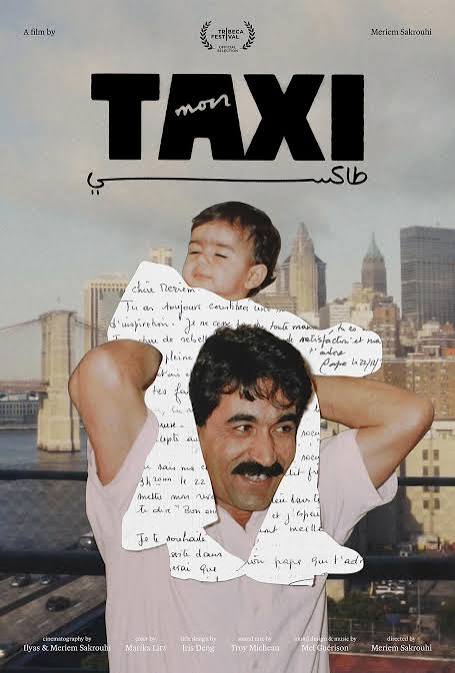
There’s constant reference to papito (“father”) as the filmmaker announces her return to New York with a series of activities reminding her of her father. She talks about being overwhelmed, interested in Asian food, attending to fig trees, being taken to her favourite café, finishing her script, re-reading her father’s book, participating in a protest, and being unable to see the Empire State Building from their apartment as before because the city is now populated with skyscrapers, among other fine details reminding her of ties with the man. The narrative features elements of a personal letter/essay, monologue and travelogue, making up a hybrid form and experimental style that challenges conventional filmmaking.
What makes this hybrid style particularly enchanting is the way it approaches grief and mourning differently. It is not uncommon for art centred on such themes to be deliberately imbued with a gloomy or depressing atmosphere. In film, this may manifest through slow pacing and characters who appear mundane or disenchanted.


Mon Taxi, however, does not follow suit. Instead, it brims with life, using moving images to capture the busy, vibrant streets of New York. With music by Mel Guérison and colour by Marika Litz, the film presents human existence as a place of hope, adventure and colour amid the pain and detachment that death can bring. Though the narrator is not particularly exuberant, her voice harbours a palpable passion. Her willingness to share information is also conspicuous, even as it varies to different degrees across the patchwork of voice recordings.
White Agbada
In this drama, a Nigerian-American woman battling depression refuses a trip to Nigeria that is supposed to help her reconnect with their roots and get her life back in order. When a supernatural visitor dressed in white agbada surfaces in her home, it becomes a cue for her to reconsider her decision. Produced by Cynthia Francillon and Janus Vogel and written and directed by Lande Yoosof, the film shows the connection between humanity and spirituality, particularly how one’s knowledge of and interaction with the supernatural may influence their personal decisions.
The title of the film is named after agbada, a flowing Yoruba outfit that is worn during special events and occasions such as weddings and festivals. It is often perceived as a symbol of virtue and prestige with spiritual significance in Yoruba and West African traditions. Its imposing silhouette expresses confidence, power and leadership that is associated with masculinity. Yoosef imagines the attire as a part of a metaphysical experience and reawakening that reminds the principal character of her ancestral ties and reinforces the superiority of tradition over modern values.
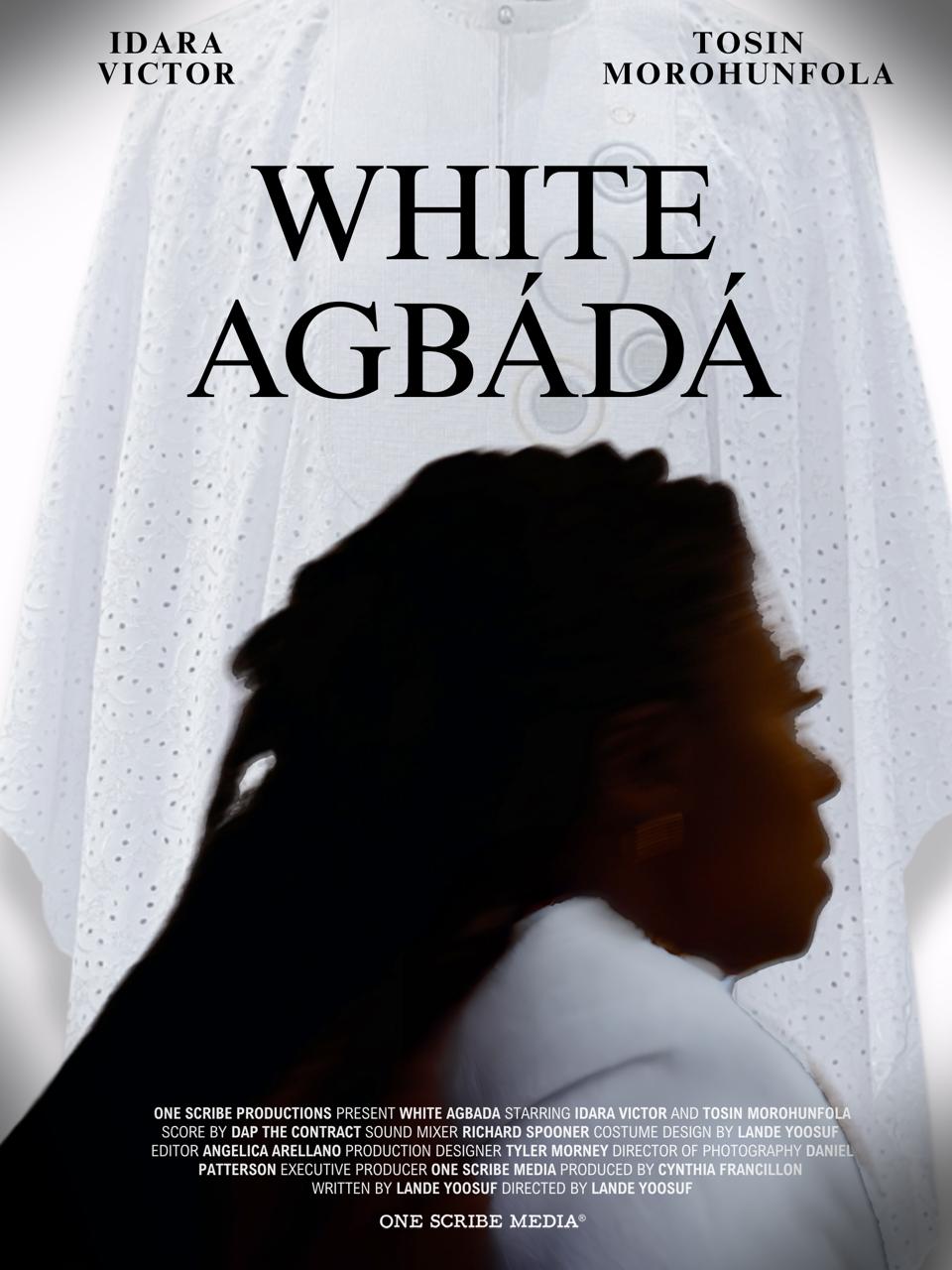
The film has Idara Victor portraying the protagonist Ibironke, a young lady in America who is partly disconnected from her Nigerian cultural heritage. Over a call with a relative, she turns down a chance to revisit the country, a reunion that is supposed to have some effect on her psychological well-being. Her life is also presented in conversations as a bit of a mess, even though this isn’t depicted with graphic detail. She misses therapy sessions and misses out on marriage to a romantic interest, which are signs of her world falling apart.
As much as there’s effort to Nigerianise the narrative through the mention of terms like “juju prayers”, “aso ebi”, “chinchin” and “aje” in dialogues, all of which are grounded in the country’s sociocultural realities, these casual references do not leave a particularly profound impression even though they point to the heterogeneous, multicultural and religious nature of human identity.
Similar to Lift Me Up, where the protagonist’s Nigerian identity surfaces in the use of language, White Agbada presents characters with cultural names and ties within a diasporic environment, an indication of how human experiences may transcend boundaries. But then, White Agbada attracts a more decisive ending, with the protagonist’s mystical encounter compelling her to change her decision and reconsider the trip—which highlights the triumph of traditional values over eclecticism.
Adedamola Jones Adedayo is a film journalist and critic with special interest in African cinema. Through writing and audiovisual mediums, he creates conversations around cinema in Africa and the Diaspora. You can find him on Instagram @jonesthegoodboy and X on AdedamolaAdeda4.