

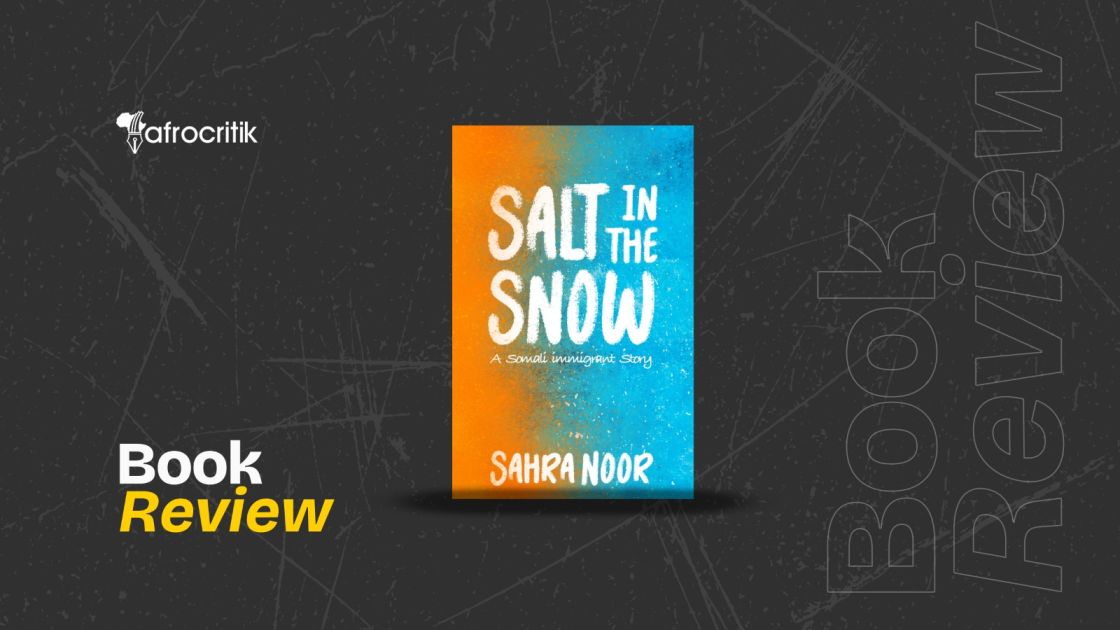

Salt in the Snow examines, amongst other things, the concept of shifting identities: the ways in which we are born anew while on foreign land, and how we assume our known identities on home soil.
By Azubuike Obi
The chronicling of a memoir is a pledge to the power of narrative. To write is to “get naked”, as the American novelist and short story writer, Harry Crews, once wrote, “To hide nothing. To look away from nothing. To look at it. To not blink”. In Salt in the Snow (2026), Sahra Noor’s debut memoir, she recounts her somewhat marvellous story of coming of age in Mogadishu, Somalia, fleeing at the outbreak of a civil war, becoming a refugee in Kenya, and navigating the peculiar struggles of being female, Black, Muslim and immigrant in America.
Noor’s home country, Somalia, is plunged into war in 1990 when a rebel group, the United Somali Congress, sought to overthrow Somalia’s dictator leader, Siad Barre. “War for us had begun quietly, with whispers and worried conversations in living rooms, the sudden closing of schools, the quiet disappearance of some neighbours, the loss of the general routines that had given us a sense of order,” the narrator reflects. Noor does well to capture that haunting horror of war, particularly as it affects women and children: “ I was fifteen, still a child, my body barely hinting at maturity, yet the threat of becoming a rape victim was more terrifying than the sharp cracks of gunfire I heard every day.”
The memoir is divided into three parts, a full; the prologue finds an adult Noor on “a beautiful May morning in Nairobi” in the thick of the COVID-19 pandemic, on the day of the George Floyd murder. After she learns that her father has taken ill, she is helpless as he battles for his life against the pernicious force of Coronavirus across the Atlantic. Soon after, her father dies, and Noor is rendered “an adult orphaned by COVID-19”. The rest of the story charts the deeply emotional connection she shared with her father, America’s insidious relationship with race, and the lengths one woman would go to create a life that is meaningful to her.
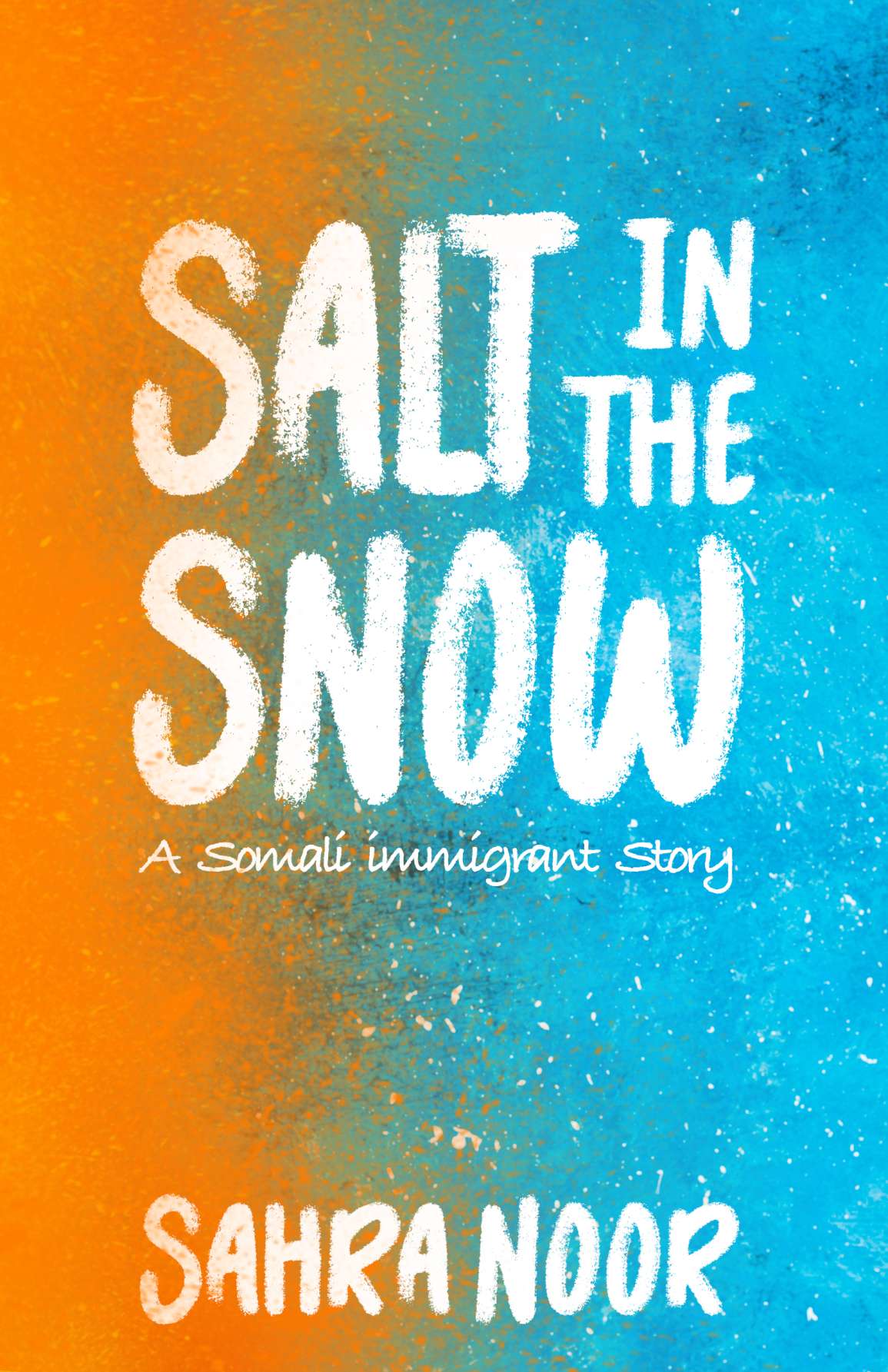
In 1991, Noor’s family, fleeing the war that gradually swept up Somalia, make their way to Kenya— there they become refugees. They soon become resettled in America, and only then does life truly begin for them again. But they carry with them stories of a home they once knew, even as they try to acclimatise to the new world of America. While this is an immigrant memoir about a woman torn between those two worlds, her relationship with her father, and how she learns to negotiate her agency in the face of her father’s demands and hold on tradition— it is also about that woman, Noor’s, active, still present negotiation with her own two cultures and languages. As a dweller of both worlds, clashes are bound to happen. In Salt in the Snow, English is a tool which Noor bends to accommodate her experiences and her tongue, and by which she, too, is bent.
In the memoir, we often encounter phrases such as “in Somali”, which is followed by an explanation of a Somalian concept. Or straight up, unprompted, anthropological explanations of Somalian terms. Take, for instance: “Our wedding day began with Soodoonis, a Somali tradition where the groom’s family formally asks the bride’s father for his daughter’s hand in marriage, symbolising the joining of the two families.”
It is as though the writer writes in anticipation of an audience that is not Somali (or African), one in which she needs to explain nearly every specific aspect of her culture. It makes for clear reading, but it is necessary that we interrogate its necessity; it is a product of the aforementioned clash: living a Somalian life and translating that experience to English for an English-speaking audience. But this is nothing new. Since time immemorial, translation and explanation have been the burden of the African writer. It is, however, worthy to note that Noor has mastered these translations, or at least has come close to a mastery of them, such that, like in the fictions of Chimamanda Ngozi Adichie, the expositions are enmeshed in the main text and hardly slow the reading.

Creative nonfiction is essentially a song and dance; a performance of unravellings and a stitching back. In Salt in the Snow, this performance filters through Noor’s writing. Consider this passage on her and the hijab:
“I began wearing the hijab in the camp. It wasn’t a grand gesture, and I didn’t have a sudden spiritual awakening that led me to it. I saw all the other teenage girls in the camp wearing one, and I asked Aabe [her father] to buy me one so I could blend in. It was that simple.”


Sly as these sentences are, they are lifted from a block of narrative text, not an interview, yet, in these sentences, the narrator takes up a bizarrely defensive position.
We cannot, however, divorce literature from the context of its production. In an era of increased paranoia and hostility towards migrants, should it be surprising that a migrant author takes up a defensive position when speaking about an article of clothing that has generated so much discourse and has come to symbolise so much, and not many of those symbolisms are positive?
Salt in the Snow examines, amongst other things, the concept of shifting identities: the ways in which we are born anew while on foreign land, and how we assume our known identities on home soil. Against the background of Somalia’s civil war, Noor delineates this in tender, evocative language. We find an exploration of America’s insidious binary relationship with race when, upon entrance into promise land, nineteen-year-old Noor fills out a form where she is required to check a box for Race. She ticks that which begins with “‘B’, for Black or African American”, as instructed by her father. Later, she looks at her forearm, then queries rather perceptively: “Did I mark my skin as ‘black’ when it was actually light brown?…The lady we met in the office would not be considered pink; she would mark herself as “white.””.
In Salt in the Snow, Sahra Noor has delivered the tremendously moving story of “nomads of a different kind”, of a people torn between worlds and languages as they try to make a name for themselves on foreign soil. In a world of increasing anti-migrant sentiments, Noor’s story moves across Somalia, Kenya, and America to show us the humans behind all the news coverage. Inasmuch as it tackles the political, the personal remains at the centre of the narrative, lending it the capacity to endure.
Azubuike Obi is an Igbo storyteller who believes in the transformative power of language. He won second place in The Republic Student Writing Competition (2025), and was nominated for Chika Unigwe’s Awele Creative Trust Award (2024). His fiction and nonfiction have appeared online and in print in The Republic, The Weganda Review, Naira Stories, Afapinen, Efiko Magazine, and elsewhere. He is a regular contributor at Afrocritik.