

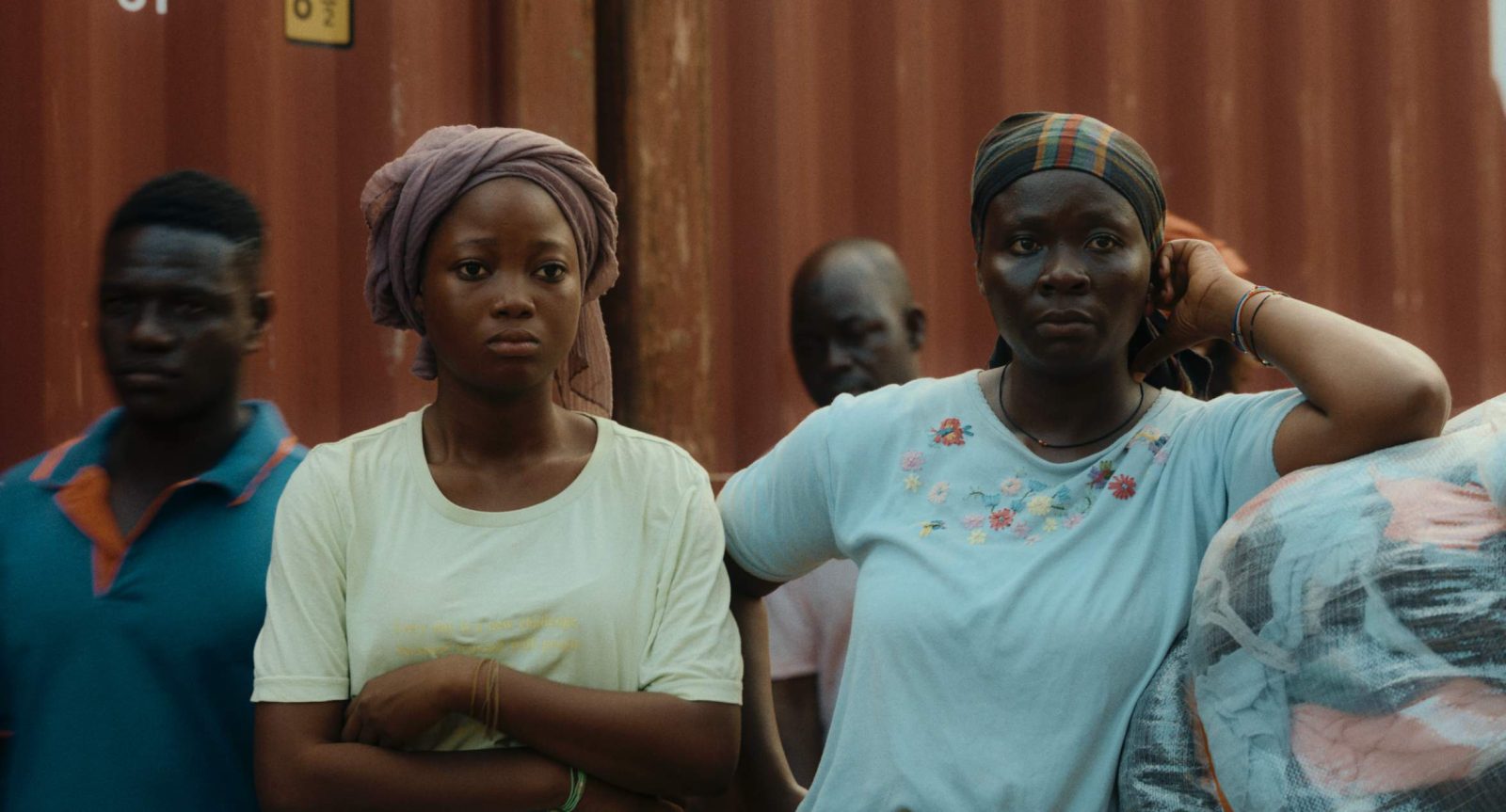

Zjili explores sisterhood, exploitative capitalism, ambition, and girl‑child subjugation, moving fluidly between rural and urban Ghanaian life.
By Jerry Chiemeke
In Accra’s Kantamanto Market, more than a thousand people, mostly young women who have migrated from northern Ghana, make their living carrying bales of secondhand clothing shipped in from across the globe. The work is called Kayayei, a term that translates roughly to “she who carries the burden”. These women are subjected to gruelling, poorly-compensated labour that causes both body and mind to erode.
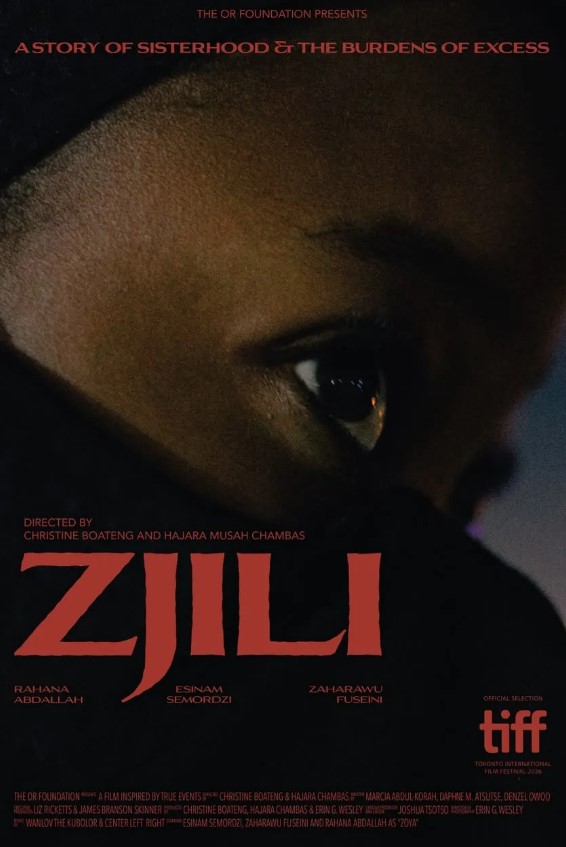
It is on this canvas that Christine Boateng (Tejiri, The Burial of Kojo) and Hajara Musah Chambas situate their debut feature, Zjili: A Story of Sisterhood and the Burdens of Excess (2026). Developed in partnership with the Or Foundation, the film is based on a screenplay by Marcia Abdul-Korah, Daphne Atsutse (A Baby for You and Me), and Denzel Owoo.
At the heart of Zjili is Zoya (Rahana Abdallah), a bright girl from Botingli in northern Ghana who dreams of becoming president. Her father encourages her education, but when he dies shortly after her exam results are released, her world collapses. In a community where girls are still bound by traditional roles and early marriage is seen as a rite of passage, Zoya’s ambitions quickly come under threat.
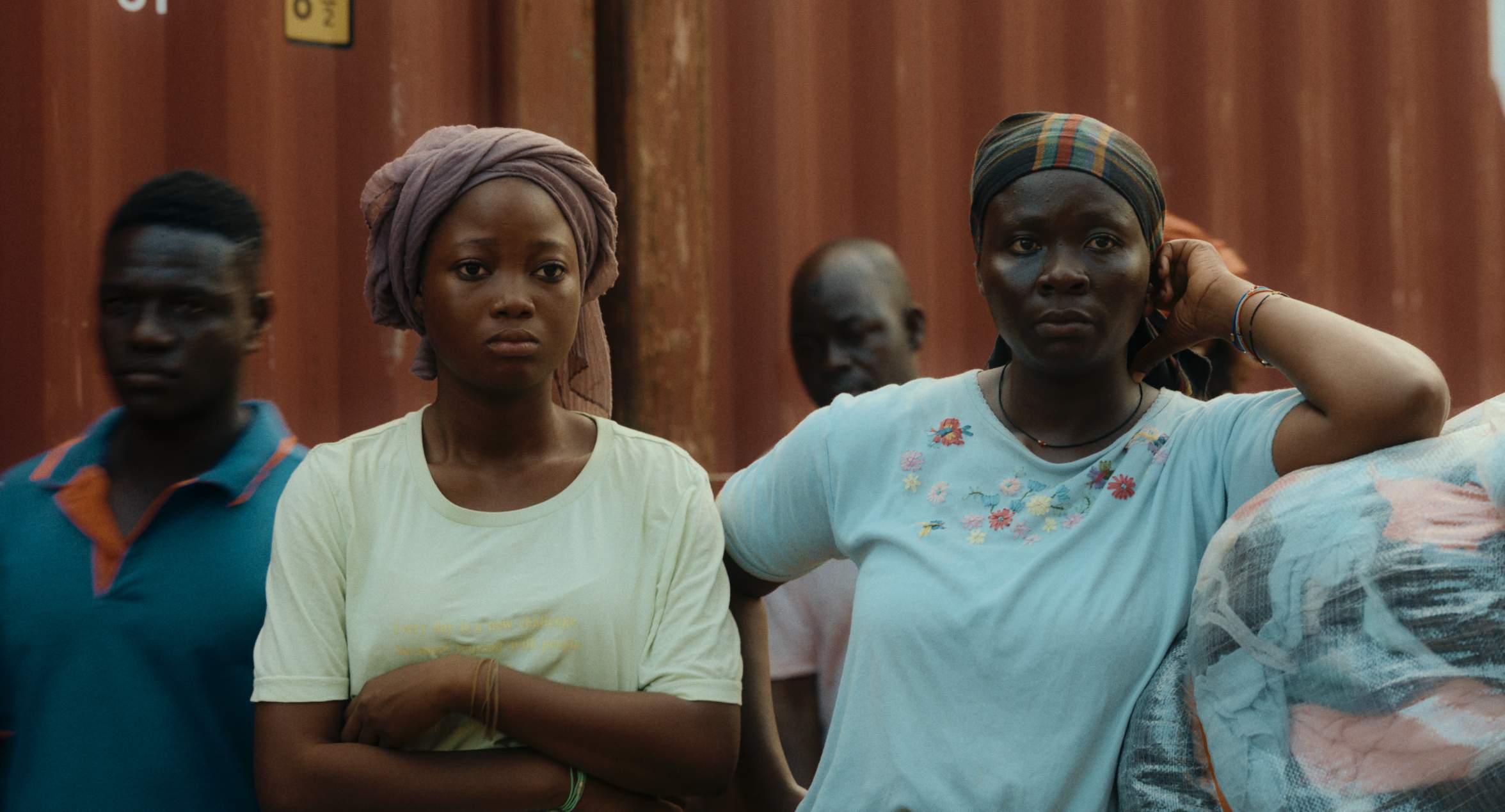
Parallel to her story is Teiya (Esinam Semordzi), a kayayoo in Accra. She lives in a cramped, unfancied suburb under the roof of Mma Chalpang (Zaharawu Fuseini), a landlady whose abrasive exterior masks deep‑seated anxiety and pain. Teiya sends much of what she earns home to care for her sick mother and her own child. Her hardship shows in everything, from the food she can afford to the clothes she wears and the quality of the painkillers she relies on to manage chronic back and neck injuries.
When Zoya’s relatives attempt to marry her off to an elderly man, she flees Botingli under cover of night, joining a bus organised by a woman known as Sister Latifa. Upon arriving in Accra, she is handed to Hawa, a trader who reluctantly employs her but refuses her accommodation. Teiya, who happens to be in the market that day, offers her shelter.
Zoya begins work at Hawa’s canteen, quickly absorbing the chaos of Accra’s suburban hustle. Teiya, meanwhile, dreams of becoming a hairdresser, even as her body threatens to give out. In their shared apartment, the girls trade aspirations with varying degrees of hope. When Teiya asks Zoya why she wants to be president, she replies: “So young girls don’t get married off when they are still children, or have to come here to carry heavy loads to feed their families and pay for water that God has given for free.”
From these intertwined vantage points, Zjili explores sisterhood, exploitative capitalism, ambition, and girl‑child subjugation, moving fluidly between rural and urban Ghanaian life. The film also delves into mental health and gender‑based violence via the story arc of Mma Chalpang, whose scowling façade conceals a history of paternal abuse and a forced teenage abortion she cannot forgive.
Boateng and Chambas draw directly from the real experiences of kayayei, illuminating the hazards in their line of work, including the cumulative dangers to their physical health and the environmental waste they are frequently exposed to. Through the lives of these women illustrated in vibrant vignettes, we see a world bedevilled by discomfort, one where resilience is more mandatory than optional. The perilous nature of the trade is depicted in a scene where Zoya faints after going a long distance with a bale of clothes that proves too heavy for her small frame. Luckily, Mma Chalpang is on hand to revive her, but there’s no sympathy from the woman who had paid for the luggage to be carried.
Yet, Zjili is not all greyness and despondency. Boateng and Chambas weave in pockets of joy: the friendship between Zoya and Teiya is especially tender (a beach scene stands out), the kayayei get to dance with abandon at a local concert, and even Mma Chalpang softens visibly during a reunion with her sister.


Abdallah, Semordzi, and Fuseini deliver deeply embodied performances. It is from their long shrugs, neck rubs, deep sighs and weary eyes that we find a window into the lives of these three key characters. Their stories intersect organically, forming the film’s emotional fulcrum as they confront difficult questions: will Teiya slide into painkiller dependency, or worse, will her body simply give out? Will Zoya manage to stay in school? Will Chalpang ever find peace?
Tackling such heavy material is a bold choice for first-time directors, but Boateng and Chambas handle it with remarkable boldness and an admirable respect for their characters’ humanity. There are more groans than giggles here, and cynics will assert that this production tethers into the territory of “sensationalised suffering”, but perhaps that’s simply the truth of these women’s lives. Perhaps some stories don’t come with any lucky breaks.
Zjili insists that these women are not statistics, and that their stories matter. During production, three kayayei died under loads; the film honours that reality without exploiting it.
*Zjili made its worldwide premiere in the Discovery programme at the 2026 Toronto International Film Festival.
Jerry Chiemeke is a Nigerian-born writer, communications specialist, culture journalist and lawyer based in the United Kingdom. His writing has appeared in publications like Die Welt, The I Paper, The British Blacklist, The Africa Report, Berlinale Press, The Johannesburg Review of Books, Olongo Africa, The Lagos Review, Agbowo, Culture Custodian, and elsewhere. Chiemeke’s work has won or been nominated for the Pushcart Prize, Ken Saro Wiwa Prize, Diana Woods Memorial Award for Creative Nonfiction, Best Small Fictions, and the Quramo Writers Prize. He is the author of the short story collection “Dreaming of Ways to Understand You” (2020), the poetry chapbook “Notes For Nnedimma” (2019), and the hybrid manuscript “The Colours In These Leaves” (2017). For his work as a writer and critic, Chiemeke has been invited to the Cannes Film Festival, Sundance Film Festival, Berlinale, Toronto International Film Festival (TIFF), BFI London Film Festival, and the Lagos Book and Art Festival (LABAF).