



The question, then, is not whether Mama Deola accurately represents Nigerian women. She does not, and no single comic character could. It is what particular idea of Nigerian womanhood she makes available for laughter and what happens when that idea is repeated across popular culture.
By Joseph Jonathan
For several years, Nigerian skitmaker and content creator Folagade Banks has built a following through a roster of comic personas, most notably Mama Deola, his female alter ego: a loud, expressive Nigerian mother defined by wigs, dresses, exaggerated mannerisms and dramatic reactions. What began as a skit character has since travelled beyond short-form comedy into live performances, brand engagements and other public spaces.
In March 2026, Banks appeared as Mama Deola at Kaffy’s Sister Circle, a women’s empowerment event, where he spoke from the character’s perspective about women’s emotional experiences and societal expectations. The appearance prompted criticism and pushed a familiar comic convention into a more complicated conversation: what happens when a male comedian does not simply perform a female character, but uses that character to speak about women’s lives?
The debate has often been reduced to a simpler question: should a man play a woman?
That question has an obvious historical complication. Men have played women for centuries, in theatre and popular entertainment alike. But historical precedent does not settle what a particular performance means. A man playing a woman is one thing; the particular woman he constructs, the assumptions that make her recognisable and the authority she acquires when speaking about women are separate questions.
Mama Deola did not emerge in a cultural vacuum. She belongs to a Nigerian skit tradition in which femininity is often communicated through a familiar vocabulary: the wig, dress, altered voice, exaggerated mannerisms, emotionality, loudness and sexual innuendo. These signals work because audiences already understand what they are supposed to signify.
That is where the more difficult conversation begins. Why has this particular version of womanhood become such a reliable source of comedy? What do these shortcuts suggest about the femininity Nigerian popular culture finds immediately recognisable? And what changes when a character built from those shortcuts moves beyond comedy and begins speaking about the experiences of actual women?

Mama Deola ultimately brings three things into conversation that are easy to conflate: performing a woman, representing womanhood and speaking about women’s experiences. They are not necessarily the same thing.
There Is Nothing New About Men Playing Women
There is a long history of men playing women. In ancient Greek theatre, female roles were performed by male actors, while in Elizabethan England, women were barred from the professional stage, meaning Shakespeare’s female characters were originally performed by boys and men. The practice therefore predates contemporary comedy by centuries.
But that history requires caution. Men did not always play women simply because it was an accepted theatrical convention; in important cases, they did so because women had been excluded from the stage altogether. The history of men performing femininity is therefore also, in part, a history of women’s exclusion from performance. It also makes comparisons between men and women performing across gender less symmetrical than the phrase “cross-gender performance” might suggest.
The practice continued into popular entertainment. In Nigeria, John Okafor’s Rev. Sis. Ibu (2004) is one example of a male comedian inhabiting a female character. Elsewhere, Tyler Perry’s Madea, Eddie Murphy’s roles in The Nutty Professor (1996) and Norbit (2007), and Robin Williams’s Mrs. Doubtfire (1993) demonstrate how extensively the convention has been used in contemporary comedy. These examples establish a history of the practice; they do not establish that every such performance is beyond criticism.
That distinction matters. History can tell us that men have played women. It cannot, by itself, tell us what a particular performance means, what kind of femininity it constructs, or why audiences might object to it. Nor does the existence of the convention make contemporary performances identical to those that came before them. Shakespearean theatre, Nigerian skit comedy and Hollywood comedy operate within different cultural and representational contexts.
This is where Mama Deola becomes more interesting. Banks is working within a Nigerian comic tradition in which femininity is often communicated through immediately recognisable signals: the wig, dress, altered voice, mannerisms and exaggerated behaviour. The audience understands the character quickly because these signals already carry cultural meaning.
The question, then, is not simply whether men have played women before. They have. It is what this particular performance asks those familiar signals to mean. Why are these traits so immediately legible as feminine to Nigerian audiences? And what does it tell us about the version of womanhood comedy has learned to recognise, exaggerate and laugh at?
The Nigerian Skit Has Its Own Language of Femininity
Mama Deola is not the first Nigerian female character created by a man, and her recognisability is part of the point. Long before Folagade Banks became Mama Deola, Nigerian skit makers had already developed a remarkably efficient visual language for turning male performers into women. Sometimes all it takes is a wig, a dress, a higher voice and a few exaggerated mannerisms before the audience understands exactly who they are looking at.
That efficiency is one of the great strengths of the skit. A performer has perhaps a minute or two to establish a character, create a conflict and deliver a joke. There is little room for subtle character development. The audience needs to understand the joke almost immediately, so the performer reaches for traits that are already culturally legible. A wig can communicate womanhood before the character says a word. A particular voice can communicate age or temperament. A dramatic reaction can establish personality in seconds. The problem becomes more interesting when those shortcuts begin to repeat themselves.
Across Nigerian skit comedy, femininity is often constructed through exaggeration: the woman who is excessively loud, excessively emotional, excessively flirtatious, excessively controlling, excessively concerned with appearance or excessively dramatic. The details vary from comedian to comedian, but the basic comic grammar is familiar. The joke frequently depends on the audience recognising the character as a woman and then laughing at the heightened version of behaviours associated with that identity.
There is nothing inherently wrong with exaggeration. Comedy has always depended on it. A comic character is not a census report, and nobody should expect a two-minute skit to provide a nuanced ethnography of Nigerian womanhood. But repetition changes what a joke is doing. When the same traits appear again and again, they begin to function as more than isolated punchlines. They become shorthand.
This is particularly noticeable when male performers create female characters. The performer is not simply changing clothes; he is assembling a recognisable collection of signals that tells the audience, almost instantly, what kind of woman they are supposed to be watching. And because the signals are familiar, the audience rarely has to stop and question them. That familiarity is precisely what makes the phenomenon worth examining.
Why are these the traits we so readily recognise as feminine? Why does a male performer often have to exaggerate femininity for the character to become funny? And why have certain versions of the loud, dramatic, vain, sexually expressive or domestically overbearing Nigerian woman become such dependable comic figures?
These questions do not require us to declare the entire tradition offensive. They require us to examine what repeated comic shorthand can reveal about the way femininity is understood and performed. Once a culture repeatedly uses the same visual and behavioural signals to communicate “woman,” those signals begin to tell us something about the version of womanhood popular comedy finds most immediately recognisable and what other versions it leaves out.
Why Is Exaggerated Femininity So Funny?
Part of the answer is simply that skits are built for speed. A comedian has little time to develop a character before delivering the joke, so exaggeration becomes one of the form’s basic tools. A bigger gesture, sharper voice or more recognisable trait allows the audience to understand the character almost immediately.
This is why the female alter ego works so efficiently. A wig, a dress, an altered voice and a few exaggerated mannerisms can establish the character before she says much of anything. The comedy can then come from the gap between the performer audiences know and the woman he is pretending to be.
But exaggeration needs something to exaggerate. A mildly dramatic woman can become hysterical; a protective mother can become tyrannical; a flirtatious woman can become aggressively seductive. The audience recognises the starting point, and the exaggeration creates the joke. When the same traits repeatedly become the basis for female characters—loudness, vanity, emotional excess, sexual availability, domestic manipulation or irrationality—they begin to form a comic vocabulary of femininity.
This is not unique to women. Comedy has always reduced recognisable social types to a handful of traits: the foolish husband, the miser, the corrupt politician, the overzealous pastor. But gender caricature can turn characteristics associated with individuals into shorthand for an entire group. Audiences can distinguish caricature from reality, but repetition still matters. What is repeatedly used to signify “woman” can begin to feel like an obvious or natural definition of womanhood.
That is why criticism of these characters should not automatically be reduced to outrage over a man playing a woman. Someone can have no objection to the performance itself and still question the narrow collection of ideas through which femininity is being made funny. The question, then, is not whether exaggeration is allowed. It is why, when Nigerian comedy needs to make femininity immediately recognisable, it so often reaches for the same handful of traits and what that repetition reveals about the womanhood being imagined.
Mama Deola Is Not Created in a Vacuum
Seen in that context, Mama Deola becomes less of an isolated controversy and more of a particularly visible example of a familiar Nigerian comic tradition. Folagade Banks did not invent the idea of the male comedian constructing a female persona through exaggeration. What he has done is give that tradition one of its more recognisable contemporary characters.
Mama Deola is immediately legible. The costume, the voice, the mannerisms and the personality do not ask the audience to spend much time wondering who she is supposed to be. She is a mother, a Nigerian woman, a comic personality and, above all, a heightened version of traits the audience already knows how to read. Her effectiveness as a skit character depends partly on that familiarity.
This is why it is insufficient to discuss the character only in terms of whether Banks is a man. The more revealing question is what happens when a performer takes an existing comic vocabulary and concentrates it into a single character. Mama Deola inherits a set of assumptions about what makes a woman funny, particularly an older Nigerian woman. The character’s comedy depends on the audience recognising those assumptions almost immediately.
That recognition can be completely harmless as a piece of comedy. Audiences understand caricature. Nobody watching a skit necessarily believes every Nigerian mother behaves like the woman on screen. The fact that a character is exaggerated does not automatically make the exaggeration malicious. But it is also possible for a character to be funny and still worth interrogating.
In fact, the two things can coexist quite comfortably. We can understand why Mama Deola works as a comic character while asking why the particular traits used to construct her have become so familiar. We can recognise the skill involved in creating a persona that an audience instantly understands while questioning the cultural assumptions that make that persona instantly understandable in the first place.
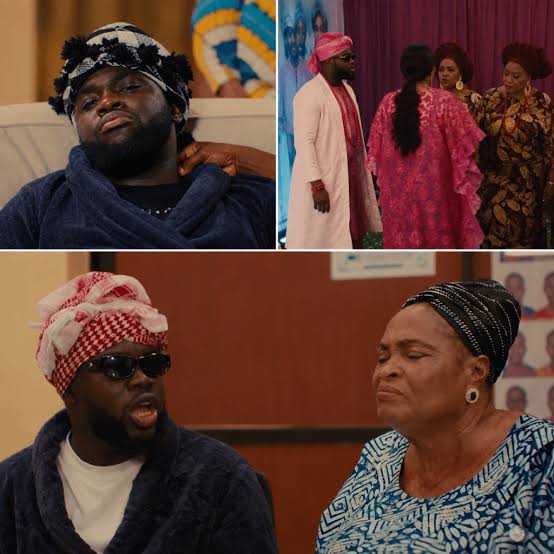
This distinction matters because criticism of Mama Deola can otherwise be flattened into a much easier argument. If someone says they dislike the character, it is tempting to assume that their objection is simply to a man dressing as a woman. But that interpretation leaves out the possibility that what they dislike is the representation itself: the idea that femininity becomes funniest when it is loud, excessive, irrational, sexually charged or otherwise exaggerated.
And there is another complication. A character does not remain culturally insignificant simply because it begins in a skit. Successful characters travel. They move from social media to live performances, films, interviews, events and other spaces. The further they travel, the more they can acquire meanings beyond the short joke that created them. Mama Deola has done precisely that.
So the question is no longer only whether the character is funny. It is what kind of cultural object she has become and what expectations audiences bring to her whenever she enters a new space. That becomes particularly important when Mama Deola is no longer simply being used to make an audience laugh, but is given a platform to speak about women themselves.
The Problem With Saying “It’s Just a Character”
One of the easiest ways to end a conversation about a comic character is to remind everyone that the character is fictional. Mama Deola is not a documentary portrait of Nigerian women. She is exaggerated because comedy depends on exaggeration. Why, then, should anyone analyse her seriously?
Because fictional characters are still products of the cultures that create them. This does not mean every joke contains a hidden political message, or that audiences cannot distinguish caricature from reality. They can. But “it is just a character” becomes less convincing when it is used to suggest that representation has no consequences because it is fictional. A caricature does not exaggerate everything equally; it selects certain traits. When those traits repeatedly correspond to familiar ideas about a particular group, they can reinforce the shorthand through which that group is understood.
The question, then, is not whether Mama Deola accurately represents Nigerian women. She does not, and no single comic character could. It is what particular idea of Nigerian womanhood she makes available for laughter and what happens when that idea is repeated across popular culture.


That question also has practical consequences. If femininity is repeatedly presented through the same exaggerated traits, those representations can contribute to the assumptions audiences bring to real women. And the stakes become greater when the fictional persona leaves the realm of comedy. When Banks uses Mama Deola to speak about women’s experiences, the question is no longer only what the character represents, but who gets to speak through that representation and how much authority audiences grant it.
None of this requires us to prove that Banks intends to insult women. A performer can inherit stereotypes without consciously endorsing them, and criticism of a comic convention need not be a demand that comedians abandon it. But criticism becomes harder to dismiss when it asks not simply whether the character is fictional, but what the fiction does in the real world.
Mama Deola can be funny and still be limited. Audiences can enjoy her and still question what makes her funny. And the debate need not be reduced to whether a man is entitled to play a woman. The more difficult questions concern the history behind that performance, the particular version of femininity it constructs, and what changes when that constructed woman begins speaking about the lives of actual women.
Sister Circle Complicates Everything
If Mama Deola had remained entirely within comedy, the argument might have been simpler. Banks creates an exaggerated female character, audiences decide whether she is funny, and the character exists primarily for entertainment. But Mama Deola has since entered spaces where the stakes are different.
In March 2026, Banks appeared as Mama Deola at Kaffy’s Sister Circle, a women’s empowerment event, where he spoke from the character’s perspective about women’s emotional experiences and societal expectations. That appearance changes the question. A man performing a woman for comic effect is one thing; a man using a female persona to speak about women’s experiences is another.
The distinction matters because representation is not only about whether someone can portray an experience. It is also about who gets to speak, who is heard and who is granted authority. This becomes particularly significant in a world where women continue to contest the power of men to define their identities, autonomy and experiences for them.
That does not mean Banks has nothing meaningful to say about women, or that men are incapable of understanding women’s experiences. But Mama Deola introduces an unusual tension: a male performer assumes a recognisably female identity and, through that identity, acquires a platform from which to discuss the experiences of actual women.
The question, then, is not simply whether Banks intends to offend women. It is what kind of authority the persona acquires when it moves from making jokes about womanhood to speaking on women’s lives. A character built through comic exaggeration and stereotypes is suddenly being used in a conversation about real experiences, real inequalities and real questions of power.
That is what makes Sister Circle significant. The issue is no longer merely who gets to wear the wig. It is who gets to speak through it, who gets to be heard, and what happens when a constructed version of womanhood is given authority to speak about women themselves.
What the “Men Have Always Played Women” Argument Misses
The history of men playing women remains relevant, but only up to a point. It establishes that male performers have long inhabited female characters, from Shakespearean theatre to popular comedy. But history can establish a practice without settling the arguments surrounding it. A convention can exist for centuries and still remain open to criticism, reinterpretation and change. That is why comparisons between Mama Deola and characters such as Madea or Mrs. Doubtfire can be useful without being conclusive. They show that audiences have long encountered men performing exaggerated versions of women. They do not establish that every such performance carries the same cultural meaning, or that every criticism of the practice is misguided.
Mama Deola exists within a specifically Nigerian history of gender, comedy and popular culture. Nigerian audiences have encountered male comedians using wigs, dresses, altered voices and exaggerated behaviour as shorthand for female characters for years. That history shapes what audiences immediately recognise as feminine and therefore what the joke can assume without explanation. More importantly, there is a difference between asking an audience to laugh at a fictional character and using that character to speak about a social group. The latter raises questions of representation and authority that theatre history alone cannot answer.
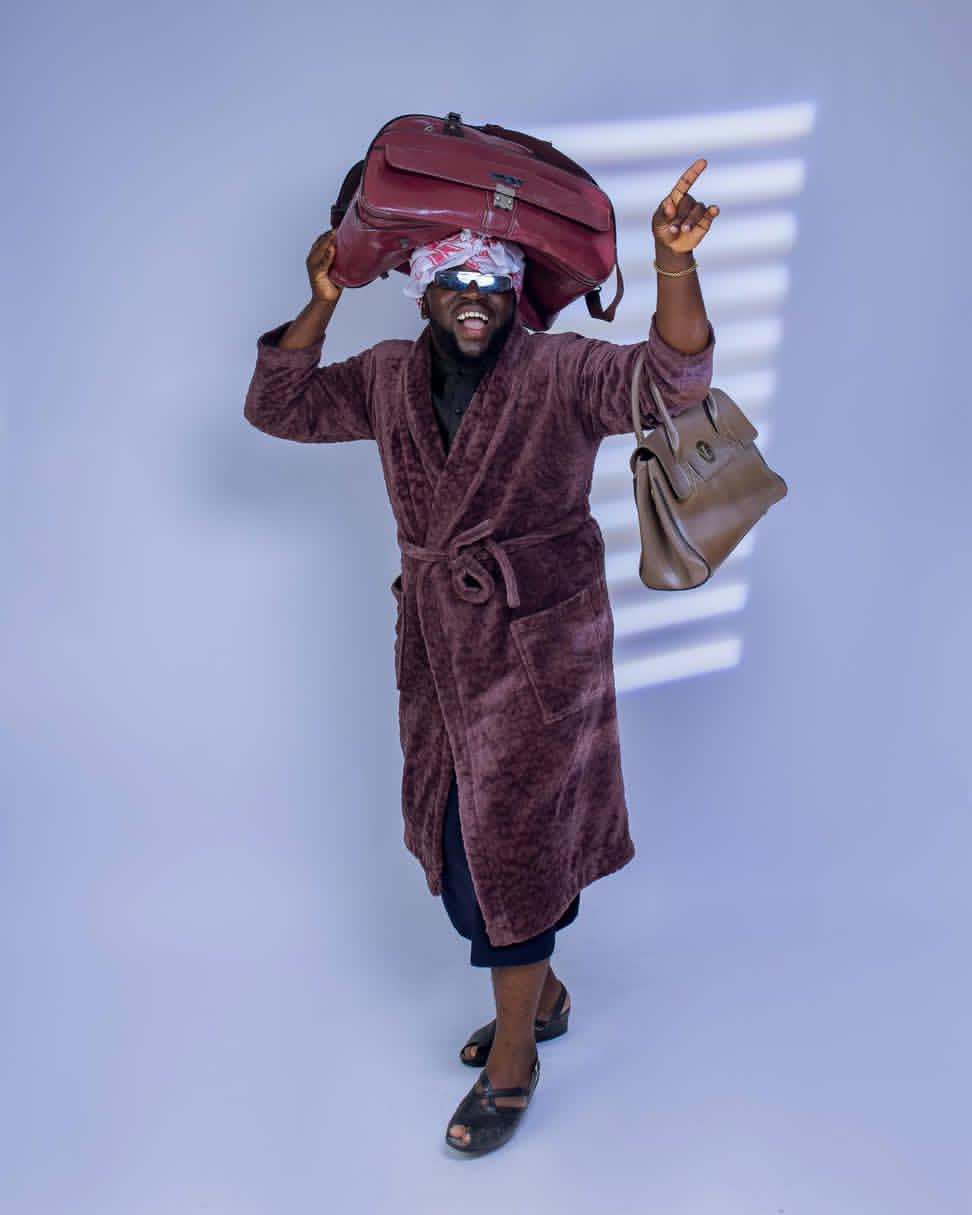
This is where the “men have always played women” argument reaches its limit. The history is relevant, but it cannot settle whether a particular performance should be accepted, criticised or reconsidered. Nor does it make every objection to cross-gender performance inherently misguided. Those are separate questions. What it does tell us is that Mama Deola belongs to a long tradition. What it does not tell us is what that tradition means in contemporary Nigeria, what its recurring representations of femininity communicate, or what happens when a fictional woman is used to speak about the experiences of actual women. It tells us that men have played women. It does not tell us what those women represent or whose experiences they can claim to speak about.
What Are We Actually Allowed to Criticise?
Perhaps the most useful way to approach Mama Deola is to resist the temptation to reduce the controversy to a single question. The objection to a man playing a woman is one argument, and the history of gendered performance gives us reasons both to understand where that convention comes from and to examine it critically. But it is not the only argument available.
There are also questions about the particular femininity Mama Deola constructs. Nigerian skit comedy relies heavily on exaggeration because its characters must become recognisable almost instantly. That explains why wigs, dresses, altered voices and exaggerated behaviour work so efficiently. But explaining why a comic convention works does not make it immune from criticism. The same traits can be funny to an audience and still be worth examining for what they suggest about womanhood.
Then there is the question of representation. Banks can contribute to conversations about women’s experiences without having personally lived them. But when he speaks through a female persona at a women-centred event, questions of voice and authority inevitably enter the conversation. The issue is not simply whether a man is capable of discussing women’s experiences, but what changes when he does so through a character constructed as a woman.
These are different criticisms, and none needs to cancel out the others. Someone can object to cross-gender performance itself. Someone else can accept the convention but question the stereotypes through which a particular character performs femininity. Another person can be less concerned with the performance and more concerned about the authority attached to it when the character speaks about women’s lives. None of these positions automatically answers the others.
That is why reducing the entire controversy to “people are angry because a man is playing a woman” is inadequate. It turns a debate involving performance, gender, representation, history and power into a single objection that can be easily dismissed.
The value of being precise, then, is not simply that it makes the argument tidier. It matters because the way popular culture represents women can shape the ideas audiences carry about womanhood, while the people given authority to speak about women’s experiences can shape which perspectives are heard. Mama Deola can be examined as a comic character, a product of Nigerian skit culture and a female persona carrying a particular kind of representational authority. Keeping those questions distinct matters because these are not merely arguments about comedy; they are arguments about how femininity is constructed, repeated and understood in Nigerian popular culture, and about who gets to speak when those constructions enter conversations about women’s lives.
Joseph Jonathan is a historian who seeks to understand how film shapes our cultural identity as a people. He believes that history is more about the future than the past. When he’s not writing about film, you can catch him listening to music or discussing politics. He tweets @Chukwu2big.