

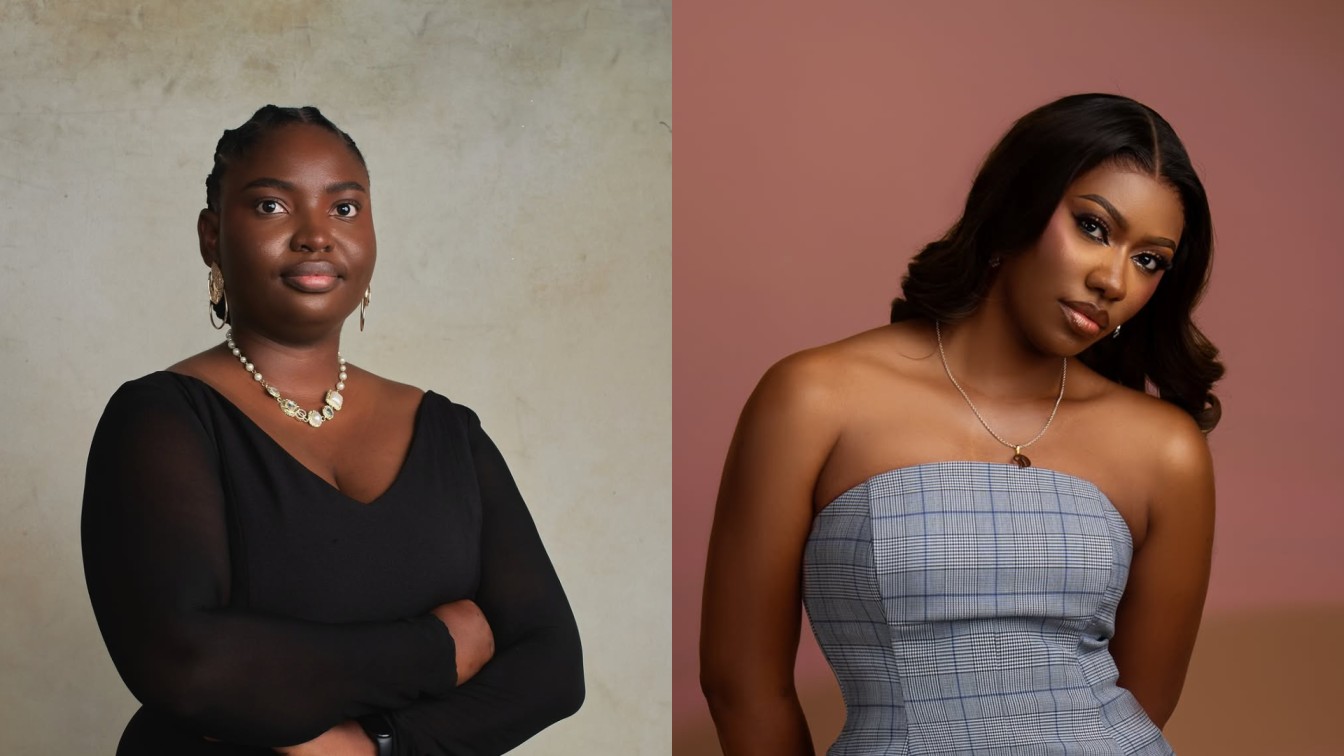

“We didn’t have that kind of infrastructure readily available. We basically had people who believed that we could do it.”— Nora Awolowo
By Adedamola Jones Adedayo
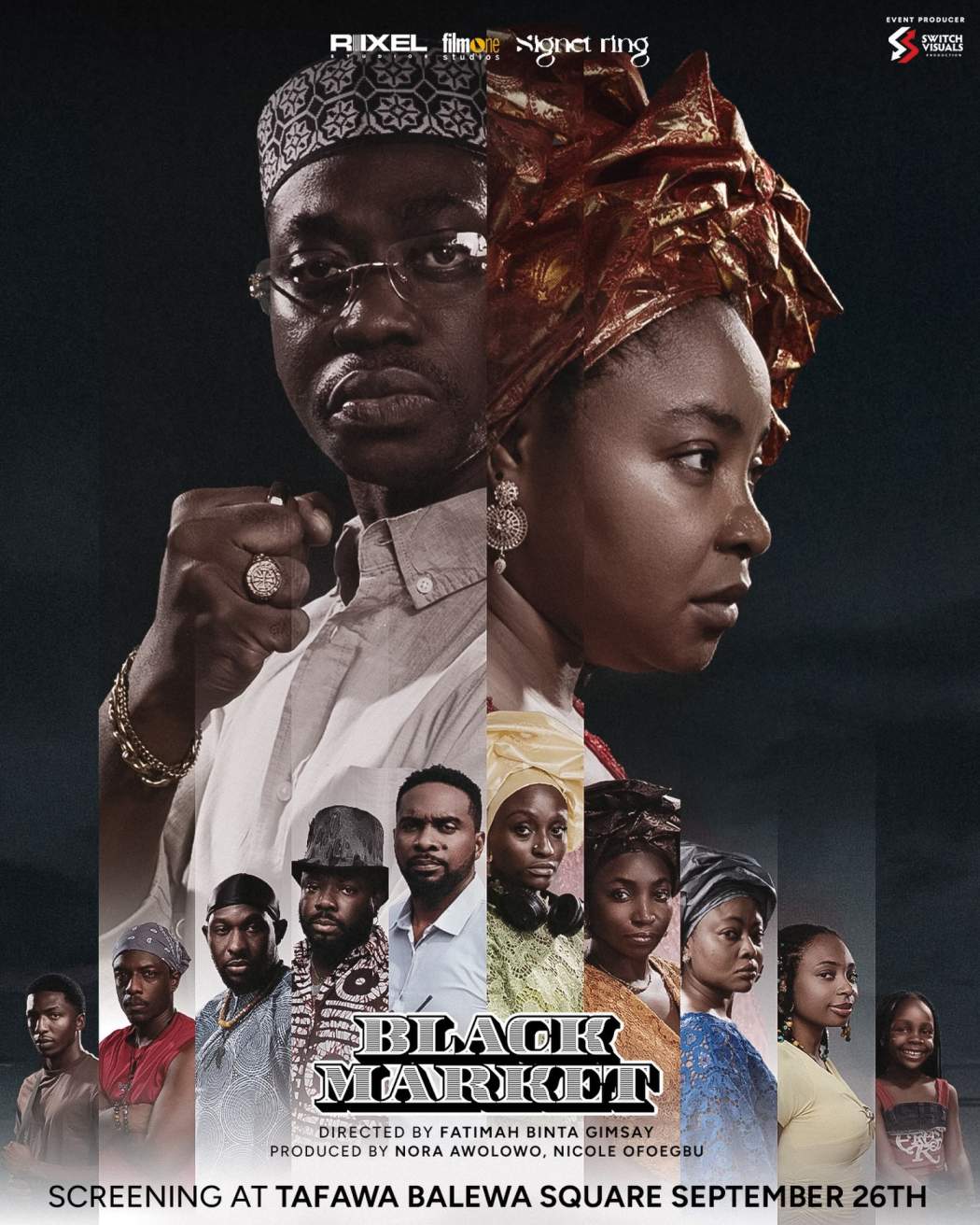
On 28th September, 2026, Nollywood hit a global milestone with the public premiere of Black Market, which drew 51,258 people to Tafawa Balewa Square (TBS), Lagos, setting a Guinness World Record (GWR) for the largest attendance ever at a film screening. The turnout surpassed the previous record of 43,624, set by the screening of the Filipino film Felix Manalo in 2015, by almost 8,000 people. The GWR achievement was spearheaded by producer Nora Awolowo of Rixel Studios and event production producer Damilola Osikoya of Switch Visual Limited.
Directed by Fatimah Binta Gimsay, who co-wrote the screenplay with Abdul Tijani-Ahmed, Black Market is a crime thriller about four women involved in cross-border smuggling operations. When a rival abducts the daughter of one of the women, the crew undertakes a mission that not only tests their loyalty but also puts their lives at risk. The film stars Linda Ejiofor-Suleiman, Lateef Adedimeji, Ibrahim “Itele D’ Icon” Yekini, Taye Arimoro, Scarlet Gomez, Teniola Aladese, and Omowunmi Dada, who also serves as a co-executive producer.
Produced under Awolowo’s Rixel Studios, the film’s record-breaking premiere was conceived not simply as a screening, but as a large-scale communal experience that brought together thousands of Nigerians to watch a film in a non-traditional setting. Before the screening at TBS in front of more than 50,000 people, the idea of using a large-scale communal screening to reach audiences had already been taking shape in Awolowo’s mind.
The idea, she explained, began during production and distribution conversations around Red Circle (2025), her producing debut with which she also implemented unique marketing strategies. At the time, she had thought about embarking on a university tour with the film, hoping to maximise its reach through community and campus screenings. The plan fell through due to financial and logistical implications.
But then came the experience that propelled her. An event organiser in Ilorin approached the producer about showing Red Circle to at least 2,000 people. The cast did not have to be present. He simply wanted the licence to screen the film, to which Awolowo consented. This became a testing ground for the community screening initiative.
While the notion of community screening is not entirely new to Nigerian cinema, it was recently revisited through the trajectory of Femi Adebayo’s Agesinkole 2: King of Thieves (2025) in light of the industry’s current distribution challenges. As Joseph Jonathan aptly noted in an Afrocritik essay this mode of screening prioritises “proximity, access, and audience specificity over prestige venues and commercial spectacle.” The approach was also adopted by Awolowo and her team alongside conventional theatrical runs for the distribution of Red Circle, and was reportedly tested in cities such as Uyo, Owerri, Enugu, and Kaduna.
“When I saw the videos from the event, I thought, ‘This is interesting’,” Awolowo recalled over a Google Meet call, reacting to the Ilorin screening experience. “If somebody in Ilorin could bring 2,000 people together simply to watch a film, mingle and have a good time, why couldn’t we do something similar in Lagos?”
Afterwards, Awolowo began preparing with director Gimsay and co-writer Tijani-Ahmed towards developing a film that could sit at the centre of a record-breaking experience. She intended to make the film screening more entertaining and less intricate for the audience. The ambition looked simple on the surface but required tact in execution. Audiences would come together to watch and enjoy the film in a non-traditional theatrical space, bearing in mind that they had participated in something unprecedented.

The eventual confirmation of 51,258 attendees for Black Market was particularly an emotional moment for Awolowo. She admits there is already a video of her on the internet crying, which validates the hard work that went into the project. “We didn’t have that kind of infrastructure readily available”, she said. “We basically had people who believed that we could do it.”
Behind the scenes, the team had been following the numbers closely, with registrations moving from the first 1,000 to 2,000, 5,000 and 10,000. Hitting these numbers was already a milestone as far as Awolowo was concerned. But registrations peaked at approximately 77,000, even though not everyone showed up. The reality on ground showed the important nature of community screening, as Awolowo noted how people claimed to have come from as far as Akure and Onitsha. It highlighted not only its communal sensibility but also the way it creates a shared experience by bringing together people from different backgrounds, fostering a sense of collective identity and belonging.
“After this, I’ve seen people send me emails because I developed a newsletter from Red Circle into this, begging me and saying, ‘I hope I’m not going to stop my newsletter. I hope I’m not just going to do this,’” Awolowo added. “And it just shows that you are writing to strangers all over the world that you’ve probably never met before, and you are not going to meet, but they know your mind, and they are with you on this journey.”
For her, being able to pull such a crowd was mind-blowing because the event was neither a musical concert nor a religious gathering. It was a film event, orchestrated by folks who hadn’t become household names.
The financial reality of the event was, however, vague. Awolowo declined to disclose the actual production budget for both the film and its record-breaking event itself, but noted that the latter outweighed the former. “The cost of the event was way higher than what we used to make the film, almost times two,” she said.
Like Awolowo, Osikoya maintained discretion, describing the event expenditure as “insane”. The screening happened alongside games, brand activations, artiste performances and other side attractions designed to keep people engaged before and around the film. Brand partners and sponsors included Zenith Bank, Swoop, MTN, Puma, Oraimo and Canon, with Awolowo named as a Brand Ambassador for Canon shortly after the screening.

When questioned about the possibility of the current achievement reinforcing the capacity of Nollywood to handle productions and experiences of global scale, Awolowo responds with optimism. For her, there is no limit to what a producer can achieve.
Still, this optimism does not erase the memory of the heavy logistics and infrastructure that came with the event. And it is here that Osikoya’s role became fundamental. As the event production producer, Osikoya was responsible for helping translate Awolowo’s screening vision into the actual event that could accommodate such numbers.

When Awolowo first approached her with the idea and with a plan for sponsorship, Osikoya envisaged that the cost of the entire event would amount to a billion naira. As founder and CEO of Switch Visual Limited, she engaged the services of her team and got extra hands to work with, including over 800 volunteers. She also engaged the services of the Nigerian Police—making arrangements for at least one policeman for every 50 persons—bodyguards, and the Ministry of Transportation for crowd control and audience management.
“Managing people is also one of the hardest things you have to do”, Osikoya admitted. “That was also very challenging. But at the end of it, what is important is that we were able to get done what was needed, and we were able to actually achieve the feat that we set out to.”
Documentation, she claimed, had started in the build-up to the event. At the arena, there were over 22 camera setups, including drones, steadicams, people on gimbals, as well as content creators following different stories and POVs. She also recognised the film’s marketing campaign for attracting an audience that understood the nature of the event.
Considering what Switch Visuals achieved with the scale of the event, Osikoya has developed strong confidence with respect to other grand projects. “I’m super pumped about doing amazing work on a large scale”, Osikoya stressed. “We don’t, of course, want to stop here. We want to do more of this”.
It appears that this GWR stride with Black Market means for Awolowo and Osikoya goes beyond just a singular, isolated achievement. Nigerian filmmakers and event producers are encouraged to come together and explore alternative distribution systems outside traditional avenues. For Awolowo, the current feat is evidence of hope and inspiration for young filmmakers like herself in the audacious quest for new possibilities. Similarly, Osikoya sees it as a starting point, a signal for bigger and more ambitious productions.
Adedamola Jones Adedayo is a film journalist and critic with special interest in African cinema. Through writing and audiovisual mediums, he creates conversations around cinema in Africa and the Diaspora. You can find him on Instagram @jonesthegoodboy and X on AdedamolaAdeda4.