

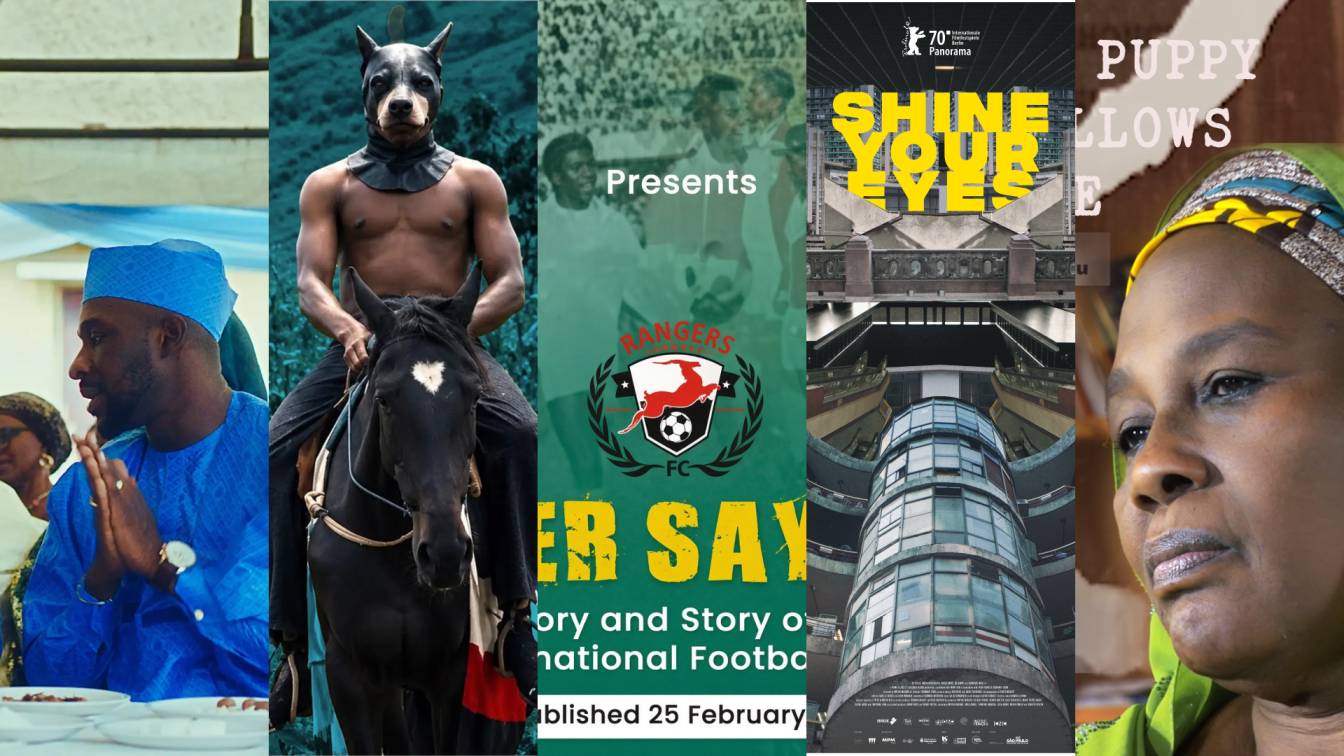

Contained in this dispatch are brief reviews and commentaries on the five films on the programme not previously covered by Afrocritik: Shine Your Eyes, By Design, Never Say Die, Sin Is a Puppy That Follows You Home, and Breastmilk.
By Vivian Nneka Nwajiaku
When I heard that the Lights, Camera, Africa! Film Festival was returning, I was unsure of what to expect. Before the S16 Film Festival became the home in Lagos for diverse African indie filmmaking, there was Lights, Camera, Africa! Film Festival, established in 2011 to “share a diverse range of African and independent cinema” and “stimulate discourse on issues and experiences that are rooted in the African experience.”
Across nine editions, LCA! grew into a formidable platform, hosting premieres and screening films, including Jihan El-Tahri’s Cuba: An African Odyssey (2007), Hawa Essuman’s Soul Boy (2010), Abba Makama’s Green White Green (2016) and The Lost Okoroshi (2019), Raymond Malinga’s A Kalabanda Ate My Homework (2017), Ema Edosio’s KASALA! (2018), and Adekunle Adejuyigbe’s The Delivery Boy (2018).
Then came 2020. COVID-19 hit, and a physical event became impossible for the festival, creating a fundamental challenge for a film festival whose priority was to facilitate in-person discourse. The LCA! Film Festival could not be held as planned that year. And unfortunately, it never returned. Well, until now.
The aptly themed “Convivium: In Gathering” edition ran from 1st to 3rd October, 2026, with a level of sanity that rivalled only that of the S16 Film Festival. I should not have found this surprising, considering that the S16 Festival was inspired by LCA!, as Ugoma Ebilah, founder of LCA!, noted during a media briefing ahead of the festival. But the expectations I have come to have of many festivals, in the years of LCA!’s absence, have been expectations of disorganisation and a larger interest in panels and photo ops than in the actual film screenings.
In those years of LCA!’s absence, Nigerian and Nigerian-adjacent cinema enjoyed rare attention on the international festival circuit. Between 2020, when the Esiri brothers helped open the door to Nigerian feature films at the big three film festivals with the Berlinale premiere of the critically beloved Eyimofe (This Is My Desire), and 2025, when the Davies brothers sealed the deal with the celebrated Cannes selection of My Father’s Shadow, it sometimes felt like Nigerian cinema was finally coming of age. I imagine that some of those travelling films might have had their Nigerian premieres at LCA! However, having been offline in those years, LCA! now has to play catch up.
To indeed catch up, this year’s ten-film programme presents some of the well-travelled films from the past seven years, including the current year, alongside smaller and more modest films. Afrocritik has covered some of these films across the years, specifically Akinola Davies Jr.’s Sundance-winning Lizard (2020); Joel ’Kachi Benson’s Emmy-winning Disney original documentary, Madu (2024); Kagho Idhebor’s S16 Film Festival Audience Choice Award winner, My Jebba Story (2025); Ema Edosio’s When Nigeria Happens (2025), which was the first African film to open the Open Doors section of the Locarno Film Festival which in 2025 began its four-year Africa focus; and Praise Odigie Paige’s Sundance-selected Birdie (2026).
Contained in this dispatch are brief reviews and commentaries on the five films on the programme not previously covered by Afrocritik: Shine Your Eyes, By Design, Never Say Die, Sin Is a Puppy That Follows You Home, and Breastmilk.
Shine Your Eyes
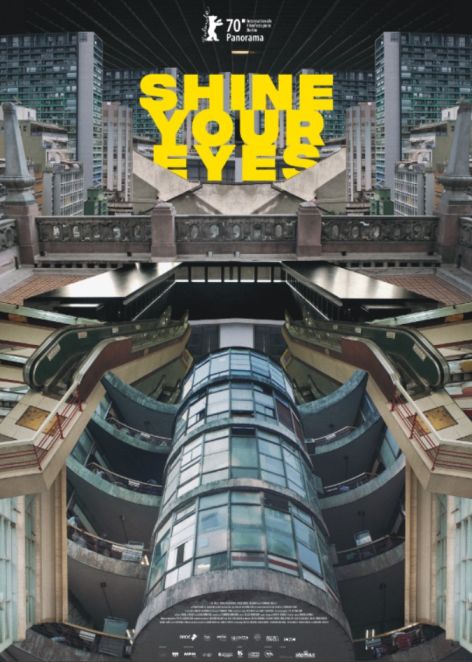
Fittingly, LCA! 2026 opened with Shine Your Eyes (2020), a feature film that shares a lot in common with Eyimofe but I think could not be more different. They both premiered at the 2020 Berlin International Film Festival. They both sit comfortably in migration-themed cinema. They are both Nigerian-centred, starring a combination of home-bred and diasporan Nigerian cast. But while Arie and Chuko Esiri are Nigerians whose film was produced and set in Nigeria, Shine Your Eyes is a Brazil-set Brazil-France co-production from Brazilian director Matias Mariani.
Led by Nigerian actor O.C. Ukeje, the film follows Amadi Igbomaeze, a young man who travels to Brazil in search of his older brother, Ikenna (Chukwudi Iwuji), who has mysteriously disappeared. Their family back home has placed all their hopes in the brilliant Ikenna, whom they believe to be a successful professor in São Paulo, and who, as the first son of an Igbo family, is expected to replace their late patriarch as the family head. Although it is Amadi who has been home and available the entire time, the consensus is that Amadi cannot do it. However, in Brazil, Amadi discovers truths about his brother that cannot be easily reconciled. Ultimately, he must decide whether to return home and step up or to reinvent himself in a foreign land.
It has been about half a decade since I first saw Shine Your Eyes. Since then, I have seen more vivid portraits of Igbo diasporan communities, from Kayode Kasum’s Lagos-set Áfàméfùnà: An Nwa Boi Story, which premiered at the Africa International Film Festival (AFRIFF) in 2023, to Kalu Oji’s Melbourne-set Pasa Faho, which premiered at the Melbourne International Film Festival in 2025 before a Nigerian premiere at AFRIFF in the same year. As such, Shine Your Eyes now feels like an underachiever in that regard.
Nonetheless, the film’s exploration of the pressures imposed on migrant relatives, especially those perceived as accomplished, remains relevant today. Even more visceral are the subtle ways in which the film captures the burdens of agnatic primogeniture, the torture of living as a spare in the shadow of the heir, and the strenuous and rivalrous effects that this dynamic inevitably has on fraternal relationships.
Yet, for all its heaviness, Shine Your Eyes unfolds at a soothing pace, with a pristinely symmetrical visual experience and an immersive cultural soundtrack, giving the film a seductive quality that matches Amadi’s new city while invoking the nostalgia of his native home.
By Design
What is a film festival without a tale of African or Nigerian dysfunction? This year, LCA! has two, one of which is the overwhelmingly overt By Design (2026), directed by Oba Kosi Nwoba and set in Eastern Nigeria (filmed in Nsukka, Enugu). In this film, a young man (played by Frank Ugwuoke) intent on watching a Nigerian football match encounters a series of unfortunate events, and everything bad that can happen to a Nigerian does happen to him in the brief space of one day.
I admit that the latter part of that statement is an exaggeration, but so is this film in which the concept of Nigeria happening to a person is stretched too widely for dramatic purposes while also compressed too tightly for heightened impact.
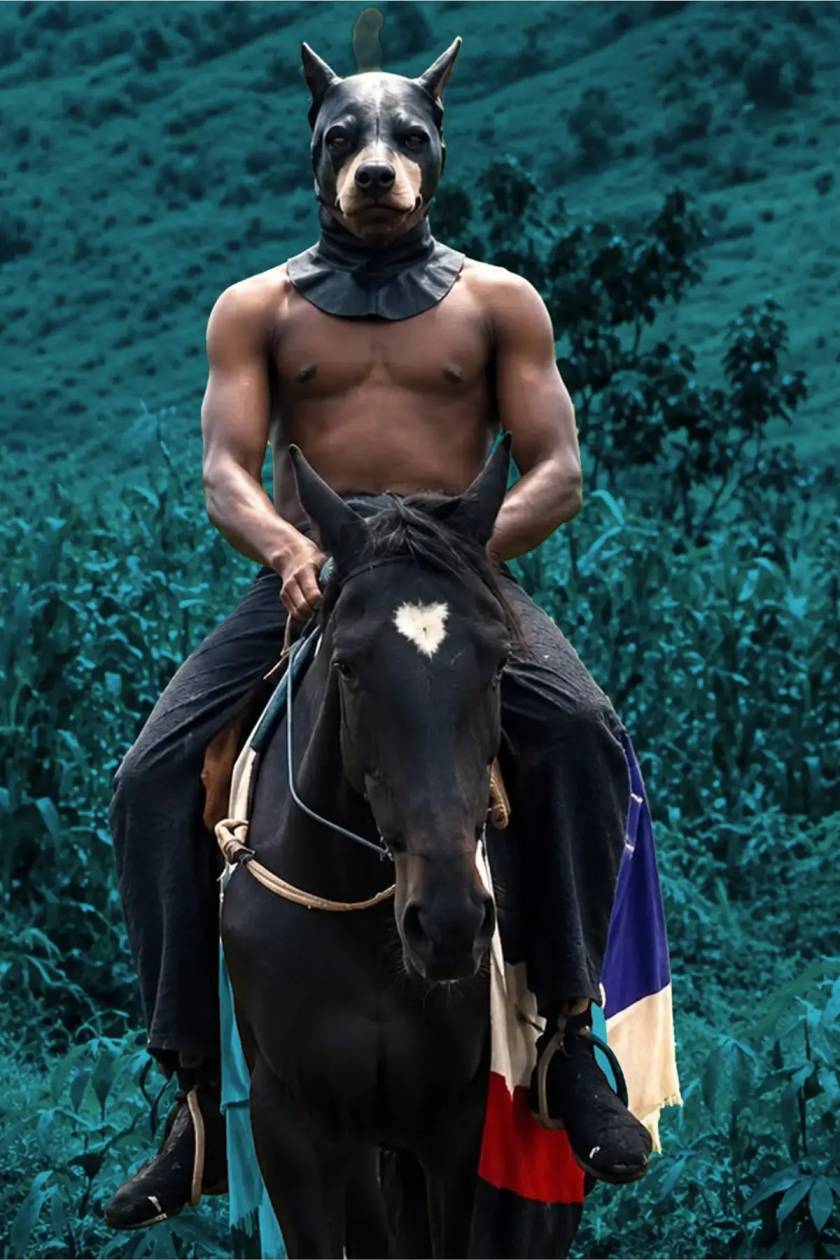
No one can deny the dysfunctional system that By Design, dedicated to “all souls killed by a dysfunctional system”, seeks to spotlight, or the often abrupt manner in which that system operates, or the fact that most Nigerian conversations ultimately devolve into lamentations on the state of the nation. But this is a 28-minute film that opens and closes with a literal lineup of human evidence of Nigerian dysfunction, a short film in which every character laments, with as much heavy-handedness as possible and for an extended period of time, at least one of Nigeria’s multitude of problems.
But what makes it finally unbearable—not in the “sit-with-discomfort” manner that the film intends—is that the protagonist runs into several of those problems in rapid, contrived succession before reaching the same tragic end that has already been more effectively captured in the Esiri Brothers’ Eyimofe.
Contrast this with the festival’s closing feature film, When Nigeria Happens, which already makes the same thesis statement in the title but which has much more restraint and much more space to establish the titular concept as an experience without having to literally announce it at every turn.
Never Say Die
In Never Say Die (2025), Nze Ed Emeka Keazor travels down memory lane to document the story and history of the Rangers International Football Club, a legendary Eastern Nigerian football club that was established in Enugu as a means to foster pride after the Nigerian Civil War. Keazor explores the role of association football, through Enugu Rangers FC, as a tool for psychological rehabilitation while positioning the players as heroes who literally gave their sweat and blood, and the club as an integral part of Nigeria’s sporting history and international football reputation.
Never Say Die is not the most technically sound documentary, and so much of it plays like reading through an illustrated but not quite exciting encyclopaedia. But it does shine occasionally, especially when former team members and officials move beyond mere recollections of history to reminisce on specific events that held special interest to them.
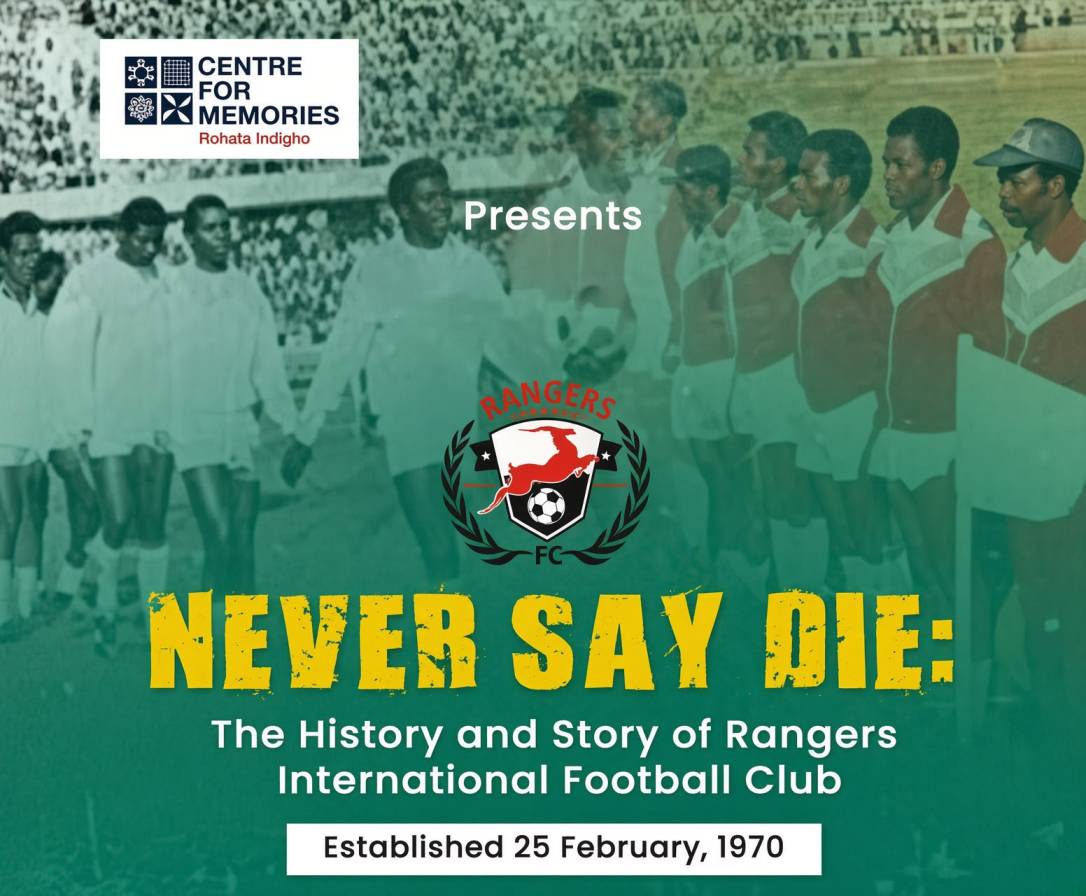
At several points in the documentary, I wondered what a technically solid fictionalised sports drama based on any of the many highlights of the Rangers would feel like, from the post-war victories to the historic Asaba Miracle, where the team ended a decades-long drought with an incredible comeback.
Watching the Asaba Miracle, in particular, made for an exhilarating end to the festival’s second day programme. But it also, unwittingly, served as a reminder to me of how far behind Nigerian cinema still is. These highlights are the stuff sports biopics are made of. But the only Nigerian sports drama that can perhaps be considered a classic is Izu Ojukwu’s White Waters (2007), where O.C. Ukeje played an athlete in his breakout role.
Nigeria is a footballing country. It is a pity that modern Nigerian cinema is yet to produce a single memorable football drama.
Sin Is a Puppy That Follows You Home
Remi Vaughan-Richards’ documentary about one of Northern Nigeria’s pioneering female writers is titled after the writer’s most famous book, but the ninety-minute documentary captures much more than the book. Six years in the making, Sin Is a Puppy That Follows You Home (2023) is essentially a biography of Balaraba Ramat Yakubu, picking up from her childhood in Kano State under the control of an authoritarian father who rejected education for his daughter, forcing her into a child marriage instead.

Sitting in an interview with Vaughan-Richards, Yakubu tells her story in her own voice, revisiting the major phases of her life, from the challenges of her family background and her marriages and divorces, to her pursuit of adult education and her eventual transformation into one of Northern Nigeria’s most prominent female writers and filmmakers.
Of course, I find her story to be thoroughly inspiring. The nature of that story, however, calls into question decisions made in the documentary as to whose contributions are necessary and whose stories get to share the spotlight. With the exception of Yakubu’s son, Muhammed, who doubles as her personal assistant and whose honest perspectives on his mother’s choices do provide a vital external but intimate perspective—their rapport marks some of the most interesting moments in the documentary—there is a tendency for the film to compel Yakubu’s story to share space with external, male figures, most notably a university professor with frankly counterproductive messaging.
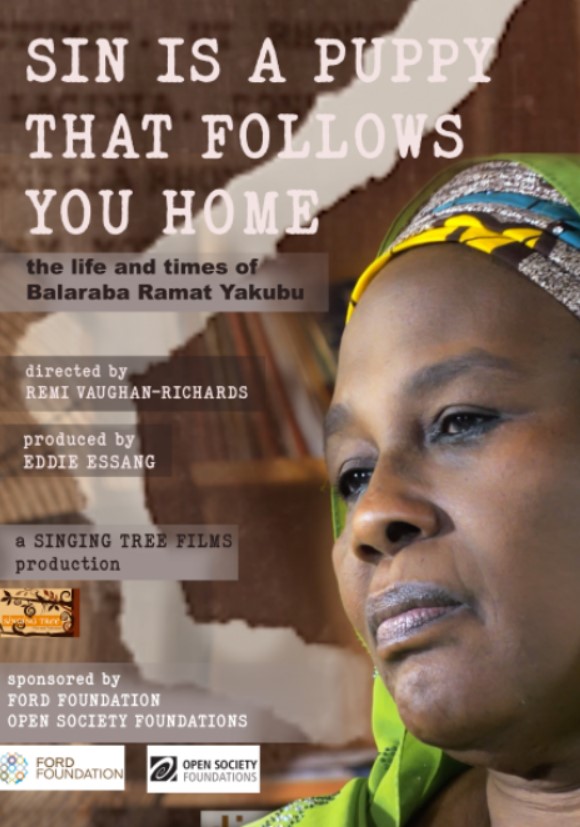
Balaraba Ramat Yakubu was also a half-sister to General Murtala Muhammed, the military head of state who was infamously assassinated in 1976. It is not a fact that can be ignored, nor do I think that it should be. It is indeed instructive that as a military dictator from a region stereotypically considered to be hostile to girls’ education and comfortable with child marriage, as the documentary itself suggests, the General was in fact an advocate for his sister’s education.
But Sin Is a Puppy That Follows You Home cannot resist the temptation to centre the late head of state in a substantial stretch of his sister’s story, to the point of near-sycophancy, as though the man in question did not leave behind a deeply contested legacy.
The documentary’s most interesting creative choice, however, is its dramatic re-enactment of parts of Yakubu’s life and scenes from her books, and the recurring animated imagery of a bird that is caged and later freed. It works especially well, considering that this is a documentary about a woman whose storytelling is both literary and visual.
Some documentary filmmakers tend to double down on the “document” part of the job while forgetting that film is a visual medium. Vaughan-Richards is not one of those documentary filmmakers, at least not with Sin Is a Puppy That Follows You Home.
Breastmilk
Not to be confused with the 2014 American documentary with the same title and subject, the LCA!-selected Breastmilk (2025) is a US and Nigeria co-produced short film set in Lagos, Nigeria, about a distressed mother who finds herself unable to breastfeed her baby while concurrently managing a fraught relationship with her husband. Directed by Ifeyinwa Arinze, the film is an adaptation of Pemi Aguda’s Caine Prize-shortlisted short story, also of the same title, published in the author’s debut short story collection, Ghostroots (2024).
The film stars Meg Otanwa in a role that is almost identical to that which she played in Damilola Orimogunje’s critically acclaimed debut feature, For Maria Ebun Pataki (2020), and also reminiscent of her character in Momo Spaine’s critically panned After 30 (2025). In For Maria, Otanwa starred as Derin, a new mother dealing with postpartum depression and society’s judgment for her inability to bond with her baby.

In After 30, she played Aisha, a mother whose experience with postpartum depression has her terrified of the idea of giving birth again. In Breastmilk, Otanwa’s Aduke comes off as possibly depressed as she navigates both betrayal by her husband (Taye Arimoro) and what feels to her like a betrayal by her own body, which simply refuses to produce milk for her baby.
There is a comfort in the familiarity of watching Otanwa deliver a compellingly internalised portrayal of a troubled new mother. She consistently makes light work of this particularly consuming subject matter, and her director knows it. Contrasting Aduke’s psychological state with a colourful palette, Arinze keenly observes Aduke’s isolation as she experiences humiliation and discomfort in her pursuit of a solution to her lactation problem, one which must involve a combination of external medical intervention and internal healing.
I must say that I have unclear feelings about Breastmilk. In a society where motherhood and its presumed accompaniments are expected to come naturally to women, and postpartum challenges go unacknowledged and undiscussed, the value of a film like Breastmilk cannot be overemphasised, especially when the film emphasises the psychosomatic character of lactation. But there is something calculated about Breastmilk that keeps the film emotionally distant, just slightly inaccessible. It is mostly the familiarity of Otanwa’s performance that makes Breastmilk resonant.
Vivian Nneka Nwajiaku is a writer and film critic writing from Lagos. She has a master’s degree in law but spends most of her time consuming, studying and discussing film and TV. She’s particularly concerned about what art has to say about society’s relationship with women. Connect with her on X @Nneka_Viv