

The more useful question, then, is not whether African artistes should sing in English or indigenous languages. It is whether the music business is prepared to support both with the same seriousness.
By Deborah Oyedijo
“They didn’t allow me to perform at shows because I spoke Yoruba.”
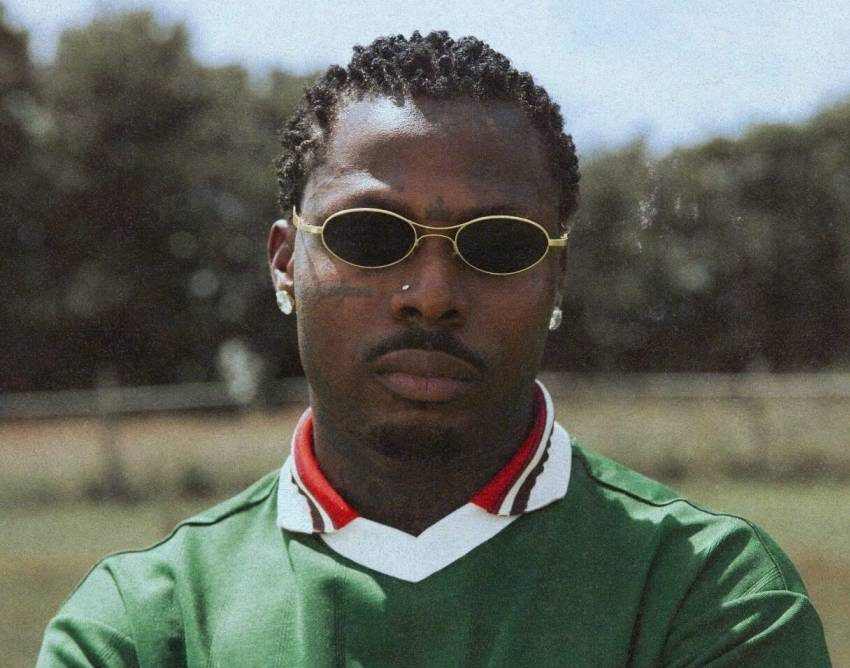
For Asake, this was not a hypothetical concern about the difficulties of breaking into an international market. He faced it while trying to establish himself as an artiste. In a February 2026 interview with Famous TV, the singer recalled that some show promoters had turned him away because he performed predominantly in Yoruba. “At some point, a lot of people said no to me; they didn’t allow me to perform at shows because I spoke Yoruba”, he said. Looking back, he was grateful that he had continued making music in the language rather than changing his sound to accommodate those expectations.
The irony is difficult to miss. Asake has since become one of Afrobeats’ most recognisable international acts, performing to large audiences outside Nigeria and earning two Grammy nominations for “Amapiano” (2023) and “MMS” (2024). His success has not required him to make English the dominant language of his music. Yet, the question of whether singing in an indigenous language limits an African artiste’s prospects continues to surface, often disguised as practical advice about reaching a wider audience.
It returned to public conversation when Asake appeared on Flow with Korty in March 2026. Speaking largely in Yoruba, he discussed his life, career and return to Nigeria. The interview was subtitled, allowing viewers who did not understand Yoruba to follow the conversation. For some observers, however, his choice of language prompted questions about whether an artiste with international ambitions should make a greater effort to communicate in English.

In Native Mag’s examination of Asake’s decision to speak Yoruba publicly, Temitope Olorunnimbe of CiDAR Africa questioned the inconsistency of that reaction. People who complained about Asake speaking Yoruba, he observed, often had no difficulty watching Korean dramas or listening to Spanish-language artistes such as Bad Bunny.
There is a larger question beneath the debate: when an African artiste sings in a language that international audiences may not understand, what exactly is being limited? Is it the number of people who can enjoy the music, the revenue it can generate, or the opportunities available to the person who made it? These are related, but they are not interchangeable. A song may reach millions of listeners without every listener understanding its lyrics. It may generate streams across several countries without returning a proportionate share of revenue to its creators. And an artiste may have a strong international following while still encountering difficulties securing bookings, partnerships or licensing opportunities.
To understand the assumptions behind this debate, it is worth looking beyond the current Afrobeats generation. African music has crossed language boundaries for decades. The more revealing question is not whether it can travel, but what has enabled it to do so, and whether the music business has consistently supported that movement.
In 1967, South African singer Miriam Makeba released the recording of “Pata Pata” (1967) that would become her international signature. Sung in Xhosa, the song reached No. 12 on the Billboard Hot 100 in the United States. It was an extraordinary achievement for a record whose central language was not English, particularly at a time when international music distribution was far less accessible than it is today.
The history of “Pata Pata” is also a reminder that the movement of African music across borders involves more than the question of language. The song had an earlier South African release before Makeba’s 1967 international recording. Its authorship and musical origins have been discussed in different accounts: Concord’s publishing profile of Makeba credits Makeba and Jerry Ragovoy, while music scholar Rob Allingham’s research traces elements of the melody to earlier South African recordings. The history illustrates why accurate songwriting credits and publishing records matter when music travels beyond its place of origin.
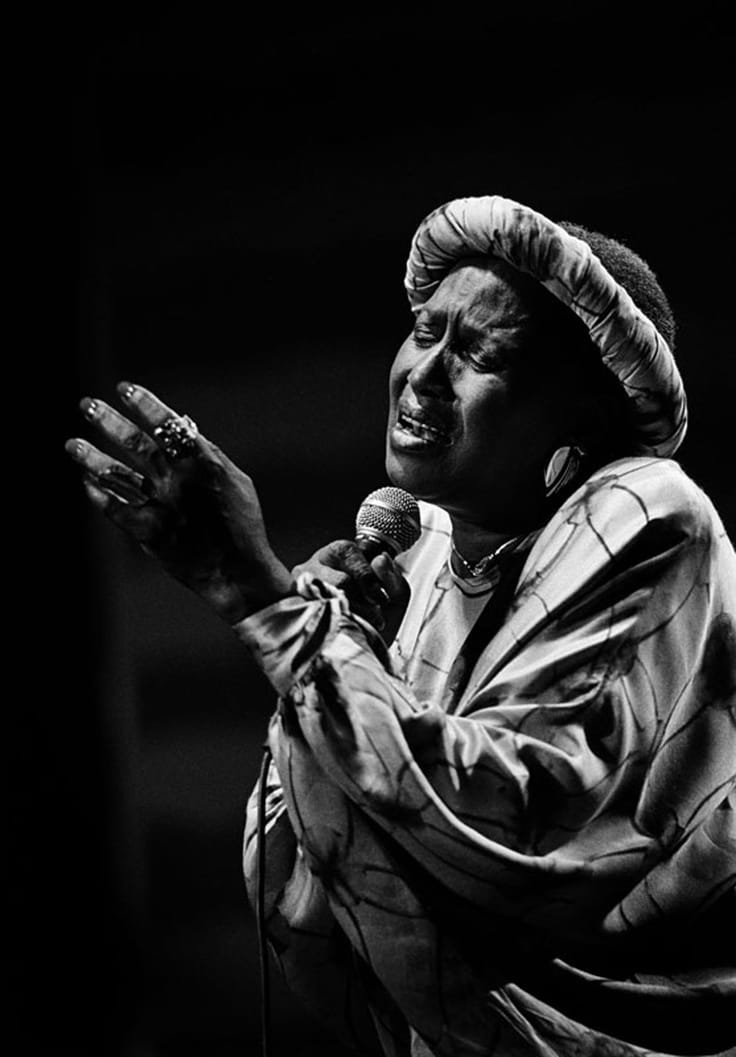
Makeba’s international recording also included a spoken English passage that introduced the dance associated with the song. This is an important distinction. The recording made room for listeners who might not know the language or cultural reference, but it did not replace the Xhosa identity of the song. Its success suggests that accessibility and cultural dilution are not the same thing. An artiste can provide an entry point for unfamiliar listeners without treating the language at the centre of the music as something that needs to be removed.
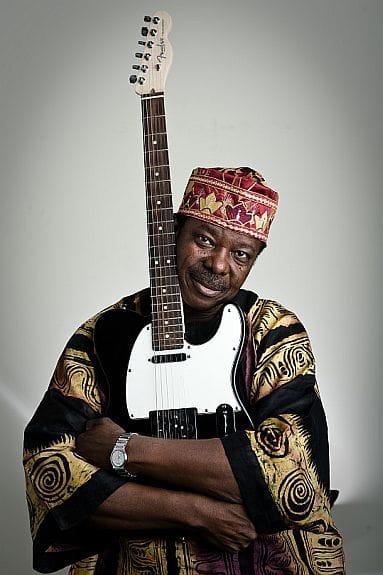
More than a decade later, Nigerian musician King Sunny Ade would demonstrate another route through which indigenous musical expression could reach international markets. In 1982, he signed to Island Records, leading to the release of Juju Music (1982) and Synchro System (1983). The latter earned him a nomination at the 26th Grammy Awards in 1984 in the Best Ethnic or Traditional Folk Recording category. It also reached No. 91 on the Billboard Pop Albums chart.
King Sunny Ade’s music was rooted in Jùjú, a genre closely associated with Yoruba musical traditions, poetic lyrics, talking drums and intricate guitar arrangements. His international breakthrough did not depend on abandoning those foundations. Instead, the Island Records partnership provided a distribution route through which the music could reach audiences outside Nigeria. The label’s involvement mattered because international success is rarely determined by the quality of a recording alone. Distribution, marketing, access to media, relationships with promoters and the ability to place music before new audiences all influence how far a record travels.
The Grammy recognition also raises a question about how African music has historically been received by international institutions. King Sunny Ade’s nomination was significant, but it came in a category specifically designated for ethnic or traditional folk recordings. Such categories can provide valuable recognition for music that might otherwise be overlooked.
However, they also invite a broader discussion about whether African music is sometimes welcomed internationally on the condition that it remains within a particular cultural classification. The question is not whether dedicated categories should exist, but whether music rooted in African languages and traditions is given the same consideration for mainstream commercial opportunities as music in English.
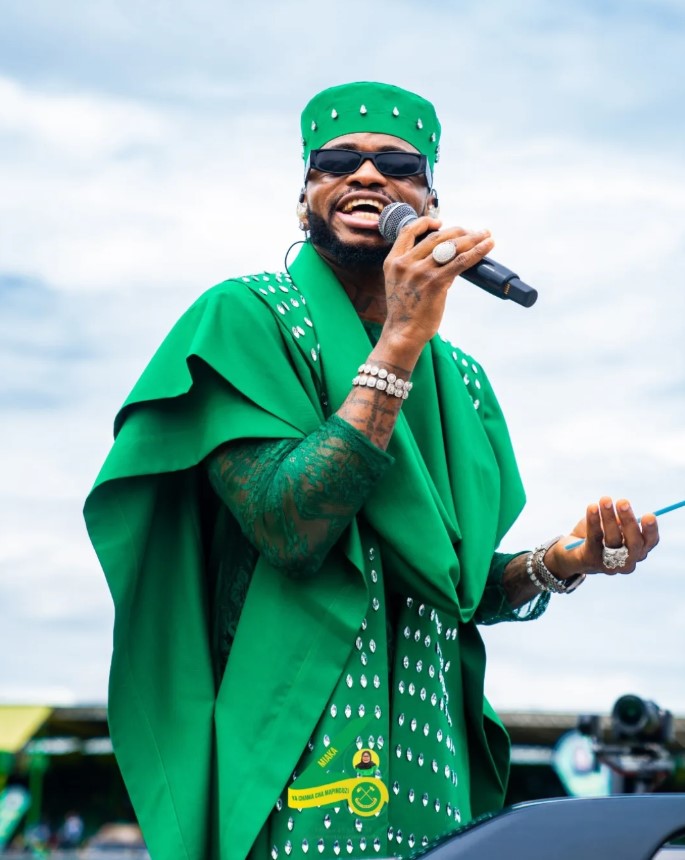
The next decades brought more examples of African artistes reaching international audiences while retaining their languages. In Tanzania, Diamond Platnumz built a career around bongo flava, a sound in which Swahili has remained central. He also recognised the commercial possibilities of reaching beyond his immediate market. In a Recording Academy interview, Diamond explained that he had incorporated more English translations into music that was normally recorded in Swahili because he wanted greater crossover appeal.
His collaboration with Ne-Yo on “Marry You” (2016) offers a practical example of that approach. The record brought together two artistes from different markets while allowing Diamond to retain his own musical identity. The collaboration was not a complete switch from Swahili to English; it was an opportunity to combine audiences and styles. Diamond’s international reach was also reflected in his becoming the first sub-Saharan African artiste to surpass one billion views on his YouTube channel, according to the Recording Academy profile.
His business activities, including the establishment of Wasafi Classic Baby, Wasafi FM and Wasafi TV, further demonstrate that building an international career involves developing structures around the music, not simply releasing songs and hoping they find listeners.
These examples are important because they complicate the argument that indigenous-language music must choose between cultural identity and commercial reach. Some artistes may decide to include English, collaborate with international performers or adapt parts of their music for particular markets. Those decisions can be effective. But they are creative and commercial choices, not proof that the original language is inherently unsuitable for international audiences.
The growth of streaming has made this distinction even more important. In South Africa, Spotify reported that music performed in isiZulu recorded a 37% increase in global royalties in 2025, with growth of more than 120% over the preceding two years. These are Spotify’s reported royalty figures, rather than a direct measure of listeners or total revenue earned by every isiZulu-speaking artiste. Nevertheless, they indicate that music in the language is generating increasing value across markets.
The figures should not be overstated. A large percentage increase can begin from a relatively small base, and royalties generated on a streaming platform are not the same as the amount ultimately received by an individual songwriter, producer or performer. Payments depend on the rights attached to the recording and composition, the agreements between rights holders and intermediaries, and the platform’s distribution arrangements. Still, the data challenges the idea that music in an indigenous language is necessarily restricted to a local audience. It can find listeners elsewhere and generate royalty value beyond its country of origin.
A different kind of evidence emerged in 2020, when South Korean group BTS released “Life Goes On” (2020). The predominantly Korean-language song became the first song sung mainly in Korean to top the Billboard Hot 100. It later surpassed one billion streams on Spotify in March 2026. The achievement was not simply a milestone for K-Pop; it was another demonstration that a song did not have to be performed in English to reach the top of the American singles chart.
BTS’s success, however, should not be used to suggest that language no longer matters or that the music industry has become entirely neutral. The group already had a substantial international fanbase, coordinated global promotion and the support of a major entertainment company. It also released English-language singles, including “Dynamite” (2020), which became a major international hit. The lesson is not that every artiste can reproduce BTS’ trajectory simply by singing in their native language. It is that language is one factor among several, and that strong audience development, distribution and promotion can help music travel beyond the linguistic boundaries of its home market.
Against this history, Asake’s experience becomes even more revealing. His rise has been closely tied to a sound that draws on Fuji, Street-Pop and Yoruba expression. His debut album, Mr Money With The Vibe (2022), helped establish that identity, with songs such as “Omo Ope” (2022) and “Sungba” (2022) becoming important parts of his breakthrough. The album’s Yoruba-inflected delivery did not prevent it from reaching listeners beyond Nigeria. His later work continued to build on that foundation, while collaborations and international performances expanded his reach.
Yet, the promoters who rejected Asake because he sang in Yoruba had made their decision before audiences could demonstrate whether they wanted to hear him. This is where the language debate shifts from a question about listeners to one about gatekeepers. Promoters decide which artistes receive performance opportunities. Labels and distributors decide which projects receive investment and international marketing. Radio programmers and playlist editors influence what gets visibility. Sync supervisors and music publishers determine which songs are considered for film, television, advertising and games. Their decisions may be based on commercial research, but they can also be shaped by assumptions about what audiences will understand or accept.


Solana’s experience with “Okunkun” (2026) provides a more recent example of how those assumptions can affect a song before it reaches the public. The track, which is largely in Yoruba, was written in 2023 but remained unreleased for years after meeting resistance from industry figures around her. In a November 2026 interview with NME, Solana described the anxiety and self-doubt that followed the reaction. She eventually decided to trust her instincts and release the song. It was teased in early June 2026 and subsequently gained attention online.
The important detail is that “Okunkun” was not first released, rejected by listeners and then withdrawn. It was held back after people within the industry expressed reservations. An audience cannot demonstrate demand for a song it has not been given the opportunity to hear. When gatekeepers decide in advance that a particular language or sound will not travel, they can restrict the very evidence that might prove their assumptions wrong.
This does not mean artistes should never adapt their music for different audiences. Shorter edits for radio, translated lyrics, bilingual choruses and international collaborations can all be sensible ways of introducing a song to new listeners. The difference lies in whether these are options an artiste can choose or conditions imposed before the music is considered commercially viable. There is a distinction between making a song accessible and suggesting that its original language makes it less worthy of investment.
There is also a legal and administrative side to this conversation that receives considerably less attention. Copyright protection does not depend on the language in which a song is written. Under Nigeria’s Copyright Act 2022, musical compositions and sound recordings are recognised as separate categories of protected works. A songwriter may own or control rights in the composition, while a record label or another party may own or control the sound recording. The rights can be licensed separately, and the people involved in creating a song may have different contractual entitlements.
The Act also contains provisions specifically addressing expressions of folklore. Section 73 includes folk songs and instrumental folk music within its definition of folklore and establishes conditions for certain uses, including the indication of the community or place from which an identifiable expression is derived. Sections 75 and 76 provide for civil remedies and criminal liability in specified circumstances involving unauthorised use or misrepresentation.
These provisions are important, but they should not be interpreted to mean that every Yoruba phrase, Swahili expression, isiZulu lyric or traditional-sounding melody automatically qualifies as protected folklore. A language itself is not protected by copyright. Original lyrics, compositions and sound recordings may attract copyright protection, while traditional cultural expressions are addressed through the Act’s separate provisions.
For music administrators and rights holders, the practical challenge is to ensure that works are properly documented and their ownership is clear. This becomes particularly important when a song contains lyrics in a language that international publishers, distributors, licensing teams or collecting societies may not understand. Accurate metadata, songwriter credits, split sheets, registrations and reliable translations can help identify the work, verify its creators and administer the relevant rights. A language difference should not become an administrative blind spot.

The issue is especially relevant to synchronisation licensing, where music is licensed for use in films, television, advertising, games and other audiovisual productions. A production company considering an indigenous-language song may need to understand the meaning of its lyrics, the cultural context of particular expressions and whether the relevant rights can be cleared.
Depending on the intended use, it may need permission for both the underlying musical composition and the sound recording. If ownership is unclear, credits are incomplete, or the relevant rights holders cannot be identified, a potentially valuable licensing opportunity may be lost.
This is why the industry needs more than enthusiasm for the global popularity of African music. It needs the administrative capacity to support that popularity. Music publishers, collecting societies, labels, distributors and rights-management companies must be equipped to identify, document and administer works across languages. The work also requires people who understand the cultural and linguistic context of the music, rather than expecting every song to be translated or simplified before it can be commercially considered.
The more useful question, then, is not whether African artistes should sing in English or indigenous languages. It is whether the music business is prepared to support both with the same seriousness. If a song can find listeners across borders, the next task is to ensure that the people who created it can access the distribution, promotion, licensing and rights-management systems that turn attention into sustainable careers.
When Asake spoke Yoruba on Flow with Korty, subtitles made the conversation accessible to people who did not understand the language. But accessibility should not be mistaken for a requirement that African artistes translate themselves before they can be taken seriously. The audience may need subtitles to understand the words. The industry should not need them to recognise the value of the music.
Deborah Oyedijo is a music business writer and entertainment lawyer-in-training with a focus on the African music industry. When she is not writing about music rights and culture, she is watching K-dramas or absorbing yet another documentary. Connect with her on IG and X: ayooyedijo