


What sounds like nostalgia at first begins to look like something more deliberate: a generation of emerging Nigerian artistes searching the past for sounds that can help them stand out in the present.
By Deborah Oyedijo
For a new artiste trying to find space in an increasingly crowded Nigerian music scene, sounding contemporary is no longer enough. There are thousands of songs competing for attention, and as Nigerian music travels further internationally, there is also a growing conversation about whether some of the music coming out of the mainstream is beginning to sound too similar. For artistes still building their identities, reaching into older Nigerian musical traditions offers another way to sound familiar and different at the same time.
This is not the first time Nigerian popular music has looked backwards. Contemporary Afrobeats has borrowed from the country’s musical history for years. Wizkid’s “Jaiye Jaiye” (2014) interpolated Fela Kuti’s “Lady” (1972), while “Sweet Love” (2017) draws from Fela’s “Shakara” (1972). Davido’s “Like Dat” (2017) also drew from K1 De Ultimate’s “Agogo Ko Ma Ro” (2010). These examples show that contemporary Nigerian artistes have long treated older music as source material rather than something that belongs exclusively to another generation.
What feels particularly interesting now is how often this relationship with older music is appearing among emerging artistes. Kunmie’s debut album, 22 (2026), offers one of the clearest recent examples. The album’s title track interpolates K1 De Ultimate’s “Awade” (2020), while “Laye Mi” (2026) samples K1’s “Show Colour”(1985). The distinction between those two uses is important. An interpolation recreates elements of an existing composition, while a sample takes audio from an existing sound recording. In Kunmie’s case, both uses were publicly confirmed as cleared, with SyncAll stating that it facilitated the interpolation clearance for “Awade”(2020) and the sample clearance for “Show Colour”(1985).
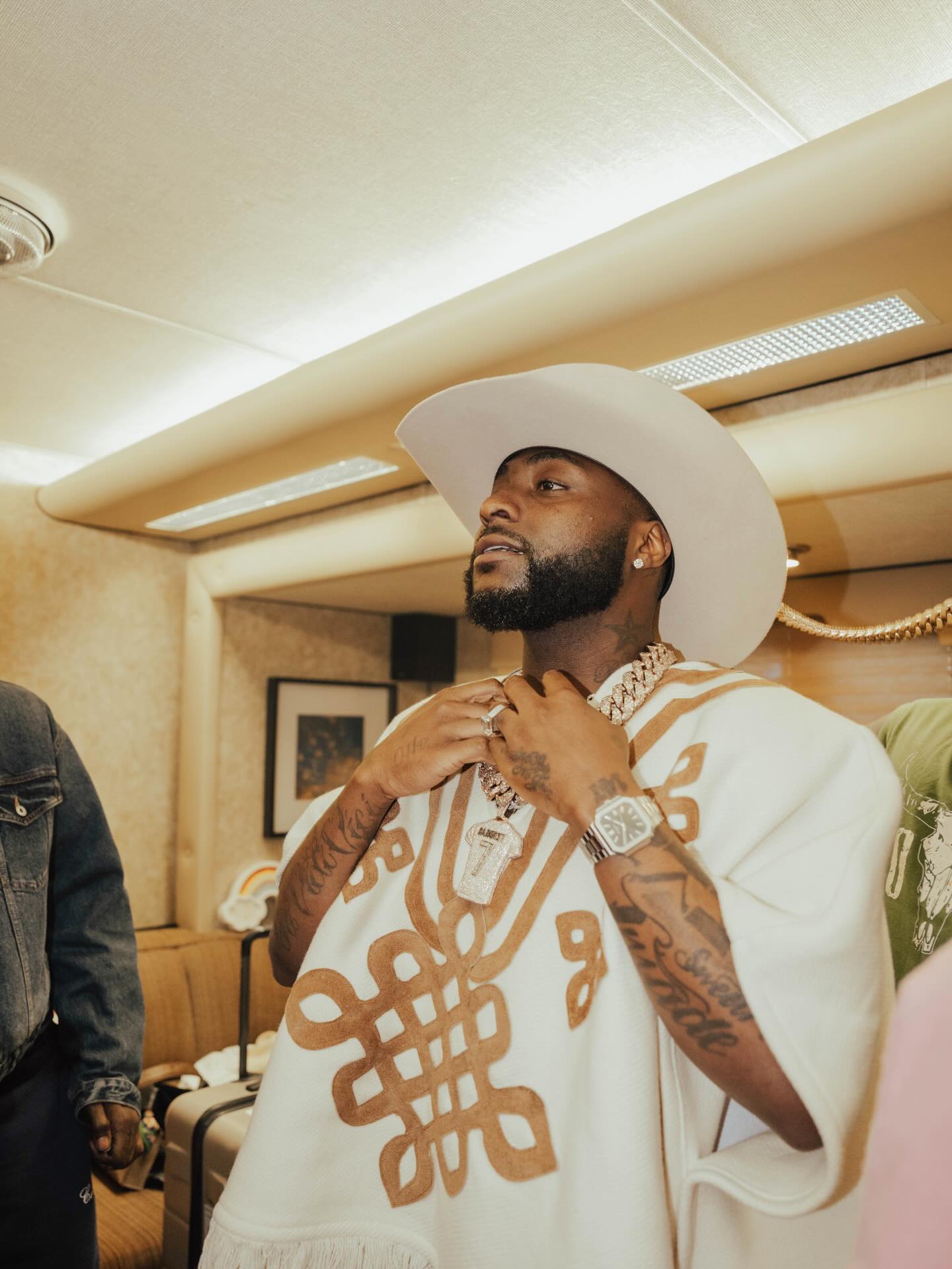
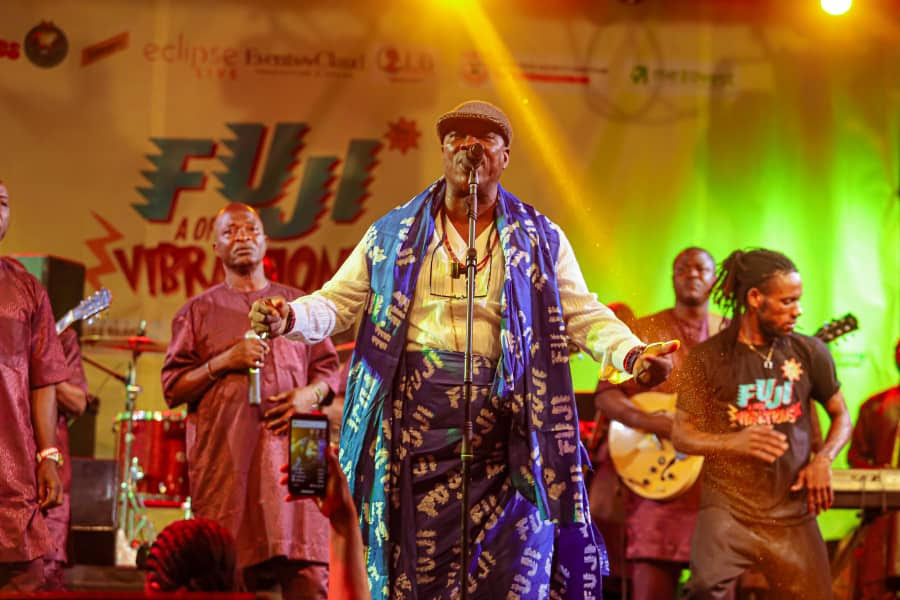
The choice of K1 is significant because the music is not being reproduced as a period piece. Kunmie takes recognisable material from a Fuji veteran and places it within a contemporary project made for a much younger audience. It is a conversation between two generations of Nigerian music, with the older work becoming raw material for the newer one.
Then there is Saheed Osupa. Danpapa GTA’s “Dance With Me” (2026) features Saheed Osupa and draws from his “Endorsement 1, Pt. 1”(2020). The collaboration is particularly interesting because it makes the generational exchange visible rather than simply embedding an old recording into a new one. Streaming metadata also identifies Osupa alongside Danpapa GTA on the record.
Kayode’s recent work takes the connection further. “Aimoye” (2026) features Saheed Osupa, while “Bere Mole” (2026) samples Adewale Ayuba’s “Ijo Fuji” (2013). The latter places Kayode’s contemporary Rap and Trap-influenced production against a recognisable Fuji reference, creating exactly the kind of contrast that makes the record feel both current and rooted. oShamo’s ‘‘Shina Rampe’’ (2026) adds another Osupa connection. The track draws from Osupa’s “Mr. Music (Ore Niwon) Pt. 3” (2013), bringing material from a 2013 Fuji recording into an emerging artiste’s contemporary sound.

Taken individually, these records could simply be examples of artistes finding interesting source material. Taken together, they begin to reveal a pattern. Saheed Osupa appears across multiple contemporary records by emerging artistes, while K1 De Ultimate and Adewale Ayuba are also being brought into new musical contexts. The important point is not that every young Nigerian artiste is suddenly making Fuji music. It is that legacy music is increasingly becoming a creative resource for artistes who are otherwise operating firmly within contemporary sounds.
And the movement is not limited to Yoruba Fuji. Shallipopi’s relationship with Edo musical heritage provides another example. His “Obapluto” (2023) sampled Pa Monday Igbinidu’s “Ogbaisi”, bringing an older Edo Highlife recording into a contemporary Street-Pop record. The use subsequently generated a copyright dispute before Pa Monday appeared in the song’s music video. The episode also illustrates why the creative conversation around legacy music cannot be separated entirely from questions of ownership and permission. That example matters because it expands the conversation beyond one genre. The broader pattern is about Nigerian artistes reaching into legacy genres and regional musical traditions for material that can be reconstructed, sampled or reinterpreted in contemporary music.

Neo-Fuji takes this even further. The emerging sound combines elements associated with Fuji, including chant-led vocal traditions, with Trap and Amapiano-influenced production. Rather than reproducing the genre in its older form, younger artistes take some of its most recognisable characteristics and place them in a production environment their own audience already understands.
The interesting question is not simply why Fuji is “back”. It is what happens when an artiste takes a sound that once belonged to another musical era and makes it function inside a completely different one. Part of the answer may be differentiation. The Nigerian music market is crowded. There are more artistes releasing more music, while streaming platforms have made it possible for listeners to move almost instantly from one Nigerian record to another. At the same time, Nigerian music is increasingly being consumed alongside music from other African markets and the wider global industry.
For an emerging artiste, this creates a particular problem. It is possible to sound polished, contemporary and commercially aware while still sounding like several other artistes doing the same thing.
Legacy music offers another vocabulary. A Fuji chant, an old highlife guitar phrase, a familiar percussion pattern or a vocal style associated with a particular region can immediately give a record a stronger sense of place. The production can still contain trap drums, Amapiano rhythms or modern electronic textures, but there is something in the record that points backwards. That is where the authenticity argument becomes useful, although authenticity here should not mean that one artiste is somehow more Nigerian than another.
It is about recognisability. A young artiste can signal where they come from without having to make music that sounds exactly like the music that came before them. They can take something culturally familiar and make it function differently. The result is not necessarily a return to the past. It is a way of using the past to create something that belongs to the present.
There is also a cultural-memory effect. A younger listener might encounter Saheed Osupa, K1 De Ultimate or Adewale Ayuba through a new artiste before ever deliberately searching for their older catalogues. The direction of discovery is reversed. Instead of the older generation introducing its music to the younger generation, a young artiste becomes the bridge through which the younger listener discovers the older work. That means sampling and interpolation can have an archival effect. An old song that might otherwise remain within the listening habits of people who remember its original release can suddenly become relevant to a completely different audience.
But this is where the romance of cultural borrowing meets the realities of music rights. When an artiste reaches into an older recording, there may be more than one right involved. The musical work and the sound recording are separate copyright subject matters. The musical work concerns the underlying composition, such as its melody and lyrics, while the sound recording concerns the particular recorded performance of that music. That distinction explains why sampling and interpolation are not interchangeable. If an artiste takes a portion of an existing recording and places that actual audio into a new song, the sound recording rights become relevant alongside any rights in the underlying composition. If the artiste instead recreates a melody, lyrics or other protected compositional material without using the original recording, the issue is primarily one concerning the musical work.
Under Nigeria’s Copyright Act 2022, copyright in a musical work includes exclusive rights over acts such as reproduction and adaptation, while copyright in a sound recording separately gives the owner exclusive rights including reproduction of the recording. The Act also provides that economic rights can be licensed or assigned, and that such licences or assignments must be in writing and specify the rights being granted.


In practical terms, this means an artiste cannot assume that changing the recording automatically makes the underlying work free to use. Imagine an emerging artiste hears a 1990s Fuji record and decides to recreate its melody with a new vocalist, new instruments and completely different production. There may be no original audio file in the new song, but that does not automatically mean there is no copyright issue. The new recording may be different from the old one while still drawing from a protected musical work.
Conversely, taking five seconds of the original recording is not simply a matter of giving the old artiste credit in the description. The use of the recording and the underlying composition can raise separate licensing questions. This is why clearance matters. A proper clearance process identifies the work being used, determines who controls the relevant rights, establishes what use is being requested and documents the permission. The commercial terms can then address things such as ownership, songwriting shares, royalties, credit and the scope of the licence.
Kunmie’s 22 (2026) is useful here because the publicly confirmed clearances show what this process can look like in practice. The fact that one track involved a sample clearance and another an interpolation clearance demonstrates that the distinction is not merely academic. Different creative uses can require different rights to be addressed.
There is also a question of credit. When a young artiste introduces an older work to a new audience, the legacy songwriter or rights holder is not simply providing inspiration. Depending on the nature of the use and the agreement reached, they may have a legal and economic interest in the new work. Nigeria’s Copyright Commission itself explains that copyright owners have economic rights that allow them to determine the conditions under which their works are commercially used, alongside moral rights concerning acknowledgement and protection against certain derogatory treatment. This becomes particularly relevant when the source material comes from music that has existed for decades and may have passed through multiple ownership arrangements.

The person who originally performed a song is not necessarily the person who currently controls every right in it. A songwriter may have assigned rights. A publisher may administer a composition. A record producer or label may own a sound recording. An estate may control rights following an author’s death. For an emerging artiste or producer, identifying the right person to approach can therefore be part of the work before the creative use ever reaches streaming platforms. And this is where the current underground movement presents an interesting opportunity for Nigeria’s music business.
The more young artistes become interested in legacy catalogues, the more valuable those catalogues can become. Older recordings that might once have been treated primarily as cultural artefacts can acquire new commercial life when contemporary artistes sample or interpolate them. New audiences discover old works, old rights holders can participate in new revenue, and younger musicians get access to musical ideas that might otherwise remain disconnected from their own creative vocabulary. But that only works properly when the rights relationship is understood. The cultural familiarity of a song does not mean its copyright has disappeared. A record being old does not automatically place it in the public domain. Calling something a tribute, homage, or reimagining does not, by itself, answer whether permission is required.
That is perhaps the most interesting tension in this entire movement. The underground is reaching backwards at exactly the moment when Nigerian music is becoming more commercially sophisticated. The artistes are not rejecting contemporary Nigerian music in favour of their parents’ music. They are taking pieces of older musical traditions and asking what those pieces can become when placed inside the sounds of their own generation. The result is a form of musical continuity that does not require imitation. The past provides the vocabulary; the emerging artiste changes the sentence.
And perhaps that is why this moment feels different from simple nostalgia. For a generation trying to distinguish itself in an increasingly crowded music market, legacy genres are no longer just records to remember. They are creative material, cultural memory and, increasingly, valuable intellectual property. If the current wave continues, Nigeria’s next distinctive sounds may not come from moving further away from its musical history. They may come from finding new ways to make that history sound like the future.
Deborah Oyedijo is a music business writer and entertainment lawyer-in-training with a focus on the African music industry. When she is not writing about music rights and culture, she is watching K-dramas or absorbing yet another documentary. Connect with her on IG and X: ayooyedijo