

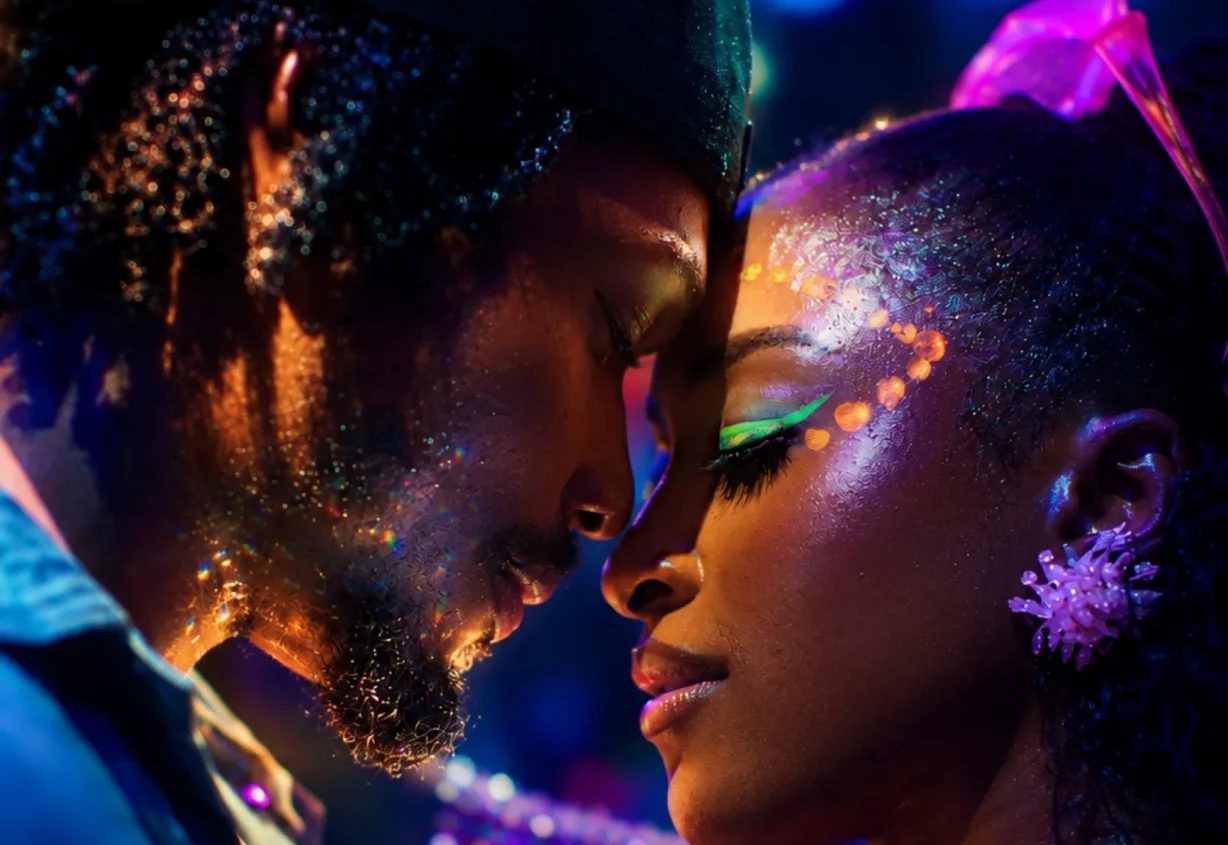

Tele x Zikora reminds us that young adult stories need not be treated as disposable diversions, and that the university remains a fertile setting for examining a changing Nigerian society.
By Joseph Jonathan
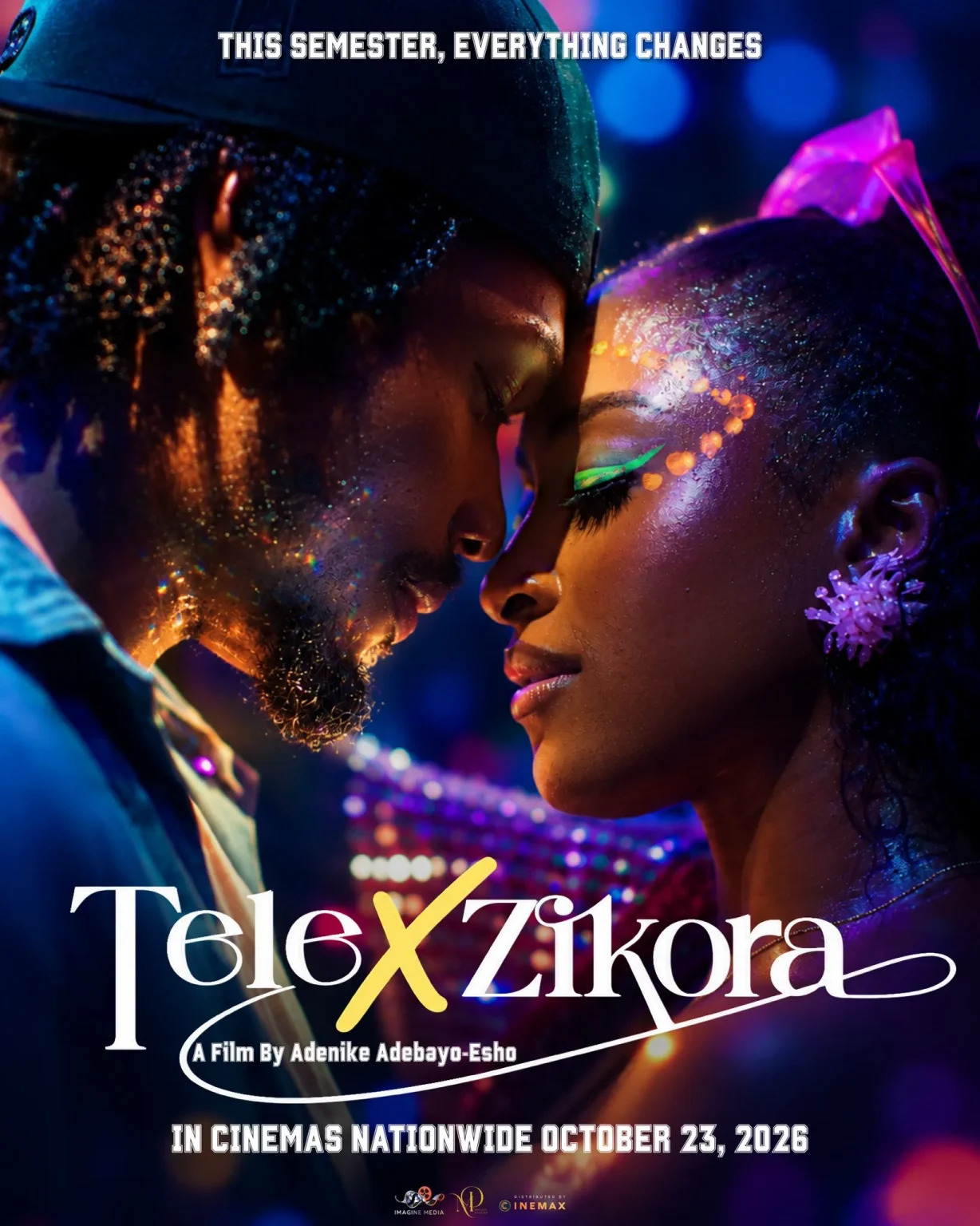
For a long time, the Nigerian university campus was a familiar setting in home-video films. It offered filmmakers a ready-made world of friendships, rivalries, romance, social pressure and youthful excess. Yet, as Nollywood’s theatrical industry has grown and recalibrated its priorities, the campus drama has become a less visible presence on the big screen. Adenike Adebayo-Esho’s Tele x Zikora arrives as a welcome attempt to return to that terrain, bringing together a young ensemble and the recognisable rituals of university life. It imagines a campus film for a generation whose relationships are shaped by social media as much as by lectures, parties and friendship. The result is inviting, if considerably less coherent than its premise suggests.
Zikora (Genoveva Umeh), a Nigerian student who has been living in Houston, returns to Lagos for a semester at the fictional Lagos Metropolitan University. There, she meets Tele (Mike Afolarin), a student who also works as an Uber driver. Their initial friction comes from their different attitudes towards social media. Zikora is enthusiastic about documenting the people and experiences around her, partly in pursuit of a documentary competition; Tele is suspicious of the impulse to turn other people’s lives into content. Their clash gradually develops into a romance, forcing each to reconsider their assumptions about the other.
This conflict gives Tele x Zikora a contemporary point of entry into a genre that has often relied on familiar campus tensions. Earlier Nigerian home-video campus dramas frequently framed university life as a space of moral testing: students negotiated peer pressure, sex, money, cultism, ambition and the distance between parental expectations and youthful independence. Even when broad or didactic, these films used the campus as a miniature of Nigerian society, where class, gender and power were negotiated. Adebayo-Esho updates that framework by placing the performance of identity online at the centre of her romance. The question is no longer simply who someone is among their classmates, but what happens when the self presented to an online audience begins to shape how they see other people.
It is a promising idea, especially because the film does not treat social media as an uncomplicated villain. Zikora’s enthusiasm can make her inattentive to the people she records, while Tele’s objections are rooted in an experience that has made public documentation feel exploitative. Their disagreement gestures towards a real tension in contemporary digital culture: the same platforms that can turn suffering into spectacle can also circulate stories, build communities and draw attention to experiences that might otherwise be ignored. The disagreement is most interesting when it complicates their attraction rather than becoming a debate with an obvious answer.
Umeh and Afolarin give the relationship enough warmth to keep it engaging. Their chemistry is easy, and the contrast between Zikora’s openness and Tele’s reserve gives their scenes a natural rhythm. Umeh brings an appealing brightness to a character whose confidence sometimes conceals loneliness, while Afolarin gives Tele a guardedness that gradually makes room for tenderness. Its best romantic moments come not from grand declarations but from the small shifts in how they respond to one another.
The difficulty is that the film rarely trusts this central relationship to carry the weight of its running time. It introduces a large circle of friends, romantic complications and family histories, many of which are insufficiently developed or simply abandoned. The result is a narrative that keeps opening doors without deciding which rooms deserve our attention. Potentially engaging supporting-character tensions are left unresolved, while important developments in the leads’ lives feel hurried or happen off-screen.
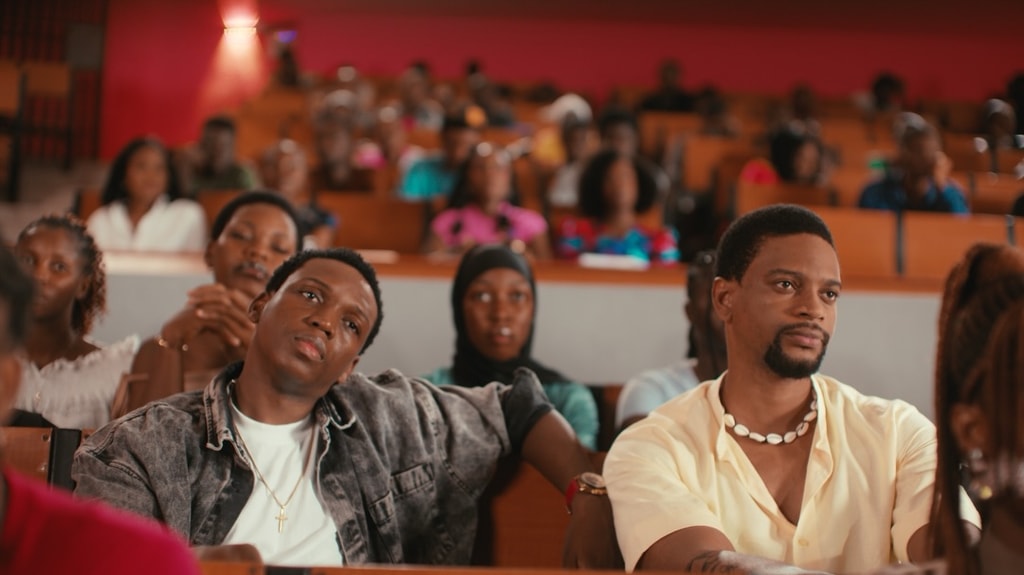
Campus dramas thrive on the interplay between individual stories and the wider social environment. The friendships, rivalries, romantic entanglements and classroom encounters should make the university feel like a living ecosystem, with one character’s choices affecting another’s. Tele x Zikora assembles the ingredients of such an ecosystem but does not sufficiently connect them. Several recognisable young performers are left with little to do beyond occupying the frame. A smaller ensemble, or a more disciplined distribution of narrative attention, might have allowed the film to build a more persuasive portrait of student life.
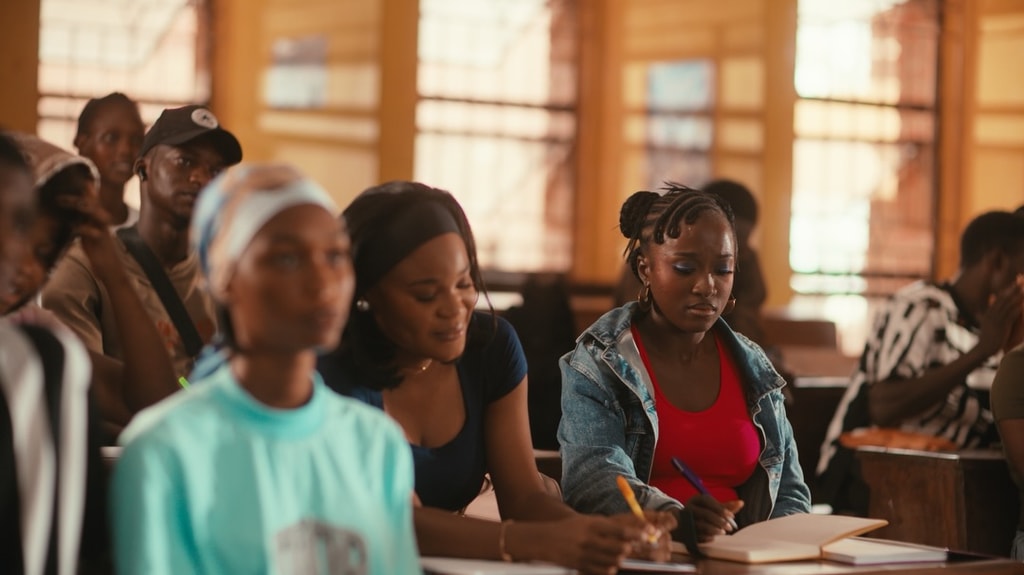
The university setting itself is also caught between competing ideas of what a Nigerian campus should look like. There are recognisable local details, particularly the general studies classroom and Layi Wasabi’s lecturer character, whose scenes bring a welcome dose of institutional familiarity and comic observation. At other moments, however, the campus is presented through the polished visual grammar of American college films: carefully styled students, glossy spaces and a social life that feels somewhat detached from the ordinary textures of Nigerian university experience. A campus film need not be documentary, and Zikora’s returnee perspective could justify some stylisation. But the film does not fully turn this contrast into a point of view. Its Lagos setting sometimes feels like a location chosen for the story rather than a force actively shaping it.


That uncertainty matters because the campus genre has room to do more than provide a backdrop for young romance. Nigerian universities are places where young people encounter class differences, negotiate independence, form political and social identities, and imagine futures that may be constrained by economic realities. A contemporary campus film could explore how students balance precarious work with education, how digital visibility changes intimacy and reputation, or how inherited social expectations collide with new ideas about gender and relationships. Tele x Zikora touches on some of these possibilities, particularly through Tele’s work as a driver and the couple’s disagreement about online representation, but it rarely follows them far enough to give the setting a distinct social life.
Adebayo-Esho’s direction keeps the film visually accessible. The cinematography by Barnabas Emodi, the colourful styling and the party sequences contribute to its buoyant atmosphere, even when the narrative loses focus. The film is often pleasant company, with an evident affection for youthful energy and possibility. But its technical polish cannot compensate for the uneven construction of its story. The romance has a recognisable shape; the larger film around it is less certain of what it wants to be.
The return of the campus drama to contemporary Nollywood’s theatrical space is worth welcoming. Tele x Zikora reminds us that young adult stories need not be treated as disposable diversions, and that the university remains a fertile setting for examining a changing Nigerian society. But reviving a genre also means asking what new life can be given to its familiar conventions. Beyond its attractive leads and timely social-media conflict, the film only partially answers that question. It opens the lecture hall doors, gathers a promising generation of performers and gestures towards a wider world of student experiences. It just does not give that world enough shape.
Rating: 2.5/5
Joseph Jonathan is a historian who seeks to understand how film shapes our cultural identity as a people. He believes that history is more about the future than the past. When he’s not writing about film, you can catch him listening to music or discussing politics. He tweets @Chukwu2big.