

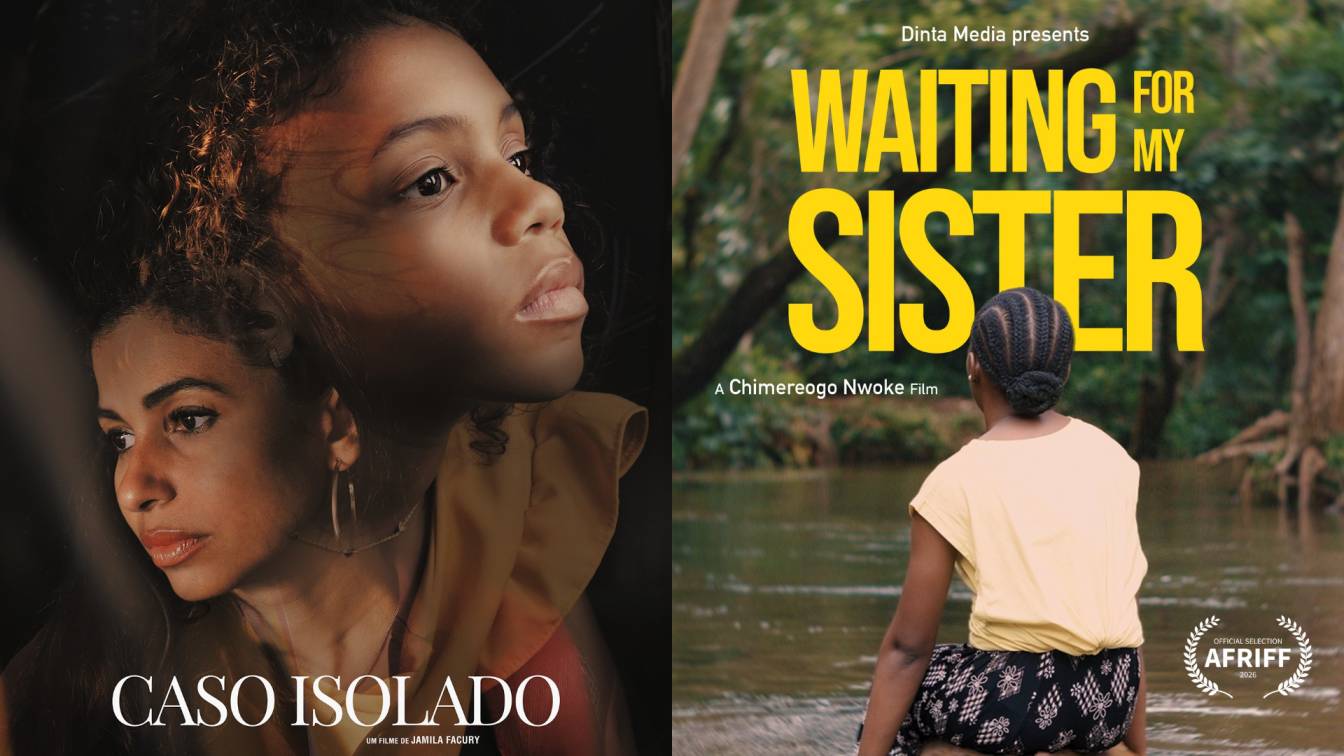


In both Caso Isolado and Waiting for My Sister, each character is having what seems like an ordinary day-in-the-life, until a slight shakeup sends their day in an unusual direction that forces them to confront the truth of their identity and reality.
By Vivian Nneka Nwajiaku
Every film festival offers at least a few gems. Whatever the challenges with organisation or the quality of some of the selected films, the knowledge that a gem will be discovered is enough motivation to endure through all the chaos, look beyond the popular titles on the schedule, and sit for as many films as possible.
It’s no different with the Africa International Film Festival. Coming across the Australian-produced Nigerian diasporan feature Pasa Faho (2025) on the AFRIFF 14th edition schedule, for instance, and deciding to try it out, was one of the best film discoveries I have ever made. This year, my favourite discovery involved an organisational lapse. I was seated for a Black American documentary, but a Brazilian short film screened in its place, delivering one of the most interesting twenty-something minutes of my week at AFRIFF.
The ironic title of my 15th AFRIFF special gem is An Isolated Incident (2026), with Caso Isolado as the original Portuguese title. The unfortunate part of the story is that I cannot be sure whether the documentary I had initially intended to watch ever did screen at the festival, and I don’t believe that Caso Isolado eventually screened on its rightful date, as the assigned screening was converted to the venue for a masterclass. I don’t know what was lost with the documentary, but it is a pity that only a handful of attendees were fortunate enough to see Caso Isolado at AFRIFF.
Thankfully, the case was different for my favourite Nigerian and African short at the festival. Waiting for My Sister (2026) screened at the appropriate time to a hall full of invested people. But AFRIFF’s methods struck again. Unlike at many film festivals where post-screening conversations with the filmmakers are planned and sometimes targeted towards a particular curatorial vision, AFRIFF simply invites the cast and crew to freestyle on the stage. That spontaneity often results in an under-experienced filmmaker sharing information that is disadvantageous to their film. Waiting for My Sister fell victim to this phenomenon. I will return to that thought, but permit me to focus first on the substance of both films and why they emerged as my favourite discoveries at AFRIFF this year.
An Isolated Incident and Waiting for My Sister are such different films and are set in worlds that are so far apart that they would likely never have come up in the same conversation had they not by chance been programmed in the same festival. Initially, they really do not seem to have much in common beyond Black leads, a single-day timeline, and, to be a tad pedantic, the absence of or under-reliance on the English language. But sitting with them a little bit reveals a common denominator that turns out to be central to both films. In both Caso Isolado and Waiting for My Sister, each character is having what seems like an ordinary day-in-the-life, until a slight shakeup sends their day in an unusual direction that forces them to confront the truth of their identity and reality.
Co-directed by Edson Lemos Akatoy and screenwriter Jamila Facury, Caso Isolado follows Cristina, a light-skinned Black woman who works as a saleswoman in a cosmetics store, throughout the course of a single day in the Brazilian city of João Pessoa. The film kicks off as Cristina begins just another workday, attending to customers, assisting a colleague, and interfering with conversations between her colleagues, though not in that specific order. A few moments in, her boss pulls her away from her usual activities and sends her on a delivery run. Initially, she resists, having just suffered an accident that would make the assignment particularly difficult. But her boss insists. The staffer who usually handles deliveries happens to be sick. The only other available person has only just begun to work at the store. It has to be Cristina.
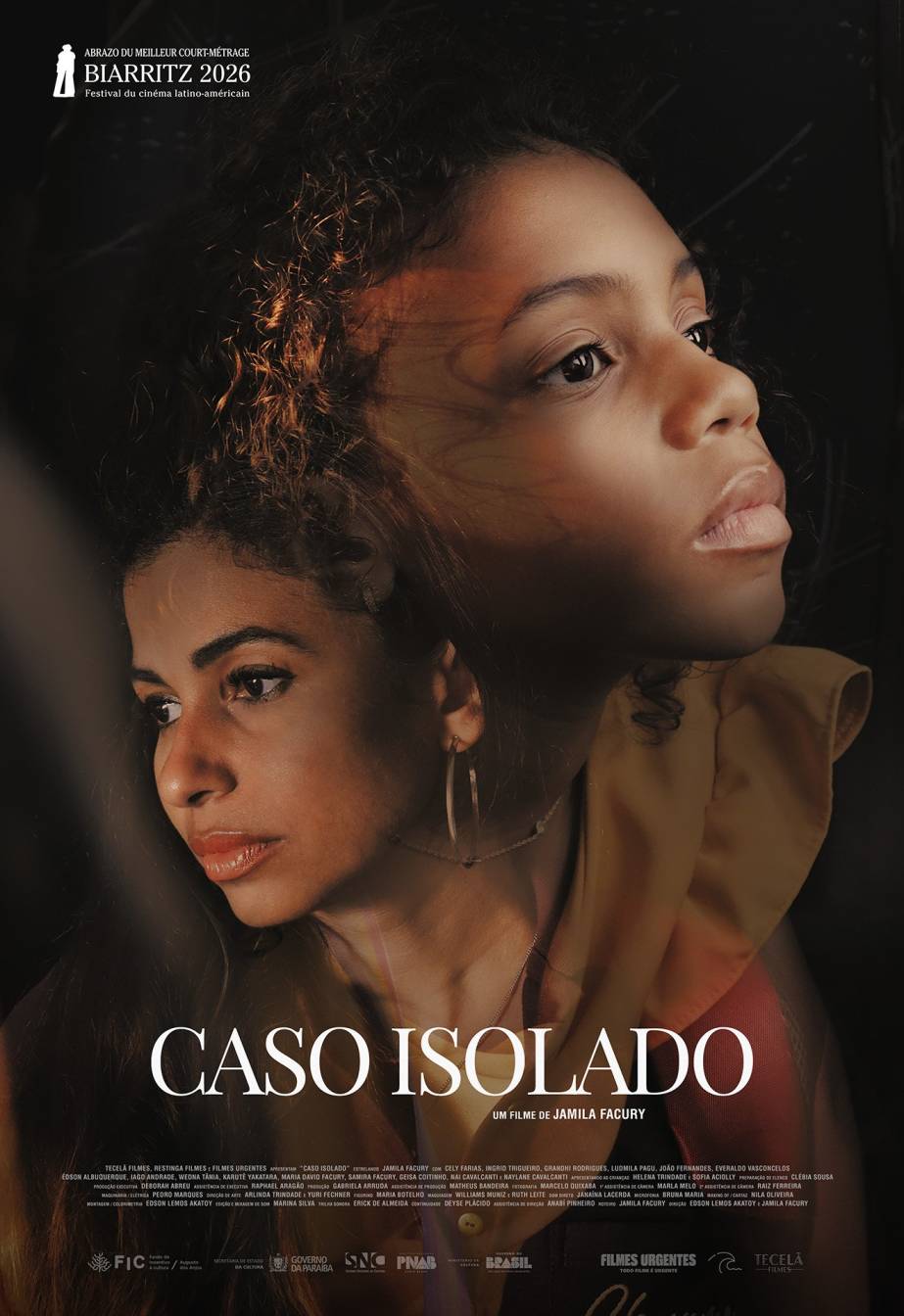
With no other option, Cristina embarks on a trip across the city on the back of a motorcycle, making stops here and there to deliver cosmetics to the store’s customers. However, what should be a casual work experience on a regular workday becomes a stark reminder of her racial identity, its relation to class, and the stereotypes attached to both Blackness and class status, as seemingly isolated incidents of microaggression all pile up to expose the nature of racial and class prejudice even in a largely mixed-race city in a notably diverse country.
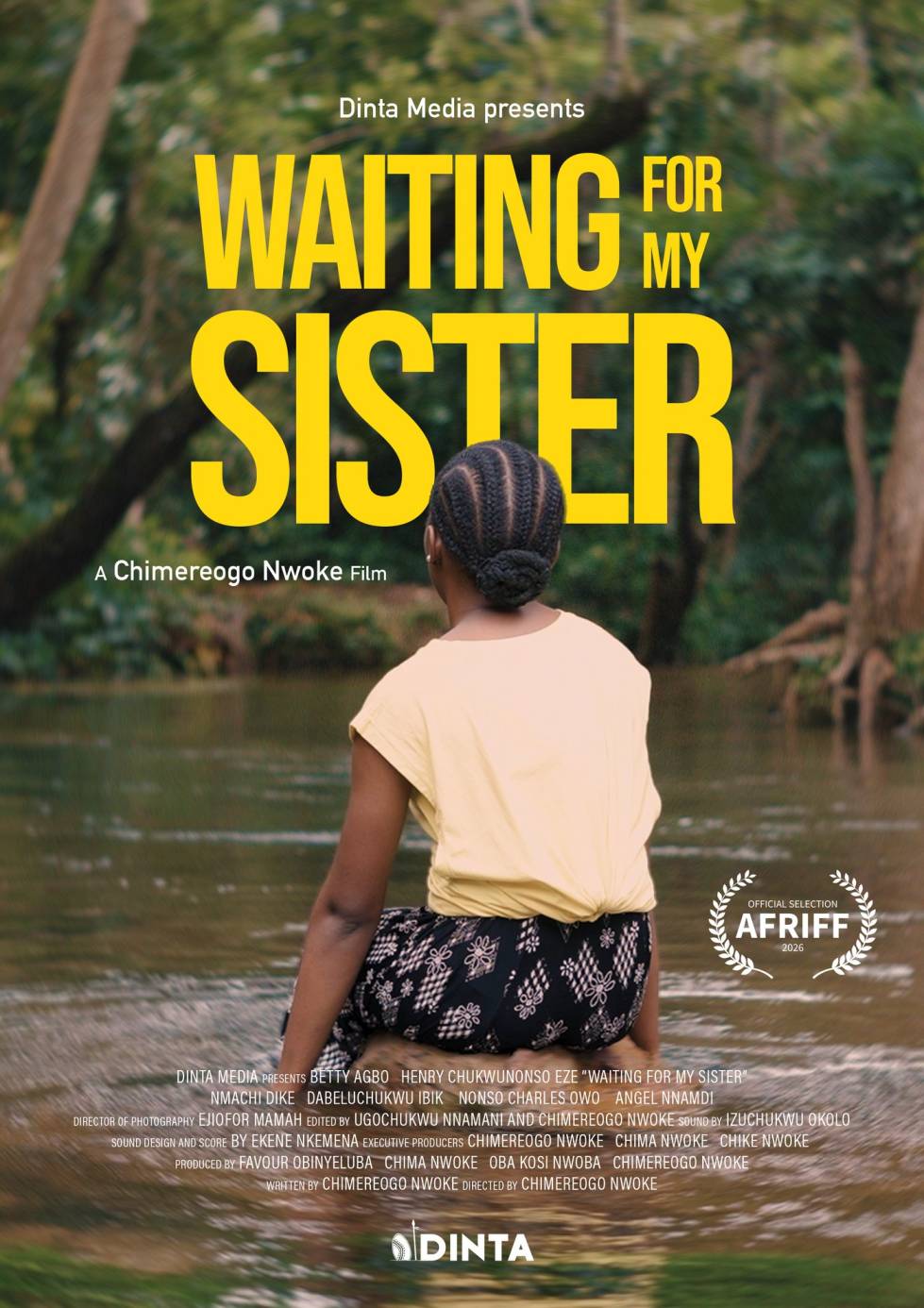
The truth that the central characters are confronted with in Waiting for My Sister is nothing like in Caso Isolado. In Waiting for My Sister, written and directed by Chimereogo Nwoke, a young man runs towards an Eastern Nigerian river where he finds a girl sitting on a rock in the river in suspicious circumstances. His name is Tobe; hers is Uzo. Tobe has just escaped a possible lynching after stealing at a busy market, while Uzo is hanging around waiting for her sister to come pick her up from the stream.
As Tobe catches his breath, he engages Uzo in small talk that graduates to warm banter while an unlikely friendship forms between them. But as they chitchat, the truth of their circumstances is gradually revealed, both to them and to the audience. And while that truth is somewhat predictable to the audience, it remains compelling as it unfolds and compels both of them, but especially Tobe, to realise the truth about themselves, their realities, and their altered identities.
While all three main characters come to terms with their truths, neither film pretends about the role the characters play in the circumstances that both films capture. Early in Caso Isolado, a colleague accuses Cristina of dating only blond men, an accusation she seems unbothered by. Almost immediately, Cristina becomes suspicious of a young dark-skinned Black woman who is supposedly window-shopping. Whether her suspicions are founded or not is beside the point. What Caso Isolado is interested in is Cristina’s relationship with Blackness as a light-skinned woman with the advantage of proximity to whiteness.
Of course, racial prejudice would not be erased in all of Brazil if Black and mixed- race people did not participate in enforcing it. And Cristina’s situation does serve to highlight just how insidious racism is in the way that it institutionalises prejudice to the point that even the victims of such prejudice have socially and functionally internalised it. But as Cristina is forced to confront the reality of her racial identity, Caso Isolado subtly establishes the folly of falling for the deception of racial hierarchies as a person who is anywhere but at the top of such hierarchies.
Waiting for My Sister, on the other hand, has its characters banter about their follies, despite their initial sense of denial. The film’s choice of its opening music is the first sign of this. When we meet Uzo, and at other strategic points in the film, she is singing an Igbo folk song, “Nne nnem, udu m araputa m o”, which essentially translates to “Mother, my mother, my water pot has put me in trouble”. It’s a song of regret and lamentation where the singer mourns their broken water pot, wonders about how it broke, and contemplates whether to break with it or leave it behind. That act of contemplation and reflection becomes a defining feature of the film as Uzo and Tobe retrace, and sometimes find justification for, the choices and actions that led them to the river.
But this is where Waiting for My Sister, like the persona in the folk song, runs into trouble. Its explanation of its characters’ journeys to the river tackles the how but stops short of the why. And as it turns out, why the characters find themselves at the river is inextricably linked with why this film exists and what this film might consciously or unconsciously be trying to say.

As a regular consumer of Nigerian film familiar with what has been called the DIY approach to filmmaking and audience engagement, I initially accepted the burden of inserting filmmaking intentions that might not exist. My explanation of the why was simple: play stupid games, win stupid prizes; make stupid decisions, suffer stupid consequences. But my effort came undone when AFRIFF’s post-screening spontaneity made it possible for the director to undo it. Take note, I have now returned to that postponed thought.
To provide some background, Waiting for My Sister features a third unidentified character who arrives at the river in unclear circumstances that hint at possible domestic violence. But a hint is not confirmation. A less perceptive viewer, or a forgiving critic as myself, might be open to other possibilities. But when the director all but provides confirmation, even a forgiving critic has to accept the reality of the situation. With that confirmation, my DIY explanation went out the window. Which stupid game could make domestic violence a logical stupid prize?
Caso Isolado is not thematically perfect, either, as much as I wish it were. In its opening sequence, it makes too much of a deal out of a prior offscreen accident and its effects on Cristina, the protagonist. But the film barely accounts for those effects as she braves the roads and travels across the city. Still, this is a much smaller sin than that which Waiting for My Sister commits. And in truth, neither sin made these films a hassle for me. Not even the greater sin of a lack of consciousness, which I have criticised exhaustively in the recent past.
Both films are buoyed up by casual dialogue that manages to be interesting and never feels pedestrian, but also by naturalistic performances from a strong but not so starry cast. Caso Isolado’s writer and co-director Jamila Facury plays Cristina like a regular person on a regular day, but she deftly manages the character’s hold on grace and dignity as she is slowly woken up to the truth of how she is perceived racially and socially. On their part, Henry Chukwunonso Eze and Betty Agbo have genuine chemistry and camaraderie as Tobe and Uzo, making for a surprisingly effective pair as a charismatic young man and eerie girl with child-like innocence.
That both films boast well-choreographed sequences that unfold against personable and photogenic locations that contrast with their characters’ situations is another positive. Caso Isolado follows Cristina from the bustling city centre to the coastal city’s calmer seaside, with all that structural beauty existing side by side with the dysfunctional racial and social dynamics. And Waiting for My Sister captures, through sights and sounds, both the beauty and ugliness of the chaos of the world they have left, juxtaposed with the serenity and strangeness of the world they now inhabit.
But what makes them most endearing is the emotional reaction that they evoke without trying too hard, the poignancy balanced with warmth. I was drawn to the characters of Caso Isolado and Waiting for My Sister in a way that very few films at AFRIFF were able to engender. Merely rewatching their trailers and teasers still manages to evoke those feelings in me. That is indeed a rare feat.
Vivian Nneka Nwajiaku is a writer and film critic writing from Lagos. She has a master’s degree in law but spends most of her time consuming, studying and discussing film and TV. She’s particularly concerned about what art has to say about society’s relationship with women. Connect with her on X @Nneka_Viv