



If I Go Will They Miss Me occasionally gets lost in its own symbolism, but its belief in the importance of imagination, community and the possibility of a different future gives it a quiet, enduring appeal.
By Joseph Jonathan
A father’s return home is not always the end of his family’s waiting. Sometimes, it is the beginning of a different kind of uncertainty: how to live with someone whose absence has become part of the household’s routine. Children, especially, can spend years constructing an image of a parent from fragments of memory, stories and their own imagination. But what happens when the person who returns cannot recognise himself in the figure his child has made of him?
Walter Thompson-Hernández’s If I Go Will They Miss Me is interested in this uneasy meeting between childhood idealism and adult disappointment. Set in Watts, Los Angeles, the film considers the fragile relationship between a father and his son, but its concerns extend beyond the domestic tensions of one family to questions of masculinity, inherited fear, community and the possibility of becoming someone different from the person life has made of you.
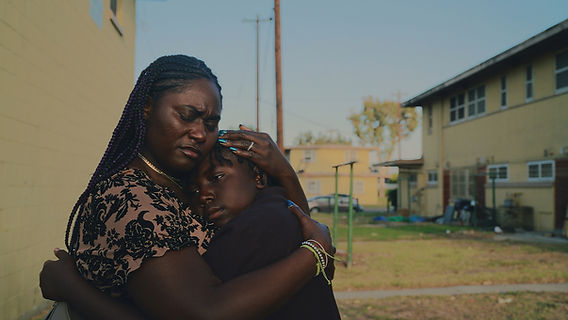
Big Ant (J. Alphonse Nicholson) has recently returned home after another period of incarceration. His wife, Lozita (Danielle Brooks), and their children must adjust to having him around again, while he attempts to reclaim a place in a family that has learned to function without him. His 12-year-old son, Lil Ant (Bodhi Jordan Dell), is particularly eager to reconnect with his father. But the boy’s affection is complicated by the fact that he does not quite see the man standing before him. Through his fascination with Greek mythology, he imagines Big Ant as Poseidon, a figure of extraordinary power and authority, while casting himself as Pegasus, the winged horse capable of flight. For Lil Ant, his father is not simply a man with a troubled past; he is a hero whose absence can be explained through the language of epic journeys and great battles. Big Ant, however, is considerably less comfortable with this elevation.

The tension between these two perspectives gives the film its emotional foundation. Lil Ant’s imagination allows him to make sense of a world whose disappointments he is only beginning to understand. His father’s time away becomes an adventure rather than an abandonment, and his mistakes are absorbed into a mythology that preserves the boy’s admiration. Big Ant, meanwhile, carries the knowledge of his own failures and the fear that his son might eventually follow a similar path. The distance between them is therefore not simply the result of time spent apart. It is also a difference in how they understand the same man. One sees possibility where the other sees accumulated damage.
Thompson-Hernández makes an interesting decision not to turn this conflict into a conventional redemption story. Big Ant’s return does not automatically make him a better husband or father, nor does his son’s affection suddenly resolve the anxieties that have followed him home. He is affectionate, insecure, sometimes playful and, at other times, difficult to reach. Nicholson gives the character an appealing vulnerability, allowing us to glimpse the boy Big Ant might once have been beneath the frustrations and defensive habits of adulthood. His performance is particularly effective when the character is confronted with the distance between his son’s admiration and his own self-perception. There is something quietly painful about watching a man struggle to accept the possibility that he might still be worthy of the love being offered to him.
Lozita, played with considerable warmth and weariness by Brooks, is the person who makes this family function. She has had to manage the practical and emotional consequences of Big Ant’s absence, and his return does not immediately relieve her of those responsibilities. Her exhaustion is not presented as an extraordinary tragedy but as the cumulative effect of keeping a household together while negotiating the unpredictability of another adult. Brooks brings humour, affection and an unmistakable firmness to the role. She understands her husband’s limitations without being entirely defined by them, and her relationship with Lil Ant suggests a mother who is attentive to the ways her children are absorbing the world around them. If Big Ant struggles to understand what his presence means to his son, Lozita is more alert to the consequences of his behaviour.
There is a recognisable resonance here with Nigerian family experiences, although the social circumstances are not interchangeable. Across many Nigerian households, a father’s authority can remain symbolically important even when the practical work of sustaining a family falls disproportionately on the mother. Children may grow up idealising an absent or emotionally distant father, while mothers quietly manage the consequences of that absence. The familiar expectation that a man should be the household’s provider and authority figure can also make it difficult for some men to acknowledge vulnerability, failure or dependence. If I Go Will They Miss Me is perceptive about this contradiction. Big Ant wants to occupy the position of a father, but he is uncertain about what being one requires beyond the title. His family, meanwhile, cannot simply suspend its needs while he figures it out.
The film also understands that a child’s development does not take place exclusively within the home. Lil Ant is surrounded by a community whose presence expands the meaning of family beyond his immediate relatives. Friends, neighbours and other residents appear throughout the film, sometimes briefly, but their inclusion gives the neighbourhood a life independent of the central family’s problems. This is important because Watts is not reduced to a backdrop of poverty, violence and criminality. Thompson-Hernández allows its residents to exist as people rather than as illustrations of social conditions. Their faces, gestures and ordinary activities become part of the film’s portrait of a community that contains its own forms of care, imagination and possibility.
This approach is especially valuable given the history of American cinema’s representation of Black urban communities. Too often, neighbourhoods like Watts have been filmed primarily through the language of danger, with their residents reduced to victims, perpetrators or statistics. Thompson-Hernández is working in a tradition that includes Charles Burnett’s Killer of Sheep (1978), but his interest is less in reproducing the hardships of an earlier generation than in exploring how young people imagine themselves beyond the limitations of their immediate surroundings.
The comparison is useful, particularly in the film’s attention to children, domestic spaces and the relationship between individual lives and the communities that contain them. Yet Thompson-Hernández is not simply looking backwards. He is interested in the imaginative possibilities available to children who inherit a world already burdened by the experiences of their parents.
The film’s visual language is central to this ambition. Airplanes repeatedly pass overhead, becoming a reminder of the world beyond Watts and a recurring image of movement, escape and possibility. For a community situated beneath the flight paths of Los Angeles International Airport, the planes are an everyday presence, but Thompson-Hernández gives them a symbolic importance in the lives of his characters. Lil Ant sees flight as liberation, while Big Ant’s anxieties make the image considerably more complicated. The recurring visions of boys and young men with their arms outstretched like wings further complicate this symbolism. Flight can suggest freedom, but it can also evoke disappearance, danger and the vulnerability of young Black men whose futures are shaped by forces beyond their control.
There is an understandable ambition in connecting these images to the film’s Greek mythology. Lil Ant’s drawings, his imagined versions of his father and the appearances of mythological figures give the film a vocabulary through which to explore experiences that ordinary conversation cannot always articulate. The papier-mâché Pegasus, in particular, becomes a striking expression of the boy’s imagination, while the presence of horses and the family’s visits to Richland Farms extend the film’s interest in the relationship between freedom and confinement. However, the different motifs do not always work together as persuasively as they might. Airplanes, horses, Greek gods and the mysterious winged figures sometimes feel like competing symbolic systems rather than parts of a fully integrated visual argument. The airplane imagery, especially, is repeated so frequently that its meaning begins to lose some of its initial force.
Michael Fernandez’s cinematography nevertheless gives the film a distinctive visual identity. The preference for patient, largely static compositions allows the viewer to observe the characters and their surroundings without constantly being directed towards an emotional response. The camera often gives the environment as much attention as the people occupying it, creating compositions in which ordinary neighbourhood spaces acquire an unexpected grandeur. Some images are memorable precisely because they resist spectacle: children occupying rooftops, residents gathered around familiar spaces, and the vast sky stretching above the buildings. There are also moments when the film moves into more surreal territory, allowing drawings and imagined figures to enter the physical world without entirely abandoning its naturalistic foundation.
The performances help hold these different elements together. Dell gives Lil Ant an appealing mixture of curiosity, sensitivity and youthful certainty, making his idealisation of his father understandable without turning him into an implausibly wise child. Nicholson is excellent as Big Ant, while Brooks brings a particularly affecting combination of strength and fatigue to Lozita. Myles Bullock also makes a memorable impression as JJ, Big Ant’s friend, providing some welcome levity. Malcolm Parson’s piano score complements the film’s contemplative mood, while Jon Batiste’s rendition of “This Bitter Earth”, which bookends the film, lends the story a lingering melancholy.



Still, the film’s deliberate approach comes with limitations. Its scenes often function as individual observations rather than steps in a tightly developing narrative. Some characters remain more suggestive than fully explored, and certain developments are introduced without being given enough room to acquire emotional significance.
The result is a film whose atmosphere and images are sometimes more compelling than the dramatic movement connecting them. This is particularly noticeable in its treatment of the wider community, which is beautifully observed but occasionally feels like a collection of fleeting impressions rather than a world we come to know in substantial detail. The film’s refusal to force every character into a conventional narrative arc is admirable, but ambiguity and underdevelopment are not necessarily the same thing.
Nevertheless, If I Go Will They Miss Me finds something affecting in its refusal to treat imagination as an escape from reality. Lil Ant’s fantasies do not erase his father’s shortcomings or the dangers surrounding his community. Instead, they allow him to imagine a world in which those shortcomings do not have to determine everything that comes next. The film’s most moving moments emerge when the distance between father and son briefly narrows, when Big Ant allows himself to experience the joy his son sees in him, even if he cannot sustain it. These moments matter because they suggest that the possibility of change does not always arrive through grand declarations or complete transformations. Sometimes it begins with the willingness to see oneself differently.
The title’s question, then, carries more than the fear of being forgotten. It asks what remains of us in the lives of those we leave behind, and whether our presence can mean something beyond the disappointments we have caused. Thompson-Hernández does not offer easy answers, nor does he pretend that affection can repair every fracture. What he offers instead is a tender, visually imaginative portrait of a family trying to make room for one another again. If I Go Will They Miss Me occasionally gets lost in its own symbolism, but its belief in the importance of imagination, community and the possibility of a different future gives it a quiet, enduring appeal.
Rating: 3.8/5
* If I Go Will They Miss Me premiered at the 2026 Sundance Film Festival before screening at the Africa International Film Festival (AFRIFF) 2026.
Joseph Jonathan is a historian who seeks to understand how film shapes our cultural identity as a people. He believes that history is more about the future than the past. When he’s not writing about film, you can catch him listening to music or discussing politics. He tweets @Chukwu2big.